‘My world went dark’: The day ISIL killed my cousin at school

news image

This is a first-person account by Maisam Iltaf, an Afghan who lost his cousin in an ISIL attack on a school in Kabul on August 15.

The teenage children at the academy, which was in a Hazara neighbourhood, had been studying towards university entrance exams.

Iltaf told Al Jazeera’s Shereena Qazi his story:

“It started out as a normal day: I woke up at 4am, hit the gym, showered, made myself breakfast and left for the office.

On that hot afternoon, I was at my desk working. My colleague was peacefully read a report I had given her. Everything was fine.

I had just finished my tea when my phone rang. It was my mum. As usual, I thought she would be calling to ask me to buy some fruit on my way home.

‘Hello mum, what’s up?’ I asked her.

Things were quiet at first, no-one spoke.

‘Hello Maisam, Rahila is missing. There has been a suicide attack at her school,’ that is exactly what I heard, I remember.

‘Everyone is out looking for her,’ she continued with a shaky voice.

Rahila’s body was found in a government morgue after the deadly attack on a school in Kabul [Maisam Iltaf/Al Jazeera]

My world went dark at once. I quickly cleared my desk, packed and left my office.

I took a taxi home, picked up my other cousin and headed to Estiqlal hospital, where I’d heard that many victims were being taken.

On my way to the hospital, I saw noisy, rushing ambulances. Not one. Not two. Many. The sound of their sirens were clamouring in my head.

The sun was already sinking behind the clouds. The day was getting darker and my feelings more grim.

At the hospital, there were scenes of chaos.

I saw bulged dead bodies and wounded people lying everywhere. Families and friends of those affected were screaming in search of their loved ones.

I skimmed through the causality list, rushed to the hospital corridor and squeezed into a room full of dead people. A rank smell spread over. I saw people’s wounded limbs, one was halfway burned.

Cries of a woman holding her son’s dead body pierced the hospital walls. There I got the first big hit: my soul scarred, heart smashed, and mind lost.

But before I myself cried of despair, a friend grabbed my hand, embraced me, and said: “Everything is going to be OK.”

But, no. We both felt helpless and weak knowing that while we were safe, many others had not been so.

‘Where is Rahila?’

My friends and I re-grouped.

We searched nearly all of Kabul’s hospitals for six hours, but Rahila was nowhere to be found.

Soon, we heard news that she was slightly injured at Ali Abad hospital. It brought us back and restored our hope. 

I was so happy and hoped things would go back to normal. That we would leave fear and despair aside, and invoke the forces of good instead.

Dozens of people were killed when a bomb ripped through a class at Mawoud academy in Kabul [Maisam Iltaf/Al Jazeera]

That hope, however, soon faded and fear and despair grew larger as we found out that the injured victim was not Rahila, but someone similar to her lying on the hospital bed.

“I found my girl,” a woman shouted. “It is her. It is Najiba. Thank god she is only injured!”

An hour later, we found what we were searching for.

Rahila’s brother and father had made their way through limbs and dead bodies, hoping that perhaps she had survived. Her father, shattered, whispered that he had found her, dead in the government morgue.

‘It was her,’ Hamid told me. ‘Every trace matched: bluish-purple dress, black cowboy jeans, black shoes, and a brown wristwatch with blood spattered all over it.’

When news of her death broke, I panicked.

The funeral

Rahila’s body was kept in a coffin in the mosque’s yard the night we found her. 

The next morning, at 4:30am, as the call to prayer at the mosque rose to a crescendo, everyone woke up for the prayer.

On the balmy morning, I felt faint and struggled to wake up. We prayed and waited for the sunlight to stream so we could go up to the rocky hilltop to bury Rahila.

On Wednesday, August 15, Rahila Monji along with her 48 classmates were tragically killed and many more injured when a bomb ripped through their class at Mawoud academy in Kabul.

The bomb blast in the academy was claimed by the Islamic State of Iraq and the Levant [Maisam Iltaf/Al Jazeera]

The youngest in her family, Rahila would brighten the darkest room and cheer up every spirit with her infectious laugh, smart sense of humour and a big beautiful smile.

Her home that was filled with life and light not long ago has turned into a place of mourning.

My heart bleeds every time I see Rahila’s little study area, where she would burn the midnight oil to increase her chances of getting the top score at Kankor – a university entrance exam – to get into university and study economics, her favorite subject.

At only 17, she taught an English language course to a class of 25 students. She prioritised education over everything else.

A page from Rahila’s diary shows a poem written in Dari that reads: Rahil can do it because she is love, she is cute, she is strong and she is empowered. To achieve one must bear the difficulties along the way [Maisam Iltaf/Al Jazeera]

I had seen her few days before.

She was excited that she had gotten admission at Mawoud academy to start her university prep courses.

Rahila used to say she was planning to top the exam and bring change in society.

My mum and I congratulated her, held her in a warm embrace. Back then, I was thinking about her dreams.

But her dreams perished before my very eyes on Thursday, at the edge of the city, as people shovelled, and dug strip of earth.

We buried Rahila with all her dreams for eduation.

I stared at the sight of her getting buried. Feelings of woe, anger, guilt and heartache were so overwhelming.

As I looked at the grave that embraced Rahila, her last words in her diary kept resonating in my mind:

“I can be the Rahil [Rahila’s nickname] who everyone needs – the society needs Rahil.”

“She must help her society in its pursuit for prosperity and progress. Her society can overcome its current crisis by solutions that must be drawn from the knowledge and education of its youth.

“Rahil must be one of them – one of those who will raise the proud flag of this country [Afghanistan] in the world…” 

Rahila’s desk where she used to study [Maisam Iltaf/Al Jazeera]

A day later, when I went to collect her belongings from the school, I found her bag. A black leather bag covered in dirt and blood.

The classroom she once studied in had turned into a complete ruin. Chairs spattered with blood.

A blackboard dotted with holes.

The shrapnel-filled suicide vest had done the worst things possible.

Now, from the quiet of my room, I reflect on Rahila’s life and lofty dreams. I cannot help but to also think about the lives of many of us in Kabul.

A city, I wonder, when was it at peace?”

Read More

from Trendy News Day https://ift.tt/2Lrarsc
via IFTTT
Boat maker, farmer, auto parts CEO feel the pain of a growing trade war under Trump

news image

CLOSE

President Trump‘s fresh tariffs on $34 billion in Chinese goods set the stage for price increases hitting American companies and consumers. So how does it affect the everyday American? We explain.
USA TODAY

An Illinois farmer’s profit is fast turning into a loss as corn, soybean and pork prices tumble.

A Florida boat maker is paying its dealers in Canada, Europe and Mexico millions of dollars to partly offset the cost of tariffs in those countries, jeopardizing U.S. employee bonuses this year.

A craft brewery is spending more on aluminum cans, forcing it to shelve plans to add workers.

They’re portraits of distress in an escalating trade war that has begun taking a toll on myriad businesses across the country. Many are paying more for imported supplies, enduring falling sales overseas, or both, forcing them to put hiring and investment plans on hold.

Trump administration officials argue the tariffs are necessary to protect U.S. steel makers that have suffered as foreign producers dumped metals in this country at below-market prices. The taxes are also aimed at prodding China and other countries to reduce longstanding high tariffs on U.S. imports, potentially opening those markets to American companies.

To be sure, the trade war has produced some winners, including American steel makers and washing machine manufacturers that have benefited from the tariffs placed on their foreign competitors’ exports to the U.S. 

CLOSE

President Donald Trump says the US and the EU have agreed to work toward “zero tariffs” and “zero subsidies” on non-automobile goods. EU Commission President Jean-Claude Juncker says he has made a deal with Trump to try to ease trade tensions. (July 25)
AP

But their ranks are dwarfed by the losers. And the casualties among U.S. firms are mounting.

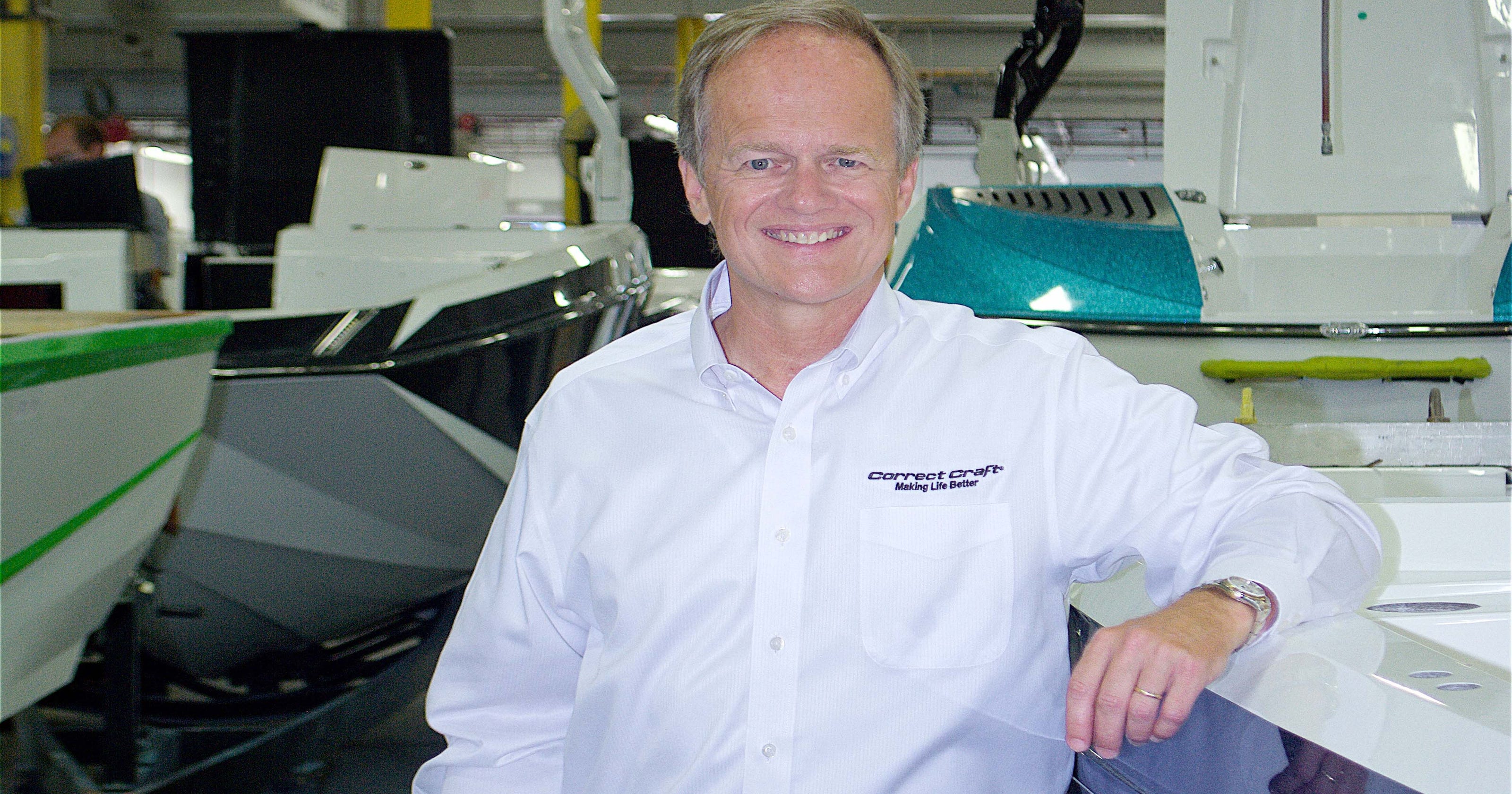
“I believe the (Trump) administration has good intentions,” says Bill Yeargin, CEO of Correct Craft of Orlando, Florida, one of the world’s largest powerboat makers. But, as a country, “I feel like we shot a hole in the bottom of our own boat.”

More: Tariffs on TV parts could cost South Carolina town struggling against poverty

More: 1st Mustang Shelby GT 500 found but mystery still surrounds its history

More: If you deposit checks through a mobile app, start adding this phrase

So far, the tariffs haven’t undercut a roaring U.S. economy, but they’re keeping it from growing even more robustly. And if President Donald Trump makes good on threats to levy duties on hundreds of billions of dollars more in imports, the pain for Main Street businesses will grow exponentially.

Trump has slapped tariffs on about $50 billion of imported steel and aluminum and $34 billion on an array of technology and other goods from China. Another $16 billion in duties on Chinese imports took effect Thursday. China, Canada, Mexico and the European Union have responded with tit-for-tat tariffs on U.S. shipments to their countries, from motorcycles and blue jeans to whiskey and orange juice.

If those taxes stay in place, it would shave a modest tenth of a percentage point off U.S. economic growth and reduce employment by 170,000 over the next year, says Mark Zandi, chief economist of Moody’s Analytics. The economy is expected to grow a solid 3 percent this year.

“It’s having an impact, but it’s not a big enough impact on the broader economy,” Zandi says, noting growth has been juiced by the sweeping Republican tax cuts.

But, he says, if Trump follows through with all $800 billion of his threatened tariffs, largely against China, and other countries retaliate as expected, it would slice growth by 1.6 percentage points and employment by another 2.6 million, tipping the economy into recession.

Already, thousands of businesses are feeling the effects. Here’s how some are coping.

Struggling farmer takes another hit

Brian Duncan, 53, a midsize corn, soybean and hog farmer with 4,000 acres in Polo, Illinois, already had been grappling with thinner profits. The culprit has been a surplus of global crop supplies fostered by favorable weather and the expectation of rising demand. Now, retaliatory tariffs by China and Mexico have crimped demand in those countries, reducing market prices for his products by 16 percent to 27 percent since April.

If the tariffs remain, Duncan expects his sales over the next year to fall by $1.5 million in his hog business, about $400,000 in corn and $100,000 in soybeans. Duncan has 3,500 acres of corn and 500 acres of soybeans. And he raises 70,000 hogs a year that are sold to giant pork producers such as Tyson Foods and Smithfield Foods. 

“The trade war has swung me from a half-million-dollar profit to a half-million-dollar loss,” the 35-year, third-generation farmer says.

As a result, he’s putting off plans to buy a new tractor and combine.

“You’re always trying to expand and grow the business,” he says. But now, “that doesn’t seem like a wise thing to do.

“I recognize there’s trade issues that need to be dealt with,” he says. “But I think there’s a better way. … The way we’re going about it is like a bull in a china shop.”

Tariff is like anchor for boat maker

Correct Craft, the Florida boat maker, is getting hit by both sides of the trade skirmish.

After current contracts with suppliers expire in a couple of months, it will pay 20 percent to 30 percent more for the aluminum that makes up the shell of some of its boats, and 5 percent to 15 percent more for aluminum parts that go in the boats, says CEO Yeargin.

The company buys those supplies domestically, but the 10 percent tariff on aluminum imports is allowing U.S. makers to raise their prices as well, since they no longer have to compete aggressively with low-priced foreign rivals. And the tariffs are “giving them cover” to boost prices by even more than the 10 percent duty, Yeargin says.  

The extra taxes will increase the company’s costs by hundreds of thousands of dollars a year, he says.

The bigger problem, Yeargin says, is that exports to 70 countries make up 30 percent of the company’s $500 million in annual sales. And Canada, Mexico and the European Union have slapped tariffs – of 10 percent, 15 percent and 25 percent, respectively – on all power boats from the U.S. Initially, he says, orders from overseas dealers came to a dead halt.

Customers “don’t want to be the ones who bought a boat with a 25 percent tariff,” Yeargin says, especially if the duty is temporary.

Then, the company decided to provide rebates to offset 20 percent to 50 percent of the tariffs. Now, Yeargin says, the hit to sales is modest, but “it’s costing us millions of dollars.”

Correct Craft has suspended plans to expand factories and hire dozens of workers in coming months. “We’re not approving any new growth initiatives,” he says.

And the reduced sales and profits could crimp the annual bonuses of Craft’s 1,300 employees.

The strong economy has been a boon for U.S. boat makers, with Correct’s sales rising more than 20 percent annually in recent years. Yet Yeargin worries that customers who put off a boat purchase may take up another hobby instead.

“Once they get out, they may never get back to boating,” he says.

Beer-can costs add up

Even seemingly trivial increases can have outsize effects.

Octopi Brewing, a contractor in Waunakee, Wisconsin, that makes beer for other brewers, is paying 15 percent more for aluminum cans since the tariff took effect a few months ago. Its supplier has increased its price from 10.5 cents a can to 12 cents, says Isaac Showaki, president of the 3-year-old company.

That doesn’t sound like much, but it adds up to about $100,000 a year for a company that churns out a few million cans of beer annually. “When you’re talking about millions of units, you’re talking about real money,” says Showaki, 34.

Initially, Octopi absorbed the added cost, but now it’s passing it along to its brewing-company customers. Still, there’s a lag until Octopi can recover those extra costs – about $30,000 so far – from customers. That’s reducing the company’s cash flow.

“That’s money we could have spent on hiring people,” Showaki says, noting Octopi sales have been growing 50 percent a year and the company had planned to add two to three workers. “It just puts a brake on everything. It just makes you slow down.”

Auto parts maker fights for its life

Lucerne International, an auto parts supplier based in Auburn Hills, Michigan, already has absorbed one blow from the trade war, and it’s bracing for a much bigger one.

The company makes about $50 million in parts annually at eight plants in Asia, then ships them back to the U.S. for final production for large automakers.

Its part sales to BMW have fallen 20 percent because China raised its tariff on cars it imports from the U.S. to 40 percent in retaliation for Trump’s higher duties on Chinese goods. BMW builds SUVs in Spartanburg, South Carolina, and exports them to 140 countries, including China. It has scaled back the number of cars it plans to sell in that country because of the levy. And so it’s ordering fewer parts from Lucerne, says the company’s CEO, Mary Buchzeiger.

The bigger impact will come if Trump follows through on threats to slap a 25 percent tariff on all imported vehicles and auto parts based on national security concerns. Long-term contracts with customers prevent Lucerne from passing along higher material costs or tariffs. And Lucerne’s profit margin is too thin to eat the added expense.

“I can’t sell the products for less than what it costs me to produce them, and that’s what would happen with the tariffs,” says Buchzeiger, who bought the 25-year-old company from her father in 2015. “We’d be out of business in three months.”

Lucerne’s revenue has been “gangbusters” the past three years, she says, and revenue of nearly $50 million is expected to reach $1 billion in nine years. As a result, the company has considered opening a U.S. plant to reduce its reliance on Asian imports, an initiative that would create 125 jobs. But with the company’s future hanging in the balance, those plans are on hold, Buchzeiger says.

Contributing: Jamie L LaReau of the Detroit Free Press
 

Read or Share this story: https://usat.ly/2whlE9N

Read More

from Trendy News Day https://ift.tt/2wg2gdy
via IFTTT

Elon Musk, Tesla and the Saudi connection

For eight years, since 2010, the electric car maker Tesla has enjoyed robust growth, even though it has never turned an annual profit. Today, the company is valued at between $60bn and $70bn. 

For the company’s investors, Tesla’s CEO Elon Musk is a visionary whose electric car is giving us a glimpse into the future that successfully integrates clean energy with transport and home power. But the company produces only a fraction of the cars that close competitors Ford, General Motors and others produce.

In recent months, it has been beset by recalls, a Security and Exchange Commision investigation and, most recently, a pair of tweets by Musk that have left shareholders and critics wondering if Tesla is on the verge of profitability or if the car maker meets technology innovator is in a bubble. 

In early August, the Financial Times reported that Saudi Arabia’s sovereign wealth fund had quietly been building a 4.5-4.6 percent stake in Tesla. Within half an hour, Musk took to Twitter, saying he was considering a leveraged buyout that would take Tesla private. Days later, her reassured shareholders that the company would remain public, for the time being.

In this week’s Counting the Cost, Al Jazeera asks Arash Massoudi, the Financial Times editor who broke the story of Saudi Arabia’s stake in Tesla, what may have been behind Musk’s tweets and earlier hints that his company was poised to organise one of the biggest leveraged buy-outs in history.

Editor’s note: the following interview has been edited for brevity. 

Al Jazeera: What is the latest that you’re hearing on the company possibly going private? Obviously, Mr Musk has been tweeting about this and it’s caused quite a ripple in the financial community – but what exactly is going on?

Arash Massoudi: As far as I can tell, it was unprecedented in terms of corporate finance battles and take-overs in history where a CEO takes to social media and amplifies basically another organisation’s story and uses it to really change the narrative around his company.

Musk may have taken some actions which violated Securities and Exchange Commission policies which have sparked a series of investigations into his actions, and as a result, also, left him scrambling to put together this plan and make it look like there was more meat than there was actually on the bone. And so, at the moment, banks are all running around and trying to figure out whether they even want to work with him on this, because it’s such a wild proposal and seemingly unrealistic and at the same time not wanting to miss out on potentially the largest leverage buyout in history.”

Al Jazeera: And on the all important question of profitability, when do you think it might turn a profit?

Arash Massoudi: There’s no indication that Tesla will turn a profit anytime soon. It’s burning cash at a phenomenal rate. It can barely produce a couple thousand cars a year, it can’t keep up with demand from consumers, and so there’s no sign of profitability in the foreseeable future. And then you hear constant stories about problems with the cars, problems with deliveries and it’s a sort of endless stream of negative news – but what keeps this company going and what keeps investors there is this sort of cult-like icon of Elon Musk where he can captivate the market into seeing the vision. He just dreams big.

We’re in a world where, as one person wrote, Silicon Valley entrepreneurs are creating these real micro start-ups that have no real direction but that will create profitable companies for their enterprise. But Elon Musk doesn’t do that. Elon Musk sets visionary ideas out and says I’m going to change the way transport works, I’m going to change the way energy works … and then he lays out these really attractive narratives which, obviously in a world where there’s small ideas, we all want big ideas – so that can captivate the market and investors who are willing to back an entrepreneur.

But the facts and the details, when you dig into them, present a much murkier picture, and that’s why so many people have bet against Tesla’s stock. It’s one of the most bet against stocks in the US market and there are a lot of people who expect this company to come crashing down and who have bet a lot of money against it.

Al Jazeera: Is this really sustainable? If you talk there about the negative side of this, problems supply lines and all … is this a bubble that’s going to burst?

Arash Massoudi: The Tesla story is part of the story of where we are in the world right now. There are so many bubbles in the world right now. We’re in a real-estate bubble, we’re in a technology bubble and Tesla sort of encapsulates one of these bubbles. The way they can get through this is if they actually just focus on building cars and delivering their demand. That is clearly the best way to run this company. If he can meet the thousands of supply orders he’s already registered and deliver those cars to consumers, then you could see a foreseeable run rate for Tesla to survive.

But this is a company that produces a fraction of what Ford, GM, etc, produce on an annual basis and yet it has a higher market value. At some point, reality will catch up if Musk can’t deliver.

Al Jazeera: Why would Elon Musk want to bring the market into private hands?

Arash Massoudi: That feeds into one of themes of our time which is that the markets are extremely short-term oriented and that investors want profits and returns on their profits. If you think about all the activist investors that are squeezing pennies out of companies and torturing CEO’s for more capital return, who are more aggressive on action. We’re sort of in this rampant environment where hedge funds and portfolio managers are demanding a maximum amount of stuff from big companies and it’s oftentimes very hard to deliver. And, you couple that with the ego of someone like Elon Musk … You can see through his actions that it’s almost like a personal vendetta, that he wants to burn through the short-sellers and prove them wrong.

This has created an incredible distraction around him, around his company and himself, where he’s not focused on the execution. So, I think part of his thinking is if I can get this company private, then I don’t have to focus on these massive distractions and I can do that. The problem is, it’s really cute to want that, but also you relied on the public markets to get to where you are. You didn’t magically become a $60bn company without having sold things to investors or having sold things to the public.

One other major topic here is the corporate governance around Tesla. The board includes his brother. It’s “lead independent director” is someone who’s been named in court filings as his ‘close friend,’ so it’s basically a mockery to corporate governance, the tesla board. And that’s another big issue that’s under examination now is how can a US company have such a captured board that is close to the CEO. 

Al Jazeera: What would the implications be for Tesla shareholders if there’s a private buyout, both for institutional and individual shareholders?

Arash Massoudi: In a traditional sense, if you want to take a public company private, the easiest way to do that is through a “leveraged buyout” where you take a slice of equity and a bunch of borrowing and you saddle the company up. You offer a premium to the share price and everyone gets a premium and sells their shares and then you take the company private with your new ownership team.

Unfortunately, that only works when you have a cash-flow positive company, because creditors don’t want to lend you money if you’re burning through money and have no capacity to pay back the money, so to basically launch the world’s biggest leveraged buyout in history is impossible here and therefore none of the world’s major banks will participate in such a plan – because Tesla doesn’t have the capacity to repay its debts.

So, then you have to find another way and the idea that they’re discussing is this “going dark” philosophy where a small group of shareholders will buy out other shareholders and take the company private with minimal equity checks, which is why everyone got excited about the way Musk spun the Saudi line that we [Financial Times] broke. Unfortunately, my reporting suggests that the Saudis have no intention of spending an extra $5bn, $10bn or $15bn to take the company private and if they had discussions, it was very, very informal and not of the nature and development that Musk may have suggested through his tweets and his subsequent communications to the market.

Al Jazeera: What’s in it for the Saudis?

Arash Massoudi: No discussion of Saudi Arabia can take place these days without discussion of the prince, Mohammed bin Salman, the gregarious 32-year-old who is leading the country, trying to transform its economy … and the vehicle through which he’s doing that and to take the country’s reliance off of oil is the country’s sovereign wealth fund, which is called the Public Investment Fund. It has about $250bn in assets and he wants to grow it to $400bn by 2020, he wants 25 percent of those assets to be in overseas holdings and he’s clearly a guy who is attracted by people who have big ideas, who are trying to change industries.

That’s why they went and invested $3.5bn in Uber, that’s why they gave $45bn to Japan’s soft bank in Masayoshi Son, this incredibly large tech investment fund which everyone has been talking about for the last two years, it’s why he’s put a $1bn in Virgin Galactic with Richard Branson. It’s why he’s put up to $20bn with Steve Schwarzman in Blackstone … and this is very much in line with those bets, a big entrepreneur trying to change an industry, potentially even a hedge to Saudi Arabia’s oil based economy by investing in electric cars, and with Elon Musk. 

And the way that I reported the story was to say that when Mohammed bin Salman went to the US in March and April of this year, he and the Saudi sovereign wealth fund soon after approached Tesla and said, “We’d be interested in buying newly issued shares to both help support your company, but also we’d like to be an investor.” And Musk, for whatever reason, did not accept that offer and the Saudis with the help of JPMorgan Chase built the stake in the Tesla stock in the subsequent weeks and months and it was private until I broke the story. 

Source: Al Jazeera

Read More

from Trendy News Day https://ift.tt/2wkcFVq
via IFTTT

Watch: Ireland v Afghanistan – first ODI

news image

Watch live Ireland v Afghanistan – first ODI – Live – BBC Sport


<!–


<!–

<!–
<!–

<!–
<!–

<!–

<!–

<!–


Summary

  1. Ireland won the toss and choose to bowl
  2. First of three ODI matches
  3. Use play icon at the top of this page to watch
  4. Listen to BBC Radio Ulster coverage


Read More

from Trendy News Day https://ift.tt/2ofBQEi
via IFTTT

Report: President Trump scrapped official statement praising Sen. John McCain

news image

CLOSE

John McCain chose the United States Naval Academy Cemetery as the place he will lay rest. He’ll lie next to his former classmate and lifelong best friend.
USA TODAY

President Donald Trump reportedly rejected sending out a statement praising Sen. John McCain, opting instead to write a short tweet.

According to the Washington Post, Trump nixed the statement, despite calls from his senior aides, including press secretary Sarah Sanders and Chief of Staff John Kelly.

The statement, drafted before the senator’s death Saturday, would have commended the Arizona Republican for his military service and his decades in the Senate. It also would have called him a “hero.” A final draft of the statement was ready for the president’s approval, per the Post.

But Trump reportedly told his aides that he’d prefer to send out a tweet. In that missive, he was brief – and his words focused on the McCain family and didn’t offer praise for the senator’s legacy.

“My deepest sympathies and respect go out to the family of Senator John McCain. Our hearts and prayers are with you!” the president wrote late Saturday.

White House aides went on to post official statements from others in the administration, including Vice President Mike Pence and others in the Cabinet.

The tweet capped off a strained relationship between the two Republicans. Before his death, McCain decided Trump should not be invited to his funeral – where former Presidents Barack Obama and George W. Bush are expected to speak.

More: President Donald Trump’s brevity on John McCain speaks volumes about their strained relationship

More: Arizona Senate candidate Kelli Ward suggests John McCain statement on ending treatment timed to hurt her campaign

More: John McCain to lie in state at U.S. Capitol, an honor bestowed on only 30 other people

Autoplay

Show Thumbnails

Show Captions

Read or Share this story: https://usat.ly/2ofww3M

Read More

from Trendy News Day https://ift.tt/2NnrhKl
via IFTTT

You need to watch this guy make sharp knives out of weird objects

news image

It can be argued that if something has the ability to cut through objects, it can technically be considered a knife.

So taking this rule to the extreme, you can turn all sorts of things into knives. At least, that’s the mentality of YouTuber and knife-maker extraordinaire Kiwami Japan, who turns rice, jello, and other unexpected objects into sharp cutting tools.

Upon watching these videos, I’m honestly not sure if I should be impressed, or scared. Take for example one of Kiwami’s most popular videos in which he takes a bunch of Jell-O, melts it down, and turns it into what looks like a deadly Jolly Rancher nightmare.

If you’re not feeling the Jell-O knife, he also made one entirely out of pasta that can stab through cardboard and cut through vegetables. The best part about this knife is that it’s also entirely edible after boiling. 

But if you’re looking for something even more impressive, his rice knife will leave you in awe. And we absolutely cannot forget his cardboard knife that bring a whole meaning to the word “paper cut.”

Kiwami’s ice knife is something straight out of a video game. It isn’t the sharpest knife, but it still managed to pass his veggie-slicing test with flying colors.

Most of these knives can take weeks for Kiwami to make, but considering the knowledge and chemistry that goes into creating them, they always manage to impress with their sharp cutting abilities.

With his cutting-edge designs, he is certain to find a way to make even the softest of objects into a slicing machine.

Https%3a%2f%2fvdist.aws.mashable.com%2fcms%2f2018%2f4%2f7f2784f7 7b2a 958f%2fthumb%2f00001

Read More

from Trendy News Day https://ift.tt/2odh9sv
via IFTTT

Russia denies it was behind air strike in Afghanistan

news image

Russia has said it was not behind an air attack in northern Afghanistan and its military aircraft has not been conducting any operations near Afghanistan’s border with Tajikistan, the RIA news agency said citing the Russian Ministry of Defence.

On Monday, two Afghan government officials said a Tajik or Russian plane bombed the northeastern Durqad district of Takhar province in Afghanistan, during a clash between gunmen and Tajik border guards.

Afghan local media, quoting the provincial governor’s spokesman Mohammad Jawed Hejri, said clashes broke out on Sunday afternoon between drug smugglers in Afghanistan and Tajik border guards. 

Hejri confirmed the jets were “foreign” but could not verify if they were either from Russia or Tajikistan.

“The identity of the drugs smugglers is not known,” said Hejri.

Security in Takhar has deteriorated recently as armed groups regularly attack security checkpoints in the province.

Clashes between security forces and the Taliban have also increased in the past few months as the armed group attempts to overrun districts in the country’s northeast.

Read More

from Trendy News Day https://ift.tt/2NnrflH
via IFTTT

Women’s Super League semi-final – Stars bat first against Storm

news image

Kia Super League Finals Day live: Western Storm, Surrey & Loughborough in action at Hove – Live – BBC Sport


<!–


<!–

<!–
<!–

<!–
<!–

<!–

<!–

<!–


Summary

  1. Semi-final: Western Storm v Surrey Stars (12:00 BST)
  2. Live text and BBC Radio 5 live sports extra coverage from Hove
  3. In-play clips from both games (available to UK users only)
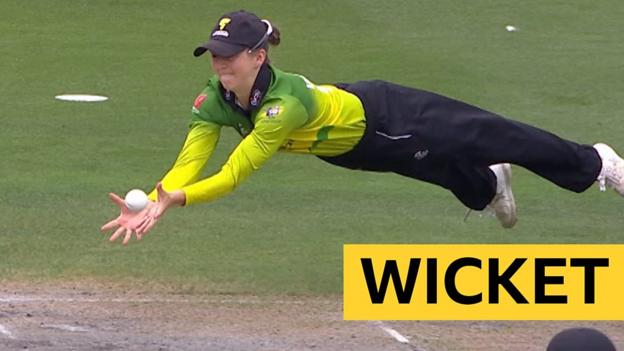
  4. Western Storm win toss and ask Surrey to bat first
  5. England seam bowler Anya Shrubsole set to open batting for Storm
  6. Loughborough Lightning to face winners in final (16:00 BST)
  7. Get involved #bbccricket


Read More

from Trendy News Day https://ift.tt/2LtXcaj
via IFTTT

Design a site like this with WordPress.com
Get started