The Editorial Board, USA TODAY
Published 9:38 p.m. ET Aug. 25, 2018
Like all heroes, the Arizona senator and ex-POW had his flaws. But the GOP ‘maverick’ served as a beacon in a troubling time: Our view
John McCain, the senator from Arizona who died Saturday of brain cancer, spent a lifetime making his country proud. As a prisoner of war in Vietnam, he endured ongoing torture and confinement rather than accept an offer to be released before his fellow prisoners. As a member of Congress, he unflinchingly stood for a strong military and an America engaged in world affairs.
McCain was principled and dignified. He could fight hard for what he believed in, something that often meant robust troop levels in the world’s hot spots. But he could also form alliances across party lines and forgive old enemies. He was one of the first lawmakers to advocate normalized relations with the same Vietnamese government that had held him captive for more than five years — and for years he worked closely with Democratic Sen. John Kerry, a fellow Vietnam veteran who opposed the war, to achieve the thaw.
More recently, McCain made a name for himself with a new generation of Americans by casting the deciding vote against a cruel and ill-conceived plan to strip tens of millions of Americans of their health coverage. He said at the time that the hasty, partisan process showed his beloved Senate had lost its way. In his last book, he made clear that under President Trump, America, too, has lost its way.
Like all heroes, McCain had his flaws. He could be temperamental. He reacted erratically to the 2008 financial crisis. His petulant decision to name the utterly unqualified Sarah Palin as his running mate in that year’s presidential race was, he admitted in his book, a mistake. And his 2010 Senate re-election campaign was a demeaning exercise in renouncing previous positions to fend off a primary challenge from the right.
But as both a Navy aviator and lawmaker, he was a survivor and an embodiment of many of the ideals that make America great.
Sadly, his death serves as an almost perfect metaphor for the death of the old Republican Party, the one personified in the past 100-plus years by the likes of Theodore Roosevelt, Dwight Eisenhower and Ronald Reagan. It was a party that believed, like McCain, that the United States should stand for the advance of freedom abroad and the rule of law at home. It was confident that American commerce could compete with anyone, and that immigration was essential to a growing nation.
In remarkably short order, that party has been turned into a Donald Trump cheering section. It has adopted Trump’s previously un-Republican positions on trade, immigration and authoritarianism, while enabling his childish outbursts and ethical outrages.
In short, today’s GOP is woefully lacking in character and pragmatism, the very McCain hallmarks that made him such an invaluable senator and statesman. To say he will be missed hardly conveys the void his passing leaves. He had the gravity to serve as a beacon in a troubling time, to remind his country and his party of genuine American greatness.
We need more leaders to show us true north. McCain left us a shining example worth following.
If you can’t see this reader poll, please refresh your page.
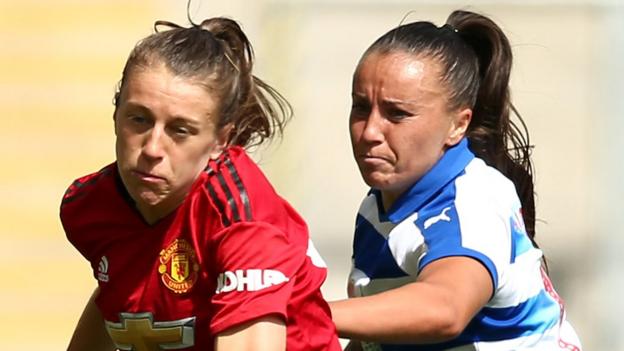
Manchester United are managed by former Arsenal, Chelsea and Lincoln defender Casey Stoney
A record crowd of 4,835 watched Manchester United Women lose 2-0 to Reading Women in their first home game since relaunching this season.
United, returning after the club disbanded their senior female side in 2005, were beaten by goals from Brooke Chaplen and Gemma Davison.
United are second in the five-team Continental Tyres Cup group, with the top two reaching the quarter-finals.
The crowd at Leigh Sports Village was a record for the competition.
It was more than double the attendance for last season’s final between Arsenal and Manchester City.
It also surpassed the 4,096 who watched Manchester City beat Chelsea to seal their first FA WSL Super League 1 title in 2016.
United executive vice-chairman Ed Woodward and former United and England captain Bryan Robson were among the crowd.
Ed Woodward’s (centre) relationship with United men’s manager Jose Mourinho has been under scrutiny this week
United, who beat Liverpool in their first match back last weekend, had the better of the first half with Kirsty Hanson hitting the bar twice in a goalmouth scramble.
The visitors, who play their league football in the tier above United, took the lead 11 minutes into the second half when Chaplen pounced on the loose ball after United goalkeeper Siobhan Chamberlain parried a Davison shot.
Reading, who were reduced to 10 players when defender Molly Bartrip was shown a second yellow card, added a second through Davison in stoppage time.
John McCain chose the United States Naval Academy Cemetery as the place he will lay rest. He’ll lie next to his former classmate and lifelong best friend. USA TODAY
John McCain had so perfected the art of the narrow escape, in politics and in life, that it was almost possible to believe he might defy the odds one more time.
During the 2008 campaign, when his bid for the Republican presidential nomination imploded months before any actual voting, the Arizona senator was out of money and on the unpopular side of the day’s big issue, the war in Iraq. But he wasn’t ready to quit.
He decided to make his stand in New Hampshire, a state with politics as iconoclastic as he was. His front-runner entourage was gone, replaced by a single aide and a borrowed SUV. The first event of his stripped-down campaign was at a Chamber of Commerce luncheon in Concord. In his new book, he likened the political reporters gathered in the back of the ballroom to “crows on a wire, watching the unfortunate roadkill breathe its last before they descended to scavenge the remains.”
He wasn’t wrong. I was covering the July 2007 speech for USA TODAY. We were watching to see whether he really planned to stay in the race that he had mismanaged to date — and, if so, how in the world he planned to turn things around.
“Under what scenario would you suspend your campaign?” I asked him during a press scrum that followed his luncheon speech — which had been devoted, of course, to defending his stance on Iraq. He looked at me as though I had asked the dumbest question imaginable. (To be fair, this is a look he often gave reporters, not to mention some fellow senators. The occasional president, too.) “Only if I succumb to a fatal disease before the day of the New Hampshire primary,” he replied.
He didn’t suspend his campaign, of course. He ended up winning the primary in New Hampshire, which propelled him to win next big contest, in South Carolina. Eventually, he claimed the Republican nomination, the prize that had eluded him eight years earlier. He would lose the general election in November to Barack Obama, but he didn’t quit. Not then. Not ever.
In the end, McCain’s battle with brain cancer was one fight he didn’t win, but then again he saw no shame in losing, just in not trying. In The Restless Wave, the book he co-authored with Mark Salter that was published in May, he praised those who pursued “the hardest causes,” who refused to acknowledge even certain defeat. “They don’t despair,” he said. “They persist.”
The larger-than-life figures in Washington tend to be presidents. There have just been 45 of them in the nation’s history, after all. But there are a handful of others who by dint of character or vision or achievement or personal history become influential beyond the particular job they held, who become iconic. Ted Kennedy, for one. John Lewis. Robert Dole. Eleanor Roosevelt.
And John Sidney McCain III.
Part of that was his story of survival through five years as a prisoner of war in Vietnam, emerging with lifelong physical scars but a spirit that remained remarkably ebullient. That brutal experience gave him the moral authority to speak out when the debate turned to such questions as the use of torture. Part of it were his credentials as a maverick — his willingness to break with his own party, and to forge alliances across partisan lines. He stubbornly stuck with his positions on issues, particularly on national security, even when they became inconvenient.
He was hardly perfect. He could be caustic. His anger could flash, raising questions even among some admirers about whether he had the right temperament to be president. He was one of the so-called Keating Five, senators enmeshed in a savings-and-loan scandal, though the Senate Ethics Committee found him guilty only of poor judgment, not of wrongdoing.
That said, John McCain was almost impossible not to like. He was smart and funny and a master storyteller, and he nursed only a handful of grudges. McCain rarely ducked reporters, even when he knew the questions they were going to ask would be uncomfortable, and even though he thought news coverage in 2008 was tilted to favor Obama. Baltimore Sun reporter Robert Timberg wrote a searingly honest portrait of McCain and four other Naval Academy graduates; McCain was one of just two of the five who showed up for the book party when The Nightingale’s Song was published. Twenty-one years later, the senator spoke at the memorial service for Timberg, himself an Annapolis grad.
During the 2016 campaign, when Donald Trump was on the rise, I interviewed McCain for USA TODAY’s Capital Download newsmaker series. He questioned Trump’s credentials on national security, but refused to say he wouldn’t vote for him over Hillary Clinton. “I vote for the Republican nominee, obviously,” he said, although he didn’t sound happy about it. Trump already had made clear his own disdain for McCain.
More than a year after President Trump had been inaugurated, I saw McCain again, at an off-the-record dinner with a group of Washington Bureau chiefs. He had just returned from a tour that took him from Australia to Vietnam to Singapore. Leaders from those countries had peppered him with questions about the perplexing new U.S. president. The senator was at a loss to explain Trump’s friendly view of Vladimir Putin, but he had tried to be reassuring, talking about the strength of American institutions.
McCain seemed to be missing a step that night, I thought. A few days before, he had stumbled in questioning former FBI director James Comey at a Senate Intelligence Committee hearing. At the dinner, he looked exhausted; he repeated a story twice without realizing it. One month later, he was diagnosed with the brain cancer that would take his life.
Even so, Susan Goldberg of National Geographic, who before that evening had never before met with McCain in person, was enchanted. After he left, she said, “Wasn’t he amazing?”
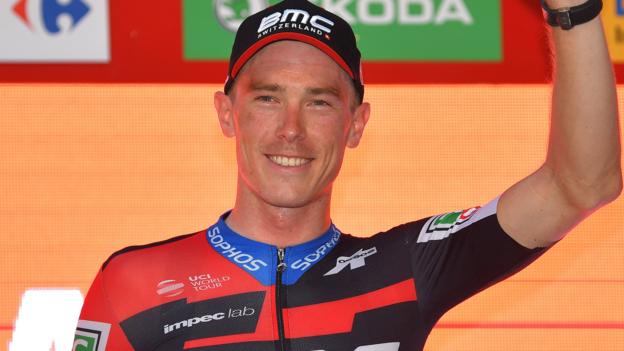
Rohan Dennis also won the opening stage of the Vuelta in 2017
Australia’s Rohan Dennis claimed the leader’s red jersey on the opening stage of the Vuelta a Espana in Malaga.
The BMC Racing rider, 28, won the 8km time trial in nine minutes 39 seconds – six seconds clear of Team Sky’s Michal Kwiatkowski.
Britain’s Simon Yates is 29 seconds off the lead, while his twin brother Adam is 11 seconds further back.
Vincenzo Nibali, who was runner-up to Chris Froome last year and won the race in 2010, also finished 40 seconds down.
Dennis was among the favourites for the stage and also won the stage 16 time trial at this year’s Giro d’Italia.
“That was the first goal – to get a win in the Vuelta, especially after doing what I did in the Giro” he told Eurosport.
“In the end you can only do what you can do and just put everything out there and hope for the win.”
It is the first time in nine years that the Vuelta has begun with an individual time trial.
Nairo Quintana, who won the event in 2016, is 30 seconds behind Dennis, with his Movistar team-mate and 2009 winner Alejandro Valverde in 16th place overall.
Australia’s Richie Porte, who missed Thursday’s team presentation with gastroenteritis, ended the day 51 seconds off the lead.
Ireland’s Dan Martin finished 38 seconds back, one second in front of UAE Team Emirates team-mate and 2015 champion Fabio Aru.
Team Sky rider Tao Geoghegan Hart impressed on his Grand Tour debut, with the 23-year-old coming home 24 seconds down on Dennis.
Fellow Briton Steve Cummings was 29th overall, one place in front of Mitchelton-Scott leader Simon Yates.
Sunday’s second stage sees the first of nine summit finishes, with the race ending in Madrid on 16 September.
Britain’s Chris Froome won the Vuelta in 2017 but is missing this year’s race along with Tour de France winner Geraint Thomas
Stage one result
1. Rohan Dennis (Aus/BMC Racing Team) Nine minutes 39 seconds
2. Michal Kwiatkowski (Pol/Team Sky) +6secs
3. Victor Campenaerts (Bel/Lotto-Soudal) +7secs
4. Nelson Oliveira (Por/Movistar Team) +17secs
5. Dylan van Baarle (Ned/Team Sky) +20secs
6. Alessandro de Marchi (Ita/BMC Racing Team) +21secs
Sen. John McCain diagnosed with brain cancer according to a statement from his office. Wochit
John McCain, who endured more than five years as a prisoner of war in Vietnam before becoming the 2008 Republican presidential nominee and serving Arizona for more than 30 years on Capitol Hill, died Saturday at age 81.
McCain died at 4:28 p.m. MST, his office announced. His wife and other family members were with him.
Destined to be remembered among the political giants of Arizona history, the six-term U.S. senator disclosed in July 2017 that he had been diagnosed with a deadly form of brain cancer called glioblastoma.
Meghan McCain, his TV commentator daughter, wrote Saturday on Twitter: “I love you forever – my beloved father.”
McCain was a two-time presidential candidate, losing the GOP nomination in 2000 to then-Texas Gov. George W. Bush and the general election in 2008 to then-Sen. Barack Obama.
The unsuccessful White House bids were spotlight moments in a long political career that began with his election to the U.S. House of Representatives in 1982. After two terms, McCain ascended to the U.S. Senate in 1987, replacing legendary Republican U.S. Sen. Barry Goldwater, who in 1964 was the only other Arizonan to top the national ticket of a major U.S. political party. McCain was re-elected to the Senate in 1992, 1998, 2004, 2010 and 2016. He became Arizona’s senior senator in 1995 and chairman of the influential Armed Services Committee in 2015.
Often called a maverick, McCain was a complicated personality and will be remembered as the most important political figure to emerge from Arizona in the past 50 years.
He was ensnared by the “Keating Five” scandal of the late 1980s and was deemed by the Senate Ethics Committee to have demonstrated poor judgment by joining four Senate colleagues in meeting with federal thrift regulators on behalf of political benefactor Charles H. Keating Jr., a savings-and-loan tycoon and developer.
It was in the wake of that scandal, in the 1990s and early- to mid-2000s, McCain’s “maverick” reputation began to take shape, as he led fights for campaign finance reform and comprehensive immigration reform and against Big Tobacco. During his 2000 presidential run, McCain famously decried leaders of the Religious Right as “agents of intolerance,” a gutsy fight to pick for a Republican.
The ‘maverick’
In 2015, his own presidential ambitions in the past, McCain clashed with Republican Donald Trump in a public feud that extended into Trump’s time in the White House.
On July 28, 2017, McCain sided with two other GOP senators and all Democrats and cast a crucial vote — a literal thumbs-down on the Senate floor — that stalled Republican efforts to roll back the Affordable Care Act, a top Trump priority.
Unlike many of Trump’s GOP punching bags, McCain had the stature to go nose-to-nose with the president.
At one point in the early 2000s, Democrats encouraged McCain to consider switching parties, and 2004 Democratic presidential nominee John Kerry approached him about serving as his running mate. But later, McCain veered to the right, a source of frequent frustrating to his previous admirers on the other side of the aisle.
Although some on the right sneered at what they viewed as McCain’s coziness with the national media — for years after his presidential run, he was a mainstay on the Sunday television public-affairs shows — McCain often kept local media at arm’s length and once wrote in a book that his long relationship with The Arizona Republic, the state’s largest newspaper, could fairly be described as “antagonistic.” However, the relationship with The Republic and other local media improved in later years.
McCain also had a love-hate relationship with his media-promoted reputation as a maverick, relying on it or distancing himself from it as the political circumstances warranted.
“That was a label that was given to me a long time ago,” McCain told The Republic in 2010. “I don’t decide on the labels that I am given. I said I have always acted in what I think is in the best interests of the state and the country, and that’s the way that I will always behave.”
Two presidential runs
McCain proved himself to be a thorn in the side of his GOP rival, Bush, at least early in the first term of Bush’s presidency. The McCain vs. Bush fight in 2000 had taken a bitter turn in the South Carolina primary, where McCain and his allies accused their conservative opponents of trying to smear him and his family.
However, he and Bush reconciled as McCain geared up for his second presidential run. A classic Senate hawk, McCain was a senior member of the Senate Armed Services Committee and strongly supported Bush’s wars in Afghanistan and Iraq. McCain also was a champion of the surge strategy that Bush employed in Iraq in 2007.
During the 2008 presidential race, McCain had to overcome the lingering distrust of many conservatives who resented his maverick record, which included votes against key Bush tax cuts as well as McCain’s successful push for bipartisan campaign-finance-reform legislation.
His decision to gamble on the untested and little-known Alaska Gov. Sarah Palin as his running mate was cheered by the conservative wing of the Republican Party but may have hurt the GOP ticket among independent voters.
CLOSE
Eight years after an unsuccessful long-shot presidential bid, John McCain took another run at the nation’s highest office. He would run against a young senator from Illinois named Barack Obama. In the end, McCain again would not be president.
However, McCain never had much of a chance of defeating Obama, given the political atmosphere of the time.
Voters were widely dissatisfied with Bush, whose approval numbers were bad, and war fatigue had set in. If that wasn’t bad enough, the U.S. economy melted down in September 2008, making it unlikely that another Republican would succeed Bush. The political-science models pointed to a Democratic victory.
“You can’t win with conditions this bad for the incumbent party,” Larry Sabato, director of the Center for Politics at the University of Virginia, said after the election. “And that’s McCain’s consolation: He did reasonably well under extremely difficult conditions. It was never meant to be.”
Looking back at the race in an August 2017 interview with The Republic, McCain largely concurred, though he stressed that Obama deserves the credit for his victory.
“One, Barack Obama was a very, very strong candidate and that’s the most important thing,” McCain said. “Second, when the stock market collapsed, it really sent us into a real drop. Third of all, I guess, Americans were ready for a change, too.
“But I’d like to emphasize the first thing I said: Barack Obama was an incredibly impressive candidate and he did a great job campaigning,” he added.
Taking on new foes
Two years after his White House defeat, the perception of McCain as an establishment moderate was still strong enough to attract a Senate primary challenger from the right: former six-term U.S. Rep. J.D. Hayworth, a professional broadcaster who was known as a fierce foe of illegal immigration.
In the year of the conservative “tea party” uprising, McCain took no chances and greatly outspent Hayworth, destroying him in the process with an unrelenting barrage of hard-hitting TV campaign commercials. In one memorable ad aimed at Hayworth’s conservative base, McCain rebranded himself as a border hard-liner by calling for the completion of “the danged fence” between the United States and Mexico. After dispatching Hayworth in the primary, McCain effortlessly clinched a fifth Senate term in the 2010 general election.
Near the end of that term, McCain found himself feuding with celebrity-billionaire-turned-presidential-candidate Trump.
In a notorious July 18, 2015, jab at McCain, Trump said McCain was “a war hero because he was captured” and that he liked “people that weren’t captured.”
Trump also derided McCain as weak on immigration and border security. McCain returned the criticism on a number of issues, including Trump’s approach to foreign policy. In October 2016, McCain finally withdrew his endorsement of Trump after a 2005 recording surfaced of Trump talking about women in crude and vulgar ways.
Their duels may have helped McCain in that they made Democrats’ election-year efforts to tether McCain to Trump, who had made a series of inflammatory comments, all but impossible. McCain effortlessly defeated U.S. Rep. Ann Kirkpatrick, and dramatically outperformed Trump, who also carried Arizona on Election Day but by a much slimmer margin.
John Sidney McCain III was born Aug. 29, 1936, at the Coco Solo Naval Air Station in the Panama Canal Zone. His father, John S. McCain Jr., and grandfather, John S. “Slew” McCain Sr., would become the only father-son team of four-star Navy admirals in U.S. history. During World War II, Slew McCain was in charge of aircraft carriers fighting the Japanese in the Pacific and had a destroyer named in his honor in 1953. The youngest McCain followed in the footsteps of his namesakes, attending the U.S. Naval Academy in Annapolis, Maryland, and becoming a naval aviator.
In July 1967, during the Vietnam War, McCain survived a fiery maritime disaster on the aircraft carrier USS Forrestal that killed 134 people and nearly sank the ship in the Gulf of Tonkin. McCain was getting ready to take off from the deck when another plane accidentally fired a Zuni missile and hit his plane or one next to it, spilling fuel. McCain was wounded by shrapnel and narrowly escaped death himself in the blaze that followed as bombs and planes began exploding.
“The crew’s heroics kept her afloat,” McCain recalled in his 1999 memoir “Faith of My Fathers.” “They fought the inferno with a tenacity usually reserved for hand-to-hand combat. They fought it all day and well into the next, and they saved the Forrestal.”
On the 40th anniversary of his getting shot down over Hanoi, North Vietnam, McCain told The Republic that the Forrestal disaster may have affected him more deeply in the long run.
“To be honest with you, the Forrestal fire seems to be a more impactful date I remember more than that of when I was shot down,” McCain said at the time.
Surviving the Forrestal crisis — the “Inferno at Sea” as the Aug. 11, 1967, cover of Life magazine dubbed it and the worst naval disaster since World War II — was just the beginning for McCain.
On Oct. 26, 1967, McCain was piloting an A-4 Skyhawk attack bomber that had taken off from the USS Oriskany when a missile blew off one of its wings. Seriously wounded, he was captured and would spend more than five brutal years as a POW.
He refused early release, which was offered to him because he was the son of a Navy admiral and would have served North Vietnamese propaganda purposes. While in custody, McCain was routinely beaten and at one point confessed that he was a “black criminal” and an “air pirate,” which he would remember as a low point of his life.
McCain finally was released, along with other POWs, in 1973.
In 1977, McCain became the Navy’s liaison to the U.S. Senate, setting into motion his future career path as a politician.
After returning to the United States, McCain’s first marriage to the former Carol Shepp fell apart, and the couple eventually divorced in 1980. He later married Cindy Hensley, daughter of a wealthy Arizona beer distributor. The two met in Hawaii. She was 17 years younger than he was. McCain retired from the Navy in 1981, and his new marriage brought him to the Phoenix area.
The POW backstory was ready-made for a politician.
Political success – and scandal
In 1982, McCain ran for and won the seat being vacated by the retiring former U.S. House Minority Leader John Rhodes, R-Ariz. Though McCain was called a carpetbagger, he prevailed in a tough four-way GOP primary. He faced no serious competition in the general election.
McCain pushed back on the charge that he was a political opportunist with no roots in Arizona. He said his Navy family was forced to move often.
“As a matter of fact, when I think about it now, the place I lived longest in my life was Hanoi,” McCain said.
McCain was somewhat lucky in his first U.S. Senate race in 1986. Veteran U.S. Rep. Bob Stump, R-Ariz., declined to run on the Republican side. Arizona Gov. Bruce Babbitt, a popular Democrat with presidential ambitions, also decided not to try for the retiring Goldwater’s seat. A self-inflicted political wound briefly made things interesting — McCain had made an ill-advised reference to Phoenix-area retirement community Leisure World as “Seizure World,” a place where 97 percent of the people voted and “the other 3 percent were in intensive care” — but he still wound up easily defeating Democratic opponent Richard Kimball.
“Occasionally, my sense of humor is ill-considered or ill-timed, and that can be a problem,” McCain later conceded in his 2002 book, “Worth the Fighting For.”
Early in his first Senate term, McCain and fellow U.S. Sen. Dennis DeConcini, D-Ariz., and three other senators participated in two April 1987 meetings with federal thrift regulators who were investigating California-based Lincoln Savings & Loan. The troubled business was part of Charles H. Keating Jr.’s financial empire.
Keating had donated and helped raise money for both Arizona senators. The McCain family even vacationed with Keating in the Bahamas. Once the meetings were made public, McCain and DeConcini found themselves at the heart of a major national scandal that resulted in 23 days of Senate ethics hearings.
“I was judged eventually, after three years, of using, quote, poor judgment, and I agree with that assessment,” McCain would later say.
CLOSE
Early in his Senate career, John McCain became ensnared in the Keating Five scandal, which threatened to derail his political career. But after emerging from that scandal, another arose at home involving his wife, Cindy McCain.
The federal government seized Lincoln Savings & Loan in April 1989 and prosecuted Keating for fraud.
Though DeConcini, who was determined to have acted inappropriately, would not run for a fourth term in 1994, McCain sought a second Senate term in 1992 and was able to overcome the Keating Five stigma. The controversy also didn’t do much to hinder his presidential runs in 2000 and 2008 and was largely forgotten during his later years in the Senate.
“It’s ancient history,” Bruce Merrill, the late Arizona State University professor emeritus and longtime political pollster, said of the scandal upon Keating’s death in 2014. “It’s amazing he (McCain) survived that, and I guess one could argue that his political skills brought him through that.”
McCain had seven children, including television commentator and author Meghan McCain. His family lived in the central Phoenix area for years.
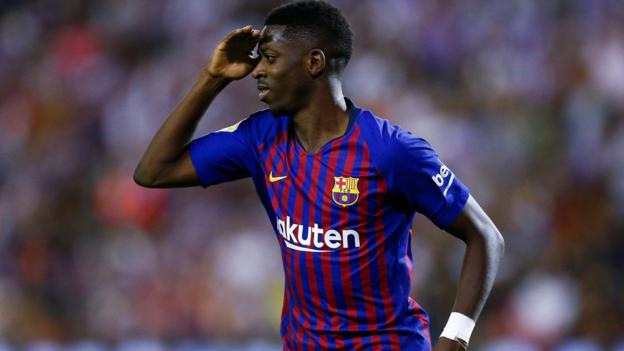
Ousmane Dembele scored his fourth league goal for Barcelona and his first of the season
Barcelona clung on to claim a hard-fought victory over newly-promoted Real Valladolid after a stoppage-time VAR review ruled out a late equaliser.
VAR was only introduced to La Liga this season and it was used to show that Keko’s diving header was offside.
The decision denied Valladolid a second point from two La Liga games.
Ousmane Dembele had fired Barcelona into the lead in the second half after Sergi Roberto kept the ball in play with a header on the byline.
Luis Suarez also had a goal ruled out for offside with 10 minutes remaining.
Barcelona began the defence of their league title with a 3-0 win over Alaves last weekend but were fortunate to cling on to victory over Valladolid – who finished fifth in Spain’s second tier last season.
Goalkeeper Jordi Masip made two impressive saves from Suarez and Philippe Coutinho before the break and former Manchester City forward Enes Unal was a constant threat.
The 21-year-old had an effort tipped over the bar in the first half and Keko came close to equalising with another header after the break.
The recently-laid pitch hindered both sides, with large divots appearing throughout the match forcing players to attempt to replace patches of turf in an attempt to make it smoother.
The hosts delivered a crushing blow to Barcelona’s title hopes when they last played at the Estadio Jose Zorrilla four years ago, winning 1-0 against a team which included Lionel Messi, Neymar and Cesc Fabregas.
Barcelona defender Jordi Alba tries to replace the turf in Valladolid
Wilmington firefighters pulled a man from a sewer near the “Hicks” Anderson Center Saturday afternoon William Bretzger, The News Journal
A man rescued from the Wilmington sewer system on Saturday told emergency responders that he fell into the underground network a day earlier and spent a night beneath the city streets.
“This was a first for me,” said Michael Schaal, a battalion chief with the Wilmington Fire Department. “I’ve been to plenty of trench rescues but not one in the sewers.”
Roughly 30 firefighters and paramedics were called to the area of Fifth and Monroe streets about 1:45 p.m. after a passerby called 911 to report hearing a voice coming from a nearby sewer grate, Schall said.
“When we got there, you could hear a lot of moaning, but he wasn’t saying much,” Schaal said.
Firefighters pulled up multiple manhole covers but initially were unable to determine from which direction the sounds were coming, he said.
Eventually, two rescuers were lowered into the sewer. They determined the man was located near a manhole between a home on North Monroe Street and the William “Hicks” Anderson Community Center. The man was pulled out about 22 minutes after the department first arrived on the scene, Schaal said.
The man told firefighters he had fallen into the sewer system somewhere in the area of the Wilmington Riverfront – about a mile from where he was rescued – and had been lost in the sewers “for at least a day,” Schaal said.
“I don’t know how he was able to get as far as he did,” Schaal said. “But I’m told there is a big cleanout around the Christina River so maybe that’s how he got down there.”
The man’s identity was not immediately available. Schaal said he appeared to be in his 30s.
He was taken to Wilmington Hospital with non-life-threatening injuries, Schaal said.
“He’s just lucky someone heard him down there,” he added.
Contact reporter Scott Goss at (302) 324-2281, sgoss@delawareonline.com or on Twitter @ScottGossDel.
In Donald Trump’s eyes, anyone who kneels during the National Anthem is a “son of a bitch.” But the 45th U.S. president could apparently use another grade school lesson or two on the American flag.
On Thursday, Trump joined First Lady Melania Trump and Secretary of Health and Human Services Alex Azar for a photo opp at the Nationwide Children’s Hospital in Ohio. During the visit, President Trump spent some time sitting with the kids and coloring. That’s when it happened.
The president added a blue stripe to the American flag.
Azar highlighted the error, presumably unintentionally, when he tweeted out photos from the event. As you can plainly see, the president’s partially finished flag-coloring project sports an unmistakable patch of blue, right where it shouldn’t be.
(It’s the third of these three images, the one on the bottom right.)
The opioid crisis is one of our top priorities at HHS, with a drumbeat of action on the full range of efforts where we can assist local communities. Today, I joined @POTUS & @FLOTUS in Ohio to learn how states and communities are responding to the challenge of opioid addiction. pic.twitter.com/NwxSoeNznA
While our country’s flag is indeed red, white, and blue, the 13 stripes — which represent the 13 British colonies that declared their independence and became the USA’s first states in 1776 — are only red and white. The blue appears behind the flag’s 50 stars (one for each state!), in the rectangle situated in its top-left corner.
Before any Trump supporters come out of the woodwork to cry foul and suggest that maybe this sheet of paper didn’t belong to the president… there’s another photo that shows him actually adding the blue himself.
On the one hand, anything goes, color-wise, when you’re sitting and coloring with a bunch of little kids. Want to make an orange, green, and purple flag? Go wild. Who cares? It’s happy fun times with kids.
Then again, this is the president who’s been railing against predominantly black athletes in the National Football League for daring to protest police brutality and racial inequality in America during the pre-game performance of the National Anthem. Surely a man who respects the flag and everything it stands for so much should know where the colors go on said flag.
Sarcasm aside, it should be clear to all observers by now: Trump pledges allegiance only to himself. He has no conception of American values, or what actually makes America great (hint: immigration is a big part of it).
It isn’t even a little bit surprising to learn that the man might not know where the blue goes on the American flag.
U.S. Sen. John McCain has a long and storied public political career, but he’s also a father to seven children who is fiercely protective of his family’s privacy.
“Our family is immensely grateful for the support and kindness of all his caregivers over the last year, and for the continuing outpouring of concern and affection,” the statement read in part.
McCain’s children, all adults now, are from two marriages. More than three decades span between the oldest and the youngest.
Throughout his political career, interviews with the McCains have characterized John as the silly one with his kids.
“The more he teases you, the more he loves you,” Cindy told People magazine in 2008.
In multiple interviews, he has emphasized his family’s independence and privacy.
In 1965, while McCain was still in the U.S. Navy, he married model Carol Shepp in Philadelphia. He adopted her two school-age sons from a previous marriage, Doug and Andrew, and in 1966 they had a daughter, Sidney.
Just a year later, as the McCains were building their new family in Florida, he was pulled away, sent as a bomber pilot on an aircraft carrier to fight in the Vietnam War.
He was shot down over Vietnam on Oct. 26, 1967, captured and kept away from his life, his country and his family for almost six years.
CLOSE
In 1967, John McCain was a Navy pilot on an aircraft carrier. He was shot down during the Vietnam War and held as a prisoner of war. By 1973, he would return to the U.S. a hero and eventually find himself at the U.S. Capitol.
When he returned in 1973, his daughter didn’t remember him.
“I remember my dad just squeezing me and not wanting to let me go,” Sidney told the New York Times in 2007. “It was very overwhelming at the time.”
McCain stepped back into his role as a father by fostering both discipline and independence.
“We didn’t have a problem knowing who was in charge. If you wanted to deviate from expected policy and he said no, he never felt an obligation to give you a reason,” Andrew told the Times.
“I kind of figured out pretty quick in high school if you make good grades and play sports and were willing to follow a few basic rules you can pretty much do what you want,” Doug said.
Despite their efforts, John and Carol’s marriage suffered and they eventually separated.
“I was responsible for the break-up of my first marriage, due to my immature and very bad behavior,” McCain later told Larry King during a 2002 interview.
“She is wonderful — Carol McCain is a wonderful person, and we are really good friends. And we have three wonderful children.”
A second chapter in Arizona
In 1979, while he was attending a military reception in Hawaii, John met a glamorous former cheerleader, Cindy Hensley.
Hensley was an heiress to a Phoenix beer distributorship and 17 years younger than John, though neither knew it at the time.
“Schmaltzy as it sounds, it was love at first sight, and so we started dating,” McCain told King.
Less than a year after John and Cindy met, he sought to divorce Carol. A month after their marriage was dissolved, he married Cindy in Phoenix in 1980. None of his children attended the wedding.
John was elected to the House of Representatives in 1982 and won his bid to become a U.S. senator in 1986.
During that time, Cindy and John started a family of their own with the birth of their daughter Meghan in 1984 and, shortly after, sons John Sidney McCain IV, known as Jack, and James, who goes by Jimmy.
In many interviews, Cindy has described a 1991 humanitarian trip to Bangladesh, where nuns asked her to help a newborn orphan with a cleft palate. Without asking John, she brought the girl home to Phoenix. They adopted her as their final child, Bridget.
Even though he would be away in Washington D.C., during the week, the couple decided to raise their children in Cindy’s childhood home in central Phoenix, anchoring their family in Arizona.
“We wanted them to have a well-rounded life, and we gave them that out West,” Cindy told People.
John and Cindy make disciplined parents
John has often credited Cindy with raising their children while his career kept him away.
“My mother was the one doing the heavy lifting of child rearing,” Jack told The Arizona Republic in January.
She was the enforcer, ensuring that the kids watched TV only on weekends and received allowances if their “chore chart” was completed, according to a 2008 People magazine profile.
“If the kids wanted a big-ticket item, they had to come to me and defend why they needed it,” Cindy told People.
We are a ride or die family. I am, always have been, and always will be insanely proud of my the man my father is. pic.twitter.com/CzFD7V5dzQ
“She was very much a mother — she always relished that designation,” Cindy’s friend and a former county supervisor and secretary of state Betsey Bayless told the New Yorker in 2008. “She was always driving her carpool, up and down Central Avenue. She really maintained the home fire.”
Jack said that although his dad was away, John McCain was still a constant presence in the home, ensuring the kids were focused on school.
“I always knew, even from a very young age, the level of effort that he was going to to make it home almost every weekend,” Jack said.
Growing up in Arizona was a gift their father gave them, Jack said.
“By the time I was 14, I was able to put a backpack on and go hike into the Arizona wilderness for a couple of days at a time and have no problem,” he said.
“He was having us live very much the same way he lived himself. So, fierce self-reliance, fierce independence, the appreciation for nature, an appreciation for the poetry life.”
A premium on privacy
McCain told the New York Times in 2007 that his desire to deflect attention from his family was “intentional.”
“I just feel it’s inappropriate for us to mention our children. I don’t want people to feel that, it’s just, I’d like them to have their own lives. I wouldn’t want to seem like I’m trying to gain some kind of advantage. I just feel that it’s a private thing,” he said.
In that sense, the family has been burned before. In 2000, when Bridget was 9, she was the victim of a smear campaign against her father, who was then fighting George W. Bush for the presidential nomination.
After McCain won the New Hampshire primary, people in South Carolina received phone calls asking, “Would you be more or less likely to vote for John McCain if you knew he had fathered an illegitimate black child?”
Shortly after losing the election, McCain said, “We tried to ignore it and I think we shielded her from it.
“A lot of phone calls were made by people who said we should be very ashamed about her, about the color of her skin. Thousands and thousands of calls from people to voters saying, ‘You know, the McCains have a black baby.’ I believe that there is a special place in hell for people like those,” he said in 2000, according to dadmag.com.
Success for the McCain children
Among the seven McCain children are a number of success stories.
Last year, Andrew McCain was named president of Hensley Beverage Co., the beer distributor to which Cindy McCain is an heiress.
Sidney McCain was a former music industry executive and is now the promotions director of a Milwaukee radio station, according to Milwaukee magazine.
The two sides of the McCain brood eventually melded. Jack remembered a rafting trip with Sidney and Andrew when he was in high school. Doug was there when Jack graduated from pilot school, and gifted Jack his own set of wings.
Meghan has long acted as something of the unofficial spokeswoman for the McCains, ever since she started the blog “McCain Blogette” in 2007 to document her dad’s presidential run.
“We’re both very strong-willed and ambitious, and I think we have a similar sense of humor,” Meghan told the Times. “I think we both live our lives kind of fearlessly and without apologizing.”
In the People magazine story from when McCain was running for president, Meghan described her younger brother Jimmy as “the peacemaker” and Jack as “the clown.”
Jimmy and Jack followed in their father’s and grandfather’s footsteps, with Jack joining the U.S. Naval Academy and Jimmy the U.S. Marines.
“There was always an unspoken expectation,” Jack said. “I was never forced to join. But there was always sort of this, ‘Well, first-born sons of the McCain family are named John and first-born sons of the McCain family go to the Naval Academy and join the Navy.’ “
Much to his family’s surprise, Jimmy enlisted at the age of 17. During a luau the McCains hosted before Jimmy’s deployment to Iraq, John hugged him and cried in “a mixture of pride and concern,” Jimmy told People in 2008.
“My brother ended up going the quicker route and going the significantly more dangerous route and I think it took quite a few years for my mom to really come to grips with it,” Jack said.
My Army boy Jim McCain, in Afghanistan. Proudly serving and safely home a few weeks ago. pic.twitter.com/MFBIzJ4OiX
Bridget started college at Arizona State University in Tempe in 2010 and, according to Jack, had an interest in special education, but it is not clear if she graduated or is still enrolled.
While the family is now spread apart, they still make an effort to get together.
“Because we are all gone so frequently, every time we get the whole family together, it’s this huge ordeal,” Jack said. “It’s a huge outpouring of happiness and excitement.”
Now, the family gets together for weddings and holidays, especially its favorite, the Fourth of July. John always makes his signature back ribs with a garlic and lemon pepper dry rub.
“We will mostly congregate around the grill and it will be the whole family,” Jack said. “Now that we’re old enough, we’ll all have a drink, and just catch up on what seems endless miles of space in between us.”
The cancer, glioblastoma, was discovered during cranial surgery to remove a blood clot above his left eye. It is a typically malignant and aggressive cancer, with a median survival rate of 14.6 months.
“We as a family will face the next hurdle together,” Cindy posted that day. “One thing I do know is he is the toughest person I know. He is my hero and I love him with all my heart.”
CLOSE
Dr. Joseph Zabramski, a neurosurgeon at Barrow Neurological Institute in Phoenix, talks about Sen. John McCain’s cancer. Thomas Hawthorne/azcentral.com
“He is a warrior at dusk, one of the greatest Americans of our age, and the worthy heir to his father’s and grandfather’s name. But to me, he is something more. He is my strength, my example, my refuge, my confidant, my teacher, my rock, my hero — my dad.”
They call it “the cabin.” It’s where the family goes to hike, play outdoors and reconnect.
“He’ll probably be mad at me for admitting this: He loves birdwatching,” Jack said of his father. “There are a couple of endangered hawks that have built nests there. It’s almost a family joke that when we first get there we have to see how the hawks are doing.”
When he’s there, John can be found walking the property to check on the cottonwood and fruit trees or firing up the grill.
“It is the one place in the world he truly relaxes,” Jack said.
It has been the site of many family dinners with John and his guests.
“I thought the guests were just these men who hung out at our cabin,” Meghan told People. “Then I got older and realized it was Bob Woodward and Henry Kissinger.”
A few weeks after John revealed his diagnosis, he hiked nearby Oak Creek Canyon with Meghan and Jimmy.
In November 2017, the cabin was the site of Meghan’s wedding.
Shortly after John was diagnosed with cancer, Meghan and her fiancé, conservative commentator Ben Domenech, decided to organize their wedding swiftly.
“This brought into focus how important it was for Meghan to have her dad see her get married, and to have that happen while he was still fully there and fully able to participate. This was something that she needed,” Domenech told People magazine.
Another source of joy has been Jack’s baby son, John Sidney McCain V, who goes by the nickname Mac.
“Every time he’s with Mac, he lights up in a way that I had never seen before in my whole life,” Jack said of his father. “I had never seen him truly giddy until he saw my son.”
When he’s at the cabin, John “never is without a book in his hand,” Jack said, and is more sentimental than people may know, especially about poetry.
One of John’s favorites has always been “Requiem” by Robert Louis Stevenson, Jack said, which John read at his own father’s funeral.






/https%3A%2F%2Fblueprint-api-production.s3.amazonaws.com%2Fuploads%2Fcard%2Fimage%2F834511%2F279a8ff9-d3f3-49e9-a9c3-24b4616b4ad4.jpg)




 trendynewsday