The president of the Palestinian Football Association has been banned by FIFA after he urged fans to burn Lionel Messi shirts and pictures earlier this year.
The call by Jibril Rajoub earlier this year was part of a campaign to prevent Argentina playing in Israel in a tie he and many Palestinians complained would be used as a “political tool” by the Israelis.
In a statement published on Friday, world football’s governing body said Rajoub’s call amounted to incitement of “hatred and violence”.
“The 12-month match suspension imposed on Mr Rajoub entails a ban on taking part in any future match or competition taking place during the given period,” said FIFA in a statement.
“Consequently, Mr Rajoub will not be able to attend football matches or competitions in any official capacity, which includes, among others, participating in media activities at stadiums or in their vicinity on matchdays.”
He was also fined $20,000 by FIFA.
Israeli authorities moved the match to Jerusalem from its original venue of Haifa, which further angered Palestinians.
The match was set to be played at Jerusalem’s Teddy Stadium, built on land that once belonged to a Palestinian village that was destroyed in 1948, the year Israel was established.
The change of venue came at a particularly sensitive time, after US President Donald Trump recognised Jerusalem as Israel’s capital, infuriating Palestinians who want the eastern part of the city as the capital of their own future state.
In response to punishment, the Palestinian FA said the sanction was excessive and that it “went beyond the alleged offence”.
“It imposed the maximum punishment for an accusation that wasn’t proven,” said the Palestinian FA.
It also cast doubt on the validity of the complaint lodged by the Israeli FA which it called a “third party that is in active conflict with the Palestinian FA” and said that neither Messi nor the Argentinian FA had acted on the matter.
Speaking in June, Rajoub said: “He [Messi] is a big symbol so we are going to target him personally and we call on all to burn his picture and his shirt and to abandon him”.
“We still hope that Messi will not come.”
The decision by Argentina to play the friendly fixture at the venue sparked an intense campaign, which drew in international and local support.
The Boycott, Divestment, and Sanctions (BDS) movement, said there was nothing “friendly” about the game and Palestinian footballers, targeted by the Israeli military, also added to calls for the Argentinian side to cancel its involvement.
“I call on the Argentinian team and especially captain Lionel Messi – because he is very popular in Palestine, particularly in the Gaza Strip – to stand in solidarity with Palestinians and to boycott the scheduled game with Israel, which is occupying our land,” said Palestinian footballer Mohammed Khalil.
An Israeli sniper shot Khalil in both legs during a protest in Gaza on March 30, putting an end to his footballing career.
Challenge Cup semi-finals: Warrington Wolves 48-12 Leeds Rhinos highlights
Ladbrokes Challenge Cup: Catalans Dragons v Warrington Wolves
Venue: Wembley Stadium Date: Saturday, 25 August Kick-off: 15:00 BST
Coverage: Live on BBC One, radio commentary on BBC Radio 5 live sports extra and BBC local radio, plus live text commentary on the BBC Sport website.
If Wembley did loyalty cards, then Warrington Wolves would have racked up a very decent number of points.
Including their 2009 success, the Wire have been to the national stadium four times and won three finals, and this season’s showpiece will make it five appearances in the past 10 years.
Unlike their opponents Catalans Dragons, who have the romantic charm of Gallic underdogs and the popular vote from neutrals, Warrington are the big bad Wolves who are used to the big occasion.
BBC Sport looks at the stories behind the Wire’s Challenge Cup final appearance.
From early starts to leading out the team
Head coach Steve Price has the opportunity to ensure a place in Warrington folklore in his first season at the club.
The 39-year-old arrived at the end of last season to pick up their reins from club legend Tony Smith – who had turned the club from perennial strugglers to a major contender for Grand Final and Challenge Cup prizes.
Like his fellow Australian, Price has enjoyed a cup run in his maiden campaign, and like many from the southern hemisphere, Wembley and the Challenge Cup have a big place in his life.
“It’s one of the biggest honours to play for the Challenge Cup at Wembley,” he told BBC Radio Merseyside.
“I’ve been to Wembley to see Arsenal play Manchester City in the Community Shield, but this will be my first Challenge Cup.
“I’ve watched it on a number of occasions though, getting up early with the old man to watch those great Challenge Cup finals.
“Given the opportunity on Saturday, hopefully we can make it a memorable one.”
Super Bennie Westwood
No quirky headlines are needed for this man, the vastly-experienced veteran Ben Westwood, who will grace the final at the ripe age of 37.
The evergreen back-rower has been a regular fixture this season, racking up his 500th career appearance and scoring two tries in 27 games.
Westwood will feature in his fifth final on Saturday if selected – he has been a Wembley ever-present in his time at the Halliwell Jones.
However, he still has a way to go to surpass the oldest finalist. Gus Risman was 41 when he led Workington Town to victory in the 1952 final.
If pigs could fly…
Well, in this part of the world, they do.
Tom Lineham bursts through to score for Warrington
Enter Tom Lineham. The man known as the ‘Flying Pig’ has scorched his way through Super League and the Challenge Cup, bringing home the bacon for Warrington with 19 tries in 28 games.
Saturday’s game will be a huge occasion for the 25-year-old, who missed the 2013 final while at Hull FC through injury having helped the Airlie Birds through their semi-final and was then dropped by the Wolves before their 2016 final defeat.
His performance in the semi-final win over Leeds included a 90-metre blast downfield to score from his own end, and surely only another cruel injury will deny him a Wembley appearance.
Lineham is not the only extremely prolific winger in the ranks. England international Josh Charnley takes up a spot on the other flank.
The speedy wideman has already scored 22 tries in 20 games since his mid-season move from rugby union club Sale, and has already won two Challenge Cups in his time at Wigan.
It’s a family affair
Wembley isn’t just special for players, it is a huge event for everyone in the family.
Stefan Ratchford has been to Wembley twice, winning once, and is preparing for another trip with the nearest and dearest in tow.
“This is the third trip for my youngest,” Ratchford told BBC Radio Merseyside.
“They understand where we’re going but I don’t know if they understand the occasion – maybe my eldest will have more of a grasp of it this year.
“In game week, they leave me be towards the back end of the week towards game day, but they’re really good.
“It’s a great experience and a great day out for the families but hopefully it will be better with the right result.”
Turning around fortunes
There are 11 Warrington players with Wembley experience – although not everyone has fond memories, as half-back Kevin Brown can testify.
Brown, 33, has been to the national stadium twice before with Wigan and Huddersfield, and is yet to pick up a winner’s medal. Will it be third time lucky?
Daryl Clark, 25, has also been to Wembley twice with Castleford and Warrington – without success – while Jack Hughes and brothers George and Toby King also possess only runners-up medals.
Nearly a month after the Carr Fire blew into Redding, destroying hundreds of homes and causing the deaths of eight people, Kirsten Chapman recently got to see the fire’s path of destruction from a unique perspective.
After plenty of prodding and “bugging” her friend, pilot Gordy Cox, Chapman finally got a chance to go up with him for a helicopter-level view.
The Record Searchlight chartered an exclusive aerial tour of the Carr Fire from the Redding area to Whiskeytown Lake. A reporter and photographer documented the destruction from a height not previously seen, revealing the extent of damage.
Chapman rode in an available seat.
Seeing the area of the fire’s path from the air brought back memories of the July 26 night she witnessed the “fire tornado” that torched and flattened dozens of homes as it churned through west Redding.
The intense heat of the fire reduced slopes once covered with thick brush and trees to barren hills where only black nubs and spindly sticks remained. Mammoth high voltage power lines in the tornado’s path were crumpled by the tornado-like winds, and homes were left in piles of ashes and twisted steel.
“I didn’t know what it was at the time. It was a sound like I had never heard before,” Chapman said. “I thought an aircraft went down. I heard an explosion.
“The sound was amazing. It was like a freight train and a helicopter and a weird humming all at the same time. It was eerie,” Chapman said.
The day before, she had evacuated from her home on Rock Creek Road a couple miles west of Redding. The following night when the tornado moved through west Redding she was helping friends evacuate from a home off Quartz Hill Road near Lake Boulevard in Redding.
A California Department of Forestry and Fire Protection report said the tornado was about 1,000 feet wide at its base. It generated gases reaching temperatures of 2,700 degrees and winds up to 165 mph, the report said.
Cal Fire believes the tornado burned in an area north of the Sacramento River and west of Quartz Hill Road, near Buenaventura Boulevard.
“Observations from witnesses and other evidence suggest that either several fire tornadoes occurred at different locations and times, or one fire tornado formed and then periodically weakened and strengthened, causing several damaged areas,” the Cal Fire report says.
Chapman’s recounting of what she saw seemed to back up the Cal Fire report. The tornado grew and lasted about an hour, 20 minutes. It moved quickly, died down and then returned again. Debris from burning buildings and trees was flying around and falling around her, she said.
“It sounded like hail,” she said.
From the helicopter she saw the house on Rock Creek Road, damaged but still standing. Numerous other homes in the hills around Redding were destroyed.
Weeks after the Carr Fire moved through the area, piles of ashes left from the homes remain. Swimming pools have turned green and streets winding through the neighborhoods were still deserted.
The fire was choosy as it moved east from Whiskeytown Lake toward Redding. While some homes were flattened by the fire, others were spared.
“I was really surprised that the house was still standing,” Chapman said of the home on Rock Creek Road.
Most people have not been allowed to clean up their homes, and debris removal has not begun in most neighborhoods where the fire burned.
For the past two weeks, crews with the California Department of Toxic Substances Control have been assessing every burned property in the county, removing hazardous materials such as asbestos, oils, pesticides, toxic cleaners and radioactive material, said Adam Palmer, who supervises the crews checking the property.
As of Thursday, crews had assessed and removed hazardous material from about half of the 1,182 structures they plan to inspect, he said.
The toxic waste removal is the first step to cleaning up properties, Palmer said. After the hazardous waste is removed, crews hired by the state plan to haul away debris. Homeowners can also hire qualified contractors, officials said.
City of Redding and county officials are still developing standards for removal of debris, which is also hazardous, officials said.
The fire, however, wasn’t limited to west Redding. The 229,651-acre fire stretches from Redding on the east to just past the Trinity County line on the west. It also stretches from Igo south of Redding to Lakehead 20 miles to the north.
The total area of the fire is roughly 359 square miles, about six times the size of Redding.
While the total loss in property value hasn’t yet been tabulated, state officials estimate the fire did $98.3 million in damage to public facilities, including roads, bridges, buildings and other structures.
North of Redding, the fire steered clear of populated areas, but further west, the fire did major damage around Whiskeytown Lake. The fire destroyed campsites and some 40 boats moored on the water in the Oak Bottom Marina area.
A total of 11 buildings around the lake were destroyed in the fire, including seven cabins at the environmental school at Whiskeytown.
The fire seemed to burn less hot in the area of Brandy Creek Marina and beach. Trees in the area of Brandy Creek facilities were still green, and buildings near the beach were not seriously damaged.
Whiskeytown National Recreation Area, managed by the National Park Service, remains closed as hazardous trees are removed and electricity, sewer and water is restored.
Numerous homes in the historic community of Shasta were destroyed, and tucked between Shasta and Redding, the tiny town of Keswick, population 450, was nearly obliterated.
In the town center, only two homes were spared. All the other houses were reduced to ashes.
“It wasn’t just a hot fire, it was hungry. It was crazy,” Chapman said.
Steve Morgan, a county supervisor, said on the evening of July 26 he saw the tornado forming over Redding and feared the worst.
He was packing to evacuate, worried that his house in Shasta Lake would burn down a second time. He was in Napa in 2016 when his house was destroyed in a wildfire that burned through his neighborhood.
This time, though, he and his wife were home and had time to pack their bags and take important documents with them. This time, though, their house was spared.
Morgan said he has driven through sections of the fire and was struck by the amount of destruction.
“I was surprised,” he said. “If the wind didn’t change direction it would have gone further into Redding,” he said.
The ‘nCamp Cafe‘ compact espresso-style coffee maker will satisfy camper’s caffein craving. The device can brew a cup of 12 oz coffee and is designed to work with the nCamp stove, however it is compatible with most other stoves.
Heads up: All products featured here are selected by Mashable’s commerce team and meet our rigorous standards for awesomeness. If you buy something, Mashable may earn an affiliate commission.
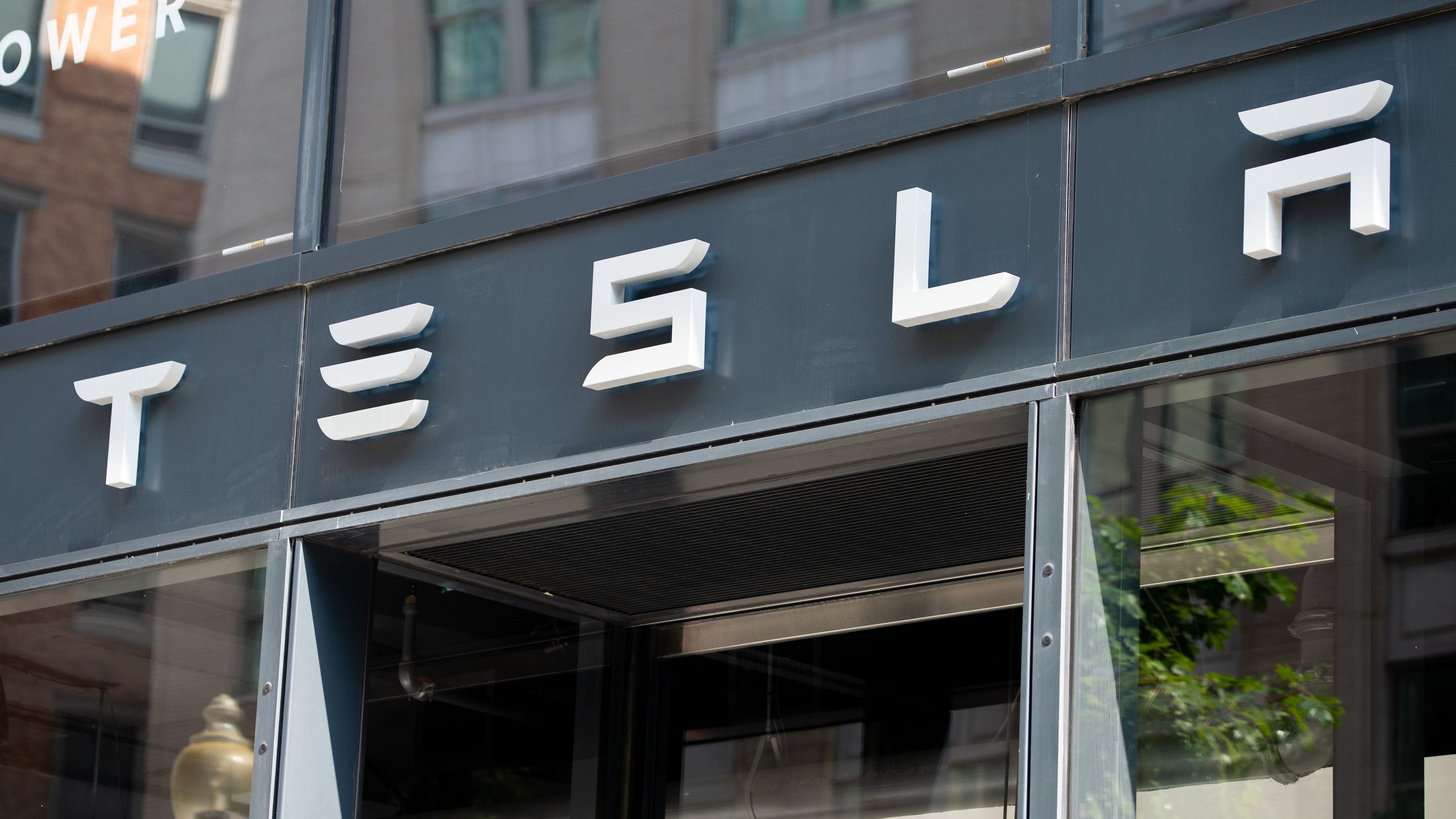
Musk said he no longer believes Tesla would be better off as a private company, though he did not back off his assertion that sufficient private capital existed to do the deal.
The Silicon Valley automaker’s board said in a statement that Musk had dissolved a special committee it formed to consider the move.
While Musk does not technically control the company’s fate — he owns about 20 percent of it — he exerts tremendous control over its future.
Musk stunned investors earlier this month when he tweeted that he was considering turning the company into a private entity with “funding secured.”
Questions immediately arose regarding whether he had truly lined up enough support to do the deal — and now the Securities and Exchange Commission is said to be scrutinizing the process.
The primary advantage of going private was to escape scrutiny over quarterly earnings and vehicle sales in favor of focusing on long-term growth plans.
But analysts noted that Tesla investors have not typically punished the company for losing money and falling short of production goals. Instead, the company has repeatedly been rewarded with additional capital that has funded its rise.
After consulting with advisers such as Goldman Sachs and Morgan Stanley, Musk acknowledged in a blog post that “most” of the company’s shareholders don’t want Tesla to go private.
Instead, he said, Tesla must devote its attention to accelerating production of its critical Model 3 electric sedan, which is vital to the company’s finances and future.
“I knew the process of going private would be challenging, but it’s clear that it would be even more time-consuming and distracting than initially anticipated,” he wrote. “This is a problem because we absolutely must stay focused on ramping Model 3 and becoming profitable. We will not achieve our mission of advancing sustainable energy unless we are also financially sustainable.”
Musk had previously suggested that Saudi Arabia’s sovereign wealth fund had indicated a willingness to finance the deal.
He said Friday that “my belief that there is more than enough funding to take Tesla private was reinforced during this process.”
Musk also serves as CEO of SpaceX and leads a tunnel-boring company that aims to revolutionize transportation. He has attracted many fans and many critics — as well as many who admire his ambition but question whether he can execute his plans for Tesla.
For his part, Musk has dismissed critics, sometimes brusquely on Twitter. Among his opponents are investors who have bet against the company through a process called shorting.
He made no mention of them in his blog post Friday.
“Moving forward, we will continue to focus on what matters most: building products that people love and that make a difference to the shared future of life on Earth,” he said.
The six members of the automaker’s special committee formed to evaluate the potential deal said, “The Board and the entire company remain focused on ensuring Tesla’s operational success, and we fully support Elon as he continues to lead the company moving forward.”
These racing drones can really do it all. You can carve crazy turns, make 360 spins and jump up to two feet in the air, all while being able to see the perspective from the controller. Welcome to the future!
Heads up: All products featured here are selected by Mashable’s commerce team and meet our rigorous standards for awesomeness. If you buy something, Mashable may earn an affiliate commission.
President Donald Trump has avoided mentioning the legal troubles of two former close associates during the opening of a campaign rally in West Virginia. Instead, he spoke about the Russia “witch hunt” and immigration. (Aug. 21) AP
WASHINGTON – As President Donald Trump’s former fixer Michael Cohen stood in a courtroom this week and pleaded guilty to paying hush money to a porn star he was handing good government advocates something they haven’t had in a while: A win.
Despite a campaign finance system that members of both parties acknowledge is broken and a series of fumbled high-profile public corruption trials, the Cohen plea became the rare case to focus the public’s attention on the vagaries of campaign law.
The Cohen case has brought the staid world of campaign finance regulations to the fore in large part because it involves the president, but also because of the scintillating details. Cohen, who once professed his loyalty by saying he would take a bullet for his boss, admitted Tuesday to paying off two women to quiet their allegations of relationships with Trump.
Prosecutors said Cohen worked with American Media Inc., publisher of supermarket tabloids, to pay the women for their stories, a “capture and kill” scheme to ensure the claims were never printed. The Associated Press reported Thursday that National Enquirer, which is owned by AMI, kept a safe of documents outlining payments it used to kill stories damaging to Trump.
“Before, you would talk to people about campaign-finance issues and their eyes would glaze over,” said Ann Ravel, a former Federal Election Commission chairwoman who left the commission last year in frustration.
“But now the public is getting a flavor of why it’s so important,” she said. “It might have to be associated with a sex star to make the public understand.”
Enforcement lacking
It’s been a vexing decade for campaign finance reform advocates. Partisan gridlock at the Federal Election Commission has meant the six-member board charged with enforcing campaign finance regulations has deadlocked in roughly a third of its cases – up significantly from a decade ago.
More than a year after Ravel’s departure, her seat remains open and the commission is working with a bare-minimum quorum of four members. All are serving expired terms. Members are appointed by the president – with recommendations from congressional leaders – and must be confirmed by the Senate.
Michael Cohen plead guilty to two counts of campaign finance violations that are not a crime. President Obama had a big campaign finance violation and it was easily settled!
Congress has been unwilling to touch the broader issue of campaign finance in a substantive way since it approved the bipartisan McCain-Feingold Act in 2002.
“We haven’t had effective enforcement at the Federal Election Commission in 10 years,” said Paul Ryan, a top attorney with the Washington-based Common Cause.
The Justice Department, meanwhile, has had a spotty record closing high-profile public corruption cases. The Supreme Court overturned the felony conviction of former Virginia Gov. Bob McDonnell, a Republican, two years ago. Prosecutors’ years long pursuit of Sen. Bob Menendez, D-N.J., ended in a mistrial last year.
In the most on-point historic example, the Justice Department failed to convict former senator and presidential candidate John Edwards, a Democrat, for a $1 million scheme to hide his pregnant mistress during the 2008 campaign.
Edwards relied on a defense that some of Trump’s allies have embraced: That he paid the money to shield his family, not his political ambitions.
Lessons learned
In Cohen’s case, prosecutors said they were armed with reams of documents, text messages and phone records they said proved Trump directed the payments in the weeks before the election. They also said Cohen coordinated the payment with “one or more members of the campaign.”
And three key witnesses – the Trump Organization’s longtime chief financial officer and two executives with the parent company of the National Enquirer – are said to have been granted immunity to cooperate with prosecutors in the Cohen case. The National Enquirer’s parent firm paid $150,000 to buy and bury the story of Karen McDougal, one of the women who said she slept with Trump.
Jeff Tsai, a defense attorney and former federal prosecutor, said it was rare for the government to have a case in which it alleges an illegal contribution that was coordinated with the campaign.
Another takeaway from the Edwards case, Tsai said, is that the government should only pursue the violations when prosecutors are certain they can prove them.
“The chief lesson is to be narrowly tailored,” Tsai said.
The circumstances of the Cohen payments were also different: Trump accusers Stormy Daniels and McDougal were threatening to take their story public, while Edwards’ mistress, Rielle Hunter, was not.
Longtime Republican campaign finance attorney Jan W. Baran said the decision to pursue Cohen could be an indication that prosecutors are feeling more comfortable with cases involving in-kind contributions that involve both personal and political benefit.
Baran, a former general counsel for the Republican National Committee, said he believes the law is far from settled.
“These two campaign finance counts signal that the Justice Department wants to test drive again a theory that personal payments violate the campaign law,” Baran said.
Campaign confusion
Most campaign violations fly under the radar, despite polls showing voters oppose the way money influences elections. Campaign law is complicated. In fact, it’s so arcane that Trump himself this week made the argument that the campaign-finance felonies Cohen pleaded guilty to aren’t criminal acts.
He insisted that no laws were violated because no campaign funds were used to pay Daniels and he later reimbursed Cohen for the payoff.
“They didn’t come out of the campaign,” the president said of the funds. “They came from me.”
Legal experts challenged Trump’s interpretation, noting that Cohen admitted providing the $130,000 to Daniels ahead of the election to influence the results. That far exceeded the $2,700 limit on what can individual could donate to help Trump win the general election.
But Richard Hasen, an election law expert at the University of California at Irvine said it’s the kind of argument that might sway voters given the complexity of campaign finance law.
“I would say campaign finance violations are seen as technical and difficult for the public to understand,” he said. “People don’t have a frame of reference.”
The Cohen plea may change that, at least for a little while, Ravel said.
She said the Department of Justice’s aggressive prosecution in the case gives her hope.
“For a long time, those of us at the FEC who were frustrated with the deadlock hoped that DOJ would step into the breach,” she said, “and this is a sign of that happening.”
Check out this sick water gun that is really stepping up the game. Spyra One water guns let you shoot individual water bullets to soak your friends and have a blast. The best part is that they reload themselves so you don’t have to slow down the fun!
Heads up: All products featured here are selected by Mashable’s commerce team and meet our rigorous standards for awesomeness. If you buy something, Mashable may earn an affiliate commission.
Sen. John McCain discusses his most enduring contribution to the Senate during an interview with The Arizona Republic on Aug. 3, 2017. Thomas Hawthorne/azcentral.com
Arizona Gov. Doug Ducey is required by law to fill vacancies in the state’s U.S. Senate delegation. But in the year since Sen. John McCain was diagnosed with a deadly form of brain cancer, Ducey has avoided discussing the topic.
The governor explained his silence by saying he wants to respect McCain and his family.
With the McCain family announcement Friday that the senator will no longer seek medical treatment, Arizonans are naturally asking who Ducey might appoint to replace McCain.
The governor has only said he will notappoint himself.
But does Ducey want a temporary caretaker to hold the office only until the 2020 election? Or someone he hopes would seek re-election?
Has McCain indicated he has someone in mind to succeed him?
Ducey, who has often highlighted Arizona’s “women role models,” could appoint the first woman to represent the state in the U.S. Senate.
Ducey’s thinking on these questions is unknown, but here are names that have been floated as potential appointees:
Cindy McCain
Cindy McCain, 64, philanthropist, businesswoman, spouse, military mom, and grandmother, would be an obvious choice to fill her husband’s seat. The senator’s wife of 37 years, she has been at his side at their home in northern Arizona as he’s battled brain cancer.
In the Senate, she could represent her husband’s legacy while pursuing her own priorities.
In recent years, Cindy McCain has been an outspoken advocate against human trafficking. She has advocated for victims while tackling legislation at the federal and state levels to combat trafficking, and some of her work through the McCain Institute’s Human Trafficking Program has raised awareness nationally about the issue.
She also is a former chairwoman of HALO USA, a humanitarian organization focused on clearing war-torn communities of land mines and other unexploded bombs and devices.
In recent months, she has represented the senator at public events.
She is chairwoman and majority owner of her family’s beer-distributor business, the Hensley Beverage Co., and mother of four children, Meghan, Bridget, John Sidney McCain IV, known as Jack, and James, who goes by Jimmy.
Kirk Adams
Ducey chief of staff Kirk Adams is the governor’s point man on state and national issues, putting him at the forefront of Ducey’s conversations with the White House and Congress on issues ranging from health care to tax reform.
Adams, 45,a former state lawmaker and speaker of the Arizona House of Representatives, unsuccessfully ran for Congress in 2012.
Adams is said to have loftier political ambitions, but in a September interview with the Arizona Capitol Times, he called his chief-of-staff role “the best job in the country.” Asked whether he planned to run for elected office again — and in light of John McCain’s illness, whether he was interested in serving in elected office again — Adams responded, “Sen. McCain is not resigning, and I have no plans.”
Adams has had close relationships with the influential, right-leaning Koch political network that has spent millions of dollars to influence races in Arizona and across the United States.
With Ducey gearing up for a general-election race for re-election, an appointment of his chief of staff could be politically risky.
Barbara Barrett
Barbara Barrett, 67, is the first woman Republican to run for governor in Arizona.
She is known for her business accomplishments and service on various corporate and philanthropic boards, including Raytheon, Mayo Clinic, and the Smithsonian Institution’s Board of Regents.
More recently, she was chairwoman of the Aerospace Corporation’s Board of Trustees from 2013 to December 2017. A news release from the corporation issued Dec. 19 said she “elected to step down as chairman.”
Barrett and her husband, former Intel Chairman Craig Barrett, have a home in Paradise Valley as well as a ranch in Montana.
They donate to Republican candidates and philanthropic causes. They have given large sums to Arizona State University — her alma mater — and several buildings and programs bear their names.
She has never held elected office.
Jon Kyl
Former U.S. Senate Republican whip Jon Kyl, who did not seek re-election in 2012 after three terms and 26 years in Congress, is close to the governor and his team. As conservatives, the pair have forged a close bond over the years on politics and policy.
Ducey has referred to Kyl, 76, as a mentor, and leaned on him during his transition from state treasurer to governor. Most recently, the governor enlisted Kyl, a onetime practicing attorney specializing in water law, to help with negotiations to reshape Arizona’s water policy.
After leaving the Senate, Kyl joined the high-powered Washington, D.C., law firm Covington & Burling. As senior adviser, he helps clients on issues ranging from tax, health care, defense, national security and intellectual property.
That job and his age make it unlikely that Kyl would accept an appointment that lasts years.
Kyl and Ducey met when Ducey first considered running for office, and the governor has said he views Kyl as a model public servant.
“I would say that Sen. Kyl helped me out in every way,” Ducey said in 2014. “ ’Mentor’ is not a word I would use loosely at all. I would say that Sen. Kyl has mentored me in many ways. I’m a huge fan of how he carried himself in his public career, the policies that he moved forward.”
In 2006, Time magazine named Kyl one of America’s 10 best senators; it’s a job he could easily return to if necessary.
Karrin Taylor Robson
As founder and president of a land-use strategy and real-estate development company, Karrin Taylor Robson would bring an economic-development background to the seat.
Ducey named her to the Arizona Board of Regents last year, noting her “well-respected voice” in the state’s business and political arenas.
She has worked with national groups representing major landowners and stakeholders across the U.S. on environmental law and policy on endangered species and wetlands issues.
John Shadegg
Former Congressman John Shadegg was first elected to the U.S. House of Representatives in 1994 as part of the “Republican Revolution” in which the GOP took control for the first time in 42 years.
Shadegg, a fiscal conservative who was respected within the House Republican caucus, gained national attention for his outspoken criticism of the Obama administration’s health-care plan. During debate of the “Obamacare” legislation, he held up an aide’s baby on the House floor while arguing it would raise the baby’s future taxes.
After seven terms, Shadegg announced in 2010 he would not seek re-election. He said he would pursue his “commitment to fight for freedom in a different venue.”
Shadegg is the son of the late Stephen Shadegg, who was a longtime strategist and ghostwriter for U.S. Sen. Barry Goldwater.
Now a partner with the Polsinelli PC law firm in Phoenix, Shadegg is believed to have Senate ambitions and appeared to briefly flirt with running to replace retiring U.S. Sen. Jeff Flake, R-Ariz., in the weeks after Flake announced he would not seek re-election in 2018.
Eileen Klein
Ducey appointed Eileen Klein as state treasurer in April, after Jeff DeWit accepted a job with President Donald Trump’s administration.
She has deep public-policy experience and is well-known in business and public-policy circles.
Before her appointment as treasurer, Klein was president of the Arizona Board of Regents, which governs the state’s universities.
Klein previously served as chief of staff to former Gov. Jan Brewer and as a former director of the Governor’s Office of Strategic Planning.
Matt Salmon
Matt Salmon served five terms in the U.S. House of Representatives before announcing his retirement last year, but he is said to be interested in the Senate. In the 2016 election cycle, “tea-party”-aligned conservative groups tried to recruit him to challenge McCain in Arizona’s Senate primary.
When he announced he was leaving Congress in February 2016, he said he wanted to spend more time with his wife, children and grandchildren. “I strongly believe in the simple truth that in any man’s life, his top priority should be his family,” Salmon wrote in a column for The Arizona Republic.
Salmon, a conservative from Mesa, shares many political views with Ducey, including that government is often too intrusive.
A case where the original still reigns supreme is in the geeky collectibles and gear subscription box. Loot Crate is the best of the best, and has built an entire community around unboxing their loot.
The original Loot Crate set out to be “comic-con in a box,” containing at least four pop-culture related items valued at over $45 total. There’s guaranteed to be a t-shirt in every box, and they often collaborate with brands to deliver exclusive products. Each monthly box is centered around a theme – past themes have included “future,” “anti-hero,” and “origins.” There’s also a Loot Crate DX subscription for the truly dedicated nerds out there, with premium items worth at least $100. We here at Mashable have a fun time every month trying to what the new theme will bring.
Loot Crate has also branched out into all kinds of other nerdy areas. There’s an anime box, a Sanrio box (delivered every 3 months — Hello Kitty has a busy life,) and even an adorable box for pets. Gamers can subscribe to a specific box, or even pick a bi-monthly box with exclusively Halo– or Fallout-related loot. The Loot Wear offshoot has apparel subscriptions for socks, underwear, t-shirts, wearables, and “For Her.” I haven’t even gotten to the film and TV crates yet, but you get it. There’s a lot of stuff here. All nerds will be able to find something they’ll love unboxing every month.
With all this the variety, the fan community, and exclusive items, there’s just no competitor even coming close to beating Loot Crate in the geeky collectible box game.






 trendynewsday