A new dawn for Cuba? The draft constitution explained.

news image

Since August, Cubans have been gathering in thousands of government-organised meetings taking place across the island.

They came together in hospitals, schools and parks to discuss a new draft constitution, which, if passed, would mark the most significant political change in Cuba for more than four decades.

Proposals include opening the door for same-sex marriage, recognising private ownership and scrapping the goal of building a communist society, but rights groups and analysts say the new legislation is more of a nod to a changing world, than an upending of the status quo on the Caribbean island.

The public consultation period came to an end on Thursday, and the work of National Assembly to sift through the comments and suggestions now begins. 

Al Jazeera examines what the new constitution may mean for Cuba’s future. 

Why now and what’s next?

Decades of economic hardship and a changing global political reality has forced communist-run Cuba to reassess its fundamental principles in an attempt to keep pace with a world that has changed vastly since the Soviet-era when the current constitution was enshrined.

In July, the National Assembly – Cuba’s parliament – approved the new draft constitution and presented it to the public for consultation the following month after more than a year debating the overhaul of the 1976 constitution.

Speaking when the draft was approved, President Miguel Diaz-Canel Bermudez said “each Cuban will be able to freely express their opinions” to build a constitution that “reflects the today and future of the nation”.

This was done during thousands of meetings where officials took handwritten notes with the public’s feedback. 

The Assembly will now consider those comments and make changes to the draft before Cubans get their final say in a national referendum scheduled for February 24, 2019.

How will the new constitution affect Cuban politics?

While reaffirming several aspects of the current system, the proposals would significantly reorganise the country’s government.

The draft reintroduces the post of Prime Minister, who would lead the cabinet, known as the Council of Ministers, in the daily running of the country. The candidate would be put forward by the president for approval by the National Assembly.

It also proposes having governors for Cuba’s 15 provinces, replacing the current system of presidents of provincial assemblies and introduces term and age limits for the presidency.

Cuba will maintain its single-party system but the president will share power with a PM [Irene Perez/Cubadebate via Reuters]

The president – who will continue to be elected by the Assembly, rather than voters – would serve a maximum of two terms and can be no older than 60 at the start of his or her first term, notable in a country where the elderly Castro brothers held the reigns for decades.

The goal of advancing towards a “communist society” has also been dropped, drawing much attention internationally, but the impact of this is likely to be limited. 

The new constitution revises the aim to “the construction of socialism” and, crucially, Cuba will maintain its single-party system under the Communist Party of Cuba (PCC), which holds complete control over politics, the economy and society in general.

National Assembly President Esteban Lazo Hernandez said shortly after the approval of the draft that the removal of references to communism do not mean that Cuba’s leadership are “renouncing our ideas,” but rather remain committed to the vision of a “socialist, independent, prosperous and sustainable country,” according to comments carried by state TV.

Will US-Cuba relations improve?

Cuba’s relationship with the United States has been fraught since 1959, when left-wing fighters, led by Fidel Castro, overthrew the US-backed government of Fulgencio Batista in the Cuban Revolution.

The US began blockading Cuba the following year, halting trade and tourism with the island. Tensions escalated further with 1961’s Bay of Pigs invasion and peaked during the Cuban Missile Crisis in 1962.

Cuba’s relationship with the US is notoriously tense [Javier Galeano/Reuters]

A brief thaw came under former US President Barack Obama who, along with then-President Raul Castro, announced an historic reengagement in 2015, however the relationship has soured once more under President Donald Trump.

“The US objection, the Trump administration’s objection, to Cuba is that it’s not a multi-party democracy like the United States and the Cuban constitution doesn’t change that, in fact the new constitution reaffirms the single-party system with the Communist Party in the leading role,” said William LeoGrande, a professor in the School of Public Affairs at the American University.

The draft also includes a prohibition on negotiating under threat and coercion, codifying an oft-repeated condition set out by the Castros and recently reiterated by Diaz-Canel.

“I think it’s meant to send a message to the United States that if somehow the United States is still hoping that it’s going to be able to coerce Cuba into making concessions about its domestic politics, it’s mistaken,” LeoGrande told Al Jazeera.

What impact will it have on the economy?

Cuba’s economy was severely damaged by the disintegration of the Soviet Union in 1991, which pumped millions of dollars into propping up the island, and the crushing effects of the ongoing US embargo

Raul Castro, who took over from his brother Fidel in 2006, introduced a series of economic reforms, which opened the country up to a limited but impactful degree of private industry and foreign investment in an attempt to avoid collapse.

Poverty is widespread on the island, where the state is the main employer [Alexandre Meneghini/Reuters]

The draft constitution continues this work, mostly by officially recognising practices that already exist in Cuba, including self-employment, in a limited way.

“The market” and “private property”, capitalist concepts, previously shunned by the communist leadership, are included in the new national charter, suggesting an attempt to make room for these realities as part of a “socialist” economy that would remain largely under the control of the state through central economic planning.

With the economic proposals, Cuba will seek to modernise without democratising, as has been done in Vietnam and China. However, unlike these countries, Cuba remains concerned about the accumulation of private wealth creating an unequal society and so the permissions for the private sector remain tentative.

“The objective is not to allow the concentration of wealth, which reinforces the uncertainty of any foreign investment,” said Carlos Seiglie, a professor of economics at Rutgers University.

“The main challenge to economic growth in Cuba is the degree of state control of the economy. For Cuba to grow and develop, the means of production has to be transferred into private hands. If the state wants to alter the distribution of income after such [a] transfer, they could do it via taxation and redistribution to those who fare less well,” he told Al Jazeera.

In November, Diaz-Canel embarked on a tour of communist allies including Russia, China and North Korea in an attempt to boost economic ties and attract investment to the island.

Will human rights improve?

Cuba has not allowed access to independent monitors or human rights organisations for years and has refused to ratify a number of key international human rights treaties, most recently at the United Nations‘s Universal Periodic Review in May. 

All media on the island remains state-controlled, with the population’s access to the internet also being extremely limited and independent bloggers facing arrest.

Rights groups have found little cause for celebration in the proposals, saying that many of the rights being offered come with caveats.

Freedom of speech and assembly are tightly controlled on the island [Ueslei Marcelino/Reuters]

“What we see with revisions to the constitution is, on the one hand, an appearance that it’s expanding rights, but on a closer reading you see that the rights being offered are limited to what already exists in national legislation,” said Louise Tillotson, Amnesty International‘s researcher for the Caribbean. 

“The revised constitution proposes the ‘democratisation of cyberspace’ but then condemns the use of the internet for what it calls ‘subversion,’” she told Al Jazeera. “The language continues to be quite hazy and opens the door for criminal laws to be applied towards people that are deemed to be ‘subversive’.”

The country’s judiciary remains tightly bound to the state, with arbitrary detentions commonly being used to silence dissent, according to Amnesty. 

The redefinition of marriage would open the door for same-sex marriage [Reuters]

A silver lining might be found in the introduction of the presumption of into the penal code and articles in the new draft to ban any sort of workplace discrimination based on gender, sexual orientation, disability and ethnicity and make provisions for the elderly. 

Marriage is redefined as being between “two persons”, rather than “a man and a woman”. Homosexuality is a divisive issue in Cuba. A change in attitudes, however, is largely credited to the work of Mariela Castro, Raul’s daughter, at the Cuban National Center for Sex Education (CENESEX), as well as the growing acceptance of the idea that discrimination of any kind being incompatible with the revolution.

“It would really be a welcome step forward, of course, if in the constitution same-sex marriage is legalised, it would be the first independent nation in the Caribbean to do so, it would be really important for the region,” said Tillotson.  

“But at the same time we need to recognise that silencing any voices, including LGBT voices needs to change if we’re going to see real progress.”

Read More

from Trendy News Day https://ift.tt/2qOqNDj
via IFTTT

Meek Mill Announces His First Post-Prison Album, Which Apparently Features Cardi B

news image

Meek Mill‘s had quite the productive run after being released from prison in April, dropping an EP over the summer and diligently campaigning for prison reform. And on Friday (November 16), the Philadelphia MC detailed his first post-prison album, which you’ll get to hear before the month is up.

Meek took to social media to reveal the album’s celebratory title: Championships. The follow-up to 2017’s Wins & Losses, it arrives on November 30 and comes with colorful cover art that captures a close-up of Meek’s focused gaze. He also threw in a couple trophy emojis, because every solid album rollout needs a trademark symbol.

Meek first hinted at Championships in an interview with Vogue published earlier this week. According to the mag, the album will address “his experiences and the issue of social justice.” He told Vogue, “I’ve been writing myself since I was probably, what, 8 years old. I’ve been doing this a long time, so [there’s] always pressure to be better.”

An accompanying Vogue video briefly previews a collaboration between Meek and Cardi B, which seemingly confirms TMZ reports from last month that suggested the two had hit the studio together. Meek cues up the energetic-sounding track around the 45-second mark in the video below, and while you can’t hear Cardi in it, it definitely sounds like a banger (sorry, Nicki).

Further details about Championships — including the tracklsit and roster of featured guests — are being kept under wraps, but thankfully there’s not long to wait until we hear the project in full. Only two weeks to go!

Read More

from Trendy News Day https://ift.tt/2DquG8X
via IFTTT

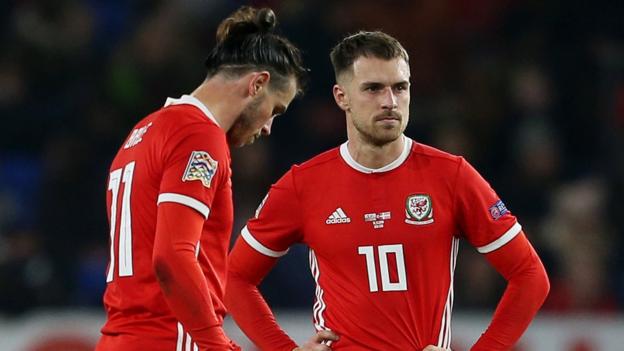
Wales 1-2 Denmark: Wales lose to Denmark in Nations League

news image

Real Madrid forward Gareth Bale scored a late consolation goal for Wales

Wales missed out on promotion to the Nations League’s top tier as they were beaten at home by Denmark, whose victory makes them Group B4 winners and guarantees them at least a play-off to qualify for Euro 2020.

An attack-minded Wales side had several chances to take the lead but their defensive vulnerability was exposed shortly before half-time as they were expertly picked off by a Danish counter-attack, finished clinically by Nicolai Jorgensen.

Ryan Giggs’ young team pushed forward with increasing desperation in the second half but, for all their endeavour, they were the recipients of a lesson in game management from their more seasoned and savvy opponents.

Gareth Bale was inches away from equalising when Kasper Schmeichel brilliantly saved his free-kick and with two minutes left, Martin Braithwaite struck a fine second goal for the Danes.

Less than a minute later, Bale rounded Schmeichel and finished into an empty net to give Wales hope of an improbable late revival – but the hosts’ onslaught in the closing stages was in vain.

It was a disappointing note on which to end Wales’ inaugural Nations League campaign, which had started so promisingly with September’s 4-1 demolition of the Republic of Ireland.

But that result, as well as last month’s 1-0 triumph in Dublin, was put in perspective by a second defeat against a thoroughly well drilled Danish side.

Giggs’ risk

This was the most important match yet of Giggs’ burgeoning tenure, and his response was to name an extremely attacking, adventurous line-up.

Bale and Aaron Ramsey returned after missing last month’s win in the Republic of Ireland, though Giggs still kept three of his fledgling attacking talents – David Brooks, Tyler Roberts and Tom Lawrence – in a side seemingly designed with defence a mere afterthought.

It was a risky approach, evident inside three minutes as Christian Eriksen – who scored both goals when Denmark beat Wales in September – was given too much space before firing a 20-yard shot narrowly over the bar.

Denmark players congratulate with Nicolai Jorgensen after he scored his side’s opening goal

Undeterred by that warning sign, Wales began to wrestle control of the tie and poured forward in search of the opening goal.

Bale was the first to threaten with a curling effort saved by Schmeichel, before James Chester headed a glorious opportunity wide from Brooks’ cross.

Brooks was at the heart of almost every Welsh attack, reproducing his sparkling club form with Bournemouth as he glided across the pitch and looked to unpick the Danish defence.

But it was another forward surge from the hosts which led to their undoing.

Denmark pinched possession near their own penalty area and broke at pace, Thomas Delaney then spread the ball to the right wing, where Yussuf Poulsen’s perfectly weighted pass allowed Jorgensen to slot the ball between Wayne Hennessey’s legs.

The second half followed a similar pattern to the first, with Wales the aggressors and creating more chances – only to fall foul to another sucker punch.

This time it was Middlesbrough’s Braithwaite, allowing the ball to bounce before unleashing a swerving effort into the top corner to seal victory, despite Bale’s swift response.

Nations League proves its worth

Wales will now remain in the second tier of the Nations League, and this encounter illustrated the value of the new competition.

It had initially caused confusion for those trying to decipher its structural intricacies, but the equation was a simple one for Wales on this occasion.

Win and promotion to the top tier would be theirs, along with the guarantee of a play-off to qualify for Euro 2020, should they fail to reach the tournament during the regular qualifying process.

Lose, as was their fate, and it was Denmark who claimed those prizes.

This was the kind of high-stakes scenario Uefa had hoped for when European football’s governing body devised the Nations League, which was designed in part to replace the many friendly matches in the international calendar – considered by many to be meaningless.

The rewards on offer made for a wholehearted encounter at Cardiff City Stadium, with both sides as committed as they would have been for a major tournament fixture.

Whereas friendly matches of the past had little or no significance, Denmark’s jubilant celebrations and Wales’ dejection demonstrated how the Nations League has been a shot in the arm for international football.

Man of the Match – David Brooks (Wales)

ven in a losing cause, the elegant Bournemouth playmaker was the best player on the pitch, creating several chances for his team and himself.

Read More

from Trendy News Day https://ift.tt/2Q0XWK1
via IFTTT

3 easy ways to resell your old iPad

news image

Disclosure

Every product here is independently selected by Mashable journalists. If you buy something featured, we may earn an affiliate commission which helps support our work.

Image: lili sams/mashable

The new iPad Pros have been in the market for a little while, and if you’re eyeing one, you may be wondering how much you can get by reselling your current iPad.

Here’s how to get the most for that device with a trade-in.

First, you’ll need to know some information about your iPad: mainly the model number, what sort of connectivity it has (WiFi only or WiFi+cellular), and storage. If you’re not sure, go to Settings>General>About to see the model number and the storage capacity. 

Gazelle

The most well-known tech trade-in site is Gazelle. It’s one of the better places to trade in iPads, but be warned that iPads tend to depreciate more than iPhones. Gazelle will pay for the device in the form of a check, PayPal deposit, or an Amazon.com gift card. 

Gazelle makes the trade-in easy by sending you a box with a return label. Right now an unlocked 64GB 10.5-inch iPad Pro with no scratches is worth $310, while the 512GB model is worth $410. A larger 12.9-inch 256GB iPad Pro is worth $425. 

It’s worth noting that Gazelle will accept all iPad models dating back to the original, but values will vary. 

MyPhonesUnlimited

Image: MyPhoneshunlimited

MyPhonesUnlimited is a newcomer in the field, and its prices are about as good as Gazelle’s. Similar to Gazelle, the service will send you a box and return label to send in your old iPad. Plus you will get paid via a check in about a week’s time.

For a 256GB 10.5-inch iPad Pro, MyPhonesUnlimited will pay $280, while a 64GB is worth $230. The 12.9-inch 2nd generation iPad Pro with 64GB of storage is worth $300, or $340 for the 256GB.

Apple GiveBack

Apple's GiveBack program puts an emphasis on helping the environment.

Apple’s GiveBack program puts an emphasis on helping the environment.

Last but not least, Apple has its own GiveBack program. The company will pay up to $250 for your old iPad in the form of an Apple gift card. Unlike when trading in an iPhone, Apple requires you to share the serial number of the iPad to see the trade-in value. It will also ask you to share information about the condition of the device. The one benefit here is that you can put it directly towards the purchase of your next Apple device.

Don’t expect to make a ton back on your iPad trade-in, but it can help make the upgrade a bit more affordable.

Https%3a%2f%2fvdist.aws.mashable.com%2fcms%2f2018%2f3%2f716f5f73 6d18 e879%2fthumb%2f00001

Read More

from Trendy News Day https://ift.tt/2DrYuCj
via IFTTT

Sabarimala temple: A rallying point for the Hindu far right?

news image

An estimated one million pilgrims flock to Sabarimala in Kerala’s Western Ghats mountains every year to pay homage to celibate deity Lord Ayyappan who, according to Hindu mythology, meditated at that spot.

But in recent weeks, the picturesque hilltop temple in the southern Indian state has emerged as a flashpoint with protests turning violent.

Since the country’s Supreme Court overturned a ban on women of reproductive age from entering the shrine, Hindu hardliners, opposed to the decision, have attacked female pilgrims, threatened journalists and pelted stones at police.

Not a single woman, aged 10 to 50, has made it through the sea of protesters to the temple.

Last week, thousands of people rallied in the streets and attended a protest in Kerala’s Kozhikode city, led by leaders of the right-wing BJP party, while many streets remained barricaded and parts of the city closed to traffic.

The Hindu nationalist coalition that rules India has been struggling to carve out a support base in Kerala, where the BJP has just one elected legislator in the state assembly.

BJP chief Amit Shah has thrown his weight behind the anti-women protesters despite the court order.

The party rose to prominence in the late 1980s on the back of a movement to build a temple in place of a medieval era mosque in the northern Uttar Pradesh state. The 16th century Babri Mosque was eventually torn down by Hindu mobs in 1992.

Charmy Harikrishnan, an editor at The Times of India, told Al Jazeera, that the BJP was fanning the unrest to make inroads into the region.

“There are conservatives who are disenchanted with the Supreme Court judgment, but the BJP sees this as an opportunity to make inroads into Kerala where it is a minor political player.

“It wants to mobilise Hindus in the name of protecting the temple’s ‘age-old practices’,” she said.

“This is a moment of reckoning for the people of Kerala – whether to go for progressive practices or support misogynistic movements,” she added.

‘Surrendering to religious bigots’

The BJP, which is trying to make political inroads into the state ruled by a communist coalition – the Left Democratic Front (LDF), says it is supporting Hindu conservatives on a “matter of faith”.

“This is an agitation against the atheist ministers in the state that is run by communists,” Sreedharan Pillai, the chief of the Kerala unit of the BJP, told Al Jazeera.

“They want to destroy Sabarimala. This is an ancient temple that has its foundations in our rituals and traditional customs. The people are resisting all these attempts to destroy the heritage of the temple.

“It is a spontaneous people’s protest. It shows the will of the people. The masses don’t want their traditions to be destroyed. So they are reposing their faith in the BJP. We will ensure our rituals and customs are not overturned,” he added.

But in a video leaked to local media earlier this month, Pillai was heard telling party supporters that the unrest was a “golden opportunity” for the BJP in Kerala.

The opposition United Democratic Front (UDF) led by the Congress party, which happens to be the main opponent to the ruling party at the federal level, seems to have joined forces with the BJP in opposing women’s entry to the shrine. And the state government is facing criticism for its inability to ensure safe passage for women into the temple.

Kapil Komireddi, an author of the forthcoming book “The Malevolent Republic: India Under Modi” said India “has a tawdry history of governments surrendering to religious bigots”.

“What is different this time is the absence of resistance. Every major political party is afraid of offending Hindu men. Nobody has the courage to enforce the rights of the women emancipated by the Supreme Court from obscurantist restrictions placed on them,” Komireddi told Al Jazeera.

“The communist government of Kerala has suddenly got cold feet. The BJP, in opposing the Supreme Court’s order, is only upholding its sectarian creed. Congress party leaders, in doing the same, are revealing the ideological and moral bankruptcy of their party,” he added.

‘Dissolving women’s rights’ 

Since the temple began taking online bookings for an annual festival that starts on November 16, 539 women in the so-called restricted age group have registered online to visit the temple.

“Everybody is equal, why should women not be allowed to go?” Jyothi Narayanan, a resident from Kochi city told Al Jazeera.

“Who is anybody to judge who should be a devotee? The government must give security to us women who want to go.”

Such contests are becoming more acute as awareness of gender rights spreads among India’s largely conservative society, rights activists say.

But discriminatory attitudes – to lower castes, to women, to LGBT – still persist.

“This isn’t the first time women have been mobilised in defence of Brahmanical (upper caste) patriarchy,” Kavita Krishnan, the secretary of the All India Progressive Women’s Association, told Al Jazeera.

“Here, political forces are manufacturing ‘religious sentiments’ to dissolve women’s rights.”

Analysts have said India is struggling to balance competing interests of “believers” and the “rights” of citizens.

“The Constitution is very clear on this: Hindu places of worship cannot discriminate against Hindus. In the contest between fundamental rights and discriminatory religious beliefs, rights should win,” said journalist Harikrishnan who is based in New Delhi.

Komireddi, the author, said it had become increasingly difficult to rein in Hindu nationalist forces, with the face-off at Sabarimala highlighting the threat Hindu conservatism posed to India’s secular constitution.

Amid intense political pressure, the top court on Tuesday said it would review its earlier order, which was criticised by Hindu groups.

“When the defenders of secularism are spineless careerists, don’t be stunned by the triumph of religious nationalists,” author Komireddi said.

“The Supreme Court can of course set aside its decision and we can all uphold the pretence that India is a secular state. But nothing can conceal the squalid truth that Sabarimala is the ground on which Indian secularism is facing its final defeat.”

Additional reporting by Juhan Samuel in Kochi, Kerala

Read More

from Trendy News Day https://ift.tt/2PYMpex
via IFTTT

Anderson .Paak Expresses His Regrets Over Mac Miller’s Death On ‘Cheers’

news image

Since Mac Miller‘s death in September, Anderson .Paak has been one of the more vocal supporters of the late rapper, paying tribute to him onstage on more than one occasion. Now, .Paak has put his feelings about Mac’s death on wax, mentioning his former collaborator in a song from his newly released third album, Oxnard.

The track in question, “Cheers,” is a buoyant but mournful cut featuring Q-Tip and co-produced by Dr. Dre. In the first verse, .Paak ruminates, “Shit, music business movin’ too fast for me / Wishin’ I still had Mac with me / How do you tell a n—a slow it down when you livin’ just as fast as ’em?” The production is jazzy and upbeat, but .Paak’s words or anything but: “Tears keep fallin’ down my eyes / Damn it, I miss you, I should be with you.”

Q-Tip jumps in for the song’s third verse, and he opens with a couple bars nodding to the late Phife Dawg, his bandmate and brother in A Tribe Called Quest. “I don’t know what to do but reminisce and face the pain / Back in the day before you were a dog and you were just pup,” he raps, before echoing .Paak’s thoughts about the lows that seem to follow the highs of fame. “So sick of sendin’ flowers to all my of brother’s mommas / Don’t know what’s harder, fightin’ trauma or keepin’ a promise.”

Though .Paak and Miller only released one song together, 2016’s “Dang!,” they managed to become close friends. .Paak made a few tributes to Miller leading up to Oxnard‘s release, including an Instagram post a few days after Miller’s death on September 7. The Cali MC also honored Mac by performing “Dang!” at a tribute show on Halloween, and by saying onstage at the BET Hip Hip Awards, “Legends never die. And Mac Miller not was, but is a whole legend.”

Read More

from Trendy News Day https://ift.tt/2ON9gFh
via IFTTT

Netherlands v France – will Germany be relegated?

news image

Uefa Nations League live: Netherlands v France – Live – BBC Sport


<!–


<!–

<!–
<!–

<!–
<!–

<!–
<!–

<!–

<!–

<!–


Summary

  1. Wijnaldum gives Dutch lead against world champions
  2. A Dutch win would relegate Germany
  3. Van Dijk captains Netherlands; Pogba injured for France
  4. France reach next summer’s finals with a win or draw
  5. Seven Nations League matches in total tonight


Read More

from Trendy News Day https://ift.tt/2zdleTI
via IFTTT

Best Movies to Watch Over Thanksgiving

news image

@font-face {
font-family: ‘ProductSans’;
src: url(‘https://ift.tt/2OAtsuh);
src: url(‘https://ift.tt/2McnL8Z) format(’embedded-opentype’),
url(‘https://ift.tt/2KNZjW4) format(‘woff’),
url(‘https://ift.tt/2Mfpiv5) format(‘truetype’);
}
@font-face {
font-family: ‘MuseoSlabRegular’;
src: url(‘https://ift.tt/2Ox6Zho);
src: url(‘https://ift.tt/2Mfpj27) format(’embedded-opentype’),
url(‘https://ift.tt/2KNZn8g) format(‘woff’),
url(‘https://ift.tt/2McnNO9) format(‘truetype’);
}
@font-face {
font-family: ‘ProximaNova-Extrabld’;
src: url(‘https://ift.tt/2OAtxhz);
src: url(‘https://ift.tt/2McnOSd) format(’embedded-opentype’),
url(‘https://ift.tt/2OAtylD) format(‘woff’),
url(‘https://ift.tt/2McnR0l) format(‘truetype’);
}
@font-face {
font-family: ‘ProximaNova-Regular’;
src: url(‘https://ift.tt/2KOghU6);
src: url(‘https://ift.tt/2McnSBr) format(’embedded-opentype’),
url(‘https://ift.tt/2KNZsZC) format(‘woff’),
url(‘https://ift.tt/2McnT8t) format(‘truetype’);
}
#feather-nav { height: 44px; }
.fl-nav-drop {
position: absolute; top: 0px; z-index: 9999; background: #292929; left: 0;
font-size: 0; padding-left: 25px; border: 1px solid #454545;
display: none; box-sizing: border-box;
}
#fl-menu .fl-close { display: none; }
#fl-logo { display: inline-block; vertical-align: top; }
#fl-copy, #fl-copy-mobile {
display: inline-block; vertical-align: top; font-Family: “ProductSans”;
font-size: 14px; color: #fff; letter-spacing: -0.22px; line-height: 44px;
padding-left: 40px;
}
#fl-copy {
border-left: 1px solid #e6e6e6;
}
#fl-copy-logo {
display: inline-block; vertical-align: top;
padding-top: 12px; height: 32px; padding-left: 12px;
}
#fl-copy-mobile, #fl-copy-logo-mobile { display: none; }
.fl-sec {
display: inline-block; background: #292929; vertical-align: top;
font-size: 16px; padding: 14px 30px; color: #fff;
}
.fl-sec h3 {
font-family: ‘ProximaNova-Extrabld’; font-size: 20px; margin-bottom: 27px;
}
.fl-sec a {
display: block; font-family: ‘ProximaNova-Regular’; letter-spacing: -0.25px;
margin-bottom: 22px; color: #fff;
}

@media screen and (max-width: 767px) {
#feather-nav { height: auto; }
#fl-copy, #fl-copy-logo { display: none; }
#fl-copy-mobile {
display: block; padding-bottom: 12px; line-height: 17px; padding-left: 0; padding-top: 12px;
}
#fl-copy-logo-mobile {
display: block; vertical-align: top;
height: 32px;
}
.fl-sec {
display: block; text-align: center; width: 100%; padding: 0;
border-bottom: 1px solid #454545;
}
.fl-nav-drop { padding-left: 0; width: 100%; }
#fl-logo {
position: absolute; left: 50%; top: 0px; transform: translateX(-50%);
}
}

#fl-menu:hover .fl-close { display: block; }
#fl-menu:hover .fl-hamburger { display: none; }
#fl-menu:hover .fl-nav-drop { display: block; }

body, #root { background: #000; }

Read More

from Trendy News Day https://ift.tt/2ON91tR
via IFTTT

Britain’s Brexit drama: What you need to know

news image

At almost 600 pages long, Theresa May’s draft agreement over Britain’s departure from the European Union is nearly half the length of Russian author Leo Tolstoy’s vaunted masterpiece, War and Peace.

But for the UK’s embattled prime minister, it’s currently all war and precious little peace.

May’s proposed deal, brokered after months of back-and-forth with Brussels, has sparked political chaos in the UK, triggering a wave of cabinet resignations and rumours of a possible leadership challenge – all the while prompting yet more calls for a second referendum on whether to exit the EU in the first place.

Here, Al Jazeera takes a look at the current political drama, what led to it and what to expect next. 

What is Brexit?

Brexit is the oft-used term for the UK’s move to renounce its membership of the European Union following a deeply divisive referendum in June 2016.

More than 30 millions voters took part in the poll, with 52 percent deciding in favour of leaving the 28-member bloc.

The referendum returned varying results in the four constituent parts of the UK: England, Wales, Scotland and Northern Ireland.

The majority of voters in England and Wales backed Brexit, while most people in Scotland and Northern Ireland supported remaining part of the European club.

The UK in its entirety, however, is due to leave the EU on March 29, 2019.

Why is securing support for the proposed deal proving difficult?

Amid deep disagreements over the best way forward for the UK, May’s proposal has remarkably appeared to unite politicians from across party divides in their droves.

Unfortunately for May, however, they are united in their dismissal of her deal but precious little else.

For those in favour of Britain remaining in the EU, the draft agreement is a watered down, inadequate version of the country’s existing EU membership arrangement with access to the bloc’s customs union and single market.

For those in favour of a definitive Brexit, meanwhile, the deal fails to deliver on a clean break with the European project. 

Complicating matters even further are the vexing questions posed by what might happen to the Irish border – one of the biggest sticking points in the negotiations – in a post-Brexit Britain.

Find out more about the issue here.

The deal reached between the UK and the EU allows for a “backstop” to be set up in order to prevent a hard border between Northern Ireland, which is part of the UK, and the Republic of Ireland, an EU member state, if no trade deal is sorted out during the so-called transitional period between 29 March, 2019 and December 31, 2020.

Under the terms of the draft agreement, the whole of the UK will remain in a customs union with the EU “unless and until” the bloc agrees there is no prospect of a return to a hard border.

But the “backstop” idea has prompted scorn from May’s parliamentary crutch, the Northern Irish Democratic Unionist Party (DUP), who argue such an arrangement could mean different rules being applied to Northern Ireland than the other parts of the UK.

Hardline Brexiteers within her own Conservative Party, meanwhile, are also unimpressed and have suggested the proposed deal could trap the UK into the customs union forever, effectively forcing it to indefinitely accept EU regulations moving forward.

What is the impact of the uncertainty?

Turmoil – and plenty of it.

Politically, talk of a Conservative party leadership challenge, a general election and even a possible second referendum is rife.

Economically, the UK’s stockmarket and currency have both been rattled, with businesses wary of a possible no-deal Brexit if May’s fragile proposal falls through.

The pound suffered its biggest fall against the US dollar for two years on Thursday, before stabilising somewhat on Friday.

Meanwhile, the FTSE 100 – a share index of the 100 largest companies listed on the London Stock Exchange – closed on Friday down more than one percent against a week ago.

What will happen next?

May’s deal will now be put to a series of regional and domestic tests.

First up, the prime minister must try to get the leaders of the EU’s 27 other member states to officially back her proposal at a summit on November 25.

If approved, the deal will then be put to a vote in the British parliament, most likely in December.

The result will be decided by a simple majority, with around 320 votes needed to be certain of success.

But May’s party does not command a majority in the 650-member House of Commons, holding only 315 seats and relying on the support of the 10 DUP members of parliament to govern.

Furthermore, the Conservatives – commonly known as the Tories – are deeply divided on Brexit. Dozens of the party’s parliamentary members are expected to vote against May’s deal.

The DUP’s parliamentary contingent, meanwhile, have said they will not support the proposal because of the “backstop” conditions.

As a result, May’s facing a monumental political dogfight.

To succeed, she must find support among parliamentarians belonging to the main opposition Labour Party and other political groupings who may yet be persuaded to vote in favour of the deal in a bid to avoid the UK leaving the EU with no deal at all, a so-called “cliff-edge” Brexit.

But Labour leader Jeremy Corbyn has called on May to withdraw her “half-baked Brexit deal”, saying the proposal did not meet his party’s six tests and was not “in the interests of the whole country”.

Several other party leaders have also slammed the proposal.

If MPs back the deal, then an EU Withdrawal Agreement bill will be introduced to parliament. That will then need to be ratified by parliament before it can proceed to a European Parliament vote and, if that’s successful, an eventual EU Council approval process.

If parliament votes against the deal, however, expect all political hell to break loose.

The government will technically have 21 days to set out how they intend to proceed in a statement, but in such a scenario, the UK leaving the EU without a deal, a renegotiation of the existing proposal, holding a general election or even staging a second referendum on EU membership would all be eminently possible outcomes. 

Read More

from Trendy News Day https://ift.tt/2zdlmTc
via IFTTT

South Africa bat first against England – in-play clips, radio & text

news image

England v South Africa in the ICC Women’s World Twenty20 – in-play clips, radio & text – Live – BBC Sport


<!–


<!–

<!–
<!–

<!–

<!–

<!–


Summary

  1. SA win toss and bat first
  2. Eng unchanged: SA bring in Tunnicliffe/Fourie for Luus/Sekhukhune
  3. Play starts at 20:00 GMT
  4. TMS commentary on BBC Radio 5 live sports extra
  5. England will take big step towards semi-finals if they win
  6. West Indies face Sri Lanka in later game (00:00 GMT)


Read More

from Trendy News Day https://ift.tt/2BbhROe
via IFTTT

Design a site like this with WordPress.com
Get started