The US State Department designated Jawad Nasrallah, son of Hezbollah leader Sayyed Hassan Nasrallah, a terrorist and accused him of carrying out attacks against Israel in the occupied West Bank.
The department on Tuesday also blacklisted Al-Mujahidin Brigades (AMB), which it said had links to the Lebanese group and had plotted a number of attacks against Israeli targets from a base in the Palestinian Territories.
“Today’s designations seek to deny Nasrallah and AMB the resources to plan and carry out terrorist attacks,” the State Department said in a statement. It said the actions denied Nasrallah and AMB access to the US financial system.
The State Department also announced it was offering up to $5m each for information leading to the locations of Hamas leader Salih al-Aruri, and Hezbollah leaders Khalil Yusif Mahmoud Harb and Haytham Ali Tabatabaei under the agency’s so-called Rewards for Justice Programme.
The department said both Hamas and Hezbollah receive weapons, training and funding from Iran.
From rhetoric to reality: The return of US sanctions on Iran | The Listening Post
On Tuesday, Lebanon‘s Prime Minister-designate Saad al-Hariri also blamed Iran-backed Hezbollah for what he called “a big obstacle” in efforts to form a new government.
Hezbollah, a Shia political group with its own armed wing, has been pressing a demand for one of six Sunni Muslim MPs allied to it to get a cabinet position. Hariri has refused to give up one of the seats allocated for his mainly Sunni party.
Earlier on the same day, the US Treasury imposed sanctions on four people linked to Lebanon’s Hezbollah who coordinate the group’s activities in Iraq and designated the son of the group’s leader as a “global terrorist”.
Amid renewed talk of a possible breakaway to form a European Super League, and recent pressure from the biggest clubs for a greater share of the overseas TV rights revenue, one of Dinnage’s biggest tasks will be to keep the league together and maintain the collective-selling strategy that has proved so successful.
The ‘Big Six’ – Manchester United, Manchester City, Liverpool, Chelsea, Arsenal and Spurs – got their way in June, and proceeds from international broadcasters will now be distributed according to league position, but that is unlikely to satisfy the clubs’ overseas billionaire owners long-term.
Brexit
The Premier League has been in negotiations with the government to secure an exemption that would not just allow freedom of movement for European players after Brexit, but even remove restrictions on permits for all overseas footballers offered a contract.
But in return for this, the Football Association wants a significant increase in the minimum number of homegrown players that have to be in any squad, using it as an opportunity to boost the presence of British talent, something which could cause friction with the clubs. Negotiations are at a delicate stage.
TV deals
Dinnage’s experience as a TV executive should equip her for the all-important negotiations with broadcasters for the rights deals that have transformed the Premier League into one of the world’s richest sports leagues, and a commercial phenomenon over the last quarter of a century.
The most recent domestic live TV deal suffered a significant dip in value however, and amid changing audience habits, the rise of social media and online viewing, and new digital challengers to the established duopoly of Sky and BT, brokering new partnerships with media organisations could be her number one priority.
As well as being exceptionally well-connected in the media industry, Dinnage has already shown she is a tough negotiator, standing up to Sky – (which has enjoyed a vastly lucrative relationship with the Premier League since its creation in 1992) – and threatening to pull 12 Discovery channels from its platforms in 2017 in a dispute over fair pricing, before reaching a deal.
Her familiarity with former Discovery colleague and ex-Eurosport chief Peter Hutton, now head of sport at Facebook, could also prove useful if the digital giant looks to acquire Premier League football rights like Amazon already has.
Grassroots
The collapse of the FA’s proposed sale of Wembley to Shahid Khan and with it a £600m windfall for the country’s dilapidated grassroots facilities, put renewed focus on whether the Premier League should contribute more of its vast wealth to the hard-up amateur game, where many matches are cancelled each winter because of the state of grass pitches and a lack of 3G alternatives.
Dinnage will be made aware by her new staff that the organisation already gives a £24m annual contribution to the Football Foundation, part of a wider £100m-per-season investment in community facilities, sports participation programmes and education projects. But she may well come under renewed pressure from politicians, the media and the public to share even more.
Fan relations
Some of football’s traditional match-going fans, often annoyed by the way fixtures are moved to suit broadcasters’ schedules, will be concerned at the appointment of a media executive rather than a figure from the football industry. And part of Dinnage’s challenge will be to convince the wider footballing public that they matter to her and the clubs, and will not be exploited or priced out of the game.
Dialogue with the Football Supporters Federation – which is merging with Supporters Direct – will be important.
Safeguarding and Player-welfare
Dinnage will be at the Premier League helm when the FA’s long-awaited independent inquiry into the historical child sex abuse scandal that rocked the sport over the last two years is finally published.
Leading the clubs’ response to any criticism or recommendations will be a major challenge, and one on which she will be judged. As well as safeguarding, there is also renewed scrutiny on the top clubs’ record when it comes to anti-discrimination, inclusion, duty of care towards trainees and players rejected by academies, mental health and the management of head injuries.
Agents
More money is going into agents’ pockets than ever before in English football, with Premier League clubs paying them £211m in the past year, an increase of £37m, and officials seem intent on a crackdown, aware that the exorbitant fees do little for the clubs’ reputation among the public.
Dinnage will be at the heart of the drafting of new regulations, and will need to work closely with the FA and Fifa on the issue.
Safe-standing
Dinnage will want to contribute to the government’s review of the ban on standing at Premier League matches, a policy that has not been reviewed since 1992. The ban was imposed following the recommendation of Lord Justice Taylor in his second report into the 1989 Hillsborough disaster, and has been the subject of fierce debate from both sides.
In the summer, Scudamore said each club should be allowed a choice as to whether to introduce safe-standing, but a final decision on this highly emotive issue is still some way off.
Gambling
Nine of the Premier League’s 20 clubs have gambling companies on their shirts this season, and there is a growing debate about the close relationship between football and the betting industry.
If there is a change in government, this could become a major priority for Dinnage, with Labour calling for a ban on gambling advertising during live sporting events and threatening to take legislative action to force clubs to end sponsorship deals with betting firms.
Talking of sponsors, it will be interesting to learn what Dinnage makes of Der Spiegel’s recent revelations about Manchester City and allegations that the club deceived Uefa over the value of its sponsorship contracts to get round Financial Fair Play regulations.
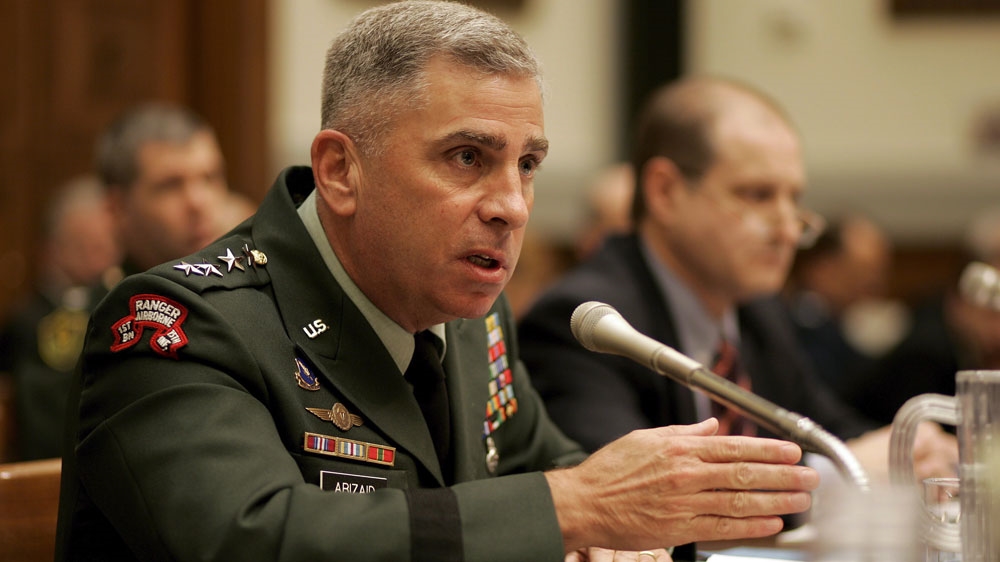
US President Donald Trump has named a former army general with long experience in the Middle East as ambassador to Saudi Arabia, a post that has been vacant since Joseph Westphal left in January 2017.
John Abizaid, a retired four-star army general of Lebanese Christian descent, is prominent for his stint as the longest-chief of US Central Command – of which the Middle East is part – starting shortly after the Iraq war in 2003 all the way through to 2007.
He graduated from the US Military Academy at West Point, after which he earned a scholarship to go study Arabic in Jordan, a language he did not speak as a child.
Abizaid also attended Harvard University where he obtained a Master of Arts in Middle Eastern Studies. His thesis focused on Saudi Arabia’s weapons procurement policy.
The 67-year-old’s appointment, which will have to be approved by the Senate, comes at a time when relations between the longstanding allies are being put to the test following the murder of Saudi journalist Jamal Khashoggi.
Khashoggi was killed shortly after entering the Saudi consulate in Istanbul on October 2.
Riyadh had consistently denied responsibility for the famed critic’s disappearance, maintaining that the Washington Post columnist had left its premises. It later admitted to the famed critic’s killing by what it described as a team of “rogue” agents.
Trump has been slow to react to evidence increasingly suggesting Crown Prince Mohammed bin Salman’s involvement in the killing of Khashoggi, in large part due to the close ties he forged with the 33-year-old heir apparent, also known as MBS.
He has gone back and forth between demanding full accountability for the journalist’s murder and emphasising the strategic importance of the US-Saudi alliance, going so far as to say any punishment imposed on Riyadh will not include a halt to US arm sales.
Trump’s son-in-law, Jared Kushner, has been acting as de facto US ambassador to Riyadh by forging a bond with Prince Mohammed. In 2017, Kushner took an unannounced trip to Saudi Arabia to pay a visit to MBS.
The two men have since reportedly been exchanging text messages and speaking frequently on the telephone.
WATCH: Who is “the boss” in phone call after Khashoggi’s murder? (25:00)
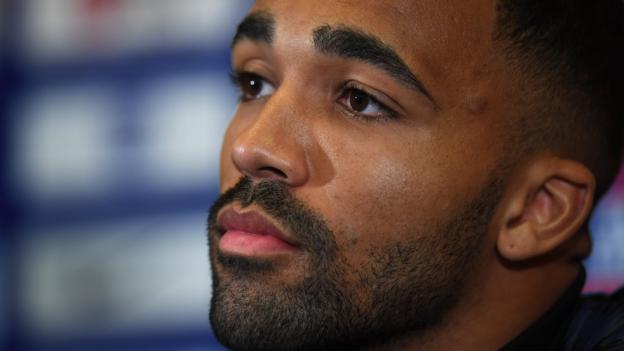
Wilson has scored six league goals for Bournemouth this season
Bournemouth striker Callum Wilson says “hunger and desire” drove him to escape non-league football and win an England call-up for the first time.
Wilson, 26, has made Gareth Southgate’s squad for Thursday’s friendly against the United States and Sunday’s Nations League match against Croatia.
Six years ago, while at Coventry, he played three games on loan in the Conference for Tamworth, scoring once.
“It was a bit surreal and put football into perspective,” said Wilson.
“You turn up for a team like that [Tamworth] and players are coming in in their work overalls and work vans, coming from a painting job that they had just finished.
“It showed me that I did not want to be at that level throughout my career. I wanted to make more of myself.
“It gave me the hunger and desire to impress my club manager at the time and then eventually go back to my home club and play.”
‘I missed the birth of my second child’
Wilson began his professional career at Coventry, his home city, before a 2014 move to Bournemouth, for whom he has scored 50 goals in 128 games, including seven this season.
In just over four years on the south coast, Wilson has spent significant time on the sidelines after injuring both his right and left knee in separate incidents, but was lifted by a message from former England and Newcastle United captain Alan Shearer.
Wilson told BBC Radio 5 live: “When I first did my anterior cruciate ligament, Alan Shearer texted me – a legend – so to receive a text from him, I was in shock at the time.
“Before the injury, he gave me a bit of stick on Match of the Day for missing a few chances but that is what he is there for and he has been very supportive.
“He congratulated me, wished me well and told me not to score too many against Newcastle, which unfortunately I did.”
During the rehabilitation of his second knee injury, Wilson spent time in Qatar, as well as the USA, where he went to see reconditioning specialist Bill Knowles.
Wilson added: “When I had my second injury, he [Knowles] was the guy I went to to get me back into the running phase. We did a lot of sprint work and spent two weeks with him.
“I actually missed the birth of my second child being out there, so that shows the sacrifices I made to get to this point.”
A smart home isn’t complete without an Echo — and the newest Dot makes it easier than ever to add the convenience of Alexa to any room. The third generation Dot is the cutest yet, complete with better sound and microphones than earlier ones. They can control smart devices like lights or blinds, become a household intercom, order pizza or an Uber, and more. You’re basically gifting an easier (lazier) life, and who wouldn’t want that?
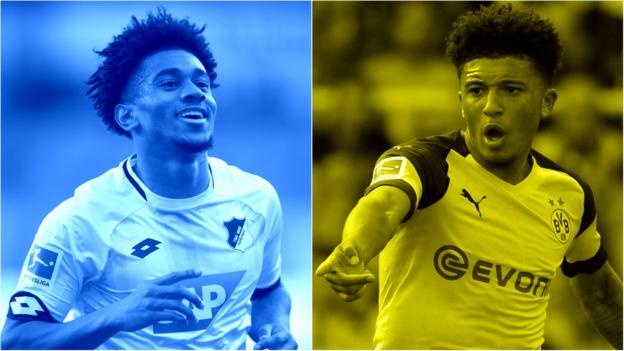
The Whatsapp group messages between Jadon Sancho and Reiss Nelson have been pinging away all season.
The England youngsters – both 18 – are plying their trade in the German Bundesliga – Sancho with Borussia Dortmund and Nelson at Hoffenheim.
They message each other all the time, especially when one of them has had a good game.
And with 11 goals and eight assists between them in all competitions, there’s been plenty of group chat “banter” so far.
“I’ve got love for him, he’s got love for me,” Sancho told BBC Sport. “We just keep on pushing each other. If I do well on a weekend, I think it pushes him. It motivates both of us. I like seeing Reiss do well and I’m sure he likes seeing me do well, so it’s good.”
Reiss Nelson and Jadon Sancho in all competitions this season (source: Opta)
Nelson at Hoffenheim
Sancho at Dortmund
Games played
11
17
Games started
4
8
Minutes played
413
859
Goals
6
5
Assists
0
8
Chances created (including assists)
14
26
Passes
149
467
Passing accuracy
89.93%
84.37%
What’s in the Whatsapp chat?
Nelson and Sancho were both part of the same Southwark side which won the Under-11s competition at the London Youth Games in 2011.
Now, former Manchester City player Sancho is part of a Dortmund team that sits on top of the Bundesliga and he was instrumental again during Saturday’s thrilling 3-2 victory over Bayern Munich.
On loan Arsenal winger Nelson had a “rocky start” but has since scored six goals in seven league games for fifth-placed Hoffenheim.
“We have a group chat – it’s me, Sanch and a couple of other boys,” explained Nelson, in a separate BBC Sport interview.
“It’s not a competition between me and Jadon… but more like ‘Sanch assists another one’ with the eyes emoji. Then it’s like, ‘Reiss, what you gonna do today?’ I’m just like, ‘Leave it, let’s crack on’.
“We message each other every day and, if he’s got a game a day before mine I’m like, ‘Sanch, you know what you’ve got to do today, come on, do what you can do’.
“He says the same to me. It’s a healthy relationship. We’re encouraging each other but I don’t think it’s a rivalry thing. It will never be that for me.”
Sancho agrees.
“Me and Reiss, growing up together, playing together when we were younger – we’ve got a strong bond,” he said.
“We banter a bit! When we played Hoffenheim, we drew that game but the banter you know will always be [there].”
So should other young players move abroad?
Players aged 21 or under accounted for just 5.3% of all Premier League minutes played this season up until last weekend. That’s lower than the French, German, Italian and Spanish leagues, according to research by a CIES study.
And in terms of English-qualified players of any age, there has been an average of 29.8% starting Premier League games this season. Taking a snapshot of last weekend’s fixtures, that figure was 21.2% among the traditional top six clubs of Manchester City, Liverpool, Chelsea, Spurs, Arsenal and Manchester United.
“If English clubs are not giving you a chance then abroad is always an option,” said winger Sancho. “They’re always open to just seeing your ability and, hopefully, if you’re good enough then you get your chance. That’s how I felt.
“That’s what the Bundesliga is about. They believe in you, they trust you and, even if you’re so young, they wouldn’t get you out here if they didn’t really believe in your ability.
“I’m not saying English clubs don’t believe in your ability, I’m just saying I think they [Bundesliga clubs] look at it earlier than the English clubs will do.”
Nelson, who claimed the Bundesliga’s rookie of the month award for October, added: “Sanch started the trend, I’d say. I call him every day and he’s obviously saying we are kind of setting the trend for the young boys to come over.
“I know a lot of the top [young] players in England as well and they’re always saying, ‘How is life in Germany, how is the Bundesliga?’ and I’m just saying, ‘It’s great’.
“They believe in young players and that’s the main thing. Getting the belief behind you to play football.
“It might no be so good for England if they [young players] all leave, but on a personal level, I think it will be great for young players to get playing time and show everyone what they can do.”
Why did you move abroad and how good has it been?
Reiss Nelson hits brilliant free-kick
Sancho left Manchester City and joined Dortmund for £10m in August 2017. He turned down a new deal that City manager Pep Guardiola said he had agreed to sign as he went in search of regular first-team football.
“I just felt I was ready for the next step and I felt Borussia Dortmund was a great club to move to and develop my career,” said Sancho.
“It’s taking my game to a different level, only because I’m playing and getting the chance to show the world what I can do on the pitch.”
“For me, I always want to be the best player I can be,” he said. “I’m 18 and I thought going to the Bundesliga will give me a challenge and doing that would make me become a better footballer and a better person as well throughout life.
“I wanted to challenge myself and see what I could do. It’s going well so far.
“It’s incredible. But I’ve just got to keep it up. It’s not just for the six games, I’ve got to do it throughout the season.
“I don’t know where it’s going to take me, but I’ve just got to keep my feet on the ground and keep positive.”
What’s life like in Germany?
Sancho is in the more metropolitan city of Dortmund compared with the quieter town of Heidelberg, where Nelson has chosen to live.
“I like it. I’ve settled down now – got my apartment and I’m loving it here,” said Sancho.
“The city is nice. I go for little strolls, I’m getting to learn the language as well, so everything’s going well so far.
“My dad’s over here at the moment, so he’s just looking after me. I’ve actually got a chef – Dortmund recommended him and he’s helped me a lot, keeping me healthy and in shape.
“There’s a lot of foreigners in the dressing room so I think it’s just normal to them, but it’s nice to be around everyone. There are different cultures and you get to learn different things.”
Nelson has swapped the bustle of London for a town which, according to Wikipedia, has “roughly a quarter of its population being students”.
“London is a very big place but I’m in a small town called Heidelberg and I’m here with my family,” said Nelson. “I’m happy at the moment and I’m playing, so it’s all going well.
“It [Hoffenheim] is a small little village. I’ve got my mum and my brother here – they’re exploring Heidelberg and they say to me they love it, so that’s just all good for me.”
He added: “I can speak a bit of German. I’m having German lessons and it’s going well. The boys banter me sometimes, the way I speak, but that’s just what comes with it.”
What about the future?
Nelson (left) and Sancho have 11 goals between them so far this season
Sancho’s form has led to him breaking into the England squad and he made his debut in a goalless draw in Croatia on 12 October. He came on for Raheem Sterling after 78 minutes and produced an impressive cameo appearance.
“I feel like I’m just doing my job really, I don’t really look at myself as the next big thing,” he said.
“I’m just here to do my job and I just want to play – that’s the love of the game really.
“I think if I keep this up I can go a long way, but I’ve just got to keep grounded and keep focused.”
Sancho added: “Right now I’m just focused on season-by-season, game-by-game. I couldn’t really tell you the future.
“But, country-wise, I hope I get more senior caps, that would be fantastic for me and my family. I’ve just got to keep on working hard and you never know what’s next.”
Nelson moved to Hoffenheim on the back of signing a new long-term contract with Arsenal and Gunners fans can rest easy when he talks about his next destination.
“Arsenal are my boyhood club,” he said. “I’ve been with them since I was eight, so that’s 10 years.
“I just want to go back there stronger because at the time I was at Arsenal I was 16, 17 and I didn’t feel confident.
“I didn’t think I was a man, but now I’m feeling stronger and I think a couple more months or even a year in Hoffenheim will make me strong and give me the belief and confidence to go back to Arsenal and do very good there.
“I want to be an Arsenal legend. And, for England, it’s the best. You can’t beat playing for your country I don’t think.”
Jadon Sancho & Reiss Nelson were speaking in separate interviews to BBC Sport’s David Ornstein
Even if that includes rolling across a dirty supermarket floor or in a washing machine? You bet.
Folks have really committed to the #TumbleweedChallenge, a strange new activity Fallon devised for the mighty popular video platform TikTok, which is usually full of people singing pop songs.
In a matter of days, Fallon managed to receive 8,000 videos of people rolling around on the floor, through parks, and down aisles for the challenge, because hey, it’s fun to be on TV, right?
Harare, Zimbabwe – A year since a trio of army generals held former Zimbabwean President Robert Mugabe under house arrest as part of a 10-day military operation that enabled his protege, Emmerson Mnangagwa, to take power there are mixed feelings as to how different the proclaimed “new dispensation” is from Mugabe’s autocracy.
In an unprecedented show of support for the de facto coup, on November 18, 2017, hundreds of thousands of Zimbabweans marched the streets, demanding the veteran ruler step down.
Days later, just moments after a parliamentary impeachment hearing began, the then 93-year-old resigned after nearly four decades in power. But a year since President Mnangagwa’s inception, the hope some citizens had in the liberation fighter nicknamed “the Crocodile” now seems jaded.
Takudzwa Tawenga, 32, a self-employed artisan who participated in a mass anti-Mugabe protest on November 18, 2017, told Al Jazeera he was disappointed by the new regime.
“The day we marched, I really felt like Mnangagwa was the hope of the people, but it seems like the suffering we experienced under Mugabe hasn’t changed.
“It’s like the army just kicked out a dictator so they could enjoy power for themselves. There is nothing for us in this new dispensation,” he said.
Bitterness over the worsening state of the economy and the contentious aftermath of the July polls risks creating a rift between the people, the Crocodile, and the military they once hailed for ousting Mugabe.
Gun between people and the state
On July 30, millions of Zimbabweans cast their ballots in the first election without Mugabe as a candidate. Mnangagwa won by a narrow and disputed margin of 50.6 percent against his younger rival Nelson Chamisa of the MDC Alliance.
An independent commission of inquiry led by former South African President Kgalema Motlanthe is currently looking into the post-election violence that saw the military deployed onto the streets of the capital.
At least six people were shot dead and dozens more were wounded, but army commander Phillip Valerio Sibanda denied troops killed civilians and said the firing of “warning shots” was constitutional.
“They fired in the air but I do not believe any could have aimed shots at the civilians.
“We would have been very foolish as the defence forces to give orders to the troops to open fire on the civilians with all these people [election observers and foreign journalists] in the country,” Sibanda told the Motlanthe Commission on Monday.
Human rights observers have dismissed the army chief of staff’s testimony. Dewa Mavhinga, southern Africa director for Human Rights Watch, told Al Jazeera the commander’s claims were false.
“The blatant denials on the documented and video-recorded role of soldiers on 1 August is an insult to Zimbabweans. It is a blatant attempt to hide the truth and sweep things under the carpet,” he said.
Although Mnangagwa initiated the Motlanthe Commission and put a stagnant national peace body into motion in an attempt to chart a different path from Mugabe’s closed authoritarian style, he has struggled to break with the past.
According to Mavhinga the general approach of the security forces in the post-Mugabe era has been one of “arrogance, continued impunity, and lack of sincerity”.
Despite promises of a new era, the blurred role of the military in state governance and party affairs continues to raise concern.
Piers Pigou, senior consultant for the International Crisis Group, told Al Jazeera although Mugabe was gone, the system of non-separation of powers between the state, the ruling party and the executive was still in place.
“There is still no effective civilian oversight of Zimbabwe’s military and intelligence community, which both retain in practice partisan loyalties to [ruling] Zanu-PF. Notwithstanding provisions in the constitution setting out non-partisan responsibilities, no significant action has been taken to alter this reality.
“Although there is a new sheriff in town, Mnangagwa, like Mugabe, must navigate around both security sector and ruling party interests,” he said.
But as Mnanagagwa struggles to balance the desires of those who helped him into power with his own, he also grapples with the dilemma of preventing the economy from collapsing.
Nation on the brink
A recently introduced tax on all electronic transactions above $10 has sparked a wave of price rises in basic commodities such as bread, sugar and cooking oil and spurred fuel shortages.
The two percent levy aroused fears of a return to the hyperinflation era under Mugabe, when the Zimbabwe dollar rapidly devalued and price increases became uncontrollable.
WATCH: Is Zimbabwe’s new tax generating shortages and uncertainty?
Under a multiple currency regime adopted in 2009, the US dollar is used in daily transactions. However, because of cash shortages a local surrogate currency known as bond notes are more commonly used, but even this is in extremely short supply and of lesser value.
On the black market the coveted US dollar currently trades at an average of US$1: $3,20 although the official rate is 1:1.
For Margaret Moyo, 47, a shopkeeper, keeping up with the price increases has made life difficult.
“I can’t keep up with the cost of things anymore. When I go out to order my goods some suppliers now demand US or they say the price is double if you are paying with bonds.
“This money is worthless, we are back to the Zim [Zimbabwe] dollar days again,” she said.
Despite a public outcry against the rising cost of living and the devaluing of the local surrogate currency, the government is pressing ahead with its reforms to widen the tax base.
President Mnangagwa has urged citizens to grit through a Transitional Stabilization Programme, which is part of his long-term vision to transform Zimbabwe into a middle-income country by 2030.
“[T]here are pains to be borne and sacrifices to be made before things start looking up for the ordinary man in the street.
“We must all gird for belt-tightening measures, leaders and ordinary citizens alike,” he wrote in a Sunday column in the state press.
Hope in re-engagement
After years of isolation under Mugabe, Zimbabwe’s hope for a lifeline may lie in re-engagement with the international community. However, following the election controversy, the US renewed targeted sanctions urging the post-Mugabe regime to demonstrate greater efforts towards reform.
Pigou told Al Jazeera that Mnangawa’s efforts to change from the authoritarian order of the past will be under close scrutiny if relations with the West are to improve.
“[T]he international community is primarily interested in an economic dispensation that actively promotes fiscal transparency and accountability, and that upholds the rule of law and protection of property rights… With some form of electoral mandate, the months ahead will be crucial for seeing how the Mnangagwa administration translate promises into action,” he said.
Follow Tendai Marima on Twitter and Instagram: @i_amten
YouTube star Lilly Singh has announced to fans that she’s taking a break, specifically to focus on her mental health.
After eight years of posting content to her 14 million subscribers, the Canadian creator and author known as IISuperwomanII revealed her intention to take an indefinite hiatus in a video posted Tuesday.
“This is not clickbait. I’m not trying to get on the trending page. I’m not trying to make a dramatic thumbnail to get views,” she began, addressing her fans collectively known as #TeamSuper. “The title is not a lie. I am planning to take a break from YouTube.”
“Why do I want to take a break? There’s many reasons. First and foremost: my mental health,” she said. “I am mentally, physically, emotionally, and spiritually exhausted. I have been doing YouTube consistently for eight years.
“I want to be honest with you, I could be happier. I’m not my optimal happiness right now, I could be mentally healthier. I don’t feel like I’m completely mentally healthy. There’s a lot going on up here that I need to address and I’m not able to constantly pumping out content.”
Singh emphasised that the hiatus “is in no way a reflection of how I feel about the platform of YouTube and of #TeamSuper. I love YouTube. I love #TeamSuper. It is not about you, this is to do with me.”
That being said, she said another reason was that she wasn’t pleased with the workload, explaining that being on YouTube “demands constant content.”
“You know, the thing about YouTube is that, in all of its glory, it kind of is a machine and it makes creators believe that we have to pump out content consistently, even at the cost of our life and our mental health and our happiness, because if you don’t you’ll become irrelevant,” she said.
“But I’ve always said that happiness is the most important thing you will ever fight for. Relevance is not.”
At the end of the day, Singh said she simply wants to take care of herself, work on her other projects, particularly in the social good space including the #GirlLove movement and being a UNICEF Goodwill Ambassador, and “get some of [her] creative energy back” — something we could all do a little more of, to be honest.
And she’s not leaving the platform, guys, Singh’s just hitting pause on main channel videos and vlogs, and will see how she feels about her other content.
“YouTube has changed. People have found a way to make it work for them. I am not one of those people,” she said.
Lilly Singh chats to Mashable’s editor-in-chief Jessica Coen and Jayathma Wickramanayake at Mashable’s 2018 Social Good Summit today in New York City.
Image: Luiz Rampelotto/NurPhoto via Getty Images
Singh acknowledged the risk in jumping off the platform, and said she’s determined to thwart these fears. “A lot of creators don’t do this, and I’m assuming it’s because there’s a fear that your audience will abandon you and that people forget all about you and that you won’t be able to get back once you return. I’m looking all those fears right in the eye,” she said in the video.
Well, Singh’s courage is already paying off, as she has some pretty kickass fans, who all rallied around the star following her announcement. Fan after fan posted messages of support on Twitter and in the video’s comments:
It was high time you did thisI’m so proud of you for taking this step. Can’t wait to see a more motivated bawse soon Lots of love, my love
You’re so committed to making us happy and laugh but im glad you realized its your turn now. Thank you for putting you & your mental health above anything. Eat proper, drink water (pls), cuddle scarbro & rest well. We cant wait for the stronger and happier you @IISuperwomanII
We were all so caught up with our lives and so many of us have been going through IT, that we missed #8YearsofSuperwoman. But that doesn’t take away from how much we love you @IISuperwomanII . After 8 freaking years, I’m happy you’re taking this well deserved break
Your happiness comes first. It’s a decision you made and it’s a good one bc we truly just want you to be your happiest self. YouTube did change, a lot. We definitely see that. So we understand the fact that you, a creator, want to take a step back We’ll be waiting for you.
I don’t understand why some ppl get mad or upset when creators take breaks. @IISuperwomanII dw take as long as you want to figure yourself out and come back even stronger#teamsuper will forever wait for you
If you need some Lilly-motivation just rewatch the older vlogs and videos, they’re guaranteed to make you feel better. It’s a whole other experience and very fulfilling






/https%3A%2F%2Fblueprint-api-production.s3.amazonaws.com%2Fuploads%2Fcard%2Fimage%2F882818%2F12da27d4-bf8b-4379-ae9a-b4450ac3ac3e.jpg)


 I’m so proud of you for taking this step. Can’t wait to see a more motivated bawse soon
  Lots of love, my love
 (@TeamSuperMumbai)
 (@ii_becky_ii)
 s Lilly (@teamsuperr_416)

 trendynewsday