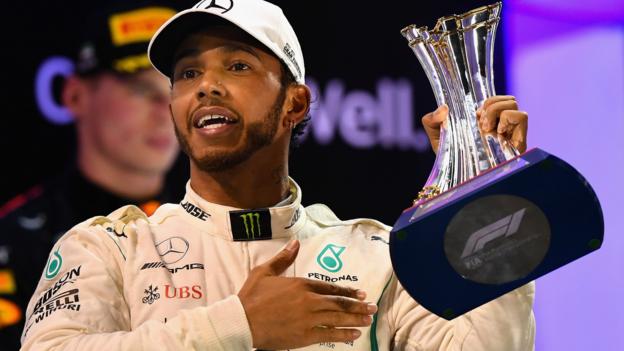
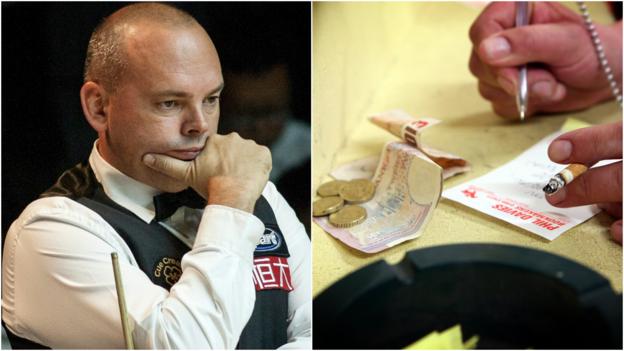
Why the Ebola crisis in DRC is unlike anything before

news image

It is the worst Ebola outbreak to have struck the Democratic Republic of Congo (DRC) – and the most complex one.

Since August, authorities in the country, together with a host of partners, have been trying to contain a new outbreak of the disease in the eastern North Kivu and Ituri provinces.

As of November 21, there have been 373 suspected cases of Ebola, including 347 confirmed cases. At least 217 people have already died.

There have been 10 outbreaks of Ebola since 1976 in the DRC, which is considered among the most experienced in dealing with the virus.

The situation this time, though, is different.

The North Kivu and Ituri provinces are among the most unstable and densely populated in the country, and subject to some of the highest levels of human mobility in it.

At the same time, there are warnings that a “perfect storm” of insecurity, community resistance about vaccinations and political manipulation threaten the efforts to contain the spread of the virus.

These factors collectively make the latest outbreak, unlike anything the DRC, which is scheduled to hold a crucial presidential election on December 23, has experienced before.

What is Ebola and how does it spread?

The Ebola Virus Disease (EVD) is introduced into the human population through close contact with the blood or other bodily fluids of infected animals. These include, but are not limited to, monkeys or fruit bats.

The virus is known to cause high fever, vomiting and diarrhoea, as well as internal and external bleeding; it puts the body into a state of shock and results in a decrease of the perfusion of blood to vital organs, ultimately inducing multi-system organ failure.

Once infected, patients have a very low chance of surviving. 

When did the latest outbreak in the DRC begin?

In late July 2018, the provincial government of North Kivu reported 26 cases of acute haemorrhagic fever that had resulted in 20 deaths.

Six specimens of blood were sent to the Institut National de Recherche Biomedicale (INRB) in the capital, Kinshasa, where four samples tested positive for the Ebola virus.

“The result of the genetic analysis by INRB confirmed Ebola Zaire strain, but not linked to the Equateur outbreak strain, meaning that we are dealing with a new outbreak,” Lianne Gutcher, a communications officer with the World Health Organization (WHO), told Al Jazeera.

The country’s Ministry of Health officially declared an outbreak on August 1, 2018.

The centre of the outbreak is now Beni in North Kivu, though the medical charity Doctors Without Borders, also known by its French initials MSF, has warned that there is a possibility it could move to Butembo, a town close to neighbouring Uganda.

How does this outbreak compare with previous ones in the DRC?

Ebola is considered endemic in the DRC, with the first cases in 1976 appearing simultaneously in Yambuku – in the north of the country near the Ebola River, from which the disease takes its name – and Nzara, in what is now South Sudan

While there is still no cure, the introduction of a vaccination programme earlier this year has been touted as the next step towards a more effective management of future outbreaks.

The DRC has been hit by two outbreaks this year.

The first one was declared in May after the deaths of 29 people in the city of Mbandaka in the Equateur province. Though there were concerns the town’s proximity to the Congo River would see the virus moving to Kinshasa, the timely implementation of a vaccination drive saw the virus quickly contained.

That outbreak was announced over on July 24.

Both Uganda and the DRC have been able to prevent mammoth epidemics spreading as it did in West Africa between 2014 and 2016 that infected 28,000 people and caused 11,300 deaths. But given that the current outbreak in North Kivu is perhaps the first time the virus has spread into an area already home to a large-scale humanitarian crisis, containing the spread of Ebola this time around is proving to be a lot more difficult.

It is already the largest outbreak in the DRC and is on course to become the second largest Ebola outbreak ever.

“The difference is that we are now operating in a war zone,” Axelle Ronsse, the emergency coordinator for MSF’s Ebola response, told Al Jazeera, referring to the militia violence that has long plagued parts of the country’s east.

WATCH: How can Ebola be contained? (25:00)

How has the security crisis impacted efforts to contain the virus?

North Kivu is home to a number of armed groups, including the Allied Defence Forces (ADF), a Ugandan rebel group, that has operated with impunity since 1995.

The endless upheavals in the region have meant regular dispossession and the incessant movement of refugees to neighbouring countries or within the province itself. As it stands, there are more than a million internally displaced people in North Kivu.

“The violence impacts our work on a daily basis,” Ronsse says. “We are not targeted but it is a matter of being in the wrong place at the wrong time.”

Likewise, Gutcher, from the WHO, says that some attacks have resulted in medical activities being severely impeded or temporarily shut down.

“Community violence has also at times impeded the work of safe burial teams’ ability to conduct safe and dignified burials.” 

In October, rebels killed 13 civilians and kidnapped a dozen children in an assault on Beni.

In November, seven Malawian and one Tanzanian peacekeeper were killed in another attack on the town.

The instability has also made it difficult for health professionals to locate others who might have been in contact with suspected victims, in what is known as “contact tracing”, considered a basic pillar of any effort to contain Ebola.

Last month, The New England Journal of Medicine (NEJM) wrote that “carrying out the effective contact tracing and community engagement can permit rapid identification of people who are ill and facilitate the provision of early clinical care, which has been shown to improve the likelihood of survival.”

Jessica Ilunga, communications officer for the DRC’s Ministry of Public Health, told Al Jazeera that every security-related incident affected field activities. She added that the underlying security context had also created a climate in which health workers faced an unprecedented level of community resistance.

“The predominance of traditional healers, who are more trusted by the population than modern medicine, has also led to an important number of nosocomial transmissions of the virus,” Ilunga said.

Citing the instability in the eastern DRC, the WHO elevated the national crisis to “very high” in late September. The crisis is still not considered a public health emergency of international concern and the world health body does not recommend imposing any trade or travel restrictions with the DRC.

How have the DRC and the international community responded to this crisis?

Since the introduction of the vaccination programme by the DRC’s government and the WHO, a key intervention has involved vaccinating suspected patients and then administering a second “ring” to those who might have come into contact with these suspected cases.

The vaccine is Canadian-developed but licensed and produced by the American pharmaceutical company Merck.

According to the WHO, around 300 medical specialists have been deployed to the country to support the response plan. Around 32,500 people-at-risk have been vaccinated, including 10,600 health workers and 8,600 children.

On November 24, the government and the WHO said they would be conducting clinical trials to assess the safety and effectiveness of drugs used on Ebola patients to find the most effective treatment for the virus.

Authorities have already started using the drugs on a case-by-case basis on around 151 people. Those who used the drugs had a 63 percent chance of survival, while those who did not receive medication had a fatality rate close to 80 percent.

“Now that protocols for trials are in place, patients will be offered treatments under that framework in the facilities where the trial has started,” the WHO said.

Over and above vaccinations and drugs, efforts have been made to spread information through door-to-door advocacy, with more than 2,500 homes visited, including almost 1,400 homes in Beni alone.

“Faced with rumours and misinformation, some families have chosen to care for sick relatives at home; some patients leave healthcare centres to find alternatives or actively avoid follow up,” Gutcher says.

Authorities have also trained around 1,700 volunteers to assist with community-based efforts. Across the border in Uganda, 758 health workers in 19 health facilities have been vaccinated.

In mid-November, the WHO said that the outbreak would end in mid-2019.

But Ilunga, from the DRC’s Ministry of Public Health, says her government is hopeful that the efforts to contain the outbreak would succeed sooner than the WHO’s target, but concedes that “the success of this response also depends on a number of factors that we do not control, such as security”.

A health worker carries a four-day-old baby suspected of having Ebola, into a Doctors Without Borders-supported Ebola treatment centre in DRC [File: John Wessels/AFP]

Why do outbreaks continue to occur in the DRC?

Microbiologists argue that viruses such as Ebola often occur among animal populations faced with restricted movement.

However, health professionals are concerned that should the Ebola become endemic to the troubled areas in the northeastern DRC, it would mean “a sustained and unpredictable spread of the deadly virus, with major implications for travel and trade”.

“This will mean that we’ve lost the ability to trace contacts, stop transmission chains and contain the outbreak,” Tom Inglesby, director of the Johns Hopkins Center for Health Security, said in a briefing earlier in November.

For her part, Ilunga says the country needs to accept the fact that the disease “will resurface regularly” and “make preventive and curative treatments more available and improve the population’s knowledge about the virus”.

Read More

from Trendy News Day https://ift.tt/2BzQAFk
via IFTTT
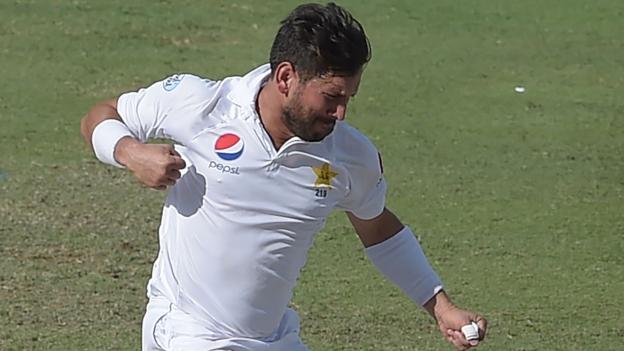
Pakistan v New Zealand: Yasir Shah takes 14 wickets in innings win for Pakistan

news image

Only 12 bowlers have taken more than the 14 wickets Yasir Shah (centre) claimed in a single Test
Second Test, Dubai (day four)
Pakistan 418-5 dec (Haris 147, Babar 127*)
New Zealand 90 (Yasir 8-41) & 312 (Taylor 82, Nicholls 77, Latham 50, Yasir 6-143)
Pakistan won by an innings and 16 runs; level the series 1-1
Scorecard

Yasir Shah claimed the second best match figures by a Pakistan bowler as they beat New Zealand by an innings and 16 runs in the second Test.

The 32-year-old leg-spinner finished with 14-184, behind only legendary all-rounder Imran Khan, who took 14-116 against Sri Lanka in 1982.

The Kiwis were dismissed for 312 on day four in Dubai, having been bowled out for 90 in their first innings.

Pakistan level the series at 1-1 with one match to play.

The third Test starts on Monday in Abu Dhabi, where New Zealand won a thrilling first Test by four runs.

Yasir took 10 wickets on day three, a Test-best 8-41 as New Zealand collapsed from 50-0 to 90 all out in reply to Pakistan’s 418-5 followed by him claiming the first two wickets when the Kiwis followed on.

The tourists resumed on 131-2 on day four, but lost opener Tom Latham for 50 and Ross Taylor for 82 before Yasir snared BJ Watling lbw for 27 to leave the Kiwis 255-5.

Despite 77 from Henry Nicholls, New Zealand lost their last five wickets for 57 runs, Yasir removing Ish Sodhi and Neil Wagner before having last man Trent Boult caught behind to complete victory and end with 6-143 in the second innings.

Yasir’s previous best match figures were 10-141 in victory over England at Lord’s in 2016.

Read More

from Trendy News Day https://ift.tt/2Bznbv8
via IFTTT

That incredible Hulu deal is still live: Get a full year for just $12

news image

Just to let you know, if you buy something featured here, Mashable might earn an affiliate commission.

Pay just 99 cents per month for Hulu for a full year with this deal.

You guys went crazy for this Hulu deal over the weekend and we’re here to tell you that it’s still live. You can get a full year of streaming for just $0.99 per month. (When you follow the link to the Hulu page, click the logo at the top left to access the deal.)

SEE ALSO: Best Cyber Monday deals on iPad, Instant Pot, Bose headphones

For literal pocket change, you’ll be able to watch thousands of TV shows and movies, including full seasons of exclusive series like Hulu originals The Handmaid’s Tale and Difficult People, plus full seasons of classic shows like Seinfeld or South Park—all with minimal commercials. You’ll also have access to tons of hit movies, kids shows, and more.

Considering a normal subscription is $7.99 per month, this new offer is seriously too good to pass up. 

After some users had issues accessing the deal, Hulu sent a tweet out letting people know that they were extending it.

Game on, Hulu.

When it comes down to it, we’ll all be doing a lot of marathoning this winter—and I don’t mean the kind that involves sneakers. So take advantage of this ridiculously generous holiday offer from Hulu and shamelessly fuel your binge-watching season for less than a buck.

Sign up through Monday while the deal lasts here — just remember to click on the Hulu logo at the top left to access the deal.

Read More

from Trendy News Day https://ift.tt/2KDO3Ne
via IFTTT

China orders probe into first ‘gene-edited babies’

news image

Chinese officials and scientists have denounced the claims of a geneticist who said he had created the first gene-edited babies.

Authorities have ordered an investigation as a hospital linked to the research suggested its ethical approval had been forged.

The National Health Commission said on Monday it was “highly concerned” and had ordered provincial health officials “to immediately investigate and clarify the matter”.

Pandora’s box has been opened. We still might have a glimmer of hope to close it before it’s too late

Scientists say in an open letter

The government’s medical ethics committee in Shenzhen said it was investigating the case, as was the Guangdong provincial health commission, according to Southern Metropolis Daily, a state media outlet.

More than 100 scientists said in an open letter the use of CRISPR-Cas9 technology to edit the genes of human embryos was risky, unjustified and harmed the reputation and development of the biomedical community in China.

CRISPR-Cas9 is a technology that allows scientists to essentially cut-and-paste DNA, raising hope of genetic fixes for diseases. However, there are also concerns about its safety and ethics.

Pandora’s box

In videos posted online, scientist He Jiankui defended what he said he had achieved – embryonic gene editing to help protect twin baby girls born this month from infection with HIV, the virus that causes AIDS.

“Pandora’s box has been opened. We still might have a glimmer of hope to close it before it’s too late,” the scientists said in their letter, a copy of which was posted by the Chinese news website the Paper.

“The biomedical ethics review for this so-called research exists in name only. Conducting direct human experiments can only be described as crazy,” the Chinese-language letter, signed by approximately 120 scientists, says.

Yang Zhengang, a Fudan University professor, told Reuters he signed the letter because gene editing was “very dangerous”.

China’s Genetics Society and the Chinese Society for Stem Cell Research said in a statement that the geneticist had acted as an “individual” and his work posed “tremendous safety risks for the research subjects”.

“We believe the research led by He is strongly against both the Chinese regulations and the consensus reached by the international science community,” the two groups said in a statement posted online.

He, who is due to speak at a summit on human genome editing at the University of Hong Kong on Wednesday, did not respond to a Reuters request for comment.

The Shenzhen Harmonicare Hospital, listed on China’s online clinical trial registry as having given ethical approval for He’s experiment, denied having ever taken part in any clinical operations relating to “gene-edited babies”.

‘Very shocked’

The signatures on the online form were suspected of having been forged and “no relevant meeting of the Medical Ethics Committee of the hospital in fact took place”, Hong Kong-listed Harmonicare Medical Holdings said in a statement.

The Southern University of Science and Technology, where He holds an associate professorship, also said it had been unaware of the research project and that He had been on leave without pay since February.

The Shenzhen City Science and Innovation Committee, a municipal fund which was also listed on the clinical trial registry as having backed the trial, said in a statement on Monday it had never been involved in the project.

Xu Nanping, vice minister in China’s science and technology ministry, told reporters he was “very shocked” on hearing He’s claim, adding that such work had been prohibited since 2003.

Details of the case were still unclear, Xu said.

“We don’t know if this work is real or fake. If it’s real, then this is certainly banned in China.”

The official Xinhua news agency said ethics could not be ignored.

“Scientific exploration is never-ending … but this does not mean that the morals of science can be abandoned or that ethical standards can be ignored,” the news agency said in a comment posted on social media.

The committee organizing the Hong Kong conference where He is due to speak – the Second International Summit on Human Genome Editing – said in a statement on Monday it had only been informed of He’s work on the genes of the twin girls.

“Our goal is to help ensure that human genome editing research be pursued responsibly,” the committee said.

Read More

from Trendy News Day https://ift.tt/2Bzn7LU
via IFTTT

Jolyon Palmer column: My star Formula 1 drivers of the 2018 season

news image

Former F1 driver Jolyon Palmer, who left Renault during the 2017 season, has joined the BBC team to offer insight and analysis from the point of view of the competitors.

The Formula 1 finale in Abu Dhabi epitomised much of the 2018 season.

There was some high drama, particularly at the start, some moments of real excitement in the middle, building up to an exciting finale, which ultimately fizzled to nothing with a few laps to go as Sebastian Vettel couldn’t challenge Lewis Hamilton for the win.

It’s been a great season of on-track action on the whole, and my three star drivers of the season were on great form in Abu Dhabi as well.

Lewis Hamilton

Lewis Hamilton celebrates a fifth drivers’ title after the Abu Dhabi Grand Prix

Firstly, of course, the world champion. What a season Lewis Hamilton has had, and what a way to wrap it up in Abu Dhabi.

Before this year, Hamilton had never won any remaining race in a season after clinching the title. This time he took pole and won both of the remaining races to end what turned into a dominant year in emphatic style.

His victory on Sunday was one of the more understated. Having taken pole by only 0.15 seconds ahead of team-mate Valtteri Bottas on Saturday, he pitted early in the race, which seemed a bold call by Mercedes.

But while Bottas struggled after his own stop, and dropped down the order, Hamilton was in complete control. He beat his team-mate, who had started next to him on the grid, by almost 50 seconds.

The comparison between Hamilton and Bottas is stark this year. Over the first half it was much closer, but you felt Hamilton had the edge. The second half was a demolition.

After the halfway point at Silverstone, Hamilton won eight of the remaining 11 races. Bottas scored just four podiums in that time and didn’t get a victory all season, finishing 161 points behind his team-mate.

Bottas is a good driver, and it highlights just how good Hamilton has been this year.

I can’t think of a more impressive performance by any driver over the course of an entire season than this one from Hamilton.

Max Verstappen

Max Verstappen takes a well-earned glug of champagne at Abu Dhabi after making it onto the podium for the fifth straight race

My second driver of the year is Max Verstappen. He’s undeniably super-talented. He’s unbelievably quick but prone to being hot-headed and making mistakes.

But over the course of this season he has developed into an almost complete driver.

Verstappen came in for a lot of stick after Monaco, where he crashed in practice and therefore had to start from the back. It was the latest in a series of errors over the early races. He had the pace but kept making mistakes – he had incidents in all of the first six race weekends.

But boy has he turned it around. Podiums in all of the last five races – including a win in Mexico, a should-have-been win in Brazil and a drive to second from 18th on the grid in Austin – show his potential for next year.

Finishing fourth in the championship, only two points behind Kimi Raikkonen, is an extraordinary achievement, considering his difficult start to the season and the lack of competitiveness from his Red Bull team, particularly in the middle of the season.

Verstappen drove another strong race on Sunday, recovering from a poor start that left him on the edge of the top 10 and nursing his car through engine overheating issues early on.

He showed his extreme aggression in the car with moves on Force India’s Esteban Ocon early in the race and then Bottas late on, having minor contact with both.

It shows there’s still a risk element to his driving, which if someone is fighting for a title isn’t ideal, but at least right now Verstappen is getting it right more often than not, when earlier on in the year it was costing him dearly.

Charles Leclerc

Charles Leclerc has earned a drive with Ferrari in 2019 after an impressive rookie season with Sauber

My third driver of the year is the man moving to Ferrari to partner Sebastian Vettel in 2019.

Charles Leclerc had a super weekend in Abu Dhabi, qualifying comfortably in the top 10 before rising up to fourth place in his Sauber early on, legitimately passing Daniel Ricciardo’s Red Bull.

Sauber pitted him too early, which mired him in traffic for a large part of the race, but he showed impressive race-craft to match his obvious pace.

Leclerc had big pressure coming into the season after a standout performance last year in Formula 2 and starting in a struggling team as a Ferrari junior.

But for a rookie he has been incredibly consistent, making very few mistakes, after an admittedly shaky first couple of races.

Sauber are the most improved team this year, and I’m sure that a significant part of that is down to Leclerc extracting the last bit of pace from the car and giving the team fresh motivation.

A mouth-watering prospect for 2019

Ferrari’s Sebastian Vettel faces a fresh challenge from new team-mate Charles Leclerc in 2019

These three drivers are hopefully going to be big rivals next year, with each in one of the three top teams.

The three-car battles for wins at the end of the season have added an extra dimension to each race and made them more thrilling as a result.

Verstappen’s chances next year hinge very much on Honda hitting the ground running in their new partnership with Red Bull, who switch from a 12-year partnership with Renault.

Red Bull have a superb chassis. The fact they won races this year, despite a significant power deficit compared to Mercedes and Ferrari, underlines that.

If Honda can prove to be an upgrade from Renault, as Red Bull hope, they will surely be a threat, particularly if Verstappen can keep his form going from the end of this season.

Leclerc can be a big threat in the Ferrari next year. It’s one of the things I’m most excited about. He will come in with an assumed position as number two to Vettel, but it’s very possible he could out-perform the German, win races and even make his own challenge for the title.

I’m sure Vettel will be wary of his arrival into the team, particularly after his experience with Daniel Ricciardo at Red Bull in 2014, where the young driver upset the establishment.

As for Hamilton, he’s driving at his best, has a team who are proven winners behind him and seems to be enjoying his racing more than ever. He will be so tough to stop in 2019, but the two other stars of 2018 will be giving it their all to do exactly that.

Farewell to a legend

Fernando Alonso hopes to complete the triple crown by adding the Indianapolis 500 crown to his F1 and Le Mans titles

A final word for another star of 2018, and Formula 1 in general. Fernando Alonso has been superb this season in a McLaren that has been woeful.

Pipped to the top 10 in the drivers’ championship on the final day, Alonso still managed to almost single-handedly secure sixth place for the team in the constructors’ championship, an incredible achievement considering McLaren have often had either the slowest or second slowest car this year.

To finish the season with a record of 21-0 against team-mate Stoffel Vandoorne in qualifying shows Alonso is still driving at his best as well.

Just as with Bottas at Mercedes, Vandoorne is no slouch, but he’s been made to look second-rate this year, to the point where he is out of F1 for 2019.

Alonso will be a big miss for F1 as a whole. He’s one of the all-time greats and, on a personal level, it was a pleasure racing him during 2016 and 2017.

Alonso has been plagued by off-track politics and poor decisions in F1. And when it comes to karma, he is certainly due some payback as he attempts to complete the triple crown in 2019 by adding victory at the Indianapolis 500 to his F1 and Le Mans titles.

Read More

from Trendy News Day https://ift.tt/2KHTRpn
via IFTTT

Sony PlayStation Classic review: The graphics are weak, but the fun is real

news image

For almost two weeks, I’ve been living life like it was 1994 thanks to Sony’s PlayStation Classic.

The $99.99 system, like Nintendo’s NES and SNES Classic before it, is yet another miniaturized game console pre-loaded with games from a bygone era.

Sony’s tiny console is a fraction of the size of the original (and unfortunately doesn’t play original PS1 CDs) and comes with two faithfully reproduced controllers.

It’s one of the nicest throwback tech products in years and made me nostalgic of the early days of games with 3D graphics, while simultaneously making me realize I’m now old. I was seven when the PlayStation launched in Japan in 1994 and nine when my childhood best friend got one for Christmas two years later and we got to eventually play classics like Rayman, Crash Bandicoot, and Final Fantasy VII in his attic.

The PlayStation goes down in history for popularizing 3D gaming and lighting the path toward more mature titles with the likes of Grand Theft Auto and Resident Evil. Still, all of us spoiled by today’s lush and photorealistic graphics often forget just how ugly most games on the console were.

Unlike the timeless, colorful 2D sprites of Super Mario Bros. or The Legend of Zelda: A Link to the Past that still look as beautiful today as they did 35 and 27 years ago, respectively, many of the once cutting-edge 3D graphics from the 20 included games on the PlayStation Classic simply don’t hold up in 2018.

The PlayStation Classic’s also missing many of the original console’s greatest hits. Don’t get me wrong, Final Fantasy VII — a game that took up three discs and defined bleeding-edge 3D graphics when it came out in 1997 — rekindled fond memories of Japan’s then-rise as a technology powerhouse and is worth the price alone.

But many people might look at the list of games and be disappointed by the omission of console classics such as Gran Turismo, Spyro the Dragon, and Tony Hawk’s Pro Skater 2.

Read More

from Trendy News Day https://ift.tt/2BB87Nu
via IFTTT

Netanyahu to formally establish ties with Chad in upcoming visit

news image

Israeli Prime Minister Benjamin Netanyahu will visit Chad in the near future to formally establish diplomatic relations between the two countries, his office has said.

The announcement came hours after Netanyahu met Chad President Idriss Deby in Jerusalem on Tuesday, Israeli daily Haaretz reported.

“The two discussed shared threats and the struggle against terrorism, increased cooperation between the nations in the areas of agriculture, counter terrorism, border security, technology, solar energy, water, health and more,” the statement said.

Deby had arrived in Israel on Sunday for the first official visit by a leader of the Central African country that severed diplomatic ties with Israel in 1972.

“We discussed … the great changes that are taking place in the Arab world in its relations with Israel,” Netanyahu said, adding there will be more visits to Arab countries soon.

Netanyahu previously pledged to strengthen ties with the continent and described his pledge as a “priority” at a regional security conference he attended in Liberia last year.

WATCH: Can Israel’s Prime Minister save his right-wing coalition? (24:40)

His government has been investing in outreach to Africa, where some countries previously warm to Israel have severed ties since its occupation of the Palestinian territories. Israel maintains diplomatic ties with 32 of the continent’s 54 countries.

Deby said his visit was “historic” for both countries and that it “could facilitate the turning of a new page in relations between us” but added that even with a renewal of ties, the Israeli-Palestinian conflict could not be ignored.

“Of course, the renewal of diplomatic ties between us, which I very much want, is not something that can make the Palestinian issue disappear,” Deby said in French through a translator.

WATCH: Illegal trade and smuggling continues at Sudan-Chad border (2:17)

Unofficial contacts between Israel and Chad have been ongoing for an extended period, Deby said. One source told Reuters news agency the visit is focused on security, adding that Israel has supplied Chad’s army with weapons and equipment this year to help fight rebels.

Chad is one of several states engaged in Western-backed operations against the Boko Haram armed group and fighters from the Islamic State of Iraq and the Levant (ISIL) group.

Wasel Abu Youssef, a senior Palestinian official, voiced displeasure over Deby’s visit.

“All countries and institutions must boycott the extremist government of Israel and impose a siege on it because of its settlement activities, its occupation of Palestinian land,” Youssef said.

Deby, one of Africa’s longest-serving leaders, took over the arid, impoverished nation in 1990 and won a disputed fifth term in April 2016. 

SOURCE:
Al Jazeera and news agencies

Read More

from Trendy News Day https://ift.tt/2KHTQ4N
via IFTTT

UK Championship: Stuart Bingham says snooker in catch-22 over betting

news image

Bingham says he missed out on a guaranteed £40,000 because of his betting ban
Betway UK Championship
Venue: York Barbican Dates: 27 November-9 December
Coverage: Watch live across BBC Two, BBC iPlayer, BBC Red Button, Connected TV, the BBC Sport website and mobile app from 1 December.

Snooker “would not be sport” without betting sponsorship, says ex-world champion Stuart Bingham – but the level of promotion is a “nightmare”.

Of the 20 ranking events, 11 are sponsored by betting companies, while other invitational events are also financed by them.

Bingham, 42, who served a three-month ban for betting breaches last season, won the English Open last month.

The situation is a “catch-22”, he told BBC Sport.

“It is in our faces, it is everywhere,” he added.

“Betting is in our game, lots of tournaments are sponsored by it, they have to put their banners out there. I don’t think you can stop it unless we get another load of companies which change the sponsorship.

“If I had a company, I would want it all advertised out there too. That is the way it is.”

In a wide-ranging interview, Bingham spoke about:

  • The heavy financial cost of being banned
  • The circumstances surrounding his ban
  • The online abuse suffered afterwards

The cost of Bingham’s betting ban

Bingham’s suspension last season excluded him from three of the most lucrative events on the calendar – the International Championship, UK Championship and the Masters.

The world number 14 said the ban ruled him out of claiming £40,000 in guaranteed prize money, on top of the £20,000 he had to pay in costs, while estimating he missed out on “around £150,000-200,000” by not featuring in those events.

Bingham faces Thailand’s James Wattana in the first round of the UK Championship on Wednesday, an event which is live across BBC TV, radio and online.

“I didn’t watch the tournament last year,” Bingham said. “My wife said no. It is one of the only times I have listened to her.

“I did watch the Masters in January to get the feeling for the sport back but I had a bit of time off and put the hours in after the New Year.”

The Gambling Commission says there are 430,000 problem gamblers in the UK, while a report last week said 50,000 children aged 11 to 16 are classed as having a gambling problem.

Last year, former Masters finalist Joe Perry and current world number 92 Alfie Burden – both in their 40s – received suspended bans for betting offences.

Asked if players need educating more about the problems with gambling, Bingham said: “The WPBSA [World Professional Billiards and Snooker Association] are trying to. It is the older generation that have always done it.

“They need to educate the younger players not to do it. People are getting the message after what happened to me.”

In a statement responding to Bingham’s quotes, World Snooker told BBC Sport: “We work with a range of fantastic sponsors on our tournaments.

“The vast majority of people who gamble are able to do so responsibly, and the betting companies have been very vigilant in getting across the message that ‘when the fun stops, stop’.”

What did Bingham do?

Archive: Bingham wins 2015 World Snooker title

Bingham was banned after the governing body, the WPBSA, found him guilty of breaking rules on betting on matches involving himself and other players.

But the Basildon player strenuously denied putting money on matches he was involved in, saying they were placed only by another person with whom he shared an account.

When announcing his ban, the WPBSA also said the estimated total of his betting on snooker in the past seven years was £35,771.

‘I was told my kids should die of cancer’

Bingham celebrated winning the English Open last month with his family

With his family in the arena, Bingham broke down in tears the after winning October’s English Open event in Crawley, securing the fifth ranking title of his career.

Bingham, who won the sport’s biggest prize at the Crucible in 2015, said the emotions poured out after he received horrific abuse on social media following his ban.

In August, world number six Barry Hawkins revealed screenshots of messages which told him “to die” following a loss at the World Open.

Bingham said: “It has been a tough time off the table and the win at the English Open made it more special. It was nice to get back into the winners’ circle, to get my hands on the trophy meant the world to me.

“My family and I got a lot of abuse on social media. People that did not know the full story and had just read the headline branded me a cheat.

“I can say on my kids’ life that I have never missed a ball on purpose or thrown a game. My family, friends and those in snooker know I have never done anything like that.

“The headlines that came out were a bit harsh but my friends and family know the truth and that is all that matters. It showed me a lot about people on tour who I thought were my friends. It opened my eyes to a lot more.

“I follow people on social media who are boxers or golfers and it is too easy to get in contact with people. I do it for publicity for myself and a bit of banter between the snooker players but it is getting out of hand.

“We had it with Barry Hawkins and I had a row with someone who had a £20 bet and he wants your kids to die of cancer. It is so bad.

“The easy way is to come off it but then you cannot publicise yourself and you have fans. It is one or two per cent of people that ruin it for the rest.”

Sign up to My Sport to follow snooker news and reports on the BBC app.

Read More

from Trendy News Day https://ift.tt/2BBHw2T
via IFTTT

This person’s 45-tweet rant about the imperial system is hilariously relatable

news image

Not everyone is a fan of imperial measurements.

Image: Getty Images/iStockphoto

If you’ve ever found yourself somewhat confused by the logic of the imperial system — you know, pounds, ounces, all that good stuff — you’re not alone.

Because unlike the more modern metric system, which is fairly logical when it comes to the way different measures and weights are broken down, the imperial system just seems a bit… messier.

Anyone who’s ever found themselves struggling to follow a recipe that contains the phrase “cup”, will understand.

Anyway, here to perfectly encapsulate your confusion is this Scottish video games programmer, who on Monday evening went on an epic 45-tweet rant about the issue.

Here’s the entire thread, in all its rage-fuelled glory:

Mic. Dropped.

Https%3a%2f%2fblueprint api production.s3.amazonaws.com%2fuploads%2fvideo uploaders%2fdistribution thumb%2fimage%2f83613%2f31538c14 cdef 4220 aecd dd3086b9089d

Read More

from Trendy News Day https://ift.tt/2ABjraX
via IFTTT

This person’s 45-tweet rant about the imperial system is hilariously relatable

news image

Not everyone is a fan of imperial measurements.

Image: Getty Images/iStockphoto

If you’ve ever found yourself somewhat confused by the logic of the imperial system — you know, pounds, ounces, all that good stuff — you’re not alone.

Because unlike the more modern metric system, which is fairly logical when it comes to the way different measures and weights are broken down, the imperial system just seems a bit… messier.

Anyone who’s ever found themselves struggling to follow a recipe that contains the phrase “cup”, will understand.

Anyway, here to perfectly encapsulate your confusion is this Scottish video games programmer, who on Monday evening went on an epic 45-tweet rant about the issue.

Here’s the entire thread, in all its rage-fuelled glory:

Mic. Dropped.

Https%3a%2f%2fblueprint api production.s3.amazonaws.com%2fuploads%2fvideo uploaders%2fdistribution thumb%2fimage%2f83613%2f31538c14 cdef 4220 aecd dd3086b9089d

Read More

from Trendy News Day https://ift.tt/2ABjraX
via IFTTT