Tanauan: Stronger than the storm

news image

In November 2013, the small town of Tanauan, on the Philippine island of Leyte was smashed to smithereens. Typhoon Haiyan, one of the strongest storms to ever make landfall, left a trail of devastation across the town’s shoreline.

Entire families were swept away by seven-metre waves that battered the coast. Known locally as Yolanda, the superstorm killed more than 6,000 people and left four million homeless across the middle of the archipelago. 

Twin brothers Elmer and Mariano Labada fought hard to stay afloat with their wives and children in the storm surges.

“It was a struggle to survive. We were all drowning. I lost sight of my wife. When I emerged from the water, my youngest son was being swept away. When he went under, I thought maybe I wanted to die. He called out ‘Papa, Papa’. I couldn’t reach him,” Elmer said.

Both lost two children.

After the storm, the brothers searched for their loved ones in the debris and rubble. Eventually, they found the body of Elmer’s daughter at the morgue.

They didn’t want to open the bag for me because of the smell. She was a beautiful child. I wanted to hold her but I couldn’t because of the way she was. They gave her to me and told me to bury her the next day.

Elmer Labada, Typhoon Haiyan survivor

Elmer said he could only recognise her from her clothing. “They didn’t want to open the bag for me because of the smell. She was a beautiful child. I wanted to hold her but I couldn’t because of the way she was. They gave her to me and told me to bury her the next day,” he said.

Devastated by the loss of their daughter and son, Elmer’s wife left him and moved to the capital, Manila. Elmer then lost his full-time job at a soft drink factory in Tanauan.

“Many times I wished the waves killed me too. My family, house … Everything was gone in four seconds, the blink of an eye. Now life is pointless,” Elmer said.

Mariano said he was luckier than his brother. His wife and two other children survived. He was also able to keep his job riding a pedal cab.

“I feel guilty. It’s harder for Elmer to move on. Two of my kids died but two survived. What I learned is, if it’s your time to die, it’s your time,” Mariano said.

A cargo ship washed ashore by Typhoon Haiyan’s waves sits among the debris in Tacloban, Philippines.  [Al Jazeera]

For journalists and photographers in Asia, covering natural disasters comes with the territory in the most disaster-prone region on earth.

Across the continent, earthquakes, typhoons, tsunamis and mudslides befall communities frequently and ferociously. But the pressures of the daily news cycle can often limit the media’s capacity to document the long-term effects – environmental, economic and emotional.

What does recovery look like when you’ve lost everyone in your family?

Since the storm hit five years ago, Al Jazeera’s 101 East programme has revisited Tanauan three times returning to the same survivors to follow their roads to recovery.

From their stories, we crafted Tanauan: Stronger than the Storm, an interactive documentary to build a conversation around climate change and its effect on people.

Tanauan’s survivors are its storytellers.

A makeshift grave marks one of the thousands of lives lost during Typhoon Haiyan.  [Al Jazeera]

In Tanauan, 1,380 people were killed by Typhoon Haiyan – the second highest number of fatalities in the disaster zone.

In the days after, the survivors were cut off from help and the town hall was turned into an emergency triage centre.

Today, signs of recovery are easy to see. Local Mayor Pel Tecson utilised government funding to rebuild.

“Every time I have the opportunity to speak with my people, I tell them that we have to set aside the painful experience of Typhoon Haiyan and we have to start moving forward and we can turn this crisis into an opportunity to rebuild the town. That’s the best way to honour those who’ve died. We can rebuild this into a much greater and more beautiful town,” he says.

Behind the town hall, where a mass grave was dug in the storm’s aftermath, lies a new amphitheatre, basketball courts and memorial site where the disaster is commemorated every year. 

“This is our living room in the town. If you come back here at 5 o’clock in the afternoon, you will see a lot of people down here. Life is back in Tanauan,” Pel says.

Today, Tanauan is one of three towns in Leyte to build a seawall along the shore. Mayor Pel hopes it will protect his community from future storm surges.

But not all recovery has been smooth. After Typhoon Haiyan, the Philippines government promised to build more than 200,000 houses for Leyte’s storm survivors.

But five years later, critics say not even a quarter of them have been built and many that have are already in a state of disrepair due to poor construction. Villagers who depend on the sea for their livelihoods have been forced to move away from the shore, which has been turned into No Build Zones.

Five years on, Mayor Pel admits storm survivors still need help but insists poverty rates are dropping.

But the Labada brothers say they find it harder to make a living now than when the typhoon hit.

I’m a bit disturbed, the big companies are able to build near the sea. But the poor, whose source of livelihood is there, are being chased out. Development doesn’t help storm survivors because we can’t get jobs [working] on new buildings.

Mariano Labada, Typhoon Haiyan survivor

During the aftermath, there was aid and assistance. Today, they say they must fend for themselves. They criticise the rebuilding around Tanauan, calling it commercially focused on projects that lock locals out of possible jobs.

“I’m a bit disturbed, the big companies are able to build near the sea. But the poor, whose source of livelihood is there, are being chased out. Development doesn’t help storm survivors because we can’t get jobs [working] on new buildings,” Mariano says.

His brother Elmer gets the odd shift back at the soft drink factory, a wage he desperately needs to support his family.

In the past few years, he has remarried and now has two new children.

“I really, really love my children like my first two children. Of course you need to stand again and start again. What happened was a tragedy, but I’m okay. I’m adjusting to my new life,” he says.

The Philippines remains one of the most disaster-prone nations in the world, but despite the dangers, the brothers have rebuilt their home on the same plot of land that Haiyan destroyed.

“I don’t care if another disaster strikes or if this house won’t survive,” says Elmer. “This is where I live.”

Read More

from Trendy News Day https://ift.tt/2qBDbpW
via IFTTT
Louis Smith: Olympic silver medallist retires from gymnastics aged 29

news image

Archive: Louis Smith wins European Gymnastics Championship gold

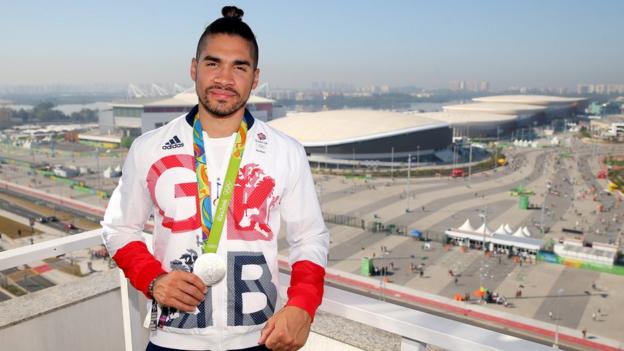
Two-time Olympic silver medallist Louis Smith has retired from gymnastics.

The 29-year-old represented Great Britain at three Olympic Games, also winning two bronze medals between 2008 and 2016.

He won three World Championship silver medals, two European golds and the 2006 Commonwealth Games pommel horse title.

“I had to make the difficult decision to hang up my leotard,” said Smith, who in December 2012 was appointed MBE for services to gymnastics.

Smith, who was diagnosed with ADHD at the age of seven, says he had intended to return to gymnastics training for the Tokyo 2020 Olympics, but changed his mind due to changes in qualification criteria and new “exciting opportunities”.

“Gym has given me everything,” said Smith, who announced his retirement on ITV show Lorraine. “It gave me the tools necessary to channel my ADHD throughout my childhood, and as I grew up through the sport, I quickly found a purpose in life, and it has made me the person I am today.

“From a young age it became my dream to compete at an Olympic Games and represent Great Britain, so to have had the opportunity to do that on three separate occasions, and bring home four Olympic medals in the process, is something I will forever cherish and for which I am eternally grateful.”

His bronze medal at the 2008 Beijing Games. saw him win Britain’s first Olympic gymnastics medal since 1928 and become the first British man since 1908 to win an individual medal.

Smith, who is to star in musical Rip it Up on London’s West End in February, won series the BBC show Strictly Come Dancing in 2012.

His career has not been without controversy – in November 2016 he was given a two-month ban by British Gymnastics after appearing to mock Islam in a video. Smith said he was “deeply sorry” for his “thoughtless actions”.

Read More

from Trendy News Day https://ift.tt/2qzV2Of
via IFTTT

Bangladesh’s unsung heroes: Model NGO sector spurs development

news image

In a rural part of Moulvibazar in Bangladesh‘s northeast, a wooden boat crosses the narrow and shallow water, even in the midst of the monsoon.

As it reaches the other side, the passengers get off and start unloading cardboard boxes.

“It’s medicine, 35 boxes in all. I hope it will be enough. We only had two days to collect money this time, and this is what we managed to get,” said Marzia Prova, a university student from Dhaka, as she takes a box and starts walking up from the riverbed.

The others, all young, mostly students, do the same.

It was early morning when they arrived with an overnight bus from the capital to do something Prova has done several times before: set up a makeshift medical camp.

“We came to Moulvibazar today because there was a flood last week, and I heard that families needed help,” says Prova.

They soon approach a small village, where a man unlocks the heavy padlock on a house.

Inside, they set up tables. Two for the doctors and medical students in the group, one for the others to hand out medication.

The grounds outside fill up with people: fathers with their children in hand, elderly men and women. Two young people from the village come to join, and start noting down names on a waitlist.

“We have a lot of enthusiasm in the young generation. That’s why we do this, we want to use it in a good way,” says Jannatul Ferdouse, one of the students from Dhaka.

Volunteer projects like this are not uncommon in Bangladesh, a small and densely populated country.

Volunteers unloading boxes of medicine from a small boat crossing the river to get to the village [Jenny Gustafsson/Al Jazeera]

Bangladesh emerged as an independent nation in 1971, after a war to end the union with Pakistan. A year earlier, the deadliest cyclone on record had hit the region; soon after the war, a devastating famine.

Located right on a large delta, Bangladesh is a prone spot for natural disasters – a challenge for its 160 million people, but also a reason to support one another.

“There is definitely something about the ecology and environment, the history of the country, that has brought about this kind of civil mobilisation,” says David Lewis, a professor at London School of Economics (LSE).

According to Rounaq Jahan, a leading Bangladeshi intellectual, most of the key NGOs are led by people who were involved in the liberation war.

“The war had an impact on people,” he said. “It weakened old social norms, taught people to do things on their own. It unleashed a sense of entrepreneurship.”

Microcredit pioneer Grameen Bank, of Nobel Laureate Muhammad Yunus, is among the humanitarian entrepreneurial organisations – making small loans to the impoverished without requiring collateral.

Development heavyweight BRAC is another. Founded in 1972 by Sir Fazle Hasan Abed, a Shell executive who left his job in London to return and build the post-war capacity of women in his native region of Sylhet, BRAC has become the largest NGO in Bangladesh and the world.

Despite this, Bangladesh’s NGOs are lesser known than their Western counterparts.

“I do think it should be more of an example. But it is not, probably because people don’t know about Bangladesh, and the country finds it difficult to promote itself on a global scale,” said LSE’s Lewis, citing the South Asian country’s humanitarian work towards Rohingya refugees as an example.

From single teaching room to school foundation

Individuals like Prova, the Dhaka university student, have a more limited scope, but do make an impact.

Besides organising support for rural families, Prova also runs a project to set up “emergency pad corners” in schools across the country, with affordable sanitary pads for girls.

With the help of students and friends in different cities, she manages this initiative in schools in eight of Bangladesh’s districts.

“But my plan is to spread them to all 64 districts. Menstrual hygiene is such a taboo in the countryside,” she says.

Marzia Prova, a student from Dhaka, runs several social and volunteer projects in Bangladesh, including campaigns to provide medicine in rural areas and give girls access to sanitary pads [Jenny Gustafsson/Al Jazeera]

In Dhaka’s low-income area of Rayer Bazar, in 2007, student Korvi Rakshand began teaching children of rickshaw drivers, day labourers and domestic workers, who had no access to education, from one single classroom.

The simple classroom turned into a school, and then a foundation, JAAGO, which now runs 12 schools across the country.

“I remember when we asked our first students about their dreams and one of them said, ‘I want to be a rickshaw puller, just like my dad’,” says Rakshand.

“Now, he is in the batch of first graduates from our school, and just started college.”

That child was Lenin Ahmed – 11 years older today.

He has come to the Rayer Bazar school with two other students, Siam Hossain and Sufian Sabbiar. It was Hossain’s father who rented out that first room to Rakshand, and the family still lives on the bottom floor.

“My mother was part of it too, she was the one who talked to people in the community, convincing them of the importance of education. She said, ‘I have three kids, so there are already three students’,” says Hossain.

The school corridor leads to an open courtyard at the back, with trees planted by the children and murals painted on the walls. A new extension building has been built.

“We can see the difference now between us and our old friends who did not get a chance to go to school. They all work as drivers and rickshaw pullers, or hawkers in the street,” says Sabbiar.

Lifesaving aid

Between 20 and 35 percent of the population is estimated to receive services from an NGO, mainly from one of the big actors.

“The government knows that they need us. Tuberculosis vaccine, for instance, could never have been delivered without BRAC, and education could not have been safeguarded. The government knows this,” says Afsan Chowdhury, a journalist and historian who worked with BRAC for several years.

Political mobilisation on the other hand, is less tolerated.

The most recent example is the student-led movement for road safety this summer, triggered by an accident with a speeding bus killing two schoolchildren.

Police and pro-government groups met protesters with violence, and the prolific photographer Shahidul Alam was arrested after commenting on the events in an interview.

A man walks past a mosaic in Dhaka depicting the liberation war [Jenny Gustafsson/Al Jazeera]

Back in Moulvibazar village, the afternoon has turned late and the heat started to diminish. The crowds outside are almost gone, save a few parents and children still waiting for their turn.

Students and doctors at the tables inside have hardly moved an inch since the morning.

“But that’s fine. We are medical students, so this is only a good experience for us,” says Meril Afroz Jebin.

A woman with thin arms and a stubborn cough sits next to her.

Since the flooding, the woman says, the cough refuses to go away.

Jebin writes down cough syrup and nutrition supplements on a note, then sends her to Prova who sits surrounded by empty boxes.

“We only have vitamins for children left now,” Prova says. “So we are giving supplements for kids to the adults too, just telling them to double the dose. For next time, we know that we have to bring more.”

Read More

from Trendy News Day https://ift.tt/2F65Ai6
via IFTTT

Man City: How damaging are the Football Leaks allegations?

news image

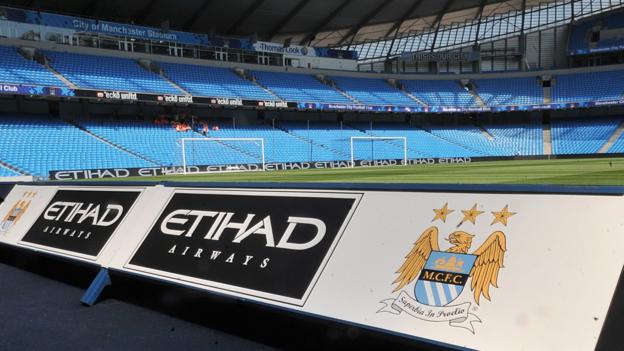
City have played at the former City of Manchester Stadium since 2003

It is unlikely that many of the Manchester City fans who attended the club’s match against Shakhtar Donetsk will have been too concerned about a third day of revelations and leaked emails published by German news magazine Der Spiegel.

With their team the reigning Premier League champions, top of the league, and known for playing some of the best football that the English game has seen, most City supporters will refuse to allow allegations that their club deceived Uefa over financial fair play (FFP) rules to detract from pride in their club.

Nor will claims – however concerning – that executives ignored internal warnings about the reputational risk of striking a sponsorship deal with a Dubai-based construction company accused of mistreating migrant workers, and that a director sought to delay a response to a Freedom of Information request from a respected human rights expert over a commercial deal with the city council, have spoiled the fans’ enjoyment of yet another convincing victory.

City supporters are used to such scrutiny of course. They have grown accustomed to the suggestion that owner Sheikh Mansour’s spending spree over the past 10 years has devalued their on-field achievements and enabled them to buy success. That their club is being used as a form of ‘soft-power’, to improve the image of a repressive regime in the United Arab Emirates that continues to be accused of human rights abuses.

Many therefore, will be dismissing the current scrutiny – and the criticism it has sparked – as the latest manifestation of jealousy and hypocrisy, and some will no doubt have jeered the Champions League anthem even louder than usual in defiance.

Others however, may not find it quite so easy to excuse a controversy that is rapidly becoming one of the most serious in the decade of Abu-Dhabi ownership at City, and which threatens to cast a shadow over the dominant force in English football.

So how damaging are the allegations and where does it leave FFP?

Chairman Khaldoon Al Mubarak (left) and owner Sheikh Mansour (right) led the Manchester City takeover in 2008

We have known since 2014, when City reluctantly accepted a settlement with Uefa that included a £49m fine (two-thirds of which was suspended and avoided) along with restrictions on their European squad and incoming transfers, that the club were found to have breached the FFP rules. What Der Spiegel’s revelations claim to have shown for the first time however is how it was done, and the extent of the alleged deception.

So far the claims of financial malpractice fall into two broad categories; firstly, that sponsorship deals were artificially inflated and not valued fairly or independent (as City previously insisted), with tens of millions of pounds thought to have been paid by commercial partners, actually coming directly and discreetly from the club’s owner. And secondly, that City under a scheme called Project Longbow set up a shell company to pay players for image rights, saving millions more from the wage bill.

The BBC has not been able to verify the leaked emails published by Der Spiegel, and City have refused to comment, beyond saying that the documents are “purportedly hacked or stolen” and an “organised attempt” to smear the club. But crucially, nor have they denied they are genuine. If they are authentic – (and Der Spiegel insist that their source – purportedly the founder of the Football Leaks whistleblower website – has assured them that he did not hack or steal the documents) – then many will inevitably conclude that they do not reflect well on the club, and raise serious questions over its integrity and its respect for the rules.

What is not yet fully known is how much of this Uefa was already aware of, and how much it really cares.

Remember that as far back as 2014, Uefa had concerns over the value of City’s shirt and stadium sponsorship with airline Etihad, and deals from image rights and intellectual property. Eighteen months ago, the Independent newspaper claimed that City was making millions of pounds from image rights deals, three years after saying they were forfeiting that income to secure a lump sum to help comply with the FFP rules.

Uefa is now under mounting pressure to act again and demonstrate that such apparent disregard for its rules cannot be tolerated. So far it has refused to comment “due to confidentiality obligations” which it says must be respected, and it may well conclude that its own rules do not allow for City to be sanctioned for a second time after the 2014 settlement.

But given the new claims and details, most of which Uefa are unlikely to have been aware of originally, doing nothing will make it look weak, especially when City always maintained they had acted within the regulations. Such a denial now appears undermined.

Should that 2014 settlement be reviewed?

Manchester City chief executive Ferran Soriano (right) said City needed to fight FFP “in a way that is not visible or we will be pointed out as the global enemies of football”, according to Der Spiegel

La Liga are leading the calls for a fresh investigation into City’s finances, threatening to lodge a complaint with the EU competition authorities.

The revelations are likely to anger the fans and owners of smaller teams from the likes of Eastern Europe that were excluded from Uefa competitions over other breaches. But anyone expecting City to be kicked out of the Champions League is likely to be disappointed.

Uefa are understood to be wary of the threat of a legal challenge by clubs with the resources of City and PSG, and reluctant to weaken their competitions by excluding some of the world’s best players.

It is also aware of the hypocrisy that exists in football, mindful of the fact that Real Madrid was one of seven Spanish clubs ordered to repay tens of millions of euros of state aid in 2016 after the European Commission ruled that preferential loans to the clubs and deals on tax and property constituted illegal government help. La Liga’s condemnation of City and PSG will therefore be viewed in that context.

Some have suggested that City’s apparent attempts to circumvent FFP are nothing more than a canny and understandable exploitation of various loopholes in the rules, and should be viewed with some sympathy, given the controversy surrounding FFP.

Established in 2011 to prevent clubs spending more than they earned and getting into financial problems which might threaten their long-term survival, FFP originally limited clubs to losses of £26m over a three-year period. Critics argued it was a restrictive and crude attempt to entrench the status quo, favouring the established clubs with the biggest incomes, and making life difficult for ambitious challengers, contributing to a lack of competition in some leagues.

They pointed out that the system allowed for a club like Manchester United to be saddled with hundreds of millions of pounds of debt and interest repayments by its Florida-based owners the Glazers – who also take tens of millions out of the club for themselves each year – yet punished City.

This despite the club earning praise for the way it has invested £1.45bn of Abu Dhabi’s sovereign wealth since Sheikh Mansour’s takeover in 2008, achieving an annual profit in each of the past four years of accounts, developing a respected youth system, and regenerating parts of east Manchester.

The fact that a new FFP system was adapted earlier this year, meaning clubs are now prevented from running a deficit of more than £90m/season purely on transfer spending, suggests an acceptance that the original rules were flawed.

Others however, insist that if clubs sign up to play in Uefa’s tournaments, then they should abide by the rules, and that a failure to do so damages the fundamental sense of fair play on which sport is meant to depend.

While City, PSG and other clubs appear to have made a mockery of FFP, Uefa stands by its regulations, arguing that they have made club finances healthier and more stable than ever, with 1,700m euros of combined losses across professional European leagues in 2011 transformed into 600m euros of profit last year.

You can agree with the principle of FFP or reject it. And while some observers will be dismayed by Der Spiegel’s rare and fascinating insight into the murky underbelly of the football industry, and the decisions apparently taken by City’s hierarchy as they plotted their assault on English football’s established order, others will merely view it as reinforcing their suspicions and their perceptions of a game already tainted by a series of financial controversies.

Only last month HMRC revealed that it was investigating the tax payments of 171 players, 44 clubs and 31 agents.

Earlier this year, Cristiano Ronaldo reportedly agreed to accept a £16.4m fine and a suspended jail term to settle tax evasion charges that he denies. And who can forget the 2015 corruption scandal that brought Fifa to its knees?

These examples are entirely unrelated to Der Spiegel’s current revelations, but it is increasingly hard to be shocked when it comes to football and money. Combine that fatigue with fans’ tribalistic loyalty to their team, and it is easy to see why sport seems so able to withstand such controversies.

What is certain is that this story has once again highlighted the challenge that ‘the authorities’ – regulators like Uefa – face when dealing with their clubs.

Clubs that are backed these days not just by private investors, but by the rulers of entire petro-states, armed with sovereign wealth funds. Whether it is top clubs jostling for a bigger share of TV money, La Liga staging matches overseas, a proposed new Saudi-backed club World Cup, or the threat of a breakaway European Super League, the rules, and the established order, seems to be under threat. Football’s complex balance of power, politics and money may be approaching a tipping point.

Read More

from Trendy News Day https://ift.tt/2F9Wp0b
via IFTTT

Multiple injuries in mass shooting at California bar: authorities

news image

Authorities say multiple people were injured at a shooting at a bar in Southern California on Wednesday night.

Police told the Los Angeles Times that at least 30 shots were fired at the Borderline Bar & Grill in Thousand Oaks, which is about 50km west of Los Angeles.

The extent of the victims’ injuries has not yet been released.

The Times reports that there were multiple reports of shots fired and people hit.

Law enforcement and emergency crews were flooding the scene.

Authorities urged the public to avoid the area.

More soon…

Read More

from Trendy News Day https://ift.tt/2qvUOrs
via IFTTT

Man Utd stun Juve & Man City thrash Shakhtar – Champions League reaction

news image

Champions League reaction: Man United stun Juventus & Man City thrash Shakhtar – Live – BBC Sport


<!–


<!–

<!–
<!–

<!–

<!–

<!–


Summary

  1. Manchester United come from behind to win at Juventus
  2. Manchester City beat Shakhtar Donetsk 6-0
  3. Latest from Premier League news conferences
  4. Chelsea at Bate Borisov in Europa League on Thursday (17:55 GMT) while Arsenal host Sporting Lisbon (20:00)
  5. Rangers visit Spartak Moscow (17:55) with Celtic at home to RB Leipzig (20:00)
  6. Get Involved: #bbcfootball or text 81111 (UK only)


Read More

from Trendy News Day https://ift.tt/2PQ5IGA
via IFTTT

Formula 1 to hit Hanoi in 2020, but will Vietnamese lap it up?

news image

Ho Chi Minh City – Hanoi will host Vietnam’s first-ever Grand Prix in April 2020 with drivers battling it out on the streets of the capital’s western suburbs, but in a country where the sport is largely unknown organisers will have to work hard to ensure the race’s success.

The Vietnamese Grand Prix will become the 22nd event on the global calendar and the fourth street race, Formula 1 announced on Wednesday.

Vingroup, Vietnam’s largest private conglomerate, signed a multi-year contract with Formula 1 to act as host of the Grand Prix, although the value of the deal has not been made public.

“We are delighted to announce that Hanoi will host a Formula 1 Grand Prix,” Chase Carey, chairman and chief executive of Formula 1, who was in Hanoi for the announcement ceremony, said in a statement.

“We have talked about developing new destination cities to broaden the appeal of Formula 1 and the Vietnamese Grand Prix is a realisation of that ambition.”

Nguyen Duc Chung, Hanoi’s Chairman, added: “We are proud to be hosting the Formula 1 Vietnam Grand Prix, and showcasing the city of Hanoi to the world.”

A security guard walks past the Red Bull team’s Formula One car during an event in Hanoi this week [Nguyen Huy Kham/Reuters]

Hanoi will be Formula 1’s fourth Grand Prix in Asia where races are already established in China, Japan and Singapore, which hosts a night race each September.

In 1999, Malaysia became the first country in Southeast Asia to host Formula 1, building a state-of-the-art circuit especially for the race.

But the race’s popularity began to wane, and coupled with rising costs the country decided the event no longer made financial sense. The final race was held in 2017.

‘Bang for the buck’

Alex Yoong, the only Malaysian ever to race in Formula 1 and now a motor racing pundit for Fox Sports, said Vietnam should try to learn the lessons of Malaysia’s experience.

“Was it good bang for the buck? Probably not,” he said of the event. “There are a lot of things that could’ve been done better to help support the local industry.”

But Formula 1 itself also changed in 2017 when the sport’s impresario, 88-year-old Bernie Ecclestone, sold the organisation to US-based Liberty Media.

The new owner’s plan is to expand the brand into non-traditional markets, starting with Vietnam.

But motor racing is a virtually unknown sport in Vietnam, where football is a clear fan favourite.

In February hundreds of thousands took to the streets nationwide as the country’s U-23 football team made a run to the final of relatively obscure tournament.

Race organisers hope to tap into this energy, but will have to do so without homegrown talent.

Most of the 20 current F1 drivers are European, and none hail from Asia.

This could make the race a hard sell.

Expensive tickets

“I’m interested and waiting for it, but I’m concerned about the quality,” said Vu Cao, who works for a start-up in Ho Chi Minh City. “Formula 1 isn’t very familiar to Vietnamese people, and I don’t know how they are going to organise it.”

Vu said he was proud Vietnam had been chosen to host such a major international sporting event, but was also concerned about the cost. “The tickets will be expensive, and I’m not sure that people will like it,” he said.

Vietnam’s GDP per capita is $2,343 and while incomes are higher in the major cities of Hanoi and Ho Chi Minh City, attending a Grand Prix is usually pricey. The most affordable tickets for the Singapore Grand Prix cost more than $250.

“Formula 1 has come to a lot of Asian countries outside of its usual support base in Europe and it’s been a bit of a smash-and-grab technique in the past by Bernie Ecclestone,” said former driver Yoong.

“Charge a lot of money, come run a race for a while and [leave] when it’s done. I can’t think of any country where it’s benefitted the local motorsport scene or helped grow it.”

Yoong said he hopes the sport’s new owners will take a different tack.

Hanoi plan to ban motorbikes by 2030 to combat congestion

“I’m hoping Liberty will have learned the lessons from Ecclestone, because if you want your model to be sustainable you need to pump some cash back into the local infrastructure as well,” he said.

While the sport has little visibility in Vietnam at the moment, the new Grand Prix won’t be the first time a Formula 1 race car has graced the streets of the country.

In May, Red Bull hosted a demonstration in Ho Chi Minh City featuring David Coulthard, a British former Grand Prix driver. At the event, Coulthard briefly showed off the power of his race car, although a concert and a collection of expensive supercars were also there to lure the crowds.

‘Racing spectacle’

Diep Nguyen, who manages a number of Airbnb properties in Ho Chi Minh City, said she would probably only follow the race if it presented business opportunities for her in the capital.

“I’m not really interested, though guys might be,” she said. “But it could be fun.”

The streets of Hanoi are known for being narrow, congested and teeming with motorbikes, but the roads in the city’s newer western suburbs are wider.

F1 is convinced the 5.6-km street circuit will be the kind of event that will enthrall spectators wherever they come from.

The team has “worked to enable a circuit that will not only test the drivers, but also ensure that our fans enjoy the racing spectacle”, Carey, the F1 chairman, said. “We are really looking forward to seeing Formula 1 cars speeding around the streets of this fantastic city from 2020.”

Vietnamese officials see the race as an opportunity to boost both domestic and international tourism, while Vingroup sees it as a chance to tell the world about its own car-manufacturing ambitions.

The event’s main sponsor is likely to be VinFast, Vingroup’s automotive arm, which was founded last year.

“Through the F1 racing event, we are going to proclaim the first Vietnamese car manufacturer, VinFast, to millions of audiences in the world,” Nguyen Viet Quang, CEO of Vingroup, said as the race was announced.

Read More

from Trendy News Day https://ift.tt/2Dadd4p
via IFTTT

FAA issues airworthiness directive after Indonesia plane crash

news image

The US Federal Aviation Administration has issued an emergency airworthiness directive for the Boeing 737 MAX 8 and MAX 9 after one crashed in Indonesia last month killing all 189 people on board. 

The directive focuses on how to handle erroneous data from a sensor that investigators believe malfunctioned on the Lion Air jet that plunged into the Java Sea shortly after taking off from Jakarta on October 29.

FAA directives are usually followed by other airline regulators internationally.

The FAA said erroneous data from the “angle of attack” sensor, which helps prevent the plane from stalling and diving, could cause flight crew to have difficulty controlling the airplane and lead to “excessive nose-down attitude, significant altitude loss, and possible impact with the terrain”.

Lion Air flight crash: Data recorder reveals malfunction

The directive instructs airlines to make specific changes to flight manual procedures for responding to the problem.

Indonesian investigators on Wednesday said the sensor was replaced on the Lion Air plane the day before its fatal flight and may have compounded other problems with the aircraft.

The two-month-old Boeing 737 MAX 8 crashed into the sea 13 minutes after take-off from Jakarta. Both that flight and its October 28 trip from Bali to Jakarta showed erratic speed and altitude shortly after take-off.

Indonesia’s National Transportation Safety Committee earlier this week announced the plane had a malfunctioning airspeed indicator on its last four flights, based on analysis of the flight data recorder.

‘Is this fatal?’

Chairman Soerjanto Tjahjono said the airspeed indicator and sensor problems were related. 

Lion Air’s first two attempts to address the airspeed problem didn’t work, and for the jet’s second-to-last flight the “angle of attack” sensors were replaced, Tjahjono said.

On that October 28 flight, the pilot’s and co-pilot’s sensors disagreed by about 20 degrees. The plane went into a sudden dive but the pilots were able to recover control and decided to fly on to Jakarta at a lower-than-normal altitude. 

On the fatal flight, the plane hit the water at very high speed after it had been cleared to return to the airport minutes after becoming airborne.

“The point is that after the AOA [sensor] is replaced, the problem is not solved but the problem might even increase. Is this fatal? NTSC wants to explore this,” Tjahjono said.

Airline safety experts said pilots are trained to handle a plane safely even if those crucial sensors fail. Backup systems are generally in place as well.

Search extended

Investigators are expected to focus on how a single sensor’s failure resulted in a faulty command that didn’t take into account information from a second sensor, said John Cox, CEO of Safety Operating Systems.

“We don’t know what the crew knew and didn’t know yet,” Cox said. “We will.”

Indonesia’s search and rescue agency has extended the search until Sunday.

Body parts are still being recovered and divers continue to hunt for the cockpit voice recorder.

Indonesia’s transportation safety committee said it had agreed with Boeing on procedures that the airplane manufacturer should distribute globally on how flight crews can deal with the sensor problems. 

The flight procedure recommendations to Boeing were based on how the flight crew responded to problems on the Bali-to-Jakarta flight, said investigator Nurcahyo Utomo.

Lion Air is one of Indonesia’s youngest and largest airlines, flying to dozens of destinations at home and internationally.

Read More

from Trendy News Day https://ift.tt/2zCltac
via IFTTT

Design a site like this with WordPress.com
Get started