Iran official: Sanctions seek ‘to impose US nationalism’ on world

news image

London, UK – The latest US sanctions against Tehran are an attempt by Washington to impose a vision of American nationalism upon the rest of the world, and are not just about Iran, a senior Iranian diplomat has said.

Seyed M Kazem Sajjadpour, deputy foreign minister, made the comments in London on Tuesday, a day after the United States reimposed sanctions that were originally lifted after the signing of the Joint Comprehensive Plan of Action (JCPOA) – widely known as the Iran nuclear deal – in 2015.

His comments echoed the defiant response of other Iranian leaders to the move by the administration of US President Donald Trump, who defied international opposition in May to unilaterally abandon the agreement.

“The JCPOA and the sanctions are not just about Iran but about a transformative process in the international community whereby you have either international law, organisations, diplomacy, negotiations – or you have imposition, you have American policy versus the rest of the world,” Sajjadpour said during in a talk at Chatham House think tank.

“It is about Europe also: we all know what they think about Europe, even about their allies.”

His remarks provide an insight into Iran’s diplomatic response based on an effort to isolate the US by driving a wedge between it and European countries.

“Our policy is not just to aim at isolating the US; the US by itself is isolated, not economically – the US lacks legitimacy globally. What we are doing is practising a form of strategic patience.”

Sajjadpour said that a “political civil war” was under way in the United States between an internationalist school of thought and supporters of Trump asserting a new and “narrow-minded definition of American nationalism which negates the interests of the rest of the world”.

He added: “Now you have a nationalist approach which thinks the United States should be at the top of everything and not just ‘America First’ but American interests, and no other interests, and also that the US achieves the re-establishment of US hegemony.

American nationalism is very narrow-minded, it is based on xenophobia of the others – even of Europeans, he [Trump] is against Europe.”

Although commentators have suggested that the latest round of sanctions will hurt Iran, Sajjadpour suggested that they would have a limited impact.

He argued European leaders had now put behind them a period of “appeasement” of Trump in order to develop the special purpose legal mechanism that they hope will enable companies to get round the US penalties.

“It is an interesting procedure but what is lacking is speed and efficiency,” said  Sajjadpour. “What we need is speed and a process which is result-oriented, because it is about results.”

WATCH: Iran looks to Europe as US reimposes sanctions (02:38)

Sajjadpour’s said his country remained confident that it would survive the latest setback, almost 40 years since the Iranian revolution, and had endured significantly harsher circumstances in periods such as during the Iran-Iraq war in the 1980s.

“Times are not as challenging as they have been … Sanctions are about psychology, that you want to dominate the other, but I can inform you that Iran is self-confident.”

The country had developed a “100 percent home-made” security system that was more independent than any other country in the world, and did not rely upon alliances.

“Our politics is very domestic – it’s not as if Washington coughs and we get a cold,” he said. “We are not worried who is in the White House.”

The Iranian official insisted the country had cooperated fully in implementation of the JCPOA, but could not tolerate having to abide by the agreement but also endure sanctions.

“Cooperation has its own limits and frames – on the JCPOA we have been cooperating and we have been abiding with the regulations, but Iran cannot have both sanctions and cooperation together.”

Protecting the terms of the JCPOA was important not just for Iran but the global community, he added, making it necessary for other countries to counter not just the US sanctions but the ideas behind them.

“Resistance is not just a concept exclusive to Iranians – although we like this concept and we focus on it. It is a global concept.”

The diplomat suggested that countries were beginning to see through the frequent use of the Iranian threat by the US and its allies in shaping Middle East policy.

The murder of Saudi journalist Jamal Khashoggi last month had been a “game changer” because it exposed what has been going on in the region under the banner of the “Iranian threat”, he said.

For regional rival Saudi Arabia, the Iranian threat had become a “commodity” used to justify foreign policy interventions such as the conflict in Yemen, which Riyadh blames on Tehran.

Sajjadpour appealed to his audience: “Please, please don’t buy the Iranian threat, it is really a dangerous commodity which can be used for covering all the deficiencies which some of the players in the region have.”

Read More

from Trendy News Day https://ift.tt/2QmZTNX
via IFTTT
Sri Lanka v England: Ben Foakes inspired by Alastair Cook video

news image

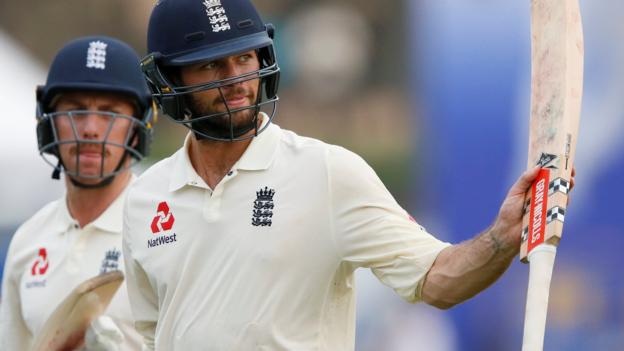
Foakes came to the crease with the score 103-5
First Test, Galle (Day one)
England 321-8: Foakes 87, Curran 48; Perera 4-70
Sri Lanka: Yet to bat
Scorecard

Debutant Ben Foakes says he was “inspired” by a video message from former captain Alastair Cook as his unbeaten 87 helped England recover from another batting collapse on day one of the first Test against Sri Lanka.

Poor shot selection saw the tourists slip to 103-5 before lunch in Galle.

But wicketkeeper Foakes’ 184-ball knock took England to 321-8 at the close.

“I don’t know who asked him to do it, but it was awesome,” Foakes, 25, said of the Cook video.

“We all sat down and watched it, it was inspiring and got us pumped up.

“He’s still lingering around,” the Surrey player joked.

Foakes said that in the video Cook was “talking us through everything about making your debut” as England began their first Test since 2006 without their record runscorer.

He was only brought into the squad as a late replacement when Jonny Bairstow was injured during the one-day series.

Sam Curran scored 48 in a 200-ball partnership of 88 with Foakes, who also put on 61 with Jos Buttler and 54 with Adil Rashid.

Foakes was one of two England debutants in the team – along with opener Rory Burns, who took Cook’s place at the top of the order – while bowler Stuart Broad was left out.

Burns was out for nine in the third over and when four more wickets fell in the morning session it looked as though England could be bowled out for a small total.

But Foakes, Buttler and Curran showed greater patience than the top order and guided their team to a much-improved position, which gives England a platform in the match on a spinning wicket.

Foakes turns tables on opening day

Foakes is England’s third wicketkeeper in their past three Tests

Foakes came to the crease for the first time in Test cricket shortly before lunch despite batting at number seven, having seen the top order perform poorly before him.

In comparison to those that came and swiftly went before him, he was mature, calm and accumulated runs carefully early in his innings.

At first batting alongside Buttler, he blocked good deliveries and was content to work the ball into the outfield, so it was not until his 44th ball that he hit his first boundary.

Foakes hit boundaries all around the wicket as he grew into his innings and was especially impressive in the way he rotated the strike by using his feet to nudge the ball into the leg-side off the spinners.

When Buttler edged Perera behind England were 164-6 but once again Curran showed his worth as a batsman at number eight.

As he did in the summer series against India, his defence looked solid and he also hit three big sixes from loose deliveries from the spinners.

Curran fell to mystery spinner Akila Dananjaya, edging to first slip Dinesh Chandimal when playing expansively, but Rashid then added a 38-ball 35 to help England to a score that arguably means they had the better of the opening day.

Attacking approach leads to familiar collapse

Before the Test, captain Joe Root said his team needed to be “bolder” and more “courageous” in their approach and in the morning session they seemed intent on playing in an attacking manner.

They lost two wickets in two balls in the third over, with Burns caught down the leg side and number three Moeen Ali bowled first ball, both dismissed by seamer Suranga Lakmal.

That brought captain Root to the crease and he looked keen to advance down the pitch and attack, hitting four fours in nine balls early on in his innings.

Root put on 62 from 81 balls with opener Keaton Jennings, with the run rate at one stage above five an over.

The England captain’s method of coming down the pitch to Sri Lanka’s spinners proved to be his downfall though, as he advanced to left-arm spinner Rangana Herath but yorked himself and was bowled for 35.

Jennings was also busy at the crease and played a number of conventional and reverse sweeps in reaching 46 from 53 balls – his highest score since being recalled to the team in the summer – but was then out playing a poor cut shot to a ball that went on to hit leg stump from Dilruwan Perera.

The off-spinner then claimed the wicket of Ben Stokes as the all-rounder also tried to sweep but left his stumps exposed and was bowled around his legs for seven.

Analysis

Former England captain Michael Vaughan on The Cricket Social

On the subcontinent, I have no idea why you would go for this risky approach. It’s like playing against Barcelona with no centre-halves.

The biggest culprit is the captain Root. He’s too good. When he plays in that frantic fashion, it sends a signal to the rest of the team that this is how to play.

He has not sent the right message to his team.

He does not need to take so many risks. Just sit in a bunker and play your shots when you can.

Root hit five fours in his 35 before being bowled

Perera steals show on Herath’s big day

Much of the attention of the home fans at the famous Galle ground was on Herath, who is playing in his 93rd and final Test at the age of 40.

He was given a guard of honour by the Sri Lanka team before play and when he bowled his first over of the day fans let off fireworks outside the ground.

The wicket of Root was the left-arm spinner’s 100th at his home ground, making him just the third bowler to take 100 Test wickets at one ground following England’s James Anderson (Lord’s) and former Sri Lanka spinner Muttiah Muralitharan (Kandy, Galle, and Colombo).

Herath bowled tidily for his 1-78 from 25 overs but it was off-spinner Perera who carried the greatest threat, finishing the day with 4-70.

Herath is the only current player to have played a Test in the 20th century

‘I tried to embrace the nerves’ – reaction

England’s Ben Foakes, speaking to BBC Sport: “That was awesome. A week ago I didn’t even have cricket on my radar, things happened really quickly. To find out I was playing yesterday and for it to go well was amazing.

“All I tried to do was embrace the nerves, embrace the excitement, don’t see it as a negative.

“I wasn’t thinking about the scoreboard when I came out to bat. I had my own thing going on, it could have been any score. Once I got off the mark, it was all good. It got easier to bat as the day wore on and I took advantage.

“I think a lot of it depends on how the wicket deteriorates. These could be very useful first-innings runs. You just have to wait and see how the game goes.

“I haven’t got the energy not to sleep, I’ll pass out soon so I think I’ll be all right.”

Read More

from Trendy News Day https://ift.tt/2PczsOt
via IFTTT

Helicopter victims ‘had minimal chance’

news image

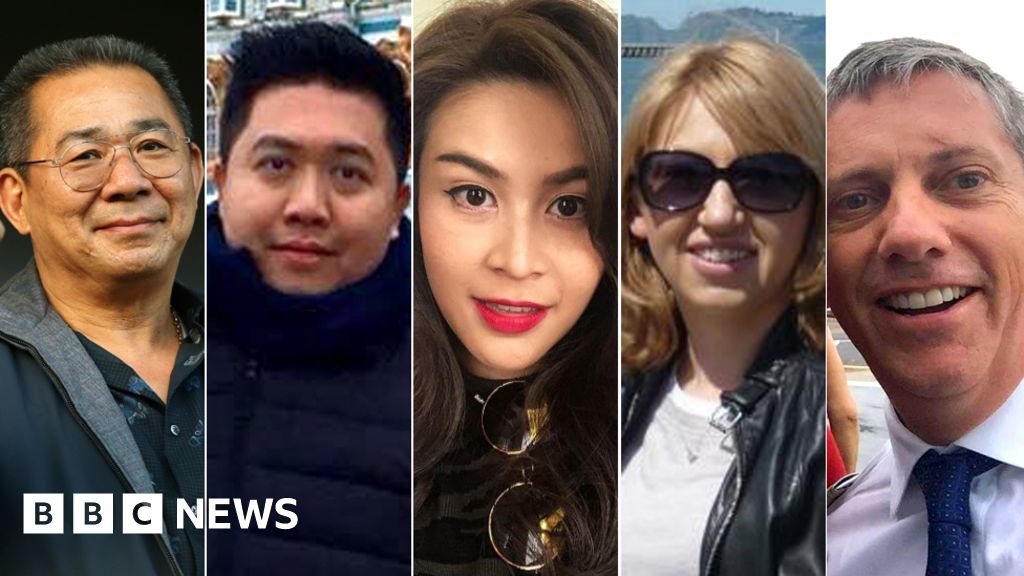
(L-R): Vichai Srivaddhanaprabha, Kaveporn Punpare, Nusara Suknamai, Izabela Roza Lechowicz and Eric SwafferImage copyright
Getty Images/Facebook/Instagram

Image caption

(L-R): Vichai Srivaddhanaprabha, Kaveporn Punpare, Nusara Suknamai, Izabela Roza Lechowicz and Eric Swaffer were killed in the crash on 27 October

There was “minimal chance” for anyone to survive a helicopter crash outside Leicester City’s stadium in which five people died, an inquest has heard.

Club owner Vichai Srivaddhanaprabha died alongside four others when the aircraft came down shortly after a match on 27 October.

Det Ch Supt David Sandall told the inquest an intense fire stopped anyone getting in or out of the cabin.

He said CCTV footage showed the helicopter “spinning out of control”.

Image copyright
King Power

Image caption

The Leicester City players joined Buddhist prayers for Vichai Srivaddhanaprabha

Coroner Catherine Mason heard Mr Sandall, of Leicestershire Police, was the senior identification manager.

Mr Sandall confirmed the victims had been scientifically identified and added: “CCTV shows the five victims in the tunnel at Leicester City football ground.

“Mobile phone footage showed the helicopter spinning out of control before descending to the crash site.”

Image copyright
Getty Images

Image caption

A huge number of tributes have been left outside the club’s stadium

Adjourning the inquest, Ms Mason said: “You have detailed to me that the final cause of death is pending subject to tests.

“Therefore I am not in a position to continue with the inquest at this time.”

A date for the inquest’s resumption has not been set.

Many players and staff have returned to the UK after attending the start of Mr Vichai’s funeral in Thailand.

The billionaire bought Leicester City in 2010, and his guidance and investment is credited with helping the club win promotion in 2014 and then the Premier League title in 2016.

A number of players, including club captain Wes Morgan, striker Jamie Vardy and goalkeeper Kasper Schmeichel, have spoken of the huge impact the Thai billionaire had on them and the club.

Thousands of tributes have been left outside the King Power Stadium and both physical and online books of condolence have opened.

Mr Vichai routinely flew from the stadium after matches and the helicopter came down less than a minute after taking off following a 1-1 draw with West Ham.

Two members of Mr Vichai’s staff – Kaveporn Punpare and Nusara Suknamai – pilot Eric Swaffer and his partner Izabela Roza Lechowicz, also a qualified pilot, were also killed in the crash.

The Air Accidents Investigation Branch (AAIB) is conducting an investigation into the cause of the crash having taken the wreckage to a facility in Farnborough, Hampshire.

The AAIB has confirmed contents of the digital flight recorder survived the post-crash fire.

Follow BBC East Midlands on Facebook, on Twitter, or on Instagram. Send your story ideas to eastmidsnews@bbc.co.uk.

Read More

from Trendy News Day https://ift.tt/2yTZDiE
via IFTTT

Will the midterm elections affect Trump’s Middle East strategy?

news image

Historically, the midterm elections in the US have often changed the power dynamics between the White House and the Congress, which has prompted US administrations to modify their approach to foreign affairs. In the recent past, there have been a number of such important foreign policy developments that have taken place as a result of electoral setbacks during the midterms.  

In 2006, the sweeping victory of the Democrats in the congressional vote prompted the Bush administration to alter its approach in Iraq, pushing for a US troops surge and seeking to appease the Iranian regime.

Then the resurgence of the Republicans in the 2010 midterms (which won them the House of Representatives) predisposed then-President Barack Obama to back the military intervention in Libya a few months later – a decision he would later consider as “the worst mistake” of his presidency. And again, after the electoral defeat the Democrats suffered in November 2014, the Obama administration switched gear and started pursuing much more seriously a nuclear deal with Iran, which was meant to serve as the president’s lasting foreign policy legacy.

The Trump administration might go through similar policy shifts or adjustments after the November 6 vote. If the polls are accurate this time around, the Democrats are slated to win the House of Representatives by a narrow margin, while the Republicans are expected to retain their control of the Senate.

Whatever the outcome, the midterm elections are likely to have both direct and indirect consequences for the US foreign policy in general and more specifically in the Middle East.

Changes in Congress

The direct consequences have to do with the change in dynamics inside the US Congress and the relations between the executive and legislative branch.

There will be a change of guard in the Senate with the passing of armed services committee chair John McCain and the retirement of foreign relations committee chair Bob Corker, two outspoken critics of the current administration who will be succeeded by Trump loyalists Jim Inhofe and Jim Risch respectively. 

However, there are still Senators Lindsey Graham, Marco Rubio, and Rand Paul (neither of whom are running for re-election in these midterms). All three have been occasionally critical of the White House and all have sway on foreign policy affairs.

If the Republicans retain control of the upper chamber (and quite likely they will), there is still no guarantee that they will not challenge Trump’s approach to the Middle East, especially when it comes to Iran and Saudi Arabia. Rubio and Graham are pressing the Trump Administration to do more on US sanctions against Iran, while Paul has been warning about the implications of exiting the Iran nuclear deal. In the aftermath of Saudi journalist Jamal Khashoggi’s murder, all three have called for harsh measures to be taken against Saudi Arabia, which Trump is reluctant to do. There have even been suggestions that the Republicans in Congress could “break” with the White House on this issue.

And of course, in the unlikely scenario that the Democrats take the Senate as well, this challenge would be that much bigger. The Democrats would be more aggressive in pressuring the Trump administration to take action against Riyadh and to revert to a more calibrated approach towards sanctions on Iran.

Moreover, if the Democrats take control of the House of Representatives, they are likely to use their oversight prerogatives to sway policy-making one way or the other. It is likely that the House will seek to press the Trump administration to halt US arms exports to Saudi Arabia and use it as a leverage to end the war in Yemen. The Trump administration’s recent call for a ceasefire in Yemen by the end of November is an attempt to pre-empt this expected development.

A Democrat-dominated House is also likely to push for cuts in the defence budget. The funding for Overseas Contingency Operations (OCO), which finances the US wars in Iraq and Syria, is expected to significantly decrease in 2019, which means

the White House will be limited in its ability to militarily deter Iranian influence in the Middle East.

Increasing focus on foreign policy

Electoral setbacks in midterm elections usually lead to a Congress that tends to disrupt the domestic affairs agenda of the White House. In this sense, the Trump administration is likely to focus more on foreign policy in the period between the midterm election and the start of the presidential campaign in mid-2019.

This is likely to push Trump to finally reveal details of the peace plan he announced for the Israeli-Palestinian conflict. While the president has talked extensively about his intentions to bring the Israelis and the Palestinians to the negotiating table, he has given almost no concrete details on what he will propose to the two sides. Re-starting talks, however, would entail challenging Israeli Prime Minister Benjamin Netanyahu to be ready to make significant compromises, something Trump has been reluctant to do so far. There might be potential frictions between the two if Trump gets serious about launching peace talks before the end of his first term.

The White House is also likely to continue exerting pressure on Iran but will most likely be criticised by conservatives in Congress for not getting tougher in implementing the sanctions and by the left for risking a potentially costly confrontation with the Iranian regime. Trump is also expected to make another attempt to re-engage with Moscow, but his efforts will most likely be thwarted by Democrats in Congress who are convinced the Kremlin intervened to help Trump win the 2016 presidential election.

Congressional opposition to any rapprochement with Russia could also foil any progress on resolving the Syrian issue and restarting peace talks between the opposition and the Assad regime. The US-backed Arab-Israeli axis against Iran might also suffer setbacks in the final two years of Trump’s presidency if pressure in Congress to take action on Saudi Arabia continues.

Beyond these direct and indirect consequences of the midterms, there are also several possible wild card developments that could take place in the weeks following the vote. Defence Secretary James Mattis might resign, which would alter the power dynamics inside the Trump administration and push it further to the right. Special Counsel Robert Mueller’s investigation could also be a game changer for the next US Congress if it found that there was enough evidence of collusion between the Trump campaign and Russia or of obstruction of justice by the president.

While we should expect the White House to get more engaged in the Middle East after the midterm election, the general character of its foreign policy in the region is expected to remain more or less the same: more tactical than strategic and more unpredictable than coherent.

The views expressed in this article are the author’s own and do not necessarily reflect Al Jazeera’s editorial stance.

Read More

from Trendy News Day https://ift.tt/2Oull1F
via IFTTT

Israeli army wounds iconic Palestinian protester

news image

Israeli soldiers have wounded a young Palestinian man whose photo has become recognised worldwide as a symbol of Palestinian resistance.

With a Palestinian flag in one hand and a slingshot poised in the other, the photo of 22-year-old A’ed Abu Amro has drawn comparisons with the iconic French Revolution painting, Liberty Leading the People.

Abu Amro was taking part in protests at the northern Gaza border against Israel’s 11-year-old land, air and sea blockade when Israeli troops intervened. Abu Amro was wounded in the leg by live bullets during the clashes.

He protests every Friday and Monday with friends.

“If I get killed, I want to be wrapped in the same flag. We are demanding our right of return, and protesting for our dignity and the dignity of our future generation,” Abu Amro told Al Jazeera late last month.

The photo, which went viral on social media and attracted worldwide attention, was taken by Anadolu Agency photojournalist Mustafa Hassona during a demonstration demanding the lifting of Israel’s blockade of the Gaza Strip.

“I don’t go to protests to get pictures of me taken, but this has encouraged me to continue demonstrating,” he earlier told Al Jazeera.

For nearly seven months, Palestinians in the Gaza Strip have protested along the fence with Israel demanding their right to return to the homes and land their families were expelled from 70 years ago.

They are also demanding an end to Israel’s crippling blockade of the Gaza Strip, which has gutted the coastal enclave’s economy and deprived its two million inhabitants of many basic commodities.

Since the Great March of Return demonstrations began on March 30, more than 200 Palestinians have been killed and thousands more injured by Israeli troops deployed along the other side of the fence.

SOURCE:
Al Jazeera and news agencies

Read More

from Trendy News Day https://ift.tt/2Qn73Se
via IFTTT

Erdogan: US sanctions on Iran wrong, aimed to unbalance world

news image

Turkish President Recep Tayyip Erdogan has slammed the new US economic sanctions on Iran, saying that Turkey will not abide as they are aimed at unbalancing the world.

“US sanctions on Iran are wrong. For us, they are steps aimed at unbalancing the world; we don’t want to live in an imperialist world,” Erdogan told reporters on Tuesday after addressing ruling party MPs at the parliament in the capital, Ankara.

His comments come after Washington this week imposed a second set of sanctions on Iran that aim to isolate the country’s banking sector and slash its oil exports.

Eight countries including Turkey – a NATO member – have received a US waiver to continue importing Iranian oil without consequences. 

According to Turkish Daily Sabah, Erdogan said that Turkey imports about 10 billion cubic metres of natural gas from Iran.

According to the data from the Energy Market Regulatory Authority’s (EMRA) Natural Gas Market Report for December 2017, about one-fifth of Turkey’s natural gas exports come from Iran.

Isolating Iran is dangerous

Foreign Minister Mevlut Cavusoglu also warned Washington against the reimposition of sanctions on Iran, saying isolating the country is “dangerous”.

“While we were asking [for] an exemption from the United States, we have also been very frank with them that cornering Iran is not wise. Isolating Iran is dangerous and punishing the Iranian people is not fair,” he said at a press conference during a trip to Japan.

“Turkey is against sanctions, we don’t believe any results can be achieved through the sanctions,” he added.

“I think instead of sanctions, meaningful dialogue and engagement is much more useful.”

Cavusoglu had earlier conveyed the same message last July to a delegation of US officials, stressing that Turkey would not abide by anti-Iran sanctions since Iran is an important neighbour and partner.

“We buy oil from Iran and we purchase it in proper conditions. What is the other option?” Cavusoglu said.

Washington has imposed two sets of sanctions this year after pulling out of the landmark 2015 nuclear pact agreed between world powers and Iran that President Donald Trump derided as “defective”.

The latest round went into effect on Monday.

Oil waivers

The new sanctions have sparked furious reactions from Iran, whose President Hassan Rouhani said the country would “proudly bypass your illegal, unjust sanctions”.

On Monday, Washington vowed to be “relentless” in countering Iran, with Secretary of State Mike Pompeo saying the US wanted Iran to make a “180-degree turn” and abandon its “current revolutionary course”.

UN inspectors say Iran is abiding by an agreement reached with Trump’s predecessor Barack Obama to draw down its nuclear programme. That deal was backed by European powers, Russia and China and sealed by a UN Security Council resolution.

Those other parties to the nuclear deal have vehemently opposed the US move and vowed to keep alive the accord, technically known as the Joint Comprehensive Plan of Action.

Read More

from Trendy News Day https://ift.tt/2AOkMMC
via IFTTT

Untold history: The WWI battles that levelled East Africa

news image

Dar Es Salaam, Tanzania – One hundred years ago, on November 11, 1918, the armistice brought an end to WWI in Europe. 

For the countries of East Africa, however, the war would go on for another two full weeks.

From 1914, British Empire soldiers fought a four-year guerrilla campaign against a small German force in East Africa.

On November 25, 1918, Allied and German forces received and accepted the terms, bringing an end to four years of conflict that had cost the lives of hundreds of thousands of African soldiers and civilians over 750,000 square miles – an area three times the size of the German Reich. 

Historian Kathleen Bomani grew up in Tanzania and had been the classroom expert on the First World War. 

“I knew it in and out,” she says, “or so I thought”.

Now, she is showing her exhibition ‘What Happened Here’ in Dar Es Salaam as part of the WWI centenary. 

Remembrance of WWI remains largely European, even within Tanzania.

Kathleen Bomani, historian

It was in her twenties that Bomani realised that not only had the war raged in Tanzania, Zambia and Burundi (then German East Africa), but that it had lasted the entire duration of the war in Europe, and brought comparable devastation.

She had questions. Why was the war considered a sideshow to the trench warfare in Europe? And what traces were left of the fighting? So she travelled through Tanzania, following the routes of African soldiers and carriers, to explore their histories.

Al Jazeera: What happened in East Africa during the First World War? Was it different from the fighting in Europe? 

Kathleen Bomani: To understand the scale of the conflicted area, you have to imagine German East Africa as a colony made up much of today’s Burundi, Rwanda and the majority of Tanzania. 

The size and nature of the land meant that the fighting took on a completely different style. 

There was less trench warfare. Instead, the Germans and the Allies chased each other up and down the region, often at a pace of 30km a day. 

They levelled villages for supplies and enlisted civilians as soldiers to fight and carriers to shift their supplies. Most soldiers and porters died from malnutrition, fatigue, malaria, tsetse fly and black fever, rather than bullets.

Significantly, the war occurred just seven years after one of the largest acts of resistance against colonial rule, the Maji Maji Uprising. 

As a result, the German forces utilised guerrilla tactics that had been successful to them.

Al Jazeera: What was the cost?

Bomani: For German commander Paul von Lettow-Vorbeck, the East Africa campaign was as a distraction, with the aim of drawing Allied troops away from the fronts in Europe. 

Britain leaned on forces from across its colonies: troops from Ghana, Nigeria, the West Indies, Jamaica, Uganda, Kenya, South Africa. 

Together with Allied forces of Belgium and Portugal, their numbers made up 150,000 soldiers. German forces numbered around 25,000.

An old German hospital built in 1895 is now completely empty in Tanga, Tanzania [Laura Cole/Al Jazeera]

More staggering was the number of carriers needed over the four years, at a total of more than one million. 

And wherever soldiers went, they recruited more. The official loss of life was around 105,000 although these numbers are almost certainly downplayed.

Fundamentally, the deaths of carriers were seen as dispensable and not accurately recorded. We may never know how many Africans died during WWI. 

Al Jazeera: You have travelled around Tanzania exploring the traces of the war left on the region. What do they look like?

Bomani: There are no official cemeteries for African soldiers and carriers and there are few traces of the battlefields. 

What have endured are large German colonial buildings that became quickly abandoned after 1918: a hospital in Tanga, disused train stations in Mwanza, a fort in Lindi and impressive houses for German governors.

A former missionary church in the historical Swahili town of Mikindani, Tanzania [Laura Cole/Al Jazeera]

The first thing you notice about these buildings is that they are statuesque. They were built to last. 

The Germans had clearly intended to keep its colony for a long time, like the British after them. 

The second is that they are all empty. These are prime locations, often beachfront or strategic, very public spaces. Despite that, they have not been used. They carry a feeling of unreconciled trauma. 

Al Jazeera: You explain in your exhibition that the traces of the war are different in the south of Tanzania…

Bomani: In the south, it is hard to find any trace of the battles. Even at the place of one of the bloodiest battles, Mahiwa, where the death count reached the thousands in just three days, there is little trace of WWI. 

There is, however, a church, which would have been a Christian mission from the same era. Such churches kept records of daily life in the run-up to the war: they recorded villagers selling all their livestock so they would have enough money to flee, they recorded student numbers in school plummeting.

Carriers were fully aware that this conflict was fundamentally a colonial project.


Meanwhile, British missionaries wrote opportunistically about the lands and congregations of German missions that would become available to them after the war. Across the southern highlands, these records give a sense of the scale of the war, and that the people in its path universally acknowledged its force. 

Al Jazeera: How do you feel, finding these traces of WWI?

Bomani: On the one hand, it is good these traces exist, or you would have a hard time convincing yourself that the war happened here. 

On the other, these traces left as they are have not been discussed or unpacked, and so remembrance of WWI remains largely European, even within Tanzania. They are not monuments, but monoliths that signal the colonial past.

Al Jazeera: You say in your exhibition that researching WWI has become a personal undertaking. What do you mean by that?

Bomani: I am Sukuma, a people from northern Tanzania. Traditionally, Sukuma are farmers and they use music to pace themselves through agricultural work. 

Through the years of the centenary, I looked into some of the songs focused on those that came from WWI, when Sukuma were heavily recruited as carriers and soldiers by German forces.

While Europe marks 100 years of remembering, we Africans are now just opening that chapter. While the centenary is almost over, it is not too late.


One song that struck me has the lyrics: 

‘Boulders fighting one another on the plain/ the Germans and the English/ they run about taken to flight/ because of cattle’.

The ‘cattle’ line means assets: resources, land, livestock, money. In other words, the carriers were fully aware that this conflict was fundamentally a colonial project.

I was struck too by the subversive power of the songs – they contradict the image of the loyal askari soldier, which was used as propaganda throughout wartime. They are a record of the larger African experience during WWI, and it is important to preserve them even as agricultural methods change. 

Al Jazeera: How is the WWI history usually remembered in Tanzania? Why do you feel this is important to the future of the country?

Bomani: There are usually memorial services, often in war cemeteries on November 11, instead of the 25. I have visited these cemeteries in Dar es Salaam, Tanga, Moshi, Iringa and there is no acknowledgement of the African soldiers and carriers. 

The lack of acknowledgement underscores how vital the Black Lives Matter movement is today. Because even in celebrating one of the most well-known events in history, there still has been a level of omission loss to African lives.

Al Jazeera: Has it been any different for the centenary? 

Bomani: This year the University of Dar es Salaam is hosting a conference on German colonial history and experts will be putting themselves to the task of discussing some of the uncomfortable truths of the war in Africa. 

There is new talk of including the East Africa campaign in the school curriculum. Ultimately, the nation is beginning to address it and move forward. While Europe marks 100 years of remembering, we Africans are now just opening that chapter. While the centenary is almost over, it is not too late.

A German fort in the southern highlands town of Tukuyu, known as Neu-Langenberg during German colonial era [Laura Cole/Al Jazeera]

Read More

from Trendy News Day https://ift.tt/2JIbDbs
via IFTTT

More than 200 mass graves discovered in Iraq: UN report

news image

More than 200 graves containing the corpses of thousands of victims have been discovered in areas formerly controlled by the Islamic State of Iraq and the Levant (ISIL, also known as ISIS), a UN report said.

The report by the UN Human Rights Office and the UN Assistance Mission documented the existence of 202 mass grave sites in the northern and western Iraqi governorates of Nineveh, Kirkuk, Salah al-Din and Anbar.

The dead include women, children, the elderly and disabled, as well as members of Iraq’s armed forces and police, the report said.

These deaths occurred in what the United Nations has called a systematic and widespread campaign of violence, “which may amount to war crimes, crimes against hunanity and genocide”.

It may be difficult to specify the exact number of people in the graves, with the smallest site in west Mosul believed to contain eight bodies while the biggest in the Khasfa sinkhole south of Mosul is believed to contain thousands of corpses.

The UN has said previously that almost 33,000 civilians were killed by the group in Iraq, with more than 55,000 injured.

The report notes that the sites could provide critical forensic material that can lead to the identification of victims and help understand the scale of crimes committed by ISIL.

“Evidence gathered from these sites will be central to ensuring credible investigations, prosecution and convictions in accordance with international due process standards,” the report said.

“Meaningful truth and justice requires the appropriate preservation, excavation and exhumation of mass grave sites and the identification of the remains of the many victims and their return to the families,” the report said.

In 2014, the armed group captured vast swaths of Iraqi territory, including the country’s second largest city of Mosul.

ISIL had entrenched itself in these areas until their defeat in December 2017 by Iraqi forces supported by a US-led coalition.

During its three-year rule, the group harassed local residents, conducting well-publicised executions of people targeted for their perceived opposition, government ties, sexual orientation and more.

Truth, justice and reparations critical 

The report also describes how families of those who went missing continue to face challenges in establishing the fate of their loved ones.

They are currently forced to report to five separate government agencies, a process that is described as both time consuming and frustrating for the traumatised families.

As well as calling for the establishment of a public federal and central government registry, the report urges the government to take a multidisciplinary approach to recovery operations, with the participation of experienced specialists such as weapons contamination and explosives experts and crime scene investigators.

“These graves contain the remains of those mercilessly killed for not conforming to ISIL’s twisted ideology and rule, including ethnic and religious minorities,” the report states.

“Their families have the right to know what happened to their loved ones. Truth, justice and reparations are critical to ensuring a full reckoning for the atrocities committed by ISIL.”

Read More

from Trendy News Day https://ift.tt/2yTjFtT
via IFTTT

Saudis tampered with CCTV cameras after Khashoggi murder: report

news image

Turkish media have reported that staff at Saudi Arabia‘s consulate in Istanbul tried to dismantle security cameras to help cover up the murder of Saudi journalist Jamal Khashoggi.

The pro-government Sabah newspaper reported on Tuesday that the Saudis tried to rip out the camera inside the consulate on October 2, the day Khashoggi was murdered.

They also tried to tamper with cameras at the police security booth outside the building.

Khashoggi, a former Washington Post columnist and critic of the powerful Saudi Crown Prince Mohammed bin Salman, also known as MBS, was killed in the kingdom’s consulate in Istanbul on October 2. His body remains missing.

According to the report, on October 6, at 1am local time, a consulate member staff went into the police security post outside the Saudi consulate to access the video system.

Sabah reported that the staff member put in a digital lock code into the system, which did not dismantle any cameras, rather the code was to prevent access to any videos showing movement at the entrance, including Khashoggi’s arrival at the consulate.

Al Jazeera’s Andrew Simmons reporting from Istanbul said that their attempt was in any case irrelevant, because the police had already deciphered the coding and accessed the system, retrieving a copy of the video well ahead of the attempt of tampering.

“All of this demonstrates, according to Turkish officials, in terms of the … whole set of procedures, that there was an effort by the Saudi Arabian consulate to once again tamper with evidence,” Simmons said.

“This follows a pattern of leaks which demonstrate beyond any doubt, according to the Turks, that the Saudis weren’t out to investigate a murder, they were out to cover it up.”

Turkish authorities claimed last month that security camera footage was removed from the Saudi consulate and that Turkish staff were told to take a holiday on the day Khashoggi was scheduled to visit the consulate to pick up a document for marriage.

On October 23, Turkish President Recep Tayyip Erdogan said in a speech to ruling party lawmakers in Ankara that the murder was planned days in advance by a Saudi team.

He said that the surveillance system at the Saudi consulate in Istanbul was deactivated on purpose.

“First [the Saudis implicated] removed the hard disc from the camera system,” Erdogan said. “This is a political murder.”

Erdogan said he wanted answers to many questions, such as who gave the orders to kill Khashoggi and what happened to his body.

On Friday, Erdogan said that the order to kill Khashoggi came from the “highest levels” of the Saudi government, but that he does not believe King Salman was to blame.

More evidence to come

Mevlut Cavusoglu, the Turkish foreign minister, reiterated on a visit to Japan on Tuesday that it is “obvious” that the 15-member team from Saudi Arabia had arrived in Istanbul with instructions to kill Khashoggi.

However, Turkey has not been able to receive an answer from Saudi Arabia as to who specifically ordered Kashoggi’s murder.

“We have to find out who gave these instructions. This is the simple question that we have put to the Saudis as well. We made it very public. It’s an ongoing investigation,” Cavusoglu said.

“Saudis proposed to have a joint working group and we accepted that but this working group should be a result-oriented one.”

Cavusoglu added that Turkey has further evidence regarding Khashoggi’s killing which they have yet to share with the public and that details of his case will continue to be reported to the public until the investigation is complete.

Saudi ‘cover-up team’ sent to dispose of Khashoggi body: Report

Read More

from Trendy News Day https://ift.tt/2OtpwL8
via IFTTT

Qatar’s Emir: Gulf crises will pass, but economy is stronger

news image

Qatar’s Emir Sheikh Tamim bin Hamad Al Thani said he regrets the continuation of conflict with other Arab states, but added that “crises will pass”, outlining the nation’s economic achievements over the past year.

The country would continue to develop its oil and gas industries as it is keen to preserve its status as the top liquefied natural gas exporter in the world, Tamim said in a speech to the Arab state’s shoura council.

Tamim added that Qatar had grown its exports by 18 percent last year and slashed spending by 20 percent.

On June 5, 2017, Saudi Arabia, the United Arab Emirates, Bahrain and Egypt severed diplomatic and trade relations with Qatar, closing land, air and sea links, as they accused Doha of supporting terrorism and violating a 2014 agreement with members of the Gulf Cooperation Council (GCC).

Qatar denies all allegations raised by the quartet.

The Gulf nation’s currency has preserved its value since the start of the rift and the economy has diversified to overcome the impact of the sanctions imposed by its neighbours, Tamim said in his speech on Tuesday.

Addressing the conflict between the GCC nations, Tamim said: “The deterioration of Gulf relations weakens our ability to solve regional problems”.

SOURCE:
Al Jazeera and news agencies

Read More

from Trendy News Day https://ift.tt/2RATsqM
via IFTTT