The US-backed Afghan government has lost control of a number of districts to the Taliban, while casualties among security forces have reached record levels, a US watchdog agency has said.
The latest quarterly report from the Special Inspector General for Afghanistan Reconstruction (SIGAR) underlines the heavy pressure on the government in Kabul even as the United States has opened initial contacts with the Taliban on possible peace talks.
“The control of Afghanistan’s districts, population, and territory overall became more contested this quarter,” the agency said in its report.
The Taliban have still not succeeded in taking a major provincial centre despite assaults on Farah in western Afghanistan and Ghazni in the centre this year but they control large stretches of the countryside.
Data from Afghanistan’s NATO-led Resolute Support mission showed that government forces had “failed to gain greater control or influence over districts, population, and territory this quarter”, the agency said.
As of September, it said the government controlled or influenced territory with about 65 percent of the population, stable since October 2017, after a year of heavy fighting in Farah and Ghazni as well as other provinces like Faryab and Baghlan in the north.
However, it reported that only 55.5 percent of the total 407 districts were under government control or influence – the lowest level since SIGAR began tracking district control in 2015.
“While the districts, territory, and population under insurgent control or influence also decreased slightly, the districts, territory, and population ‘contested’ – meaning under neither Afghan government nor insurgent control or influence – increased,” it said.
Six months before presidential elections, the figures are a sign of the degraded security situation in Afghanistan, even as the US special envoy, Zalmay Khalilzad, has met Taliban officials to map out possible peace talks.
As the Taliban have kept up pressure on the government, SIGAR quoted the Resolute Support mission as saying the average number of casualties among Afghan security forces between May 1 and October 1 was “the greatest it has ever been during like periods”.
The Afghan government no longer releases exact casualty figures but this month General Joseph Votel, head of US Central Command, said Afghan casualties were increasing from last year and were an issue “we are paying very, very close attention to”.
The United Nations Assistance Mission in Afghanistan (UNAMA), which has documented civilian casualties in Afghanistan since 2009, said in its latest October report that there were 8,050 civilian casualties during the first nine months of the year, including 313 deaths and 336 injuries caused by US and Afghan air attacks.
The Taliban, who were removed from power by US-led forces in 2001, has been waging a bloody armed rebellion to defeat the Western-backed government in Kabul.
This post is part of Mashable’s ongoing seriesThe Women Fixing STEM,which highlights trailblazing women in science, tech, engineering, and math, as well as initiatives and organizations working to close the industries’ gender gaps.
It had taken a month of work, but Jesse Kinser had finally hit the jackpot. The security researcher had managed to pull off quite a feat — stealing the source code for more than 10,000 different websites, including a big four consulting company — and the ramifications of her find were staggering.
But contrary to many people’s perceptions of shadowy hackers, her next move wasn’t trading the data on the dark web, or crafting exploits to sell to the highest bidder. Rather, she was faced with a different sort of daunting task: developing a responsible disclosure process to notify the thousands of vulnerable companies she’d just pwned. That’s right, after accessing all that code, her next job was to let the victims know exactly how she’d done it — and how they could stop someone with a different set of moral guideposts from doing the same.
It’s all in a day’s work for the researchers who, driven by curiosity, a common sense of purpose, and the real possibility of financial reward, spend their time hunting bugs online. Welcome to the world of bug bounties, where the hackers are the good guys — or, just as often, the good gals.
Though, perhaps not as frequently as one might hope. A 2017 report from The Center for Cyber Safety and Education, a nonprofit “committed to making the cyber world a safer place for everyone,” investigated the gender gap in the field of cybersecurity and information security and the findings weren’t pretty.
“Women are globally underrepresented in the cybersecurity profession at 11 percent, much lower than the representation of women in the overall global workforce,” read the study’s key findings. “In 2016 women in cybersecurity earned less than men at every level.”
To make matters worse, a 2017 survey by endpoint security company Endgame found that “85 percent of non-male respondents experienced some level of discrimination at professional conferences, and over half have experienced harassment at those events.”
Clearly, much needs to change.
We spoke to three women absolutely crushing the bug bounty field, who explained how they got started, why they do what they do, and some of their most memorable discoveries. They also shared their thoughts on how to encourage more women to join them in their quest to make the internet a safer place.
But first, a little background.
Bug Bounties
As long as there has been publicly released software, there have been enthusiasts poking into it. Those people, often viewed with suspicion by corporate execs or government officials, sometimes discover bugs — unintentional holes, or glitches, built into a system that allow it to be manipulated in ways its designers hadn’t intended.
This, the security community has come to understand, can be a very good thing.
The term bug bounty appears to have first been used by Netscape in 1995 press release regarding its beta Navigator 2.0 software. The idea itself had been tried before, and notably involved an actual VW Bug, but Netscape’s program was one of the first attempts by a major software company to codify the practice and lay out clear rules for anyone poking around the company’s products in his or her spare time.
Netscape referred to its program as a “bugs bounty” contest and structured rewards — from cash prizes to merch — based on the type and severity of the bugs reported.
This program, and later bug bounty programs like it, killed two birds with one stone. First, reported bugs would allow the company to make its software more secure. Second, and here’s the real game changer, it created a legal alternative for hackers hoping to financially benefit from their hard work.
With the implementation of bug bounty programs, embraced by the likes of Google, Microsoft, Facebook, and shepherded by companies like HackerOne and Bugcrowd, hacking could make you rich (or, at the very least, pay your bills) without the drawback of having to look over your shoulder for police in the process.
Katie Moussouris
Image: courtesy of Katie Moussouris
“I was a really strange, lonely child with a computer,” recounted Katie Moussouris over the phone one sunny October afternoon. “I think that’s the origin story of many of us, especially in the pre-internet days of computing.”
Moussouris, an internationally renowned security researcher and founder of the bug bounty program at Microsoft, was always interested in computers. Growing up in the Boston area, she first got her hands on one at eight, and quickly learned how to program Basic on a Commodore 64. Before long, she was dialing into the same bulletin board systems (BBS) frequented by members of the notorious L0pht hacking crew.
She carried this interest into her professional life, and her early work included a systems administration job at MIT’s Whitehead Institute for Biomedical Research Genome Center, and later a role as MIT’s Department of Aeronautics and Astronautics sys admin.
“MIT, up until very recently, was on purpose a very open network,” she said over the phone. “You had students and grad students and professors all putting their unpatched, brand new installed boxes up on the raw internet with IP address. It was my job as systems administrator to make sure that they didn’t get hacked too often, and if they were hacked that I could go in and clean up and restore their services.”
Moussouris’s next professional step involved a move to San Francisco to work as a Linux developer with a focus on security.
The dot-com bust of the early 2000s changed things for many in the Bay Area, including Moussouris, who used the upheaval as an excuse to become an independent penetration tester — a “hacker for hire,” as she explained.
Skip ahead a few years, and Moussouris was employed at Microsoft in her first non-hacking role in roughly a decade. She was working as a strategist, but found Microsoft’s vision for her work — “part technical recruiter, part influencer of the hacker community” — to be “a little bit thin.” So, she did what any hacker would do: She found how to make the larger corporate system work for her.
Moussouris launched Microsoft Security Vulnerability Research — a program that consisted of Microsoft employees searching for vulnerabilities in third-party products — giving her the chance to help coordinate the discovery and reporting of bugs that affected the larger security ecosystem.
In early 2010, she was offered a Director-level position at a company in San Francisco and was all set to leave Microsoft when her employer made her an offer she couldn’t refuse. Specifically, the chance to start a bug bounty program at the company, helmed by her.
Three years later, after a lot of work, the Microsoft Bug Bounty program launched. Moussouris had secured the full support of the Internet Explorer team, the Windows team, and the Office 365 team was itching to get on board.
And the project was a success. She still remembers the first $100,000 bounty that Microsoft paid out. The recipient was her friend James Forshaw, now with Google Project Zero. Moussouris happened to be in England at the time — Forshaw lived in London — and so she took him out for beers in an attempt to convince him to participate in the program.
It worked.
“He found four different sandbox escapes in the 30 days of the IE bounty,” Moussouris recalled with more than a touch of pleasant surprise. “That was astounding to us.”
“Our threat models as women are different from men.”
So, knowing a good thing when she saw it, she went back to Forshaw and asked him to try again. He did, and at the end of a three-week “research bender,” he discovered a reliable exploit and handed over a full technical writeup that was, in Microsoft’s eyes, well worth a $100,000 payout.
“My favorite moment was calling my friend James on the phone, and I was standing outside of a Microsoft cafeteria, and I said, ‘James, you’ve made history.’”
But Moussouris wasn’t done there. She later went on to help create the U.S. Department of Defense’s first bug bounty program, known as Hack the Pentagon.
Still, despite her work launching foundational bug bounty programs, Moussouris offered a word of caution. She explained that if the security community isn’t careful, bug bounty programs will turn into a sort of virtue signaling that doesn’t address real security problems.
“What I see in the couple of years of bug bounty popularity is a huge diversion from the original purpose of focusing eyes on areas you want to look at, to ‘a bug bounty is a replacement for a [penetration test]’— which is absolutely wrong,” she explained. “Unfortunately it’s creating a very damaging ecosystem for both bug hunters and companies who want to start bug bounties.”
And that’s not her only critique of the bug bounty space. Moussouris, who founded and currently runs the security company Luta Security, sees industry-wide pay disparities as something that must be fixed if more women are going to find longterm success in the field.
“It’s not about getting more women interested in tech, we already are, we’re born ready.”
“This is a result of valuing women’s work less than men, and it’s an endemic problem,” she noted. “So, I look at this as more of a societal issue. It’s not about getting more women interested in tech, we already are, we’re born ready.”
Moussouris was quick to identify one of the tangible problems that comes with having a homogenous security community. “Our threat models as women are different from men,” she observed. “We should be participating.”
Still, Moussouris thinks the tide is changing — albeit slowly.
“I’m holding out for my hacker Hidden Figures LEGO box set figure of myself in like 50 years,” she joked toward the end of our conversation. “I’ll be 93, at that point, and I think that’s about right — that’s probably when we’ll see the broader recognition of women’s contributions to computing.”
Jesse Kinser was interested in security research, and wasn’t going to let the fact that Indiana University Bloomington — where she was studying for her undergraduate degree — didn’t at the time have a dedicated program stop her from pursing it.
So, with some guidance from professor of informatics Jean Camp, she got to work on her own.
“[I] started research on malware and digital forensics,” she explained over the phone, “and started writing these random research papers which actually ended getting picked up by [the U.S. government].”
Essentially, like so many hackers before her, she made her own way into the community.
She graduated in 2010, and, after college, worked with the U.S. intelligence community for five years — eventually getting her masters degree in computer science at Capitol Technology University.
Fast forward to three or four years ago, and Kinser found herself interested in expanding her work past secure development and into so-called “red teaming.” You know, the actual breaking into stuff part of hacking.
That’s where the bug bounties came in.
“I really wanted to get a more hands on, technical skill set,” she recounted. “I started doing bug bounties because I could do that on the side to really perfect my skills, and then I had a chance to legally hack against all these random third-party companies that encouraged it. So that was really cool.”
One of those cool things? That aforementioned stolen source code from over 10,000 websites.
“I actually put a down payment on a Tesla with my bug bounty money.”
“There was a big four consulting company that I was able to pull all their database passwords down and steal their entire source code for their site,” she recalled. “There was 10,000 different websites that I did this for, right, and so then I had to come up with a responsible disclosure process to let them all know ‘hey you’ve got this misconfiguration.’”
“So that was a barrel of fun,” she laughed.
Kinser presented her findings at DEF CON 25 in 2017 as part of the non-recorded track. That track is typically reserved for sensitive findings, of which this clearly counted. Especially considering the number of websites affected.
“The vulnerability disclosure work took longer than actually finding and exploiting the vulnerability because of the number of impacted sites and people to notify,” she explained. “The source code was exposed at the root of the website for more than 10,000 sites, some of which were U.S. federal and state government owned.”
This research, while incredibly valuable, didn’t exactly make her rich. And it even pissed a few people off. At least some of the vulnerable companies didn’t want to believe that someone was able to pull off what she had done. But, of course, Kinser was.
Some companies straight up ignored her attempts to notify them of her findings, while a few responded more reasonably.
“Some of the impacted people sent me money via Paypal or random swag as a token of appreciation but most did not,” she recalled. “It was mostly a few hundred dollars here and there. One company sent me this strangely shaped umbrella which everyone looks at me weird when I use here in the midwest.”
But that was then.
Kinser currently works at LifeOmic, a software company in the healthcare space, and puts her expertise to use as the company’s Director of Product Security. She is exactly the kind of person you want protecting sensitive medical data from attackers — after all, as a bug bounty researcher, she (legally) is an attacker herself.
Plus, she gets to run LifeOmic’s bug bounty program. In other words, she’s on both sides of the coin — paying her bills with her full-time security job and earning her “fun money” by finding holes in others’ software.
“I actually put a down payment on a Tesla with my bug bounty money,” she noted.
Kinser emphasized that you don’t need to have an academic background researching malware to become a bug bounty hunter. The field, she insisted, is open to all comers.
“I think the thing that women need to know is that it’s OK if you know nothing about this industry, you can always get into it.” She explained that a career in security “really is [obtainable] if you just spend time and start doing it, and these bug bounty programs are a great way to do that.”
Kinser added that bug bounties, specifically, offer the flexibility needed to get into the hacking scene.
Not that it’s without its challenges. “A lot of us are parents,” she said, “[and] once my son is in bed, I work on bounties sometimes until 2:00 a.m. in the morning.”
Kinser hopes to see a wider understanding of the difficulties presented by being a parent and a security professional at the same time. Specifically, traveling the world to attend security conferences becomes a lot more difficult when you need to find child care.
“It’s a unique balance,” she observed, “and I’ve noticed a lot more women in the security industry starting to talk about that, and how they balance it and some of the challenges [that come] with that.”
Alyssa Herrera
Image: hackerone / courtesy Alyssa Herrera
Like many who’ve chosen a life in security work, Alyssa Herrera got her start hacking early — 16, to be exact. She was quickly hooked.
Her discovery of bug bounty programs, and the real possibility of making cash doing what she loved, changed the course of her life.
“It was a small turning point for me when I found out about bug bounty programs and it being a possible legitimate outlet for something I knew how to do,” she explained over email. “It was so much of a decision for me that I actually didn’t go to college because I wanted to spend time learning about information security and everything about the legal side of doing security work for companies.”
Now, four years later, she does well enough that finding and reporting bugs via platforms like HackerOne is her sole source of income.
“It’s like solving a hard riddle or a puzzle.”
“It’s been quite a journey,” she observed. Which, well, based on some of her findings, sounds like an understatement.
When asked about the more memorable bugs she’s discovered and reported, Herrera shared two of particular note. The first of which just so happened to involve hacking the U.S. Department of Defense.
“I was able to find a novel way to access their internal non-classified networks,” she explained. “It was quite a rush to demonstrate how a malicious state actor could compromise and gain access to sensitive military servers.”
A rush indeed. Working as a bug bounty researcher, Herrera was allowed to legally hack the U.S. government. But she targeted private companies, as well — with their permission, of course.
“The other vulnerability would be for a private insurance company in which I was able to demonstrate basic command injection that gave full access to their servers,” she recalled, “which could [have] led to [a] massive data leak.”
“The experiences were both quite euphoric,” added Herrera, “it’s like solving a hard riddle or a puzzle. It’s one of the things that keeps me working toward finding more vulnerabilities.”
Herrera sees plenty of room for more people to get into the bug bounty scene, noting that organizations like Women In Tech Fund and WISP work to provide resources and funding for women in the hacking community.
However, she noted curiosity and drive go a long way on their own.
“Honestly anyone can learn about bug bounties and web application security,” she explained. “The community for information security as a whole is quite welcoming, and there’s various resources freely available.”
As for what keeps her going? “There’s always a new challenge around the corner, especially with bug bounties.”
Almost a decade ago, the teardrop-shaped island in the Indian ocean brought to a brutal end a conflict that claimed thousands of lives.
Since then, history seems to have come full circle. On October 26, Sri Lankan President Maithripala Sirisena made a shock decision to fire the current Prime Minister Ranil Wickremasinghe and appoint former President Mahinda Rajapaksa in that role. He also unilaterally suspended Parliament and the cabinet. Many analysts and experts fear a chilling revival of the former abusive regime.
Rajapaksa’s administration was accused of serious rights violations during the final stages of the conflict between the government of Sri Lanka and the Liberation Tigers of Tamil Eelam. It is a matter of record that the Sri Lankan military indiscriminately attacked civilians, hospitals and schools, executed prisoners and interned thousands of Tamils with widespread use of torture and sexual violence. Thousands of Tamils and other minorities with links to the Tigers were also forcibly disappeared.
Sirisena defeated Rajapaksa in 2015 on a broad mandate of reform which included good governance and a process towards transitional justice for crimes committed by all parties. However, the initial good relations between Sirisena and his coalition partner Wickremasinghe soon soured into three years of bickering and deep distrust with very little progress made on justice and accountability issues.
Rajapaksa’s appointment to the prime minister’s seat is not final, as the Sri Lankan high court has to rule on the constitutionality of the presidential decision. But if its ruling is in favour of the sacking of Wickremasinghe and the former president comes back as prime minister, what does this mean for the future of the country?
The death of post-conflict justice agenda
Rajapaksa’s return would certainly mean the reversal of the few gains that have been made on transitional justice and accountability. It would also signal the end of a joint process towards transitional justice at the Human Rights Council, which began with a landmark UN resolution in 2015.
This resolution led to the creation of an Office of Missing Persons which gave hope to those desperately seeking information on loved ones, but it never really got off the ground. The resolution also called for a hybrid court involving international judges that would investigate all parties to the conflict. But it lost momentum and the hybrid court was soon relayed into a call for domestic processes only.
Thousands rally in Colombo in support of sacked Sri Lanka PM
In addition, other measures, such as security sector reform never happened and Sri Lanka continues to have emergency laws and regulations which foster a legal framework for violations.
In the face of competing conflicts, international steam for the UN process was already fading fast but Rajapaksa’s return will certainly sound the death knell for these initiatives. Rajapaksa presided over a government which brutally ended decades of conflict in the country. Coupled with the lack of progress on national efforts for reconciliation within an unchanged repressive framework, this essentially marks the end of any real justice or accountability for the crimes that took place.
Impact on Tamils and Muslim minorities
The profile and role of militant Buddhist groups also poses additional challenges. Rajapaksa is a popular figure amongst Sinhalese Buddhists and their political influence came to the fore under his leadership from 2012 to 2014. Through using traditional and social media, their influence has continued to grow.
More worryingly, there has been a recent increase in attacks against Muslims by Buddhist militants. Radicalised Buddhist groups have continued to incite violence against Muslim communities and there has been almost no accountability for the harm done. A return to Rajapaksa could see further communal tensions or violence. In all probability, Rajapaksa will continue to court hard-line Buddhists to gain support in Parliament and outside.
For a beleaguered Tamil population in the north and east of the country, the concern will be that history could repeat itself with the threat of further discrimination and violence looming. With no real accountability processes for previous crimes committed, Rajapaksa’s return could see Tamil activists and perceived dissidents targeted once again.
Relations with India and China
The domestic economy is facing several related challenges including sluggish growth, variable foreign investment flows, high external debt and pressures on the Sri Lankan rupee. A prolonged political crisis could deter further foreign investment, raise sovereign borrowing costs, impact debt servicing capacity and negatively impact growth.
Wickremasinghe had moved away from Rajapaksa’s reliance on Chinese capital to service Sri Lankan debt and tried to find a better balance between engaging with China and India as two dominant powers in the region. However, given the pressures on the Sri Lankan economy, it is unclear whether the return of Rajapaksa will also mean a return to the former cosy relationship with China.
Beijing, for its part, has been insistent that it is “observing” the ongoing situation and reiterating that it sees the turmoil as an “internal issue”. But it is quite telling that the Chinese ambassador has already met Rajapaksa and Wickremasinghe, referring to the former as the “new prime minister”.
India, on the other hand, is already wary of Chinese influence returning to Sri Lanka. Reportedly, Rajapaksa sent out feelers to Indian officials over the past few days but it is likely they will continue to play their cards close to their chest. However, should Rajapaksa prevail, it will take more than a few meetings to get Indian officials on his side. New Delhi will remained concern about his close links to China.
However events unfold in the coming weeks, one thing is for sure: a Rajapaksa’s premiership risks plunging the country back into economic turmoil and potential violence. Sri Lanka is one of South Asia’s oldest democracies, and never before has it so blatantly disrespected its own constitutional norms. As Parliament is set to reconvene in a few days, there is an urgent need to ensure that the democratic processes prevail. Political gains should never be pursued at the cost of democracy. The risks are far too high.
The views expressed in this article are the authors’ own and do not necessarily reflect Al Jazeera’s editorial stance.
If you’re looking for a pair of men’s sneakers that are comfortable, stylish, and eco-friendly, then Allbirds are a great choice. These sneakers are made from high quality merino wool from New Zealand sheep or Tencle Lyocel tree fiber from South African trees. In fact, every bit of these sneakers are made with eco-friendly materials, from their shoelaces to their packaging.
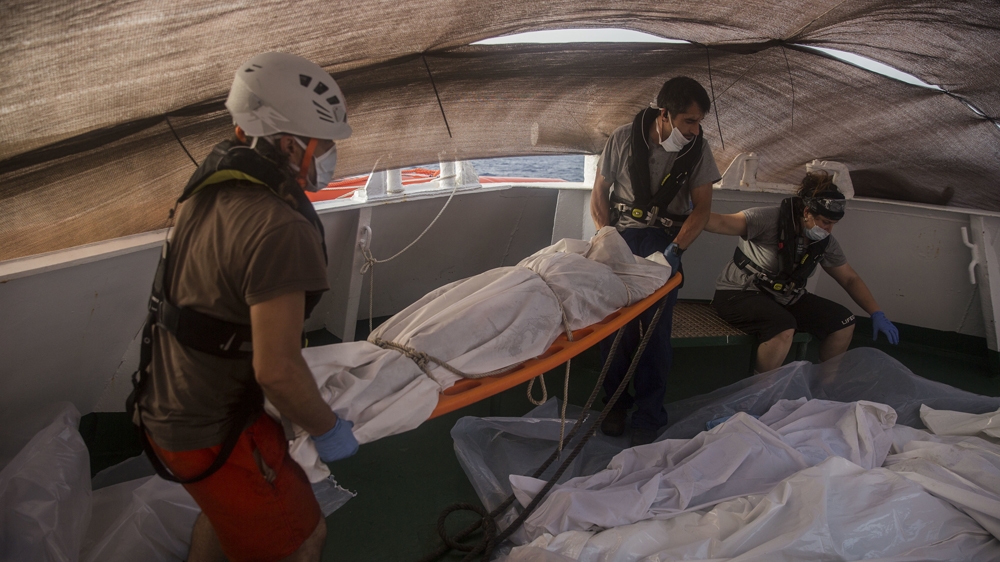
At least 56,800 refugees and migrants have died or gone missing since 2014, almost double the number recorded by the UN’s International Organization for Migration (IOM), an investigation by the Associated Press news agency has said.
The IOM’s tally, which mainly focuses mostly on migrants heading to Europe, stood at 28,500 as of October 1.
The Associated Press reported on Thursday that an additional 28,300 people had either died or gone missing according to data it compiled from international groups, forensic records, missing persons reports, death records, and interviews with migrants and refugees.
WATCH: What is the world doing for migrants? (25:00)
As an example, the AP said that when 800 people died in an April 2015 shipwreck off the coast of Italy, Italian investigators had pledged to identify them and find their families. More than three years later, under a new populist government, funding for this work was being cut off.
Beyond Europe, the AP said information on the fate of migrants was even more scarce.
Little was known about the toll in South America, where migration among Venezuelans was among the world’s biggest today. Or in Asia, the leading region for migration.
“No matter where you stand on the whole migration management debate … these are still human beings on the move,” said Bram Frouws, the head of the Mixed Migration Centre, which surveyed more than 20,000 migrants and refugees since 2014.
“Whether it’s refugees or people moving for jobs, they are human beings.”
More than 16 million migrate within Africa
Despite talk of the ‘waves’ of African migrants trying to cross the Mediterranean, as many 16 million people migrate within Africa, the AP said.
Since 2014, at least 18,400 African migrants had died travelling within the continent, according to the figures compiled from AP and IOM records. That figure included more than 4,300 unidentified bodies in the South African province of Gauteng.
Zimbabwean migrant Kholakele, who entered South Africa illegally three years ago, said she had heard stories of people going missing.
Afraid that one day they will end up as anonymous bodies in the streets of Johannesburg, where crime rates and traffic accidents are steep, she told the AP that she barely let her five children out of sight.
“If one of them stays away for longer than 10 minutes, we phone them,” Kholakele said.
With a prosperous economy and stable government, South Africa draws more migrants than any other country in Africa.
In the Netherlands, three companies partnered up to collect your recycled plastic and turn it into bike paths. PlasticRoad is a Lego-like road system that consists of modular, prefabricated sections. The plastic road has a hollow space inside it and can host cables, pipelines, but also rainwater so that the street does not become flooded in case of heavy rainfall.
Sri Lanka’s President Maithripala Sirisena will reconvene parliament on November 5, newly appointed Prime Minister Mahinda Rajapaksa said on Thursday, as international pressure builds to resolve a political crisis.
Sirisena named Rajapaksa as prime minister on Friday after abruptly dismissing the government of Ranil Wickremesinghe.
“President has decided to reconvene the parliament on 5th,” Rajapaksa said addressing a meeting at the prime minister’s office.
Wickremesinghe was quick to react, saying “democracy will prevail”
“The people’s voices have been heard,” he tweeted.
Wickremesinghe has said his removal is unconstitutional and has demanded he be allowed to prove his parliamentary majority.
Sirisena had earlier prorogued the parliament till November 16 but political parties and foreign powers urged an earlier session to resolve the crisis.
The move comes a day after President Sirisena and speaker of parliament, who belongs to sacked prime minister’s United National Party, held a meeting to resolve the political deadlock.
The island nation has been gripped by constitutional chaos after Sirisena appointed Rajapaksa – a controversial leader whom Sirisena had defeated in 2015 presidential elections – to the prime minister’s post.
The surprise moves, which critics denounced as a “coup”, drew tens of thousands of protesters to the streets of Colombo on Tuesday.
Despite the dispute over the legality of his appointment, the newly appointed prime minister continued to consolidate power. On Wednesday, Rajapaksa assumed the finance minister’s duties and officials said he was expected to begin work on the state budget for 2018 soon.
Wickremesinghe, meanwhile, remained holed up in the prime minister’s official residence at Temple Trees, where Buddhist monks have been reciting prayers throughout the day.
The ousted prime minister, whose popularity is declining amid widespread anger over costs of living, insisted he commanded majority support in the House.
It’s already nerve-wracking answering questions at the border, and some ports in the European Union are taking it to another, kinda worrying level.
They’re installing an artificial intelligence-powered system called iBorderCtrl, which aims to speed up the processing of travellers, but also to determine if they’re lying.
According to New Scientist, a six-month trial will take place at four border crossing points in Hungary, Greece and Latvia.
During pre-screening, users will upload their passport, visa, and proof of funds, then answer questions asked by a computer-generated border guard to a webcam.
The system will analyse the user’s microexpressions to determine if they’re lying, and they’ll be flagged as either low or high risk.
People will be asked questions like “What’s in your suitcase?” and “If you open the suitcase and show me what is inside, will it confirm that your answers were true?”
For those who pass the test, they’ll receive a QR code that will let them pass through. If there’s additional concern, their biometric data will be taken, and be handed off to a human agent who will assess the case.
“We’re employing existing and proven — as well as novel ones — to empower border agents to increase the accuracy and efficiency of border checks,” project coordinator George Boultadakis told the European Commission.
“iBorderCtrl’s system will collect data that will move beyond biometrics and on to biomarkers of deceit.”
Of course, there’s the question of how accurate a system like this could be. iBorderCtrl is still in its early stages, and a team member told New Scientist that early testing provided a 76 percent success rate, but believe this could be raised to 85 percent.
Indonesian divers recovered a flight recorder from the downed Lion Air jet on the sea floor on Thursday, a crucial development to find out what caused the new plane to plunge into the sea and kill 189 people.
One TV station showed footage of two divers after they surfaced, swimming to an inflatable vessel and placing the bright orange device into a large container that was transferred to a search-and-rescue ship.
One black box from the jet was recovered, the head of Indonesia’s National Transportation Safety Committee said.
“We found one of the black boxes,” Soerjanto Tjahjono told AFP news agency. “We don’t know yet whether it’s the FDR [flight data recorder] or CVR [cockpit voice recorder].”
The devices record information about the speed, altitude and direction of the plane as well as flight crew conversations and could hold vital clues to the cause of the deadly accident.
“If there is an anomaly, some technical problem, it is recorded there too,” said aviation analyst Dudi Sudibyo.
The treasure trove of information black boxes provide helps explain nearly 90 percent of all crashes, according to aviation experts.
Fuselage found?
Navy divers interviewed on Indonesian television described recovering the flight recorder from the depths of the Java Sea.
“I was desperate because the current below was strong,” said navy diver Hendra, who uses a single name. “I started digging and cleaning the debris until I finally found an orange object.”
Indonesia: ‘No survivors’ after Lion Air flight crashes into sea
Navy Colonel Monang Sitompul said what is believed to the aircraft’s fuselage was also seen on the seafloor.
The wreckage will be lifted using a crane because of the many bodies likely to be trapped inside, officials said.
The recorder will be examined by the National Transportation Safety Committee, said search-and-rescue agency head Muhammad Syaugi.
Syaugi said the location of the find was about 500 metres northwest of the coordinates where the plane lost contact.
The Boeing 737 MAX 8 plane crashed early Monday just minutes after takeoff from Jakarta. It was the worst airline disaster in Indonesia since 1997, and renewed concerns about safety in its fast-growing aviation industry, which was recently removed from European Union and US blacklists.
The black box could provide clues to what happened after the two-month-old plane lost contact with ground staff just 13 minutes after taking off early on Monday from Jakarta, on its way to the tin-mining town of Pangkal Pinang. There were no survivors.






/https%3A%2F%2Fblueprint-api-production.s3.amazonaws.com%2Fuploads%2Fcard%2Fimage%2F875014%2F00267958-39d1-4f13-8959-90617ef22cbb.jpg)


 trendynewsday
