Carrying bloodstained backpacks, Yemeni children return to class

news image

Dahyan, Saada – Excited screams used to echo through the corridors. Boys would skip and giggle, arm in arm.

They would race across the playground, kicking footballs against the sun-baked earth, imitating their sporting heroes, Lionel Messi and Cristiano Ronaldo.

But on Sunday, as the school bell shrilled to mark the start of a new term, several young boys, some of them on crutches, marched silently to their classrooms with their eyes and faces pointed squarely at the ground.

As they entered Al Falah primary for their first lesson, artwork from last year on one of the walls was a reminder that the school was once a place of joy.

But as soon as Abdulrahman al-Ojeri, one of the school teachers, began taking the morning register, a sombre mood swept over the room when the names of several familiar children, who should have been in attendance, were left out.

In the summer, a Saudi air strike decimated a school bus carrying a group of boys, some as young as six, as they went on a field trip to Yemen‘s northern city of Saada.

Images of children covered in blood being dragged from the twisted wreckage triggered global outrage, and reignited the debate over the safeguards Saudi Arabia, along with its military partner, the United Arab Emirates, employ in their fight against Houthi rebels.

As they returned to school on Sunday, some of the surviving children carried blue UNICEF rucksacks, some of which were still stained with blood from that horrific day.

Hassan Hanash, a 12-year-old boy, was visibly haunted by the August 9 attack.

He was sat near the back of the bus when a US-made missile landed metres away, lifting the vehicle off the ground and flinging it into a nearby shop.

Although most of his physical injuries have healed, the emotional trauma is palpable.

“I still don’t know why the aircraft attacked us,” he told Al Jazeera, his face gaunt.

Attacking children is the lowest any party in this conflict can do.

Meritxell Relano, UNICEF’s resident representative in Yemen

A total of 51 people, including 40 children were killed in the attack, which the Saudi-UAE alliance had initially declared a “legitimate target”.

In the days following the raid, the alliance defended its actions, claiming it was in response to a missile being fired from Yemen at the Saudi city of Jizan some 24 hours earlier.

But as international condemnation grew, including criticism from the alliance’s main military backers – the United States and UK – Riyadh made a rare concession, saying it would conduct an investigation, and hold those responsible to account.

The Trump administration lauded the announcement with Secretary of State Mike Pompeo praising the alliance’s efforts to limit civilian casualties in a war that has claimed an estimated 56,000 lives.

“Saudi Arabia and United Arab Emirates are undertaking demonstrable actions to reduce the risk of harm to civilians and civilian infrastructure resulting from military operations,” Pompeo said.

But his remarks were overwhelmingly rejected by survivors and their families at the Al Falah primary school.

“Anyone who says we were a legitimate target is a liar,” an angry Hassan told Al Jazeera.

“We didn’t fire a ballistic missile,” he said, pointing to his small, frail leg which was wounded in the attack and continues to affect his mobility.

Hassan Hanash and his two brothers, Ahmed Ali and Yahya, pray for their friends who were killed in a Saudi air strike on a school bus in August [Naseh Shaker/Al Jazeera]

Since March 2015, when it intervened in Yemen’s war, the Saudi-UAE military alliance has conducted more than 18,000 air raids across the country, with almost one third striking non-military sites.

Data collected by the Al Jazeera and the Yemen Data Project has revealed that weddings, funerals, schools and hospitals have frequently been targeted.

Under the leadership of Crown Prince Mohammed bin Salman, the alleged architect of the war, the alliance has also imposed a raft of punitive economic measures aimed at undercutting the Houthis grip on power, including a debilitating blockade on the port city of Hodeidah, a vital gateway for food, fuel, medicine and other goods into the country.

This has exacerbated Yemen’s humanitarian crisis, which aid groups have decried as “choking civilians.”

“Mass starvation is a deadly by-product of actions taken by warring parties and the Western nations propping them up,” Jan Egeland, the secretary general for the Norwegian Refugee Council, said in a statement earlier in October.

“The way the war is waged has systematically choked civilians by making less food available and affordable to millions of people.”

The war has also truncated children’s education, with UN officials telling Al Jazeera that nearly 2,000 schools have been destroyed by the conflict, re-purposed as shelters or commandeered by armed factions.

“Attacking children is the lowest any party in this conflict [can] do,” said Meritxell Relano, UNICEF’s resident representative in Yemen.

“There is no justification whatsoever to attack children. Unfortunately, this has become a common feature of the conflict.”

‘The carnage in Yemen’

The war has received more attention recently as outrage grows towards Saudi Arabia over the killing Jamal Khashoggi, a Saudi journalist and Washington Post columnist.

In recent weeks, American and British politicians have voiced their opposition to the alliance’s war campaign, and pushed for a temporary halt in arms sales to Saudi Arabia.

Writing in the New York Times, US Senator Bernie Sanders urged Congress to end what he called “the carnage in Yemen”.

“The US is deeply engaged in this war. We are providing bombs the Saudi-led coalition is using, we are refuelling their planes before they drop those bombs, and we are assisting with intelligence,” Sanders wrote.

Between 2010 and 2014, Washington sold more than $90bn of military equipment to Riyadh, and since Trump took office, the US has signed an arms deal to supply military equipment worth nearly $350bn to the Saudis over the next 10 years. 

“I very much hope that Congress will act, that we will finally take seriously our congressional duty, end our support for the carnage in Yemen, and send the message that human lives are worth more than profits for arms manufacturers,” Sanders added.

Meanwhile, Emily Thornberry, a member of the UK’s opposition Labour Party, told parliament that “a repeated pattern” was being played out by the Saudis, both in how they handled the Khashoggi killing and the war in Yemen.

“When major civilian casualties are reported, first they deny the reports are true, then they deny responsibility,” she said. “And when the proof becomes incontrovertible, they say it is all a terrible mistake. They blame rogue elements, promise those will be punished and say it will not happen again, until the next time, when it does.”

Zaid al-Humran’s son Osama was among those killed on August 9.

He had filmed the children on the bus prior to the attack and said were it not for the recording, the massacre would have gone unreported like several other crimes in the more than three-year-war.

“Without it, people would have believed [the Saudi narrative] that they were [the ones responsible for firing the] missile launchers,” he told Al Jazeera.

WATCH: In Yemen, children clamber over rubble to get to school

Lingering trauma

Despite the school’s many shortcomings owing to its limited resources, teacher al-Ojeri said it was one of the few places in Dahyan which provided routine, with classes offering a brief respite from the horrors of war.

But now as term begins again, several students are unable to shake off their lingering trauma.

“When I see my [new] teacher standing in front of me, I’m reminded of those teachers who were killed in the assault,” said Ahmad, Hassan Hanash’s 14-year-old brother.

An image of Ahmad after the attack, showing him soaked in blood, highlighted the devastation being unleashed in Yemen.

“I keep remembering when I was at hospital and seeing all that blood and chaos around me,” he said.

Attempting to put on a brave face, the child added that he would not allow the attack to deprive him of an education, referring to several pupils who had chosen not to return to school.

“By God, I will remain steadfast,” he said.

But with the Yemen Data Project reporting more than 101 air raids on Saada province last month alone, and one attack striking a school, Ahmad’s future, like countless other Yemenis looks bleak.

Ahmed Ali Hanash attends class at his school which lost pupils in an August 2018 Saudi-led air strike on a school bus in Saada province [Naseh Shaker/Al Jazeera]

Read More

from Trendy News Day https://ift.tt/2qj0BjU
via IFTTT
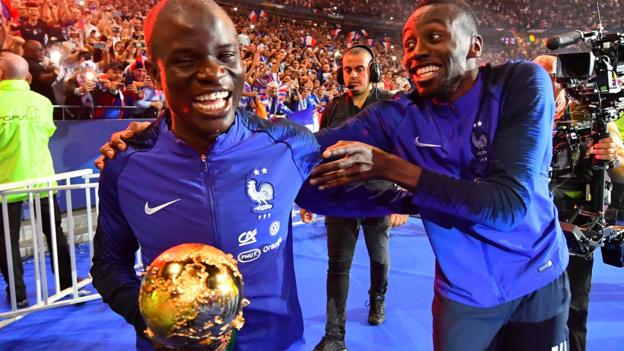
World Cup expansion to 48 teams could happen at Qatar 2022, says Fifa

news image

Gianni Infantino has been president of Fifa since February 2016

The expansion of the World Cup from 32 to 48 teams could be brought forward from 2026 to 2022, says Fifa president Gianni Infantino.

The change would require Qatar to share 2022 hosting duties with other countries in the region.

The decision has already been taken to expand the tournament in 2026, when it will be held in the USA, Canada and Mexico, and Infantino is now considering doing the same for 2022.

“If it is possible, why not?” he said.

“We have to see if it is possible, if it is feasible. We are discussing with our Qatari friends, we are discussing with our many other friends in the region and we hope that this can happen.

“And, if not, we will have tried. We will have tried because we always have to try to do things in a better way.”

Speaking at the opening of the Asian Football Confederation’s new headquarters in Kuala Lumpur, Infantino also reiterated his plans to expand the Club World Cup.

He said he wants to make it a “real competition” that “every club in the world can target”.

Read More

from Trendy News Day https://ift.tt/2CQxzQc
via IFTTT

Crypto exchange Coinbase is now valued at $8 billion

news image

One of the most popular cryptocurrency exchanges, the U.S.-based Coinbase, announced on Tuesday that it has raised $300 million in a new round of financing. 

The round, led by Tiger Global Management, values the company at more than $8 billion. 

Y Combinator Continuity, Wellington Management, Andreessen Horowitz and Polychain also contributed to the funding round, among others. 

Coinbase says it will use the funds to accelerate global expansion, introduce more crypto assets to its platform and continue development of utility applications in the space, such as its recently announced USDC stablecoin and the Coinbase Wallet. Finally, the company plans to bring more institutional funds into the crypto space. 

“We see Coinbase’s growth as validation that the ecosystem will only continue to grow in size, influence and impact — ultimately ushering in a more open financial system for the world,” the company said in a blog post

Coinbase has been growing like a weed when Bitcoin and Ethereum prices were raging early this year. But even when the prices pulled back, Coinbase continued to expand, having recently introduced a stablecoin, adding new cryptocurrencies to its platform, and launching new tools for institutional and professional investors. 

The result of that expansion is that $8 billion valuation — as TechCrunch notes, it’s a huge increase from the $1.6 billion the company was valued in August 2017. 

Disclosure: The author of this text owns, or has recently owned, a number of cryptocurrencies, including BTC and ETH. 

Https%3a%2f%2fblueprint api production.s3.amazonaws.com%2fuploads%2fvideo uploaders%2fdistribution thumb%2fimage%2f85075%2fabccb23e dace 4f3b a350 3066c988a87a

Read More

from Trendy News Day https://ift.tt/2P10QPp
via IFTTT

Secret no more: Israel’s outreach to Gulf Arab states

news image

It was a scene unthinkable just weeks ago: an Israeli Cabinet minister, tears of joy filling her eyes, proudly singing her country’s national anthem at a sports event in the heart of the Arab world.

The spectacle of Miri Regev singing “HaTikva”, which describes the Jewish yearning for a homeland in Zion, was just one in a series of taboo-busting public appearances by Israeli officials in Gulf Arab states that have thrust the once-secret back channels of outreach into public view.

Prime Minister Benjamin Netanyahu has for years boasted about warming ties with key Arab states that have no diplomatic relations with Israel. But those ties – still largely unpopular among the Arab public – were rarely visible.

That changed on Friday when Netanyahu made an unannounced visit to Oman, where he met longtime ruler Sultan Qaboos bin Said.

It marked the first visit by an Israeli leader in more than 20 years to the tiny Gulf state, a US ally that has in the past facilitated negotiations between the United States and Iran.

“These were important talks, both for the state of Israel and very important talks for Israel’s security,” Netanyahu told his Cabinet on Sunday. “There will be more.”

As he spoke, Regev was in the United Arab Emirates with an Israeli delegation at a judo tournament – the scene of her happy tears after Israeli judoka Sagi Muki won the gold medal – and Netanyahu’s communications minister was headed to the UAE for a security conference.

Israel’s transportation minister, Yisrael Katz, is scheduled to head to Oman next week for a transportation conference where he plans on presenting his plan for a rail link between Gulf Arab countries and Israel.
The driving force in these visits seems to be a shared concern over Iran.

An emotional issue 

Israel and many of the Gulf Arab states consider Iran a destabilising force, meddling in conflicts and supporting rivals across the region. Oman, which borders Saudi Arabia and lies at the mouth of the Gulf, has often played the role of regional mediator.

It also provides an opportunity for these Arab countries to curry favour in Washington. President Donald Trump has promised to present a plan for the “Deal of the Century” for Middle East peace, and Saudi Arabia’s dependability as an influential conduit has been thrown into question amid the fallout from the killing of Saudi journalist Jamal Khashoggi in the kingdom’s Istanbul consulate.

Regev’s emotional appearance Sunday at the gold medal ceremony in Abu Dhabi was unprecedented and especially remarkable, given her political leanings. At home, she is an outspoken nationalist popular with hard-liners.

In Abu Dhabi, Regev also toured the grand Sheikh Zayed Mosque. Wearing a loosely wrapped headscarf and the traditional floor-length gown known as an abaya, she was warmly welcomed by local officials.

While the visits by Netanyahu and his Likud Party ministers are a huge public relations boost for him domestically, they do not immediately signal an Arab embrace of Israel.

The Palestinian-Israeli conflict remains an emotional issue with the Arab public, and relations will likely remain limited without a peace agreement.

Israeli forces have killed over 160 Palestinians during months of Hamas-led protests in the Gaza Strip against an Israeli blockade and a deepening humanitarian crisis.

The peace process has been frozen for years, and Palestinian President Mahmoud Abbas cut ties with Washington after the White House recognized Jerusalem as Israel’s capital last year and moved its embassy to the city.

The Palestinians fear that Trump is trying to rally support from Saudi Arabia and other Gulf states in order to pressure the Palestinians into accepting a peace plan that falls far short of their demands.

In Muscat, Netanyahu’s meeting appeared aimed at dealing with the Palestinian-Israeli conflict and his close ties with the Trump administration. With Netanyahu’s urging, the US this year pulled out of the Iran nuclear deal, which Oman had supported.

WATCH: Netanyahu visits Oman, says opposing Iran unites Gulf and Israel

Strategic move

After the visit, Oman’s Foreign Minister Yousef bin Alawi suggested the meeting was merely a strategic attempt at dealing with some of the Middle East’s most pressing issues.

In an interview with Al Jazeera, he said Netanyahu had initiated the meeting to present his views on Middle East issues to Sultan Qaboos.

“What Sultan Qaboos is doing now is nothing short of an intervention,” said Sigurd Neubauer, a Washington-based expert on Oman. “Oman is interjecting itself into the Israeli-Palestinian peace process for one obvious reason, and that is (because) the Arab states are so divided.”

Oman is also the only Arab country in the Gulf that could have hosted Netanyahu without fear of destabilising backlash, Neubauer said.

That’s because Sultan Qaboos, in power since 1970, has direct lines of communication with a range of players in the region, thanks to his long-standing policy of non-interference.

Oman has brokered the release of Western hostages in Yemen and provided a back door for communications between Washington and Tehran under the Obama administration. It is a member of the Saudi-led Gulf Cooperation Council, but it did not join the kingdom in its boycott of Qatar or the war in Yemen.

Even statements by the Palestinian Fatah Party and Iran fell short of directly condemning Oman after Netanyahu’s visit, instead criticising Israel’s attempts to normalise relations with Arab states before a peace deal is reached.

For Oman, hosting Netanyahu sent a message to the Trump administration that Muscat is a valuable regional player.

“The currency is American currency,” Yoel Guzansky, a senior researcher at Israel’s Institute for National Security Studies, said. “Oman can show that it’s a go-between, a conduit not just between Israel and the Palestinians, but more ambitiously between Iran and Israel.”

Read More

from Trendy News Day https://ift.tt/2CUneTw
via IFTTT

Gethin Jenkins: Wales and Lions prop great announces retirement

news image

Gethin Jenkins (right) celebrates winning the 2008 Grand Slam with ex-Wales captain Ryan Jones

Wales’ record cap holder Gethin Jenkins is set to retire from rugby after playing in Sunday’s home Pro14 match for Cardiff Blues against Zebre.

The prop, 37, played 129 times for Wales and made five Test appearances for the British and Irish Lions.

But Jenkins has had a long struggle with what the Blues call a “chronic” problem with his right knee.

“The pain I have been experiencing from rugby, in my daily life, simply isn’t tolerable,” loose head Jenkins said.

“But it’s important to me that after all the work I have put in, I run out with my team one last time and finish on my own terms.

“I have been working hard rehabbing over the last three months and I was confident I was going to be back playing, so it’s disappointing to be retiring after Sunday’s game against Zebre.

“It’s obviously a big decision but I’ve had a good innings, it’s time to finish and I’m looking forward to one more run out on the weekend and hopefully finishing on a high.”

Jenkins made his Wales debut in 2002 and won four Six Nations titles, including three Grand Slams.

He was renowned for his dynamism in open play, typified by the try he scored against Ireland in the victory which helped clinch Wales’ 2005 Grand Slam.

Wales v Ireland classics: Gethin Jenkins 2005

Jenkins was also a fearsome competitor at the breakdown, forcing turnovers with the frequency of a back-rower.

He won two European Challenge Cup titles with the Blues and, in his one season away from Cardiff Arms Park, he lifted the Heineken Champions Cup with Toulon.

Jenkins will now take up a coaching role with the Blues’ academy.

Blues coach John Mulvihill added: “Gethin Jenkins is a legend of Welsh rugby, a great servant for both club and country and it is fitting that he finishes his career in front of his home crowd at Cardiff Arms Park.

“After early discussions it was always my intention to have Gethin decide when he would like to call an end to this playing career.

“He will be a massive loss to us in a playing sense but his presence and intellectual property as a coach will be a great asset to us going forward.

“After 13 seasons at Cardiff Blues, at the top of his game, this weekend marks the end of an era at the club.”

Jenkins made 194 appearances for the Blues, second only to Taufa’ao Filise in the region’s all-time list.

Former Pontypridd prop Jenkins also captained the Blues from 2014 to 2017.

“It’s obviously a big decision but I’ve had a good innings, it’s time to finish and I’m looking forward to one more run out on the weekend and hopefully finishing on a high,” he added.

“I’m very grateful to [Blues chairman] Peter Thomas, the entire club and its brilliant supporters for everything they have given me over the years, and also Gruff Rees and John Mulvihill for making this transition from playing to coaching a smooth one.”

Read More

from Trendy News Day https://ift.tt/2SxMkNh
via IFTTT

Prince Harry comforts child whose mum passed away with words of encouragement

news image

Image: Pool/Samir Hussein/WireImage

Well, congrats to Prince Harry for making us all cry at our desks this morning. 

He had a conversation with a 6-year-old boy in Auckland, New Zealand, who lost his mum when he was one year old and offered up some comforting and inspiring words. 

Prince Harry was just 12 years old when his mother, Princess Diana, was tragically killed in a car accident in Paris, France. He has since talked publicly about the impact losing his mum at such a young age had on his mental health. 

“Don’t you worry about having just one parent,” said Harry, after the boy’s grandmother told him that her grandson looks up to him. 

“You live here in Auckland? You gonna be a rugby player?” he joked.  

“Life will always be alright, you know that? I made it to 34 years old and life is great, I’ve got a beautiful wife and a baby on the way,” he said. Your life is gonna be sorted, don’t you worry about that.” 

Excuse me, I think I have something in my eye. 

Https%3a%2f%2fblueprint api production.s3.amazonaws.com%2fuploads%2fvideo uploaders%2fdistribution thumb%2fimage%2f86013%2fda24048d 4fe4 4125 9f1a af3a928f0feb

Read More

from Trendy News Day https://ift.tt/2zgR8xz
via IFTTT

Why Israel does not mind Trump’s anti-Semitic supporters

news image

The massacre of Jewish worshippers on Saturday by an avowed anti-Semite in Pittsburgh reveals a clear, straight line between Trump’s sustained dog-whistles – against Jews, black people, Muslims, immigrants and members of the LGBTQ community – to the violence carried out by right-wing white nationalists.

Robert Bowers, apprehended after a shooting spree that killed 11 people, explained he wanted “all Jews to die” and described immigrants and asylum-seekers as “invaders” of the United States. Instead of condemning far-right nationalism, Trump reinforced this hysteria, tweeting on Monday that a caravan of asylum-seekers coming from Honduras should be considered as an “invasion” and that the US military “would be waiting” for them. Last week, Trump proudly embraced the “nationalist” term.  

Bowers had consumed and regurgitated the lethal rhetoric of far-right extremists who want to rid the US of non-white, non-Christian people, and of a government which constantly incites hatred and vilification of all marginalized groups.

Three days earlier, a white supremacist in Kentucky set out to kill black people. He eventually murdered Maurice Stallard, 69, and Vickie Lee Jones, 67, in a grocery store.

There is no question that these killers were motivated by the white nationalist extremism the Trump administrations has adopted and encouraged.

After Saturday’s synagogue massacre, curiously, Israeli leaders offered their condolences but refused to address Trump’s responsibility for fuelling such anti-Semitic violence.

Instead, they scrambled to provide cover for the US president while Israel advocates attempted to blame the rise in anti-Semitism on left-wing, anti-racist and anti-fascist activists who campaign for Palestinian rights.

Why would they do this, especially when American Jewish support for Trump is overwhelmingly low, and while Israel claims to be the protector of all Jewish people? To whom – or to what – were they speaking?

The unwillingness by Israeli leaders to confront such modern-day Nazism and the political forces pushing state-sponsored bigotry and hatred exposes that state’s unsettling alliance with Trump and his agenda.

For Israel, Trump has been the ideal partner in its efforts to crush Palestinian resistance and deny rights to African asylum-seekers while entrenching apartheid and systematic, unchecked violence against Palestinians in the occupied West Bank and Gaza Strip.

Trump has, in turn, looked to Israel to model his policies of intensified militarisation of the US-Mexico border, his authoritarian threats against asylum-seekers and immigrants, and his open embrace of nationalist figures and right-wing legislators.

Notorious white supremacist Richard Spencer, speaking about his dream to make the US a European ethno-nationalist state, for example, has said he sees Israel as the ideal model.

Spencer has even dubbed his project for an Aryan state “white Zionism.”

Brazil’s president-elect, Jair Bolsonaro, a far-right extremist who has promised to treat social movements as terrorist organisations and wage a war on poor and indigenous communities, has also embraced Israel and says he will – like Trump – move his country’s embassy from Tel Aviv to Jerusalem.

Israeli flags were prominently waved during rallies celebrating Bolsonaro’s win on Sunday, a chilling symbol of Israel’s popularity in fascist political movements.

But there is another reason Israel is embracing today’s white nationalists.

Right-wing extremists openly yearn to push Jewish people out of the US and Europe – a fantasy shared by Israel’s top leadership. The appeal to Jews to leave their homes and settle in Israel – on Palestinian land – is a main tenet of Zionism, Israel’s state ideology.

But only a tiny number of ideologically motivated Jews are prepared to leave the safety, prosperity and comfort they enjoy in their home countries in North America and Europe for a hard life in Israel. Meanwhile, many Israeli Jews, especially the young and most educated, are leaving – a drain Israel is hard pressed to stop.

So unable to attract Jews from abroad, Israeli leaders must convince Jewish people that they are unsafe and unwanted everywhere – everywhere except for Israel. Just like Trump, Israel’s main weapon is fear.

Israeli politicians like opposition leader Avy Gabbay – who on Sunday urged American Jews, in grief and traumatised by the Pittsburgh massacre, to emigrate to Israel – seek to deliberately weaken the safety and diversity of communities in which Jewish people around the world are rooted.

Israel’s education minister Naftali Bennett, an extreme right-wing supporter of Israel’s settler population who has bragged about killing Arabs, used the massacre of Jewish worshippers to dehumanise Palestinians.

The efforts of Bennett and Gabbay did nothing to assuage the Jewish community’s fears, but they did exploit anti-Semitism for Israel’s gain – and they gave Trump yet another tacit endorsement of his policies.

Instead of fighting to make the world a safer place for Jews – for everyone – wherever they live, wherever they make their home, Israel’s leaders and their supporters align openly with Trump’s agenda even when it means siding with white nationalist movements who espouse deep anti-Semitism.

It’s a horrifying and stark reality and one that Israeli leaders can only try to cover up by falsely deflecting the blame for the lethal anti-Semitism that visited the Tree of Life synagogue onto anti-racist activists and even left-wing Jewish groups.

Israel and its lobby have spent millions of dollars in recent years on campaigns to conflate criticism of Israel with anti-Semitism, especially on US college campuses. They are trying to suppress the nonviolent, anti-racist boycott, divestment and sanctions movement for Palestinian rights by smearing it as anti-Semitic, while giving actual cover to anti-Semitism across the US.

Israel’s hardline advocates show deep contempt for American Jews who stand with the marginalised and oppressed, who reject Israel’s unmitigated violence against Palestinians, who remain grounded in our communities fighting against systemic racism and injustice propagated by Trump and his authoritarian allies in Israel.

When Trump announced he would be visiting Pittsburgh, members of the progressive Jewish community there immediately stated that he was not welcome until he denounces white nationalism that targets Jews, migrant families, people of colour, Muslims, people with disabilities and LGBTQ people. He went anyway.

Jewish communities in the US are drawing a line: as we refuse to accept Trump’s right-wing nationalism that fomented the massacre in Pittsburgh, we also refuse to advocate for Israel as it embodies and sharpens that nationalist fantasy.

Instead, we fight for a broad-based, inclusive and just future for us all.

The views expressed in this article are the author’s own and do not necessarily reflect Al Jazeera’s editorial stance. 

Read More

from Trendy News Day https://ift.tt/2SzIYcK
via IFTTT

Sri Lanka v England: Ben Stokes retires hurt in warm-up match

news image

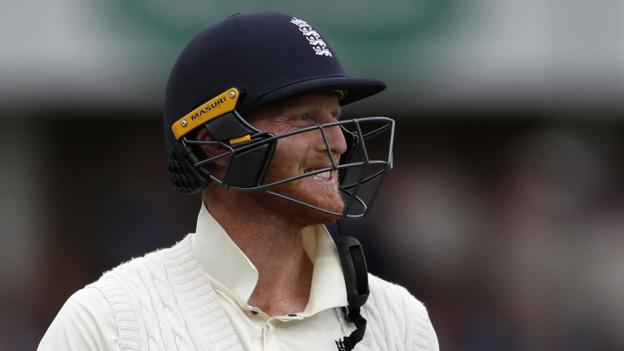
Stokes made 10 off 15 balls before being forced to leave the field in Colombo

Ben Stokes retired hurt on day two of England’s warm-up match in Sri Lanka after being struck on the left arm.

The all-rounder’s workload is being managed before the Test series and he did not bowl on day one against a Sri Lanka Board President’s XI in Colombo.

During England’s reply, Stokes, 27, was struck by a short ball from Lahiru Kumara having attempted a pull.

Pathum Nissanka was then carried off after a Jos Buttler shot struck him flush on the helmet at short leg.

The Sri Lankan fielder, 20, immediately slumped to the turf and received treatment from England’s medical staff for about 15 minutes.

They then carried Nissanka off on a stretcher while the players took an early tea.

Stokes made 10 runs off 15 balls and may resume his innings after tea.

The three-Test series begins in Galle on 6 November.

Buttler pulled a ball from spinner Nishan Peiris into the top of Nissanka’s helmet

Read More

from Trendy News Day https://ift.tt/2P4N4vm
via IFTTT

Gifts for travelers: Best gift ideas for people who love to travel

news image

UNIVERSITY OF TEXAS PRESS

BEST FOR HUNGRY TRAVELERS

This super yummy book gives travelers a look at the numerous fresh, cheap, and varied street foods found in urban spaces in hundreds of countries. This photo book takes a deep dive into street food, from the Saharan roadsides and Patagonian villages, to downtown Hong Kong and even New York City fare. You don’t have to be a foodie or traveler to enjoy this book.

Read More

from Trendy News Day https://ift.tt/2CRpWce
via IFTTT

Ali Milani, the young Muslim politician challenging Boris Johnson

news image

London – A British Muslim of Iranian descent will fight Boris Johnson for the former foreign secretary’s constituency, marking a moment in politics that, according to the young parliamentary candidate, could come to represent “poetic justice”.

Ali Milani, 24, recently graduated in International Relations from Brunel University London, and has been selected by Britain’s main opposition Labour Party to take on Johnson in his constituency of Uxbridge and South Ruislip.

Johnson, 54, is a politician with the ruling Conservative Party. He was foreign secretary and London mayor, but has attracted most attention for his outlandish statements and often racist language, including derogatory remarks about Muslims.

Britain’s next general election is due to take place in 2022, but Prime Minister Theresa May’s minority government is teetering on the brink of collapse amid divisions within her party – largely stirred by Johnson – over Brexit.

Milani, third from left, is trying to overturn a majority of 5,000 [Courtersy: Ali Milani]

The Conservative leader’s aides had hinted at a ballot taking place as early as November to shore up support within the party, but that now seems unlikely to materialise.

Nevertheless, Johnson, a Brexit hardliner has emerged as May’s primary challenger.

Milani plans to make his mark on history and thwart Johnson’s ambitions.

“We (Labour Party members) thought there was a lot of poetic justice in me standing against Boris,” he told Al Jazeera. “A young local Muslim activist who’s grown up in the area, versus someone who’s not from the area and who as far as I know, doesn’t live there.”

‘For Boris, it’s always about Boris’

Born in the Iranian capital, Tehran, Milani moved to the UK when he was three years old and has spent the rest of his life in Hillingdon, the area where he is now standing to become an MP.

Milani cut his teeth in student politics as an elected executive in the National Union of Students and was later elected as a Labour councillor.

His political leanings tilt heavily to the Labour Party’s left, in line with its leader, Jeremy Corbyn.

The British Iranian said his campaign would focus on his credentials as a local, affected by similar issues and concerns as his fellow constituents.

That, he added, would be in stark contrast to Johnson’s record as an MP.

“I use the local hospital, I’ve been to school there, I’ve worked there, and lived there, and all of that. That is what’s ultimately going to defeat him.”

Johnson is a member of an out-of-touch elite, according to Milani, someone who had been politically parachuted into the area and was using the constituency as a platform to advance his own scheming within the Conservative party.

The way you connect with voters is to talk about the things they care about.

Ali Milani, Labour councillor

“People can see that for Boris, it’s always about Boris. Everything is a ploy to him, he doesn’t care.”

Milani’s rival has faced accusations of dog whistling to the far right, recently causing a media uproar by comparing Muslim women who wore the face veil to letterboxes. 

His previous racist outbursts include using the racial slur “piccaninnies” to describe black people and referring to their “watermelon smiles”, another offensive trope.

Johnson later apologised for the remarks but has had more race-related controversies since, notably blaming former US President Barack Obama’s Kenyan heritage for his “ancestral dislike of the British empire.”

For Milani, such remarks additionally render Johnson unfit to represent the constituency.

“Our community is one that is proud of its diversity and sees it as a source of strength,” he said.

“To have [an MP] who so readily and frequently uses such offensive and incendiary remarks proves to us that he is not only unfit to be a foreign secretary, but he is unfit to be in any public office.”

Chances of an upset

Milani faces a difficult challenge.

Johnson has a significant majority of just over 5,000 votes, and that was despite a stronger than expected Labour showing in the 2017 election, which saw the ruling Conservatives lose their majority in the House of Commons.

But Milani sees more than a glimmer of hope after Labour cut Johnson’s majority during the 2015 election in half. He also believes Johson’s behaviour during the Brexit negotiations will cost him further support.

There is some evidence to support such an optimistic outlook.

In February, a report by the Global Future think-tank said several seats, including Johnson’s, were at risk as voters shifted away from traditional party allegiances and increasingly based decisions on where candidates stood on the issues they cared about.

Simon Griffiths, a senior lecturer in Politics at Goldsmiths, University of London, said Milani’s challenge would be in taking on such a well-known rival.

There have been murmurs of a snap election ahead of the conclusion of Brexit talks [Courtesy: Ali Milani]

“I wouldn’t like to predict what will happen,” he said, adding: “That would be a big majority to overturn though, and Johnson’s name will help him compared to the rivals – voters certainly know who he is.” 

Milani’s optimism lies in the belief that his and his party’s vision of the future will win out over the lure of Johnson’s brand of personality politics.

“The key thing for me is that Boris thinks it’s about Boris, for me it’s a platform to help our community,” Milani said.

“We talk to them about things they care about, so things like investment in public services, the NHS, hate crime, housing, healthcare, and so on.

“The way you connect with voters is to talk about the things they care about.”

Read More

from Trendy News Day https://ift.tt/2P3DUz9
via IFTTT