Why the Istanbul summit failed

news image

After several delays, the Istanbul summit finally took place on Saturday, bringing together the leaders of Turkey, Russia, France and Germany to discuss peace in Syria. The four-way meeting was originally scheduled for early September, but major differences between the four led to its postponement.

The summit brought together parties from the Astana process group (Russia, Turkey and Iran) and the Syria Working Group (the US, the UK, France, Germany, Saudi Arabia, Jordan and Egypt), but it failed to mend differences between and within each of the two groups.

Apart from a very broad joint statement that emphasised the need to initiate “an inclusive, Syrian-led and Syrian-owned political process” to end the Syrian conflict, no agreement was reached on how to achieve it. The main divisive issues continue to be the political fate of Bashar al-Assad, foreign military presence, the question of the refugees and reconstruction, and the future of the Kurdish areas in the northeast.

Russia’s refugee card

After realising its main military objectives – defeating the opposition and securing the regime of President Bashar al-Assad – Russia is trying to translate this “victory” into political gains. It seeks to normalise the situation in Syria by focusing on reconstruction and the return of the Syrian refugees.

Now, its main political objective is to convince potential donors, mainly the EU and the Gulf states, to pour money into the ailing Syrian economy and help rebuild the country. Moscow’s call for the return of the refugees is quite popular in Europe and with it, the Russian leadership seeks to convince Germany – which hosts more than a million Syrians – to lead the EU into a reconstruction deal.

Russia has used the refugee card before. It was deliberately targeting civilians in opposition-held areas with the aim of flooding Turkey and Europe with Syrian refugees and forcing them to reconsider their support for opposition armed groups. Refugees indeed became a key issue in European politics, contributing to the rise of populist and ultranationalist forces across the continent.

Many EU countries, including Germany, seem willing to fund reconstruction in Syria, but only after a political settlement is reached. The Syria Working Group believes that after the Russian-backed military “victory” of the regime, funding for reconstruction is the only tool left in the hands of the international community to pressure Assad and his allies to accept a political solution to the conflict.

Russia, by contrast, wants reconstruction to be detached from any political process. Disagreement over this issue overshadowed the Istanbul summit, which was reflected clearly in the subsequent press conference.

Russian President Vladimir Putin raised the stakes when he stated that the Sochi agreement on the demilitarised zone in Idlib province is “a temporary measure”, hinting that a military option is still on the table. Many interpreted that statement as an implicit threat aimed at Turkey, Germany and France: If they do not go along with Russian plans, they should be prepared for three million civilians currently living in Idlib fleeing towards their borders.

Why Russia really wants the US out

Putin’s remarks on Idlib were also an indication that his ultimate goal in Syria is to end all foreign military presence there, including Turkish, French, and particularly the US. In early October, Putin said: “We should pursue a goal that there would be no foreign forces, [the forces] of third states in Syria at all.”

In fact, Russia was very disturbed by the US plans to maintain a military presence in Syria after the end of the war against the Islamic State of Iraq and the Levant (ISIL).

The stated objectives of the US decision to stay in the northeast of the country were articulated in September: to preclude the resurgence of ISIL, contain Iran and prevent it from establishing a land corridor through Iraq and Syria to Lebanon, and use this military presence as a bargaining chip to force a political solution to the Syrian conflict.

Today the US controls one-third of Syrian territories through its alliance with the Syrian Democratic Forces (SDF); Russia (through the Syrian regime) dominates a bit more than half of the country; and the rest is under Turkish supervision (through the Syrian opposition forces it supports).

The SDF-controlled area contains 90 percent of Syria’s oil and gas reserves, including al-Omar, its largest oil field, as well as most of its water resources, major dams, and power plants. The northeast is also Syria’s breadbasket. As long as this area is out of its control, no government in Damascus can survive independently from foreign aid.

And the Russians, who are eager to reap the economic benefit of their military intervention in Syria, do not want to and cannot provide financial aid. Hence, the withdrawal of the US forces is essential for the survival of the Syrian regime and for the success of Russia’s Syrian venture.

Therefore, without a US-Russian agreement, there can be no significant progress made on a political solution in Syria.

In this sense, the Istanbul summit was doomed to fail because the US was not there. Perhaps it was for this reason that French President Emmanuel Macron announced that on November 11 he will be hosting a US-Russia summit on Syria in Paris.

The political future of the Kurds

The US military presence on the eastern bank of the Euphrates River is troubling for Turkey, too, but for completely different reasons. It supports and funds the SDF whose core consists of the Kurdish People’s Protection Units (YPG), an affiliate of the Kurdistan Workers’ Party (PKK) which has engaged in a guerrilla conflict with the Turkish government for decades. Turkey believes therefore that the continued presence of the US forces near its southern borders with Syria empowers the Kurds and nurtures their ambitions for independence.

French support for the Kurdish fighters in eastern Syria was also a bone of contention between Paris and Ankara before and during the Istanbul summit. The French have in recent months expanded their military presence in the area in support of SDF’s fight against ISIL.

As a sign of displeasure, Turkish intelligence disclosed the positions of the French Special Forces in SDF-controlled territories. France has also suggested that the SDF should have a seat at any constitutional committee formed to rewrite the Syrian constitution in the future, which Turkey has flatly rejected.

But France and the US are not the only ones supporting the SDF’s cause; Russia is also pressing Turkey to accept some kind of Kurdish representation in any political talks on the future of Syria. It is pushing for some form of decentralisation of the Syrian political system.

Despite being partners in the Astana process, Russia and Turkey do not necessarily trust each other. For the past year, Ankara has watched powerlessly how Moscow used the Astana process to eliminate or expel the Syrian opposition from three of the four de-escalation zones agreed on in May 2017. Over the summer, Russia was also considering plans to invade Idlib and finish off the last remaining stronghold of the Syrian opposition.

With all these different agendas, interests and objectives, it is extremely difficult to see how the main powers in the Syrian conflict can reach an agreement. In the end, even if they do, it will certainly be at the expense of the Syrian people, who appear to have no say in negotiations on the future of their country.

The views expressed in this article are the author’s own and do not necessarily reflect Al Jazeera’s editorial stance. 

Read More

from Trendy News Day https://ift.tt/2Qb3yhC
via IFTTT
NFL week eight review: LA Rams continue perfect start as Saints get revenge over Vikings

news image

Odell Beckham Jr, Kareem Hunt & Adrian Peterson star in plays of the week

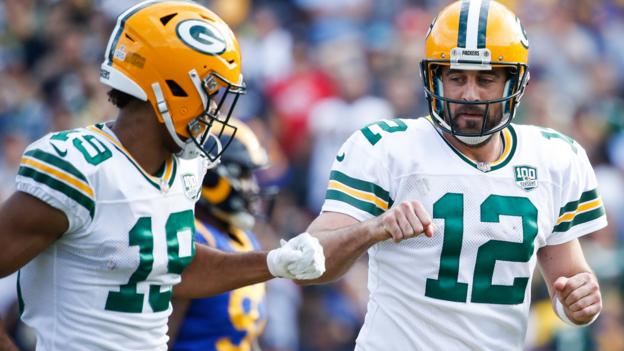
There seems no way to stop the Los Angeles Rams this season as they made it a perfect 8-0 first half of the season with a thrilling 29-27 victory over the Green Bay Packers.

Las Vegas odds makers had the Packers as the biggest underdog ever in the time Aaron Rodgers has been their quarterback, but the two-time MVP and his team produced an inspired performance on both sides of the ball as they pushed the Rams all the way.

Defence was key in a game billed as a shootout between two of the best offences in the league, as Green Bay built a 10-0 lead early on, before coming from behind to lead by a point with just eight minutes left to play.

Both attack and defence has won games for the Rams this season, but special teams finished this one off as Greg Zuerlein’s field goal put the team in front before Ramik Wilson forced a fumble on the following kick-off to seal their toughest win of the season.

It is the best start to a season for the Rams since 1969 and they showed everything in their armoury during the game – managing to connect on a fake punt to keep a drive going and also forcing a two-point safety when Packers running back Aaron Jones was tackled inside his own end zone.

Running back Todd Gurley maintained his run of scoring a touchdown in every game so far this season for the Rams – who have been transformed under 32-year-old head coach Sean McVay and his innovative play calling but backed by a squad laden with talent.

It gets no easier for either side as the Packers next take a trip to New England to face the Patriots while the Rams face what could well be a prelude to the NFC title game as they take on the streaking New Orleans Saints.

NFL week eight: Saints exact revenge on Vikings

After the Minnesota Vikings won an epic play-off contest in January, the New Orleans Saints gained some manner of revenge with a 30-20 success for a sixth victory in a row that sets up next week’s home showdown with the Rams perfectly.

Quarterback Drew Brees threw for the lowest yardage total in his 13-season Saints career, showing how tough their defence and running game has grown over their fine winning stretch, which has seen them go 4-0 on the road for the first time since they won the Super Bowl in the 2009 season.

Carolina Panthers QB Cam Newton fakes the entire Baltimore Ravens defence on touchdown run

Another week and more records for Kansas City Chiefs quarterback Patrick Mahomes, who became just the third QB to have seven consecutive 300-yard passing games as his team beat the Denver Broncos 30-23 to move on to 7-1 for the season.

Future Hall of Fame running back Adrian Peterson rolled back the years with a 64-yard touchdown run as he compiled 149 rushing yards for the Washington Redskins in their 20-13 win over the New York Giants. At 33, Peterson is the oldest player to record a 100-yard rushing game and have both a rushing and receiving score.

Carolina Panthers quarterback Cam Newton destroyed the top-ranked defence in the NFL with three total touchdowns steering his side to a convincing 36-21 victory over the Baltimore Ravens as the 5-2 Panthers remain well in the NFC play-off conversation.

Quarterback Russell Wilson was in sparkling form as the Seattle Seahawks beat the Detroit Lions 28-14 to remain relevant in the NFC wildcard picture at 4-3, while the Philadelphia Eagles regained some glimmer of hope of retaining their Super Bowl title by beating the Jacksonville Jaguars at Wembley.

The Pittsburgh Steelers maintained their dominance over the Cleveland Browns with their 15th consecutive home win against their AFC North rivals – with the Browns losing their 25th straight away game, just one short of the record.

The Cincinnati Bengals showed they are still a good team and moved to 5-3, to sit just behind the Steelers in the AFC North, as their kicker Randy Bullock converted a 44-yard field goal on the final play of the game to beat the Tampa Bay Buccaneers.

Philadelphia Eagles QB Carson Wentz catches a rebounded pass at Wembley

Bucs quarterback Jameis Winston gave the Bengals defence a helping hand with a career-high four interceptions before being benched in favour of Ryan Fitzpatrick – who then led a strong fightback that leaves the quarterback situation in Tampa up in the air as he rekindled memories of his stellar start to the season.

What’s left in week eight?

New England Patriots @ Buffalo Bills (00:15 GMT)

Tom Brady needs four touchdown passes to match Brett Favre’s 508, the second highest total in history, and will fancy his chances as he’s got 12 games with at least three TD passes against Buffalo – with a commanding 28-3 record over Monday night’s opponents.

The Pats have scored 30 points in over half of Brady’s games against the Bills and his 28 wins against Buffalo are the most ever by a quarterback against a single opponent. Current form also gives the 5-2 Patriots a huge advantage over the 2-5 Bills and anything other than an away win would be a huge surprise.

Stats of the week

  • Todd Gurley of the LA Rams scored a touchdown for the 11th straight game, which saw him tie the team record set by Elroy ‘Crazylegs’ Hirsch in 1950-51.
  • Gurley now also has 15 touchdowns in the first eight games of the season – he is only the fourth player to score that many in the first half of a season.
  • Sunday’s Wembley attendance of 85,870 marked the biggest crowd of the NFL International Series since games started to be played regularly in London in 2007.
  • Veteran kicker Adam Vinatieri is now the leading points scorer in NFL history as he scored 10 points for the Indianapolis Colts to take his tally to 2550 in his 23 years in the league.
  • Kansas City Chiefs quarterback Patrick Mahomes had four touchdown passes for the third game running on Sunday – he’s just the fourth player in NFL history to do that.
  • Adam Thielen’s remarkable start to the season continued despite the Vikings losing on Sunday – as the wide receiver became the first player ever to start the season with eight straight 100-yard games.
  • Thielen also tied former Detroit Lions star Calvin Johnson for the best run of 100-yard games in a season.

Who was this weekend’s MVP?

If you are viewing this page on the BBC News app please click here to vote.

Seahawks get creative

Seattle Seahawks brave call on a fake punt from their own end zone

Even Seattle quarterback Russell Wilson had to get involved in Doug Baldwin and company’s touchdown celebration during the Seahawks’ victory over the Detroit Lions.

“We did it as a group,” said fellow receiver Tyler Lockett. “When one person brings an idea, everybody has to agree in the receiving room, so whenever we finally agree it’s ‘let’s do this, let’s do that’.”

Wilson was not in on the planning apparently, but as quarterbacks often do, he just had to get in on the action.

NFL try-outs at Wembley?

Confirmed NFL fan Sam Quek can often be found at Wembley when the gridiron takes over the national stadium, but we didn’t expect to see two top comedians around there – fully dressed to take part!

Rob Beckett and Romesh Ranganathan were all decked out in full NFL pads as part of their new show – they certainly looked the part, though whether they can walk the walk is another question…

Hurdling Hunt

Kareem Hunt hurdles one defender then drags a few more over for a touchdown

Kareem Hunt is making a habit out of hurdling over on-rushing defenders to find the end zone, and he produced another moment of magic for the Kansas City Chiefs against the Denver Broncos on Sunday.

Hunt added a little touch of added sauce on the run this time though as he finished strongly by carrying defenders over the line with him.

Hunt may not look the biggest on the field but he showed he has got strength to go along with his obvious speed as one of the best running backs in the league.

Read More

from Trendy News Day https://ift.tt/2AzDUy5
via IFTTT

Gaza’s drinking water spurs blue baby syndrome, serious illnesses

news image

This article is the first of a two-part series on Gaza’s water crisis. The second, which examines solutions to Gaza’s water and health catastrophe, will be published on Tuesday, October 30.

Gaza – The unshaven doctor with circles under his eyes enters the children’s ward at Al Nassar hospital in Gaza City. It’s a Thursday evening, almost the weekend. The ward is bleak and eerily quiet, but for the occasional wail of an infant.

At each cubicle, sectioned off by curtains, it’s a similar image: A baby lies alone in a bed, hooked up to tubes, wires and a generator; a mother sits in silent witness at the bedside.

Dr Mohamad Abu Samia, the hospital’s director of paediatric medicine, exchanges a few quiet words with one mother, then gently lifts the infant’s gown, revealing a scar from heart surgery nearly half the length of her body.

At the next cubicle, he attends to a child suffering from severe malnutrition. She lies still, her tiny body connected to a respirator. Because electricity runs only four hours a day in Gaza, the baby must stay here, where generators keep her alive.

“We are very busy,” the overwhelmed doctor says. “Babies suffering from dehydration, from vomiting, from diarrhoea, from fever.” The skyrocketing rate of diarrhoea, the world’s second largest killer of children under five, is reason enough for alarm.

But in recent months Dr Abu Samia has seen sharp rises in gastroenteritis, kidney disease, paediatric cancer, marasmus – a disease of severe malnutrition appearing in infants – and “blue baby syndrome”, an ailment causing bluish lips, face, and skin, and blood the colour of chocolate.

Before, the doctor says, he saw “one or two cases” of blue baby syndrome in five years. Now it’s the opposite – five cases in one year.

Asked if he has studies to back up his findings, he says: “We live in Gaza, in an emergency situation … We have time only to relieve the problem, not to research it.”

Yet Palestinian Ministry of Health figures support the doctor’s findings. They show a “doubling” of diarrheal disease, rising to epidemic levels, as well as spikes last summer in salmonella and even typhoid fever.

Independent, peer-reviewed medical journals have also documented increased infant mortalityanaemia, and an alarming magnitude” of stunting among Gaza’s children.

A Rand Corporation study has found that bad water is a leading cause of child mortality in Gaza.

Simply put, Gaza’s children are facing a deadly health epidemic of unprecedented proportions.

“So much suffering,” says Dr Abu Samia. It is, he says, a matter of “life and death”.

Multiple factors are to blame for the uncoiling health crisis, but medical experts agree on one central culprit: Gaza’s scarce and contaminated drinking water, owing to Israel’s economic siege, its repeated bombing of water and sewage infrastructure and a collapsing aquifer of such poor quality that 97 percent of Gaza’s drinking-water wells are below minimal health standards for human consumption.

Dr Majdi Dhair, director of preventive medicine at the Palestinian Ministry of Health, reports a “huge increase” in waterborne disease, which he says a “directly related to drinking water” and to contamination from untreated sewage water flowing directly into the Mediterranean.

A visit to Gaza’s densely-packed Shati (or “Beach”) refugee camp helps explain why. There, 87,000 refugees and their families – expelled from their towns and villages during the creation of Israel in 1948 – are packed into half a square kilometre of cement-block structures along the Mediterranean.

“Water and electricity? Forget about it,” says Atef Nimnim, who lives with his mother, wife, and two younger generations – 19 Nimnims in all – in a small three-room dwelling in Shati.

The Gaza aquifer that sputters through their taps is far too salty, hardly anyone in Gaza drinks it any more. For drinking water, Atef’s 15-year-old son piles plastic jugs onto a wheelchair and rolls it to the mosque, where he fills the family’s containers, courtesy of Hamas.

Most families, even in the refugee camps, spend up to half their modest income on the desalinated water from Gaza’s unregulated wells. But even that sacrifice comes at a cost.

Faecal contamination

Palestinian Water Authority tests show that up to 70 percent of the desalinated water delivered by a small army of private trucks and stored in the camps’ rooftop tanks, is prone to faecal contamination.

Even microscopic amounts of E coli can bloom into a health crisis.

The reason for that, explains Gregor von Medeazza, UNICEF’s water and sanitation specialist for Gaza, is that the longer the E coli remain in the water, the more “they start growing” in the water and the worse it gets. This leads to chronic diarrhoea, which in turn can lead to stunting in Gaza’s children, as a British medical journal recently documented. One effect, von Medeazza says, is on “brain development,” and a “measurable effect on the IQ” of affected children. 

High salinity and nitrate levels from Gaza’s collapsing aquifer – so badly overpumped that seawater is flowing in – are at the root of many of Gaza’s health problems. Elevated nitrate levels lead to hypertension and renal failure, and are linked to the rise in blue baby syndrome. Waterborne maladies like infant diarrhoea, salmonella and typhoid fever are caused by faecal contamination – both from the rooftop desalinated water and from the 110 million litres of raw and poorly-treated sewage that flows into the Mediterranean every day. 

Because electricity here is shut off for 20 hours a day, Gaza’s sewage plant is essentially useless; hence, brown water spews into the sea, 24/7, from long pipes above a beach just north of Gaza City. Yet in the summertime, children continue to swim along Gaza’s beaches. 

In 2016, five-year-old Mohammad Al-Sayis swallowed sewage-laced seawater, ingesting faecal bacteria that led to a fatal brain disease. Mohammad’s was the first known death by sewage in Gaza.

Children make their way through sewage water in Mighraqa neighbourhood on the outskirts of Gaza City [File: Khalil Hamra/AP Photo]

Making matters worse: Israeli rockets and shells damaged or destroyed Gaza water towers and pipelines, wells and sewage plants causing an estimated $34m in damages. This further crippled the delivery of safe, clean water, deepening the health catastrophe here. An even greater impact comes from Israel’s economic blockade, which Dr Abu Samia blames directly on the area’s growing malnutrition.

The severe shortages of water and electricity, along with rising poverty, have damaged nutritional levels, Dr Abu Samia says.

“It is affecting babies.” 

Before the siege, he said, he had no patients suffering from malnutrition.

Now he frequently sees children with nutritional disease.

“We are seeing babies with marasmus” – a severe nutritional disease. “The last two years, it is increasing more and more.” 

Gazans well remember the cynical words of Israeli minister Dov Weissglas in 2006, when he infamously compared the blockade to “a meeting with a dietician …We have to make them much thinner, but not enough to die.”

Gaza to become uninhabitable by 2020

Now, quite apart from the hundreds of deaths by rockets, missiles and bullets in the three most recent Gaza wars, children here are getting ill and dying from bad water and the infectious diseases that result.

“Occupation and siege are the primary impediments to the successful promotion of public health in the Gaza Strip,” declared a 2018 study in the Lancet, which cited “significant and deleterious effects to health care.”

Without a major intervention by the international community, and soon, humanitarian groups warn Gaza will become uninhabitable by 2020 – barely a year from now.

Failure to urgently intervene will result in “a huge collapse”, says Adnan Abu Hasna, Gaza spokesperson for UNRWA, the UN agency for Palestinian refugees, which recently had all its US funding cut by the Trump administration. 

Otherwise, in less than two years, he says, “Gaza will not be a liveable place.”

And yet, liveable or not, the vast majority of Gaza’s two million people have nowhere else to go. Most are simply trying to live as normal lives as possible under extremely abnormal circumstances.

At dusk on a summer night, on a spit of rock and earth in the middle of Gaza harbour, five of those two million people try to enjoy a few minutes of quiet. 

All around Ahmad and Rana Dilly and their three young children, the harbour ripples with life. Fishermen haul in their nets. Kids pose for selfies on broken concrete blocks and rebar – remnants of an old bombing raid.

Rana pours mango soda; Ahmad insists on handing out some chocolate wafers. 

“You are with Palestinians,” he laughs, dismissing those who reject his offer.

Their three young children nibble on chips.

The Dillys have the same problems as many Gaza families.

Ahmad, a money changer, had to rebuild his shop in 2014 after an Israeli missile destroyed it.

Like most Gazans, the family has to contend with the salty water from the taps and the inherent risks of disease from the trucked water they rely on. But these problems mean little to them compared with their wish to feel safe and to enjoy fleeting moments of living like a normal family.

“I know the situation is horrible, but I just want to let my kids have a little change from time to time,” Ahmad says. “I want them to see something different. I want my family to feel safe.”

In the distance, an explosion echoes. Ahmad pauses for a short moment, then ignores it. 

He says, “I come here to the sea, and forget about all the world.”

The Dilly family visit a spit of land near the Gaza harbour to escape their daily difficulties [Abdel Kareem Hana/Al Jazeera]

Read More

from Trendy News Day https://ift.tt/2AxBYpI
via IFTTT

Justin Bieber Did Not Eat A Burrito Sideways, Actually

news image

Justin Bieber, who may or may not be married to Hailey Baldwin, has not released an album since 2015’s Purpose. He’s guested on scores of singles since then, including many summer bangers (“I’m the One,” “Cold Water,” and more).

But in the absence of a new musical project to do proper press behind, Bieber tends to get singled out for his extremely laidback fashion choices, for example, as well as his seeming inability to eat Mexican food the way most of us do.

Last week, what looked to be a paparazzi or fan-captured photo of Biebs chowing down on a burrito while holding it sideways (like corn on the cob) hit the internet. People loved it. They were also confused.

But in a very 21st-century twist with shades of Zardulu behind it, the photo is, in fact, fake. It’s a real pic, but that’s not Justin — it’s a highly convincing impersonator hired by the folks behind the Yes Theory YouTube channel.

They roped in Brad Sousa, who looks like he could be Biebs’s long-lost brother, to stand in for him, fitted him with a wig, and cleverly hid most of his face behind the honking Chipotle creation. “We wanted to prove a point: that staging a story, as goofy as it was, can be done much more easily than most people can imagine,” their new revelation video explains.

The whole behind-the-scenes look is worthwhile, showing just much brainstorming and backend work went into a simple photo that fooled the entire entertainment world. There’s additional info about a supplementary video where fake Biebs assisted a grandma, played by an actor, across the street — and most of the work appears to be just sitting around waiting for the thing to go viral.

No word yet from Justin himself about the pic or the story behind it. But last week, he did take to Twitter to remind young people in the U.S. to get out there and vote in the upcoming midterm elections, which is cool. Watch the full explanation video above.

Read More

from Trendy News Day https://ift.tt/2Db5Pa6
via IFTTT

Sony reveals the 20 iconic games coming with the PlayStation Classic

news image

The 20 games coming with the PlayStation Classic have been unveiled, including some heavy-hitting classics like Metal Gear Solid and Final Fantasy VII.

Sony revealed the PlayStation Classic game lineup Monday, a list of 20 pre-installed games that span almost every genre imaginable. The PlayStation Classic, coming Dec. 3, will cost $100 — just in time for the holidays.

Here’s the full list of games:

It’s a solid list of classic games that represents the original PlayStation’s life pretty well, although there are a few notable titles missing that fans might’ve expected, like Silent Hill, Crash Bandicoot, and PaRappa the Rapper to name a few.

Some of the omissions, like Crash Bandicoot and Spyro are likely due to the fact that the games have received a recent remaster. Meanwhile, Silent Hill‘s absence is likely due to the fact that Konami lost the source code to the games, according to a report from the now-defunct 1Up (re-reported by Destructoid).

Sadly, Pepsiman is also not included on the PlayStation Classic. Pour one out for ya boy.

Https%3a%2f%2fblueprint api production.s3.amazonaws.com%2fuploads%2fvideo uploaders%2fdistribution thumb%2fimage%2f86468%2ffab9bfa7 a117 4e7d b3e2 41d3a212b735

Read More

from Trendy News Day https://ift.tt/2DaGmxi
via IFTTT

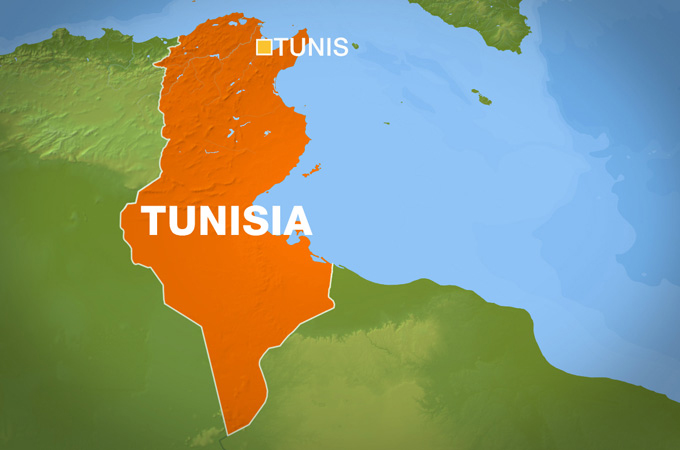
Suicide bomb blast rocks central Tunis: state radio

news image

At least nine people have been injured in a suicide bomb blast that struck the centre of Tunisia’s capital, Tunis, according to the interior ministry.

A woman blew herself up on Monday afternoon, according to witnesses, near Le Palmarium shopping mall on the central Habib Bourguiba avenue, which has a regular security presence due to the proximity of government buildings.

According to Radio Mosaique FM, the injured included eight security officers and one civilian. The bomber used a hand-made grenade containing small quantities of explosives, the radio report said.

The pictures published on the radio’s social media platforms showed a veiled woman who appeared to be dead wearing dark trousers, pink top and a dark short jacket with serious injuries on her left hip and the stomach lying on the ground in a cordoned off area.


More to follow…

SOURCE:
Al Jazeera and news agencies

Read More

from Trendy News Day https://ift.tt/2JmEuBS
via IFTTT

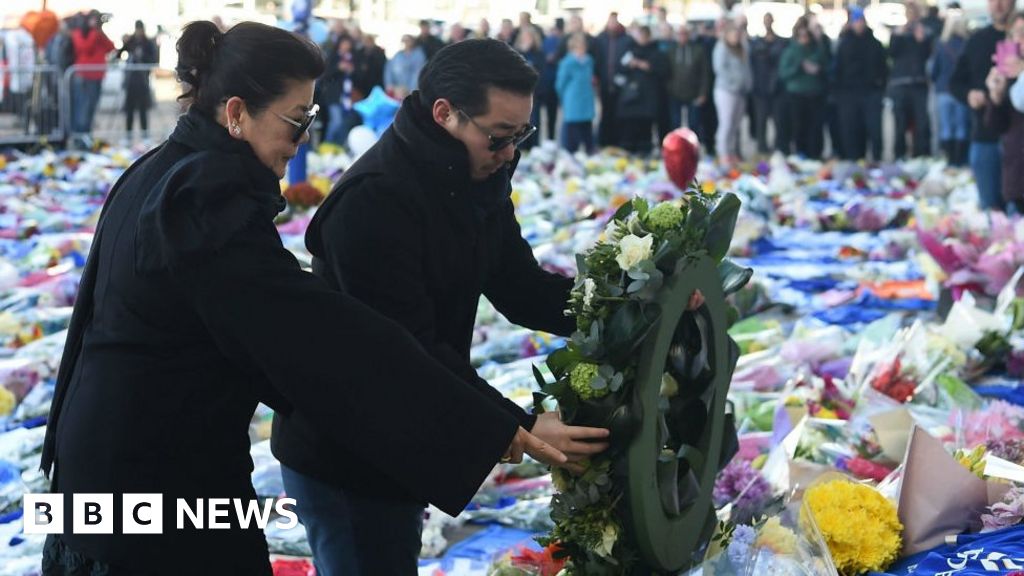
Wife and son visit Leicester City crash site

news image

Aiyawatt Srivaddhanaprabha and mother AimonImage copyright
AFP/Getty

Image caption

Mr Vichai’s wife Aimon and son Aiyawatt Srivaddhanaprabha visited the King Power Stadium

The wife and son of Leicester City’s owner have laid a wreath at the club’s stadium after he and four others were killed in a helicopter crash.

Vichai Srivaddhanaprabha died on Saturday alongside two members of his staff, the pilot and a passenger.

The helicopter spiralled out of control outside the King Power stadium at 20:30 BST.

The Air Accidents Investigation Branch said it had reco vered the aircraft’s digital flight data recorder.

The club chairman’s wife Aimon and son Aiyawatt Srivaddhanaprabha were joined at the ground by the president of the Thai FA, Somyot Poompanmoung and his wife, Potjaman Poompamoung.

The Foxes first team players are expected to pay their respects to Mr Vichai and the other victims of the crash outside the stadium shortly.

Leicestershire Police named the other people killed in the crash as Nursara Suknamai, Kaveporn Punpare, pilot Eric Swaffer and his partner Izabela Roza Lechowicz.

Image copyright
PA

Image caption

Mr Vichai was killed along with four others in a helicopter crash outside the stadium on Saturday

The AAIB said inspectors would be at the crash site until the end of week before transporting the wreckage to specialist facilities in Farnborough.

“In the meantime, we are still gathering evidence as part of our investigation,” a spokesman said.

Read More

from Trendy News Day https://ift.tt/2z71UX2
via IFTTT

Goop has been reported to UK regulators for ‘potentially dangerous’ claims

news image

Gwyneth Paltrow’s controversial lifestyle and wellness brand Goop is facing some adversity these days. Just a month after settling a consumer protection case in California over unscientific claims, Goop has been reported to two regulators in the UK — the National Trading Standards and the Advertising Standards Authority. 

Goop was reported by Good Thinking Society, a pro-science organisation, for 113 misleading claims on their website. According to Good Thinking Society, the 113 claims are in violation of UK advertising law. 

According to documents seen by The Sunday Times, Good Thinking Society alleges that Goop is making “potentially dangerous” claims about health products, the effects of which are “unproven.” 

Per Retail Gazette, some of the products in question are a range of sun protection products, pre-natal supplements, and a “medicine bag” featuring a selection of “health-giving” stones. 

Project manager at Good Thinking Society, Laura Thomason, tells The Independent: “It is shocking to see the sheer volume of unproven claims made by Gwyneth Paltrow’s Goop about their products, especially given that some of their health advice is potentially dangerous.”

The settlement reached by Goop in California last month was in relation to unsubstantiated claims about Goop products called jade egg, rose quartz egg, and the oil inner judge flower essence blend. 

The eggs, Goop claimed, help regulate women’s menstrual cycles and increase sex drive when inserted into the vagina. These claims have been refuted by gynaecologists. Goop claimed that oil inner judge flower essence blend could help prevent “depressive states.” Goop paid $145,000 (£112,975) in the settlement. 

Goop launched in the UK on September 24 2018 with their first European e-commerce site and a pop up shop in London’s Notting Hill. 

Https%3a%2f%2fvdist.aws.mashable.com%2fcms%2f2018%2f4%2f483c7d02 58bd 725f%2fthumb%2f00001

Read More

from Trendy News Day https://ift.tt/2StMXaK
via IFTTT

Design a site like this with WordPress.com
Get started