‘Ralph Breaks the Internet’ almost had a completely different plot

news image

In Ralph Breaks the Internet, Ralph’s quest to save Vanellope’s game leads them to the internet, where Ralph tries to strike it rich as a viral video sensation. Before the BFFs arrive at that plan, though, they stumble through a few false starts, some more promising than others.

It’s not unlike the journey that the Disney Animation story team had to take before setting Ralph and Vanellope on that very course. If anything, the real-world process was even more arduous – according to story artist Jason Hand, “literally every single one” of the sequences in the film had been changed over the course of developing the story.

From the start, the idea was for the Wreck-It Ralph sequel to send Ralph and Vanellope to the internet. But “the thing about the internet is, it’s like New York City,” said head of story Josie Trinidad. “You can tell any story there. It’s huge.”

Narrowing down all those limitless possibilities proved easier said than done, and the story team explored several concepts before landing on what would ultimately become the plot of Ralph Breaks the Internet. At a press day in August, Trinidad, Hand, and story artist Natalie Nourigat shared some of the other visions that had been considered.

“It takes 100 ideas to get to the one idea that shines the brightest and pops through.”

In one early version, it was Vanellope who went viral, developing her own website and beginning to give TED Talks. Ralph, meanwhile, was put in jail for failing to understand the distinction between “going viral” and “becoming a virus,” and had to find his way out with KnowsMore, a defective search engine that got every third answer wrong.

Once out, that pairing went in search of Vanellope, “who was changing dramatically, going from the Vanellope that we know to this dolled-up internet celebrity and forgetting who she was,” Trinidad recalled.

Another suggestion basically swapped those roles, having Ralph become a self-obsessed internet celebrity. That plot also had a completely different villain, an “internet super cop” that was essentially antivirus software. 

What ultimately unlocked the narrative was the understanding that Ralph and Vanellope’s friendship needed to be at the heart of the movie – it was, as Hand put it, the “true north.” “That’s the main story we’re trying to tell with this,” said Trinidad. “Not those other versions.”

Yesss helps Ralph and Vanellope navigate the internet in Ralph Breaks the Internet.

Yesss helps Ralph and Vanellope navigate the internet in Ralph Breaks the Internet.

Even then, it took quite a bit of effort to nail down the details. The story team realized quickly that they wanted Ralph and Vanellope to go viral, but figuring out how to create a video that could plausibly go viral required “a lot of trial and error,” Nourigat admitted. 

One possibility explored was Ralph and Vanellope representing the “two types of people” in a video recorded by Yesss, the trendsetting head algorithm of BuzzTube. However, “as the plot was developing, we realized that we wanted Ralph to make a sacrifice for his friend, so it might make more sense if he’s the one going viral,” said Nourigat.

Other scrapped ideas included a “meme factory,” which would have had Yesss directing funny videos of Ralph getting hurt, but which was thrown out for feeling too mean; and a “meme generator,” which would see Yesss combine seemingly random elements with Ralph in the middle. 

“To go viral is no easy feat.” 

None of it quite clicked, though, until the story team realized that their favorite viral video ideas were the ones that riffed on familiar genres like unboxing videos, cooking demos, Bob Ross painting lessons. 

The finished film has Ralph inserting himself into well-worn YouTube formulas like screaming goat clips and makeup tutorials, while Vanellope sets out on a related journey, encountering new sites and new people. The videos are believably viral and Ralph and Vanellope’s relationship is touchingly bittersweet. 

In other words, Ralph does exactly what the story team set out to do. It just took a lot of tries to get there. “There’s this concept that it takes 100 ideas to get to the one idea that shines the brightest and pops through, and that’s kind of how we work,” said Hand.

“I would say on Ralph, it was more like a thousand ideas to get that one idea,” added Nourigat. “To go viral is no easy feat.” 

Https%3a%2f%2fvdist.aws.mashable.com%2fcms%2f2018%2f5%2f9b066024 3eb3 6d2e%2fthumb%2f00001

Read More

from Trendy News Day https://ift.tt/2OWGtOn
via IFTTT

Why Saudi Arabia’s foreign policy is failing

news image

The brutal murder of Saudi journalist Jamal Khashoggi at Saudi Arabia’s consulate in Istanbul on October 2 and the spectacular mismanagement of the crisis that ensued show how reckless and ill-advised the kingdom’s foreign policy has become under Crown Prince Mohammed bin Salman.

This is the latest in a series of foreign policy blunders Saudi Arabia has suffered under the watch of the 33-year-old crown prince. Other prominent examples include the failed blockade of Qatar, the house arrest of Lebanese Prime Minister Saad al-Hariri, the diplomatic row with Canada over human rights issues and the disastrous war in Yemen.

One could argue that Prince Mohammed, also known as MBS, has had to pursue a more assertive foreign policy because of the rise of Iranian influence in the Middle East, which threatens the security and stability of Saudi Arabia. Yet, there is a clear distinction to be made between “assertive” and “reckless”. With his grave foreign policy miscalculations, MBS has not only moved away from the House of Saud’s traditional tactical diplomacy, but has also effectively pushed his country towards the precipice of political instability.

‘Backseat’ diplomacy

In the first decades of the Cold War, a revolutionary wave swept through the Middle East. In 1952, King Farouk of Egypt, the last monarch of Mohammad Ali’s dynasty which had ruled Egypt since 1805, was overthrown. In 1958, the Hashemite family was brought down by leftist and nationalist forces in Iraq. In 1962, army officers removed Zaydi Imam Mohammad al-Badr, plunging Yemen into a seven-year civil war which ended with the establishment of the republic. And in 1979, the monarchy of Shah Mohammad Reza Pahlavi was toppled and replaced by an Islamic republic led by Shia clerics.

Amid this upheaval, the Saudi monarchy managed to survive, mainly because of its calculative approach to foreign affairs, employing a quiet but remarkably effective diplomacy in dealing with external threats and challenges.

At the beginning of the Cold War, Riyadh took a backseat in most regional conflicts, leaving the rowdy revolutionaries of the Arab world (Egypt, Iraq and Syria) to take the lead. On Palestine, for example, the Saudis decided to keep a low profile. Although Riyadh backed the war efforts of the so-called “ring states” – the Arab countries surrounding Israel – it always refrained from getting involved in a direct military confrontation with the Zionist state. When it decided to get involved – for example by leading the 1973 oil embargo – it always did so through soft or economic power.

Even when it was forced to fight against regional rivals, Saudi Arabia avoided direct conflict and opted for proxy wars. In the 1960s, it drew the regime of Egyptian President Gamal Abdel Nasser, an archenemy for the Saudi ruling family, into a proxy conflict in Yemen. Abdel Nasser sent a large chunk of his army to support the revolutionary effort against Imam Mohammad al-Badr, who was backed by Saudi Arabia. But in doing so, the Egyptian president weakened his army which contributed to its defeat in the 1967 war against Israel and his subsequent political demise. The Egyptian leader died along with his pan-Arab dream three years later.

Using more or less the same tactics, the House of Saud achieved exactly the same results with another revolutionary leader that threatened its rule: Grand Ayatollah Khomeini. Riyadh avoided direct confrontation with Tehran, which was seeking to export the revolution and depose the conservative Arab Gulf regimes, and instead, encouraged and supported Iraq in the eight-year Iran-Iraq war (1980-1988). This effectively contained the Iranian revolution and the idea of exporting it to the rest of the Middle East withered away with the death of Ayatollah Khomeini in 1989.

Throughout the Cold War, Saudi Arabia also played a quiet albeit important role in the international arena, contributing to the eventual collapse of the Soviet Union. In the 1980s, it joined Pakistan and the United States in their efforts to support armed groups resisting the Soviet occupation of Afghanistan, funding most of the CIA programmes to arm and train the Mujahideen. The House of Saud also helped plunge oil prices in the second half of the 1980s, bringing the oil-dependent Soviet economy to its knees.

And when the threat came to its borders in August 1990 with Saddam Hussein’s decision to invade Kuwait, then also Riyadh opted for a circumvent solution. It requested the help of the US which promptly dispatched a coalition force to expel the Iraqi army from Kuwait and prevent an invasion of Saudi Arabia.

Resurgent Iran

Thus throughout the second half of the 20th century, Saudi Arabia won most of its battles without having to fire a shot. But the situation over the past few years changed dramatically in the Middle East. The US invasion of Afghanistan in 2001 and Iraq in 2003 eliminated two of Iran’s key regional foes, resuscitating its ambitions for regional hegemony.

The breakout of the Arab Spring in 2011 brought down and undermined a number of dictatorial regimes which Saudi Arabia viewed as the pillars of “stability” in the region. Egyptian President Hosni Mubarak was toppled in February of that year, which sent shockwaves across the Middle East. To try to avoid the same fate, Bashar al-Assad unleashed a violent wave of repression onto the Syrian population, eventually plunging the country into a bloody civil war.

For the first time in its recent history, Saudi Arabia found itself completely exposed, with no one to fall back on but itself. To add insult to injury, the Obama administration showed little sensitivity towards Saudi concerns as it sought rapprochement with Iran, leaving Riyadh deeply worried about its security. As the feeling of insecurity in the House of Saud grew, “backseat” diplomacy gave way to a more assertive foreign policy; the tactics, however, remained more or less the same: confrontation by proxy.

Anxious to prevent Iran from taking advantage of this fluid situation, Saudi Arabia – along with the United Arab Emirates – decided to fill in the power vacuum left by a retreating US and the collapse of the Arab heavyweights.

In March 2011, Saudi troops were sent to Bahrain to quash the protest movement. In June 2013, Riyadh supported the military coup in Egypt that overthrew the government of the Muslim Brotherhood. It funnelled billions of dollars in support of Egypt’s military junta as it mercilessly cracked down on the Islamist movement.

In Syria, Saudi Arabia put a lot of effort into undermining the regime of Bashar al-Assad, both militarily and diplomatically. Riyadh financed the purchase of infantry weapons and funnelled millions of dollars to anti-regime fighters in a drive to break the bloody stalemate that had allowed Assad to cling to power.

Yet, it was the Houthis’ takeover of the Yemeni capital Sanaa in September 2014, that shook Saudi Arabia to the core. The death of King Abdullah and the ascendance to the throne of King Salman paved the way for the young and ambitious MBS to lead his country into its first direct military conflict with another country.

Initially, the decision to go to war in Yemen was hailed as a brave and timely intervention to prevent the Houthis from taking complete control of Yemen and hence contributing to Iran’s rising regional influence. However, as the war dragged on with thousands of civilians getting killed, and hospitals and schools getting bombed, it became another foreign policy fiasco for Saudi Arabia. 

A reckless leader

MBS did not stop with the invasion of Yemen. His arrogance and belief that money can buy everything, and his utter ignorance of regional and international realities got Saudi Arabia into deep trouble with each of his aggressive foreign policy decisions.

Instead of trying to build a unified front against the Saudi archenemy, Iran, and direct Saudi resources to that end, MBS found himself fighting on almost every possible front. Right now, he is in conflict with Turkey and its Sunni allies, including Qatar; and with Iran, and its Shia allies in Iraq, Syria, Yemen and Lebanon.

Not only has MBS created more enemies than he can handle, but he has also chosen the wrong allies. He has embarked on a dangerous path of normalisation with Israel, believing that it would pay back in the long run. But with this decision, he risks losing the hearts and minds of the Arab people to Turkey and Iran, both of which have positioned themselves as champions of the Palestinian cause.

More importantly, he risks losing support in his own country and contributing to the rise of more radical forces, as some Saudis come to see their country fighting the wrong “enemies” and allying with the wrong “friends”.

If Mohammed bin Salman continues down this path, he is likely to bring about not only his own political demise, but that of the House of Saud as well.

The views expressed in this article are the author’s own and do not necessarily reflect Al Jazeera’s editorial stance.

Read More

from Trendy News Day https://ift.tt/2zkg6Ns
via IFTTT

MPs told off over Commons keepy-uppy

news image

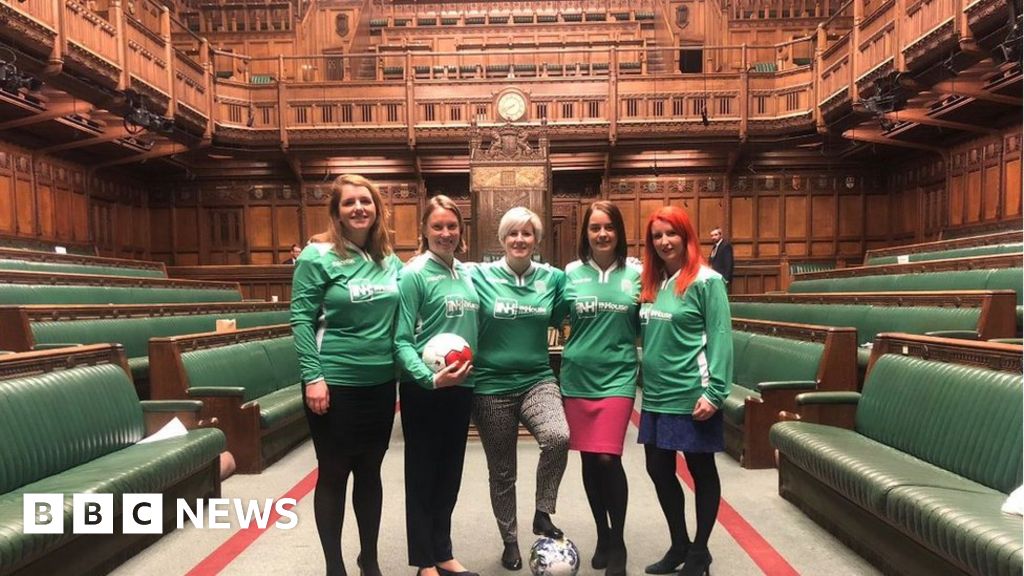
MPs playing football in CommonsImage copyright
Hannah Bardell MP

Image caption

Five MPs posed in the Commons chamber in their football tops on Tuesday evening

A group of MPs have been reprimanded for playing football in the chamber of the House of Commons.

Hannah Bardell posted a video on social media of herself playing keepy-uppy in the parliament after the sitting was adjourned on Tuesday evening.

The SNP MP also posed for photographs in the Commons with other including former sports minister Tracey Crouch.

Speaker John Bercow said the “historic chamber should not be used for this type of activity”.

However he said that several members involved had apologised, and that there were “no hard feelings”.

Ms Bardell and Ms Crouch, a Conservative MP, had been due to play for the UK Women’s Parliamentary Football Club on Tuesday, but the match was cancelled amid concerns it would clash with votes in the Commons.

The MPs later took photographs in the chamber wearing their football tops, with Ms Bardell filmed playing keepy-uppy between the green benches.

In a statement to the Commons on Wednesday, Mr Bercow said: “It has been brought to my attention that some football skills were displayed in the chamber yesterday evening after the House rose.

“I am informed that the doorkeepers on duty told the members concerned that the chamber was not the place for this activity, however, those doorkeepers were advised that permission had been given.

“Let me assure the House that that permission certainly did not come from me.”

Mr Bercow said he had received “gracious, indeed fulsome” letters of apology from Ms Crouch and Labour MPs Stephanie Peacock and Louise Haigh.

Another Labour MP, Alison McGovern, was also pictured wearing her football top in the chamber.

He added: “I think I can speak for us all when I say that our historic chamber should not be used for this type of activity and I gently remind colleagues if they are seeking to use the chamber outside of sitting hours beyond for the purpose of simply showing it to guests, frankly they should write to me asking for their request to be considered.

“I have said what I have said, there are no hard feelings and I consider the matter to be closed.”

Read More

from Trendy News Day https://ift.tt/2FAU0fe
via IFTTT

Best pre-Black Friday deals for Nov 21: Instant Pot, Fire HD 10, iPad, CBD oil, KitchenAid

news image

Just to let you know, if you buy something featured here, Mashable might earn an affiliate commission.

Save on Instant Pots, iPads, KitchenAid mixers, Fire HD 10 tablets, and more ahead of Black Friday.

Image: amazon/walmart/best buy/macy’s/Medix CBD/mashable photo composite

Read More

from Trendy News Day https://ift.tt/2r0yJl3
via IFTTT

Israeli cabinet minister Erdan urges Airbnb boycott

news image

An Israeli cabinet minister has called for a boycott of Airbnb and promoted one of its rivals, escalating the government’s response to the home-rental company’s decision to delist Israel’s settlements in the occupied West Bank.

On Monday, Airbnb said it would remove 200 listings from the website that allows home-owners to rent out rooms, apartments and houses to people, prompting a response from the Israelis.

“I call today on all those who support Israel and oppose discriminatory boycotts. They should cease using Airbnb and turn to other services,” Strategic Affairs Minister Gilad Erdan said at a conference in Jerusalem on Wednesday. 

“By the way, Booking.com is a great service,” added Erdan, the main person in Israeli government efforts to combat pro-Palestinian boycotts.

Airbnb said the move was based on an internal framework used to judge how it handles listings in occupied territories around the world.

“We concluded that we should remove listings in Israeli settlements in the West Bank that are at the core of the dispute between Israelis and Palestinians,” a statement on the Airbnb website said.

The company will remove listings in Israeli settlements in the occupied West Bank but this does not include East Jerusalem or Golan Heights.

Human Rights Watch’s director for Israel and the Palestinian territories, Omar Shakir, said Airbnb’s decision was a “welcome step”.

“Airbnb has sent an important message to the rest of the business community,” Shakir told Al Jazeera.

“It is impossible to do business [in the occupied West Bank] without contributing to serious violation of international humanitarian law and the human rights of the Palestinians.

“It was acquiescing to a policy in which Palestinians ID holders are not allowed to enter settlement solely because of who they are – and it appears to be the only case in the world, for which Airbnb hosts are mandated by law to discriminate based on national origin,” he added.

Israeli Justice Minister Ayelet Shaked, addressing another conference on Wednesday, backed Erdan’s call to boycott Airbnb and suggested Israel also deploy its own anti-discrimination laws.

Israel has said it would turn to the Trump administration and could back lawsuits against Airbnb within US states that have legislated against anti-Israel boycotts.

In a statement emailed to Al Jazeera, Airbnb’s global head of policy and communications, Chris Lehane, said: “Israel is a special place and our over 22,000 hosts are special people who have welcomed hundreds of thousands of guests to Israel. We understand that this is a hard and complicated issue and we appreciate everyone’s perspective.”

Israeli settlements 

All Israeli settlements are illegal under international law.

The Airbnb listings in the West Bank have long been criticised by the Palestinian community and human rights activists.

In a 2016 report, Human Rights Watch said companies that operate within or in coordination with Israeli settlements in the Palestinian territories benefit from and contribute to an unlawful system that violates the rights of Palestinians.

According to Peace Now, settlement plans in the West Bank have increased since the beginning of 2017, when President Trump, a key ally of Israeli Prime Minister Benjamin Netanyahu, was inaugurated as president of the United States.

According to Palestinian figures, more than 700,000 Jewish settlers now live on 196 settlements (built with Israeli government approval) and more than 200 settler outposts (built without its approval) across the occupied West Bank.

International law views the West Bank and East Jerusalem as occupied territories and considers all Jewish settlements on the land to be illegal. They are also viewed as major obstacles in peace efforts as they are built on land the Palestinians want for their future state.

SOURCE:
Al Jazeera and news agencies

Read More

from Trendy News Day https://ift.tt/2Fv2q7M
via IFTTT

Roger Federer: Rafael Nadal’s ex-coach says the Swiss won’t win a Grand Slam in 2019

news image

Roger Federer went almost five years without a Grand Slam title before winning the 2017 Australian Open

Roger Federer will not win a Grand Slam next year, according to the uncle and former coach of long-time rival Rafael Nadal.

Federer, 37, and Nadal, 32, have dominated Slam tournaments over the past 14 years, along with Novak Djokovic, 31.

But after Alexander Zverev, 21, beat both Federer and Djokovic at the ATP Finals, Toni Nadal feels the new generation of players have made a “quality leap”.

“I find it hard to see Federer raising another Grand Slam trophy,” he said.

Federer won the Australian Open in January to extend his all-time men’s record to 20 Slam victories, but the veteran Swiss struggled to maintain that form throughout the rest of 2018.

“I do not say it for his game, although I do say it for the toughness of the five-set tournaments,” Nadal added in his El Pais column.

“I have to confess that I said that on other occasions and the Swiss, repeatedly, surprised me.”

Federer and Nadal were both world number one this year, before Djokovic won Wimbledon and the US Open to finish 2018 on top.

Highlights: Dominant Zverev beats Djokovic to win ATP Finals

Zverev is back up to fourth after the weekend, when his performances forced 57-year-old Nadal – who retired as his nephew’s coach at the end of the 2017 season – into a rethink.

“For some time I had my doubts about whether the youngsters would be able to overcome the game of Federer on grass, the one of Djokovic on fast courts and the one of Rafael on clay,” he said.

“And I had the impression that the change would be caused rather by the decline of some than by the attack of others. The final in London has made me think about it.

“For now, for the coming year, I trust in the full physical recovery of Rafael. I feel new episodes of his rivalry with Djokovic and, in general, a more open panorama with the definitive incorporation of the new generation.”

Read More

from Trendy News Day https://ift.tt/2DEmd1U
via IFTTT

UK politician casually shares ‘Game of Thrones’ quiz result midway through a work day

news image

Here's Michael Gove, presumably thinking about his 'Game of Thrones' soulmate.
Here’s Michael Gove, presumably thinking about his ‘Game of Thrones’ soulmate.

Image: Jack Taylor/Getty Images

You’d think that pretty much every politician in the UK would be busy these days thinking about Brexit and you know, the future of the country.  

But it seems that Secretary of State for Environment, Food and Rural Affairs, Micheal Gove, has other, more pressing matters to attend to. Such as finding out who his Game of Thrones soulmate is.

The MP tweeted out a result from the “Who’s your Game of Thrones soulmate?” quiz from quiz site Magiquiz on Wednesday morning — in the middle of a workday. 

Gove “got” Tyrion Lannister, a man described by Magiquiz as a “storied and tortured” man. He appears to have shared his results using an automated sharing function.

A lot of people on Twitter noticed this behaviour, which seems a bit odd for an elected politician. 

Twitterers had a lot to say about Gove’s quiz result. 

We’re sure that Gove is happy with his GoT soulmate, though. In a video dug out by Politico, Gove says that his favourite character on the show is “undoubtedly” Tyrion Lannister.

Mashable has reached out to Michael Gove for comment. 

Happy humpday, Michael. 

Https%3a%2f%2fvdist.aws.mashable.com%2fcms%2f2017%2f9%2f435666b2 86c4 796e%2fthumb%2f00001

Read More

from Trendy News Day https://ift.tt/2Q6hEV5
via IFTTT

Could the EU’s battle with Italy over its budget spark a crisis?

news image

Rome, Italy – The European Commission has taken the first steps in fining Italy over its national budget, saying it deviates from the EU’s fiscal rules and commitments made by the previous government.

The move comes as Italy, which received a European Commission request to adjust its 2019 budget to meet EU parameters, refused to make any substantial changes.

Commission Vice-President Valdis Dombrovskis said on Wednesday: “With what the Italian government has put on the table, we see a risk of the country sleepwalking into instability.”

The Commission said formal proceedings that could bring financial sanctions were “warranted”.

In its report, the executive of the European Union said: “The opening of a procedure for excessive deficit based on the debt is therefore justified.”

Italy’s far-right Interior Minister Matteo Salvini reacted to the news with customary defiance.

“Has the letter from Brussels arrived? I’m waiting for one from Father Christmas too,” Salvini said. “We will politely talk as we have always done. We will have dialogue. I’m going to keep going.”

Italy’s debt

Italy’s 2019 budget includes tax cuts that will benefit middle-income, self-employed workers – partially fulfilling an electoral promise made to Salvini’s right-wing voters – a “basic income” for the unemployed called for by the anti-establishment Five Star Movement led by labour minister Luigi di Maio and the lowering of pension age, revising an unpopular reform made during Europe’s financial crisis.

The next steps will be taken on December 3 and 4, when European finance ministers will meet to decide whether to act against Italy for violating a debt reduction rule, considering that Italy’s debt is over 130 percent of its gross domestic product (GDP), second only to that of ailing Greece in the EU.

Wednesday’s report confirms a previous opinion expressed by the Commission, which considers the Italian budget based on an overly optimistic growth forecast.

The actual procedure is unlikely to be launched before the Italian Parliament approves the budget by December 31.

It could eventually see the EU apply fines against Italy of up to 0.5 percent of its GDP. 

This process could take up to six months, in which Italy will be given time to make revisions, coming close to the EU election in May 2019. 

“In the end, it doesn’t mean for sure that there will be a sanction,” explains Gregory Claeys, an economist at the Brussels-based think-tank Bruegel. 

“There are countries that have been in an excessive deficit procedure for years, like France or Spain, without adding a sanction. I think the main difference between those cases and the Italian case is that the financial markets are already a bit nervous about Italy because the debt is much higher than in other Eurozone countries,” Claeys said, adding that the EU’s opinion will “send a bad signal to the financial markets”.

‘Could lead to a spiral’

This could have serious consequences on the Italian economy, as Italy would end up paying a much higher interest on its debt.

“We have already seen that the market’s reactions in the past few days have not been positive,” Arianna Giovannini, a senior lecturer at De Montfort University and chair of the Italian politics specialist group at the UK-based Political Studies Association, told Al Jazeera. “This could lead to a spiral at the economic level, and the beginning of an actual crisis, a recession in Italy which, in my opinion, the country cannot afford,” she added.

According to recent polls, the Italian government has about 60 percent of voters’ consensus, with the League, the far-right party led by Salvini, nearly doubling it since the government was installed last June.

According to Giovannini, at the Italian political level, the standoff between Italy and the EU could play in favour of the League, which has been able to draw much consensus by touting a hard line on migration.

“Should the Italian government open to a compromise with the EU eventually, it is the Five Star Movement that stands to lose in the equation,” Giovannini argued. “The League has other arguments that seem to have much appeal on the electorate. On the other hand, if the Five Star Movement is not able to pursue the policies it has promised, the decline we have seen could broaden.”

For the European Commission, which has to confront the rise of populist movements not only in Italy but in other European countries as well, it’s a lose-lose situation.

“If they do something, they will be used as a scapegoat in the European election in Italy. If they don’t do anything, they will be bashed by populist movements in other European countries like the Netherlands or Germany. In all cases, they will favour eurosceptic movements in some countries of the EU,” Claeys told Al Jazeera.

It’s a cold shower for populists that shows objective obstacles in building this European populist bloc.

Carlo Ruzza, sociology professor at the University of Trento 

“Populists are on the rise, while there is a counter-movement that is trying to understand what to do. But it understands it little and badly,” Carlo Ruzza, sociology professor at the University of Trento who writes on populist movements, told Al Jazeera. “The anti-populist bloc is led by Macron in a moment in which Macron himself is weak.”

Ruzza suggests that Italy’s action has exposed underlying tensions between northern and southern Europe, exemplified by Austrian and Dutch foreign ministers expressing concern last week over Italy’s decision to go ahead without heeding the European Commission’s requests.

“It’s a cold shower for populists that shows objective obstacles in building this European populist bloc,” Ruzza said. “By definition, radical right-wing populism is nationalist, and Salvini [and his will to build a European populist bloc] is limited, while Italy’s ways give the impression of jeopardising the economic interests of European countries.” 

Read More

from Trendy News Day https://ift.tt/2DBppvt
via IFTTT

Jordan Nobbs: England and Arsenal star ‘heartbroken’ after rupturing ACL

news image

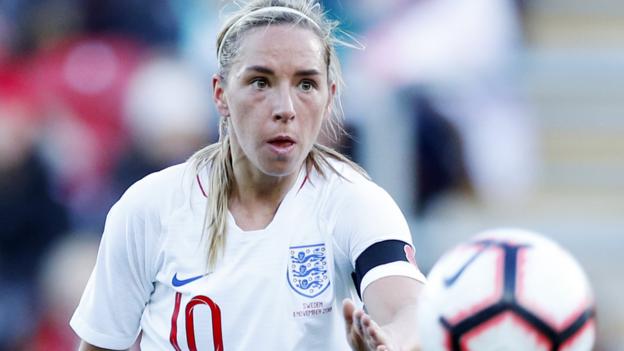
Jordan Nobbs has averaged a goal a game in the Women’s Super League this season

England and Arsenal’s Jordan Nobbs says she is “heartbroken” after rupturing her anterior cruciate ligament seven months before the Women’s World Cup.

Nobbs could miss the rest of the season and is a doubt for the 2019 World Cup, which begins in France on 7 June.

The midfielder, 25, has scored eight league goals for Arsenal this term.

“I am heartbroken right now but I can’t thank the whole football world enough for their support and messages,” the Gunners skipper said on social media.

The England vice-captain, who has 56 senior international caps, added: “I have been truly overwhelmed.”

Nobbs, who was England’s player of 2016, has been described as the “engine” of their midfield by the Lionesses’ record goalscorer Kelly Smith.

WSL Highlights: Everton 0-4 Arsenal

The Gunners, who are top of the Women’s Super League table with a 100% record so far this season, say Nobbs is “receiving specialist care” but are not yet able to put a timeframe on her recovery.

She suffered the injury during Arsenal’s 4-0 win at Everton on Sunday, having scored the Gunners’ second goal of the game.

The club added in a statement on Monday: “Everyone at the club wishes Jordan a speedy recovery and will give their full support in her journey back to full fitness.”

England captain Steph Houghton has been among those to offer support on social media

Read More

from Trendy News Day https://ift.tt/2Twyf39
via IFTTT

AmazonBasics Microwave is fine, but Alexa sure doesn’t make it magical

news image

Dirt cheap • Voice commands work well

Limited voice command presets

Amazon’s Alexa-enabled microwave is dirt-cheap buy if you need a simple microwave.

We did this to ourselves. 

Welcoming Amazon’s Alexa into our home with trojan horse devices like Echo smart speakers, smart displays, set-top boxes, tablets, and the zillion other things the digital assistant has infiltrated was only the beginning.

So it’s not at all outrageous Amazon’s now put Alexa into a product you’d least expect to find it: a microwave.

The first question most people I’ve shown the AmazonBasics Microwave ask is: “Why would I want Alexa in my microwave?” And my response has been the same: “Why wouldn’t you want to use voice commands to control your microwave?”

Interest piqued, the follow-up question is always: “How much does it cost?” 

“$60, which is about what a microwave of this size and power already costs without Alexa,” I tell my suddenly more interested pals.

And that is how Amazon’s gonna sell a ton of these Alexa-supported microwaves.

The product name gives away everything you need to know about the quality of this smart microwave: It’s as basic as any AmazonBasics product. 

A high-powered microwave for cooking a 20-pound turkey centerpiece, this microwave is not. This 700-watt microwave is good for making popcorn, or reheating a cup of soup or a rubbery Salisbury steak you picked up in the frozen aisle.

Its power is comparable to the non-smart $50 Sunbeam microwave of the same class I picked up from Target about six years ago and its size is the perfect fit for a college dorm room, basement man cave, or tiny apartment. 

Amazon’s smart microwave will heat up your frozen veggies or Campbell’s just fine with the press of the Alexa button below the keypad on the front. Just say “1 cup of noodle soup” after pushing it. 

How lazy are you that you can't press the number buttons?

How lazy are you that you can’t press the number buttons?

Image: ZLATA IVLEVA/MASHABLE

Unfortunately, even with Alexa, the microwave didn’t make the mundane task of reheating food any faster or less of a chore.

Feeling too lazy to muster up extra energy to press the Alexa button even though you just had enough strength to place a casserole onto the glass plate? Not to worry, you can use a voice command like “Alexa, reheat six ounces of casserole” instead.

Whether you press the button (no need to say “Alexa” first) or don’t (in which you do have to use the Alexa command), you’ll still need to have an Echo device nearby it for the voice commands to work. There are no microphones built into the food-heating machine. Instead, when you press the button or call on Alexa, the microwave wakes up a nearby Echo device and uses it to listen to your voice command.

Unfortunately, even with Alexa, the smart microwave didn’t make the mundane task of reheating food any faster or less of a chore.

It didn’t feel magical or futuristic the way the original Echo and Alexa voice commands did when I first installed that in my apartment way back in 2015. On the contrary, this sad, basic microwave only reminded me how terrible microwavable food is and that I need to spend more time eating with friends and family instead of by myself.

Limited “cooking” options

Doesn't get more depressing than a candle-lit dinner for one with Alexa.

Doesn’t get more depressing than a candle-lit dinner for one with Alexa.

Image: zlata ivleva/mashable

True story: That Sunbeam microwave was my very first microwave. My parents never owned one and for good reason: You should learn to cook or starve. That, or get a job so you can buy takeout. 

I bought that crappy low-powered microwave because an ex-girlfriend wanted it and I secretly wanted to relate to modern civilization, I guess.

But the thing is: A 700-watt microwave just isn’t very powerful. Sure, it’s enough for reheating certain foods and beverages and you can defrost small portions (between 50-70 ounces) of meat such as chicken, beef, or pork, but you’re probably mostly gonna use it to pop some popcorn or reheat leftover pizza.

Ain’t nobody doing any real “cooking” with the AmazonBasics Microwave. Amazon could have went all-out and made the Alexa smarts cook the crap out of foods so nerds like me can remain glued to our YouTube and Reddit, but it didn’t. 

Even with voice commands, the microwave only knows a very limited number of things to reheat, defrost, and cook.

Amazon gave me a reviewers guide with a list of stuff to try out with the microwave and Alexa controls. So I went shopping and tried out as many as my budget allowed.

It reheats your soup just fine.

It reheats your soup just fine.

Image: ZLATA IVLEVA/MASHABLE

Alexa worked with aplomb for reheating basics like coffee, soup, noodle soup (not to be confused with regular soup for some reason), but it fell short on warming up my severely frozen chicken sandwich when I told it “1 burger.”

Some dinner plates still required personal intervention. For example, I told Alexa to “reheat 1 dinner plate” (a Salisbury steak with potatoes and a side of mac and cheese) just two ounces over the recommended “12 ounces = 1 plate” definition and was grossed out by the frost still visible on sections of the rubbery meat and mac and cheese. Whipping the mac and cheese to mix up the frost and flipping the steak over and then reheating it again cooked it a little better, but the preset just wasn’t enough. In the end, it was still trial and error to add more time to fully heat up the meal. 

Dinner plates are hit or miss.

Dinner plates are hit or miss.

Image: ZLATA IVLEVA/MASHABLE

If I’ve learned one thing from using voice assistants at home it’s this: If it fails to understand me or it doesn’t accomplish what I want the first time, I’m less likely to ask it to try again. With this Alexa microwave, after a few improperly heated or cooked sessions, my frustration made me ignore the futurism and just pressed the damn number buttons.

Maybe the thing that annoyed me the most was that the microwave didn’t know how to cook bacon. If there’s any one thing Amazon should have focused on when teaching Alexa cooking skills, it should have been delicious, crispy bacon.

But no… I had to cook bacon the old-fashioned way: like a caveman pressing still pressing buttons.

Maybe it's microwavable food that needs reinventing and not the microwave itself.

Maybe it’s microwavable food that needs reinventing and not the microwave itself.

Image: ZLATA IVLEVA/MASHABLE

The microwave works with some nuanced voice commands such as “Alexa, microwave for 3 minutes” or “Alexa, reheat milk for 2 minutes on low power,” but I’d hardly say they’re more convenient than manually entering the settings.

And there’s also a built-in “Dash Replenishment” feature that keeps a tally of how many bags of popcorn you’ve eaten and then reorders more at a 10 percent discount before you out of it, but like meh. All I’m hearing is “Here, keep eating popcorn you fatty!”

It works, but it’s nothing special

Nah, the microwave won't have breakfast ready by the time you roll out of bed.

Nah, the microwave won’t have breakfast ready by the time you roll out of bed.

Image: ZLATA IVLEVA/MASHABLE

There’s nothing to really dislike about the AmazonBasics Microwave. It’s a microwave! It reheats things, and it does so just fine.

Amazon is making it seem like adding Alexa to such a boring home appliance somehow reinvents the microwave. It doesn’t.

The thing’s $60 and didn’t catch on fire during my week of attempting to use it to cook several meals. Should you buy one? Go for it if you don’t need something more capable or it’s your first microwave. Did I mention it’s only 60 bucks? The Echo is separate, so if you don’t already own one I recommend an Echo Dot, which is frequently on sale for less than $50. That’ll get you cooking, but mostly on your own, since Alexa isn’t much help.

Https%3a%2f%2fblueprint api production.s3.amazonaws.com%2fuploads%2fvideo uploaders%2fdistribution thumb%2fimage%2f86954%2f4954b872 cfd6 473d a0e0 017626ce3de5

Read More

from Trendy News Day https://ift.tt/2A8Ft4z
via IFTTT