6 problems with the foster care system — and what you can do to help

news image

When Tenaja Jordan came out to her parents at 17 years old, they kicked her out of their home. As a teenager, she was still considered a child in the eyes of the state, and was immediately placed into New York City’s child welfare system.

Following the trauma of the situation, one question remained on Jordan’s mind: Where was she going to live?

Jordan made her needs clear to child welfare workers: She didn’t want to live on Staten Island or with a homophobic guardian. But that’s exactly where she ended up.

“Her first words to me were, ‘Did any of those lesbians at the children’s center hit on you?’” Jordan tells Mashable about her guardian. “ACS put me exactly where I didn’t want to be.”

Advocates say there’s a lot wrong with a system that desperately needs to get it right.

Jordan, now an adult who has worked in the foster care system herself, isn’t unique in her struggle to navigate child welfare. Foster care has long been criticized for failing to meet the needs of children, from allowing kids to age out of the system without safety nets in place, to struggling to adequately support youth and families.

Advocates like Jordan say there’s a lot wrong with a system that desperately needs to get it right.

According to the latest statistics available, as of September 2014, more than 415,000 children and teens were in the foster care system at any given time. These young people live in temporary housing provided by the state, are cared for by relatives or unrelated foster parents, or are placed in other residential facilities like group homes. And they’re constantly frustrated with a system that feels unmanageable.

But getting to the root of frustration with child welfare systems isn’t easy. Advocates say there are a lot of complicated and intertwining factors that make foster care ultimately unsuccessful for many who enter the system.

Consider this a critical starting point to reframe how we think of child welfare. Here are six problems advocates say hinder foster care in the U.S., and what you can do to make a change.

1. Group homes are too often a go-to.

More than 56,000 children in child welfare systems are living in group settings — and advocates say that number is far too high. Many argue children have more success when placed in family settings from the start, and that defaulting to group settings is a troubling practice.

“We believe that all kids who have to be removed from their families should be placed with other families.”

“We believe all kids who have to be removed from their families should be placed with other families,” Tracey Feild, director of the Child Welfare Strategy Group at the Annie E. Casey Foundation, tells Mashable. “That’s the most important criterion for placement — or it should be.”

Aside lacking in adequate support for children in care, group homes also make little financial sense. Group settings are about seven to 10 times more expensive per child than placement with a family.

But, Feild admits, there’s one major obstacle when it comes to getting children out of group care: There are rarely enough foster families to achieve that goal.

Denise Goodman, a child welfare professional and consultant with the Annie E. Casey Foundation, adds that there’s often a dependency on group homes for teenagers in particular, because “not enough people want to step up for teens.”

What you can do to help: Become a foster parent, if the new role fits your life and your family.

“What we want is to stabilize youth in one family — and have that family understand what they are going through, and address and meet their needs,” Feild says.

To learn more about the process to become a foster parent, state-by-state, visit here.

2. Teens age out of the system without proper support.

When children, especially teens, are placed into group homes, they’re denied the ability to connect with a permanent, adoptive family. Without those connections, they’re likely to age out of the system without a supportive network in place.

“At a certain point, a decision is made that a child is old enough that we can let them age out,” Feild says. “Now, we are realizing that that’s a mistake.”

And the realities of aging out of the system are devastating for youth. One in five young people who age out of the system will become homeless. One in four will be involved in the justice system within two years of leaving foster care. And it’s estimated that more than 40% of youth who age out won’t complete high school.

“The best independent living, transitional support teens in foster care can have is a family.”

“The best independent living, transitional support teens in foster care can have is a family,” Goodman says. “There wasn’t a whole bunch of us who were truly ready to be 100% on our own at 18.”

Goodman adds that many jurisdictions have recently extended foster care beyond age 18 to age 21, because states are starting to understand that young adults are in need of much more support from caregivers and case workers.

“Even kids who have grown up with families and have gone to college — very few can be independent at 21,” Feild says. “And we expect these kids to go off and succeed on their own? It’s unlikely and unfair to think that’s going to happen.”

What you can do to help: Become a mentor for foster youth in your community — and be a vocal advocate for stronger transitional measures for young adults aging out.

“You need a connection to an adult that is going to be there for you,” Jordan says. “Young adults need that kind of mentorship and support.”

To become a mentor, reach out to agencies in your state or local families in your community that could use support. To learn more about the challenges facing young adults aging out of the system, read first-person accounts of the crisis here.

3. Foster parents need more support to achieve success.

Guardians need more support, too, which Feild says is essential for foster parents to work through any difficulties they may experience.

“An entire community needs to have a positive attitude toward people who do this difficult … work of becoming foster parents.”

“They are often taking kids who have experienced trauma in their early years,” she says. “They have to be trained about what’s going on in a child’s life, and how to best address those concerns.”

Though advocates say family placement is ideal over group homes, children and teens in the system — especially those who are LGBTQ — are often reluctant to leave congregate care because many foster care families can’t meet their needs the way group care workers can.

With almost half of all children in the child welfare system living in foster homes with non-relatives, Feild says early support while families are forming relationships is especially key to curbing disruptions in placement. And because it’s common for foster kids to hop from placement to placement, addressing that trend through child and parental support is crucial.

What you can do to help: Support foster families in your community in big and small ways — tutor, babysit or simply ask how you can make their lives a little easier. Goodman says there needs to be an “all hands on deck” mentality to support foster families, especially since not every family can be a foster family.

“An entire community needs to have a positive attitude toward people who do this difficult, challenging but ultimately rewarding work of becoming foster parents,” she says.

Organizations like the National Foster Parent Association recruit, train and support foster parents in a more structured manner. You can donate to its efforts here.

4. There isn’t enough focus on reunification.

We often talk about adoption or aging out as the only two options after foster care, but reunification with a parent is an option often overlooked. It’s actually common, with about half of all youth who leave foster care becoming reunited with their parents.

“We need to be saying, ‘Lend a helping hand to children and their families by becoming a foster parent.’”

But, advocates say, the system as a whole often ignores reunification as a viable option when thinking about a young person’s future. Feild says that’s a major misstep, especially because children who are removed from their families don’t necessarily want to be.

For these youth, Goodman adds, talking about foster care with reunification in mind is essential.

“We aren’t ‘giving this child the gift of a family’; this child has a family,” Goodman says. “Family needs to be part of the conversation. We need to be saying, ‘Lend a helping hand to children and their families by becoming a foster parent.’”

What you can do to help: Reframe how you talk and think about foster care. Don’t assume parents who have children taken away are forever unable to provide for those children.

Abuse or neglect aren’t always the issues at hand. The realities of mass incarceration for minor convictions — especially for black families — may place a child out of parental care, or a family struggling financially may temporarily lose the ability to take care of their children.

There are many reasons for lapses in the ability to care for a child that can be solved, allowing families to move forward. Let reunification become one of the end goals you talk about when speaking about foster care, not just adoption or aging out.

5. Children’s needs often go unheard.

For many children in the foster care system, their frustrations stem from one main source: They feel their voices go unheard.

“I do think that sometimes we aren’t very good at listening to kids or engaging with kids,” Goodman says. “Some people just don’t value the youth voice — and I think we should.”

“Some people just don’t value the youth voice — and I think we should.”

Sometimes, that voice can be angry or frustrated, leading adults to cut off communication and leave a child’s needs unmet, simply because they don’t like how they’re being articulated. But both Goodman and Feild agree that anger, especially when dealing with a complex foster care system and past trauma, is understandable.

“You’ve got kids who have had terrible things happen to them — so bad that they’ve had to be removed from their families,” Feild says. “They have a lot going on and a lot to deal with, along with growing up and becoming independent.”

What you can do to help: Be someone who listens to children and teens in foster care — and encourage others to do the same. An adult advocating for an unheard child acts as an amplifier for that child’s needs.

6. The system is filled with too many rules, regulations, and players.

Some children may feel frustrated with the foster care system because they’re constantly under surveillance. There are often a lot of players in the lives of foster children: guardians, advocates, social workers, courts and more.

“You have to go through 12 layers of people to find the right person to talk to about something,” Feild says. “You are bound by the rules of the system — and they are not the normal rules a parent would have for a child.”

“You are bound by the rules of the system — and they are not the normal rules a parent would have for a child.”

Feild says seemingly normal tasks for foster children and teens, like getting a driver’s license or playing on a sports team, require extensive approval and paperwork. As a result, it’s easy for children to feel like their lives are impossible to navigate.

“That’s a lot of people controlling your life and making decisions for you,” she says. “At least in a biological or adoptive family, you can have a dialogue about that.”

And for young people in foster care to assert themselves against these rules can be especially tricky. It often involves a lot of risk.

“[In the foster care system], there’s no room for error. If I’m a teenager and I make a stupid mistake, my foster parents may say to an agency, ‘Hey, move this kid,’” Feild says.

What you can do to help: Become a court-appointed special advocate for foster youth, if the new role fits your life. A special advocate in the courts ensures foster youth are getting all their legal needs met by getting to know those children and their situations, and then vocalizing their opinions of a positive and sensitive care plan in the courts.

To learn more about how to become a volunteer, visit here

To learn more about youth rights within the system, start with this breakdown.

Read More

from Trendy News Day https://ift.tt/2MIRVAm
via IFTTT
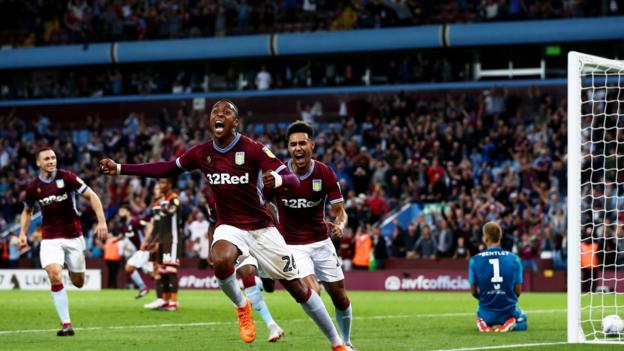
Aston Villa 2-2 Brentford: Two goals apiece for Jonathan Kodjia and Neal Maupay

news image

Villa’s Jonathan Kodjia has now got three goals in two games – after scoring just once last season

Jonathan Kodjia’s stoppage-time header earned Aston Villa a draw against Brentford, as both sides maintained their unbeaten starts in the Championship.

The Ivory Coast striker looped a header over Bees goalkeeper Dan Bentley in the fifth minute of added time – his second equaliser of the night – to give Villa a deserved point.

Neal Maupay got both Brentford goals – but he was fortunate to escape punishment for a first-half stamp on Villa midfielder John McGinn and may yet be retrospectively banned.

Maupay’s well-worked right-foot volley into the roof of the net, after Sergi Canos galloped down the right for Ollie Watkins to head back across goal came against the run of play on 23 minutes.

But Villa were rightfully level on 39 minutes when a great tackle by McGinn won possession, Kodjia turned Ezri Konsa on the edge of the box and then, after letting go of the Bees defender’s shirt, darted into the area to drill a fiercely struck right-foot shot beyond Bentley.

Maupay then got in at the far post ahead of Alan Hutton to acrobatically net from close range on 82 minutes after Villa keeper Orjan Nyland could only parry Watkins’ neatly chipped left-wing cross – the Frenchman’s fifth goal of the season.

Nyland, who had already made one stunning low save to keep out a Nico Yennaris strike, then made another great block to prevent a third Bees goal for sub Said Benrahma.

But Kodjia, who had an injury-wrecked 2017-18 season, had the final word with that key late second equaliser to leave both his side and boyhood Villa fan Dean Smith’s Brentford with eight points from their first four matches.

Since being relegated to the Championship, Villa have met Smith’s Brentford five times – and are still to win.

Aston Villa manager Steve Bruce told BBC WM:

“That was our best performance by a country mile in the first half. You can see what we’re trying to do. Then the first mistake we make they score from, but the reaction was good.

“It was a horrible stamp on John McGinn and their lad should have been sent off. I know how difficult it is for referees and I never want to see anyone red carded. But I am sure they will look at it. A malicious stamp on purpose sticks in the back of your throat, especially when that player scores twice

“At 2-1 down, they then had a couple of chances in a good 10 minutes and, all of a sudden, you think that’s a bit unjust. But Jonathan Kodjia looks a bit more like the old Jonathan Kodjia again. And we had the character to come back again and get something.”

Brentford boss Dean Smith told BBC Radio London:

“If you remember the incident, Mile Jedinak fell over, got up and then smashed Neal in the back of the head so, if they are looking at retrospective for Neal, then we’ll do so for Jedinak.

“I would have taken a point at half-time. We weren’t very good in the first half but we looked the more likely as the game went on.

“We missed big chances at 2-1 to put the game to bed. The start has been very good, it could have been excellent.”

Neal Maupay is now the Championship’s top scorer with five goals in four games

Read More

from Trendy News Day https://ift.tt/2MRng3X
via IFTTT

‘It’s on’: Tiger Woods confirms showdown with Phil Mickelson

news image

USA TODAY Sports
Published 5:37 p.m. ET Aug. 22, 2018 | Updated 6:56 p.m. ET Aug. 22, 2018

CLOSE

USA TODAY Sports’ Steve DiMeglio previews the upcoming tournament at the Ridgewood Country Club in Paramus, New Jersey.
USA TODAY

“It’s on.”

That’s what Tiger Woods tweeted Wednesday to confirm the highly anticiipated one-on-one matchup against Phil Mickelson, “The Match,” will be Thanksgiving weekend.

The showdown will be Friday, Nov. 23, and it will be match play.

As various details start trickling in, here is one thing we know for sure: It’s winner-take-all for $9 million.

The Match will be played at Shadow Creek Golf Course in Las Vegas. 

Woods and Mickelson staged a promotional back-and-forth on Twitter on Wednesday.

Mickelson was quick with his reply.

It continued:

Woods: “Think you will earn some bragging rights?”

Mickelson (who joined Twitter on Wednesday, just in time): “Let’s do this.”

The match will be shown on pay-per-view.

“We think there will be some pretty good interest, but we’re also trying to present it in a way that you don’t get to see on normal TV,” Mickelson told reporters at Ridgewood Country Club in Paramus, N.J., site of the Northern Trust, the first event of the FedExCup playoffs. “We’ll have (microphones) on both of us and our caddies, and you’ll be able to hear all the banter as well as all the commentating that will be more interactive.”

“The idea is not just to have this great match but to have this interactive experience so fans can see something they have never seen in televised golf before.”

Other details — What time it begins? Who will be in the gallery? Will there be an undercard? How much for the pay-per-view? — are still to be worked out.

WarnerMedia issued a release following Woods’ tweet with some details:

Live pay-per-view coverage of the event will be distributed through Turner’s B/R Live, the company’s new premium live sports streaming service, AT&T’s DIRECTV, AT&T U-verse, and will be offered to other on-demand platforms. 

HBO Sports will capture all the excitement leading up to the match.

Bleacher Report and its House of Highlights, which recently surpassed 10 million followers on Instagram, will offer comprehensive highlights and behind-the-scenes content.

Turner’s TNT will also televise programming with select content from the event in the weeks following the live competition.

Turner International will facilitate distribution of live PPV access to the event outside the U.S.

Also in the release: 

“Woods and Mickelson will selectively make side-challenges against one another during the match.  For instance, Woods or Mickelson could raise the stakes by challenging the other to a long-drive, closest-to-the-pin or similar competition during a hole as they play their match, with money being donated to the winning golfer’s charity of choice.”

Woods has been installed as a prohibitive favorite at -180 by Golfodds.com and Westgate Las Vegas SuperBook manager Jeff Sherman. 

Mickelson, meanwhile, is +150. A $100 bet would fetch $150 in net winnings if Lefty pulls off the upset.

One interesting mystery: Will Woods have to use a left-handed driver (like the one he is holding in the poster he tweeted)?

Contributing: USA TODAY Sports’ Steve DiMeglio

Autoplay

Show Thumbnails

Show Captions

Read More

from Trendy News Day https://ift.tt/2NanU9u
via IFTTT

Facebook to pull VPN Onavo from App Store after Apple pushback

news image

Gulp.
Gulp.

Image: Christophe Morin/getty

Facebook is finally, ever-so-slightly curtailing one aspect of its creepy data gathering practices, and all it took was a threat from Apple. 

The social media and advertising conglomerate plans to remove its Onavo VPN app from the App Store after Apple warned the company that the app was in violation of its policies governing data gathering. So reports the Wall Street Journal, which notes that app should be gone by late Wednesday. 

For those blissfully unaware, Onavo sold itself as a virtual private network that people could run “to take the worry out of using smartphones and tablets.” In reality, Facebook used data about users’ internet activity collected by the app to inform acquisitions and product decisions. 

Essentially, Onavo allowed Facebook to run market research on you and your phone, 24/7. It was spyware, dressed up and neatly packaged with a Facebook-blue bow. Data gleaned from the app, notes the Journal, reportedly played into the social media giant’s decision to start building a rival to the Houseparty app. Oh, and its decision to buy WhatsApp

In other words, Facebook seriously relied on the detailed look at users’ web habits that Onavo provided. That specific arrow in the company’s surreptitious quiver will soon be cast aside — sort of. 

Importantly, it’s not like the app itself is going anywhere for the untold number of people who’ve already downloaded it. And it’s still available on the Google Play store as of the time of this writing. (Just a little tip for all your Android users out there: Don’t download it.)

While the app’s removal from the App Store is certainly unwelcome news for Facebook, it is likely not surprising. The threatened Apple ban and subsequent Facebook retreat, after all, didn’t come out of the blue. In June of this year, Apple updated its App Store guidelines to explicitly ban “[collecting] information about which other apps are installed on a user’s device for the purposes of analytics or advertising/marketing.”

As that’s more or less exactly the point of Onavo, people saw the writing on the wall.

Now Facebook will just have to resort to all its other ways of gathering data about its users to determine which burgeoning competitor to crush beneath its hoodie-bedazzled boot. Oh yeah, and all the data it will continue to gather from the misguided people still using Onavo, of course.  

Https%3a%2f%2fblueprint api production.s3.amazonaws.com%2fuploads%2fvideo uploaders%2fdistribution thumb%2fimage%2f85091%2fa32d7063 b4aa 45e5 8762 30703ada18bd

Read More

from Trendy News Day https://ift.tt/2MINN3k
via IFTTT

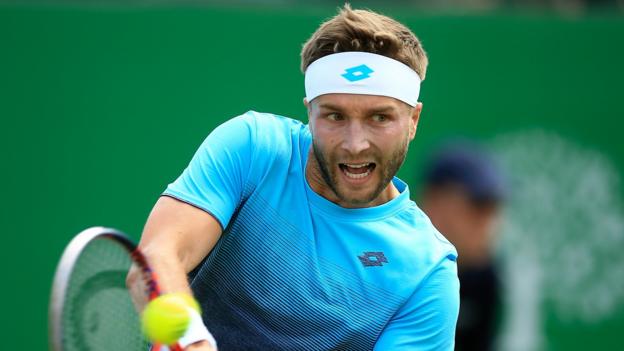
US Open 2018: Liam Broady beats fellow Briton Jay Clarke in qualifying

news image

Liam Broady was beaten by Milos Raonic in the first round of Wimbledon this year

Liam Broady beat fellow Briton Jay Clarke in straight sets to reach the second round of US Open qualifying.

British number five Broady, 24, eased to a 6-3 6-1 victory against Clarke, who is two places higher than him in the national rankings.

Broady will next face Belarus’ Uladzimir Ignatik, needing two more wins to reach the main draw, which starts on Monday in New York.

Heather Watson also won in the first round of qualifying on Wednesday.

The 26-year-old British number three beat 14-year-old American Cori Gauff 6-4 6-1 in one hour 11 minutes to set up a tie against Japan’s Ayano Shimizu and join Naomi Broady, who upset Katie Boulter on Tuesday, in the second round.

Katie Swan fought back from a set down to beat Italy’s Deborah Chiesa 3-6 6-4 6-4 in two hours 24 minutes and will face Japan’s Nao Hibino next.

Britons Harriet Dart and Gabriella Taylor are also in first-round action in New York on Wednesday.

Kyle Edmund, Andy Murray and Cameron Norrie are the British men already in the main draw, while Johanna Konta is the only Briton to have gained direct entry to the women’s singles.

Read More

from Trendy News Day https://ift.tt/2whHlpK
via IFTTT

Cohen charges: Federal investigation implicates others close to Trump

news image

CLOSE

President Donald Trump is defending the hush money payments made by his former attorney Michael Cohen to a pair of women, insisting, contrary to Cohen’s guilty plea, that the effort wasn’t “even a campaign violation.” (Aug. 22)
AP

Sham invoices from the President Donald Trump’s private company. Secret talks with a tabloid owner to “catch and kill” a damaging story. Members of a presidential campaign coordinating to hide payoffs to alleged mistresses on the eve of an election

The Justice Department’s charges against President Trump’s longtime fixer Michael Cohen offer a trail of people and organizations who prosecutors say helped him orchestrate the illegal payments, including members of the president’s campaign, his company and a longtime friend. Prosecutors said they had unearthed a mountain of evidence — including encrypted messages and audio recordings — to support that case.

But prosecutors left one central question unanswered: What happens to them now?

Cohen, Trump’s former personal attorney and longtime fixer, pleaded guilty on Tuesday to eight felonies, including two charges that he violated election laws by engineering the payments to two women who claimed to have had affairs with Trump years earlier. Then he told a stunned federal courtroom in New York that Trump himself had directed the illegal payments.

“There were others who had direct roles in these illegal contributions; in some cases, a more direct role,” said Noah Bookbinder, the head of the campaign finance watchdog group Citizens for Responsibility and Ethics in Washington. “Whether they have sufficient proof to bring an indictment against any of them we don’t know yet, but the information goes pretty far toward alleging criminal activity by some of these other entities.”

MoreTrump suggests people not hire Michael Cohen

More: Did Michael Cohen lie to Congress?

Trump acknowledged in an interview with Fox & Friends on Wednesday that the money to pay one of the women, pornographic actress Stormy Daniels, “came from me,” but he denied that it violated any laws. Earlier in the morning, he said on Twitter that the violations for which Cohen had pleaded guilty and could soon be sent to prison are “not a crime.”

White House Press Secretary Sarah Huckabee Sanders said only that “what I can tell you is the president did nothing wrong. There are no charges against him.”

But through much of Trump’s orbit on Wednesday, the question turned to how people and organizations close to him could be caught up in the Justice Department’s understanding of the case.

The charges prosecutors laid out on Tuesday did not name any of them but instead concealed them behind flimsy pseudonyms, something the government routinely does.

They include unnamed members of Trump’s 2016 campaign; his private company, The Trump Organization; and American Media, Inc., the owner of the tabloid National Enquirer.

A Justice Department spokeswoman declined to comment on the case. Representatives of Trump’s company, his campaign, AMI and Cohen did not respond to requests for comment.

Autoplay

Show Thumbnails

Show Captions

The government’s allegations left observers with little doubt that the federal investigators have taken a broad view of the potential wrongdoing. What remains to be seen, they said, is whether investigators have unearthed evidence that any of the others identified in the charges against Cohen knew that the payments were illegal.

Paul Ryan, the top lawyer for the watchdog group Common Cause, aid the organization “expects and hopes that the U.S. Attorney’s Office is exploring criminal charges and indictments of AMI, The Trump Organization and the Trump campaign itself.”

The charges against Cohen center on payments to two women, Daniels and former Playboy playmate Karen McDougal, in the months before the 2016 election.

In one episode, prosecutors charged that Cohen and AMI paid McDougal $150,000 to prevent her from speaking to the media about an affair with Trump. Prosecutors charged that although the agreement was ostensibly to pay her for writing for the magazine, “its principle purpose … was to suppress [her] story so as to prevent it from influencing the election.”

Prosecutors also said they had developed evidence that the payment was part of a broader agreement between Cohen and AMI’s chief executive David Pecker to help Trump’s campaign “deal with negative stories about [Trump’s] relationships with women, by, among other things, assisting the campaign in identifying such stories so they could be purchased and their publication avoided.” 

AMI’s involvement is significant because one of the charges against Cohen alleged that the payment by AMI was an illegal corporate campaign donation. Cohen pleaded guilty to engineering the illegal payment.

That doesn’t mean AMI could face charges, said Richard Hasen, a University of California Irvine professor who specializes in election law. Beyond that, the Justice Department would have to navigate “another layer of complexity” to build a case against AMI because election laws include a special carve-out for media companies meant to keep them from running afoul of the law when they report or comment on political candidates.

In the second episode, prosecutors said Cohen paid $130,000 to Daniels through a shell company to prevent her from talking about an alleged affair with Trump. Prosecutors said Trump’s private business, The Trump Organization, which is now held in a trust run by his two adult sons and another executive, ultimately repaid Cohen for the payoff, plus a $60,000 bonus, falsely describing them as a retainer for legal services.

Ryan said federal law prohibits companies from reimbursing campaign donations.

Prosecutors said in a court filing that both payments were “coordinated with one or more members” of Trump’s campaign.  

Peter Zeidenberg, a former federal prosecutor, said “all the entities have legal exposure.” But he said he would be surprised if the government pursues charges against the president’s business.

“They got the guy who did it: Cohen. If they aren’t going after the president, it seems a little unfair to go after all these people at the Trump Organization who were just effectuating it,” he said.

Other experts said they were skeptical that the government could bring additional charges, and raised questions about whether it should have prosecuted Cohen for election violations at all.

“Ask yourself — is the purpose of campaign laws to allow (and in fact require) people to pay blackmail to their mistresses with campaign funds?” said Capital University Law School professor Brad Smith. Because that’s what he said prosecutors’ position seems to require.  

The other unanswered question on Wednesday was how directly the government could prove that Cohen and the others intended to violate election laws. That was the issue that ultimately undermined the government’s case against former Democratic presidential candidate John Edwards, who the government charged with engineering illegal contributions to silence his mistress. A jury acquitted Edwards of some charges and failed to reach a verdict on others.

“You have to be able to persuade a jury that this was ultimately about the election,” said Columbia Law School professor Richard Briffault.

On Tuesday, prosecutors told a federal judge in New York that, at least as to Cohen, they were prepared to do that. Just before Cohen pleaded guilty, assistant U.S. attorney Andrea Griswold ticked through a list of evidence the government was prepared to present if he chose to go to trial, including files the FBI seized from Cohen’s office during an April raid, audio recordings, text messages and messages sent on encrypted apps, plus “the testimony of witnesses, including witnesses involved in the transactions in question.”


Read or Share this story: https://usat.ly/2w8CFmA

Read More

from Trendy News Day https://ift.tt/2Pq7aN3
via IFTTT

Your comprehensive guide to dick pics (both solicited and unsolicited)

news image

In a strange way, dick pics have defined this weird, at times beautiful, but mostly horrifying place we call the world wide web.

I mean is there any online experience more universal than encountering a penis you never expected nor wanted to see? It’s perhaps only surpassed in its pervasiveness by trolling.

A 2017 market research survey by YouGov, an online polling company, found that 53 percent of millennial women have received one. (The online survey was weighted to represent U.S. adults over 18.) Dick pics are such an embedded aspect of our online experience, in fact, that there’s even a blockchain for that

Dick pics weren’t even a possibility before widespread internet and cellphone access. Sure, really committed folks could snail mail penis photos. But the distinct experience of suddenly receiving digital schlong in the palm of your hand is pretty much exclusive to the smartphone age.

You don’t even have to be a heterosexual woman, a gay man, bi, or romantically interested or involved with someone who owns male genitalia in order to encounter dick pics. Spend any amount of time on services like Chatroulette or OKCupid, and there they are: dicks. Everywhere.

We’re in the golden age of penis portraiture.

We’re in the golden age of penis portraiture. But unfortunately, we only get to talk about the negative side of it, when dick pic culture can actually be very intricate, multilayered, sex-positive, and feminist (more on that later).

So, we’ve helpfully put together a complete guide to getting a handle on dick pics, both of the solicited and unsolicited variety. Without further ado, some rules:

1. No, it is never OK to send an unsolicited dick pic

Let’s get this one out of the way. There is never ANY reason to send an unsolicited dick pic. We don’t care if you’re just doing it for laughs. It doesn’t matter if you think you can reasonably assume the other person is willing.

Even if it’s with someone who’s already given prior consent or has expressed interest in receiving a dick pic, you still can’t know where in the world they are at the moment you decide to surprise them with some unrequested wang.

Remember: You’re inherently dealing with a digital interaction when it comes to dick pics. That means consent is even harder to establish without an explicit and enthusiastic, “Yes!” Lots of communication can be lost without visual body language cues, and tone is easily misinterpreted. 

Always make sure your schlong shot is desired before proceeding. And for parties who want the D pic: Don’t be afraid to respectfully ask (as long as you’re clear that “no” is absolutely an OK response.)

2. When it’s OK to send a dick pic it can be fantastic

Now that we’ve established the basic concept of consent, let’s dig into the less talked about phenomenon: Lots of people (yes, including lots of women) actually love receiving solicited dick pics! 

Don’t believe us? Well, Bustle recently wrote an article about the growing phenomenon of dick appreciation threads. One redditor from r/LadyBoner, Kate, explained that, “I don’t like porn because I have to see the men’s stupid faces, whereas with a dick pic, I can imagine whatever I want or even find a dick pic that looks like my boyfriend’s.” 

“I don’t like porn because I have to see the men’s stupid faces.”

For her, it’s even empowering. It feels like a reclamation, she said. “It’s an act of choice and agency, unlike when unsolicited dick pics are sent to me … Dicks are fantastic when I’ve consented to interact with them.”

Here’s why dick pics can be an awesomely sex positive and feminist experience: In a world where sending nudes via Snapchat is practically considered a formal “next step” in a millennial relationship, it can feel really weird if it’s only one-sided. Uneven distribution of exposure between the two parties can lead to a sense of uneven vulnerability.

Nudes should be a mutually agreed upon, enjoyable, and equal experience. It’s an opportunity to appreciate and explore each other from a distance (if you protect yourself properly, which we’ll get into later). If you’re sexting with visual aids, dick pics are integral to that balance.

There's an art to a good dick pic.

There’s an art to a good dick pic.

Image: vicky leta / mashable

However, not all dick pics are created equally. Which brings us to …

3. There’s definitely an art to taking a great dick pic

I’m not gonna lie: Having never possessed a dick myself, there’s a limit to my advice on the mechanics of taking a good dick pic. For that, check out this great guide from the creator of the blog Critique My Dick Pic (NSFW, obvs), Madeleine Holden. To summarize: Stop freaking out about size, no “log shots,” and setting/production value is important.

However, as a receiver of many D pics (both solicited and unsolicited), I do consider myself something of a connoisseur of the art form. Here’s what to know about creating a masterpiece:

  • One of the sexiest aspects of a dick pic is the sheer thrill of receiving one. It’s a naughty digital secret you now share together. Like the appeal of getting your own private striptease or sexting, it’s personal, just for you, and a pretty high level of intimacy for a bunch of pixels on a screen. Really makes a lady feel special, you know?

  • Confidence in your dick pic is super sexy — but arrogance makes us want to gag (and, no, not like the porn stars). Do not use dick pics as a platform to boast and showboat. Which goes hand-in-hand with …

  • When it comes to pics, size truly doesn’t matter. For one, you can’t even accurately judge in a photo. And if you’re throwing in an object for scale in a dick pic (like a banana — yes, I swear to god men do this), you’re already failing.

  • What matters is making your dick pic personal. No two dicks are alike, and your partner asked to see yours for a reason. It’s because they already like you, which means they probably already like your dick.

  • That segues perfectly into our next hot tip: NEVER REPURPOSE A DICK PIC YOU ALREADY SENT SOMEONE ELSE. It is painfully obvious when you’re using a stock photo equivalent of a dick pic. Don’t think we won’t notice, either. Like, damn, Easter’s coming up but there’s a Christmas tree in your photo … 🤔🤔🤔

  • I know the phrase “dick pic” rolls off the tongue (get it?!), but if you’re comfortable, you might want to try a dick vid. That invites all sorts of new possibilities for creativity and intimacy, that you should always discuss with your partner first.

  • Have fun. Sending nudes should be about making each other feel wanted, so only dick pic when both of you feel great about what’s happening.

  • There’s a lot of trust that goes into sending a nude. And don’t underestimate the need to protect yourself, your data, and your schlong. Check out these safety tips.

4. How to clap back at an unsolicited dick pic

It’s hard to describe just how violating it feels to get an unsolicited dick pic. You can’t ignore the negative aspects of non-consensual dick pics, and the disturbed psychology of individuals who do it.

It’s ludicrous that, while we have laws prohibiting flashers IRL, virtually assaulting people on the internet has no real consequence (besides perhaps getting kicked off a platform). So we recommend shaking off the heebie jeebies of this experience by reclaiming that unwanted penis.

There’s lots of different forms of revenge. One woman threatened to send any dick pics she received on Tinder to the perpetrator’s mom (and actually followed through with it). Others choose witty retorts. There’s even an app to help you do just that.

Artist and activist Whitney Bell reclaimed the experience of receiving unsolicited dick pics by turning them into an art gallery called I Didn’t Ask for This: A Lifetime of Dick Pics, and calling attention to harassment in the digital space. “Professional penis photographer” Soraya Doolbaz took a different artistic approach, with her high-end dicture gallery advocating for better solicited dick pics, while also stripping this symbol of patriarchal power through humor.

So do whatever feels cathartic and right for you, and grab that horrifying unwanted dick by the literal balls. Go wild. Get MS Paint involved. Photoshop a “This Is What A Feminist Looks Like” t-shirt onto it, and send it right back.

Because some fool just sent you their genitals. Abuse the hell outta that power.

5. But most importantly: Protect yourself first

We’ve had some fun, but the hard truth (no pun intended this time), is that clapping back can lead to even more harassment. That’s a risk you don’t have to take if you don’t want to. And there’s other, safer forms of recourse. 

Like we said, there’s little to no legal consequences for it in America (though officials are trying to change that in places like Australia, Canada, and Britain). 

But the best options is to block the person immediately: Whether barring a phone number, Instagram or Snapchat account, un-matching on Tinder, disabling open DMs on Twitter, or changing your Airdrop settings to “Contacts Only.”

On most platforms, you can and should report them too (though the results are not always stellar.) Many dating websites even removed the ability to exchange photos altogether to fix the issue. But the following apps explicitly classify harassment like unsolicited dick pics as a reportable offense: Twitter, Facebook, Tinder, Instagram, Reddit, and Snapchat.

So when it comes to dick pics, practice safe sexting. And above all, make sure your virtual junk is only sliding into those DMs who want them. 

Https%3a%2f%2fblueprint api production.s3.amazonaws.com%2fuploads%2fvideo uploaders%2fdistribution thumb%2fimage%2f84869%2fec1b2886 5eb4 4700 a421 8b5a08fe5dda

Read More

from Trendy News Day https://ift.tt/2wmQuNy
via IFTTT

Danny Cipriani: England and Gloucester fly-half not sanctioned by RFU

news image

Cipriani was recalled by England for the Test series against South Africa in June, after three years out of the squad

England and Gloucester fly-half Danny Cipriani will face no punishment from the Rugby Football Union after a nightclub incident in Jersey.

On Friday, Cipriani was charged with “conduct prejudicial to the interests of the game”.

An RFU misconduct hearing took place in Bristol on Wednesday, and the charge was upheld by the governing body.

“Mr Cipriani is expected to behave in line with the core values of the game,” said panel chair Gareth Graham.

“That includes respect and discipline.”

He had already been fined £2,000 by both magistrates and his club.

The former Wasps and Sale back pleaded guilty to common assault and resisting arrest following the incident outside a nightclub during a pre-season tour in Jersey.

“By his guilty plea before the criminal court, Mr Cipriani accepts that he behaved in a way that, in the panel’s view, fell below the standard of behaviour expected of a rugby player,” Graham added.

“The panel were supported in reaching that decision by Gloucester Rugby’s own internal disciplinary hearing finding that his behaviour fell below the standard that the club expects.

“Mr Cipriani is a role model and by committing an act of common assault and by resisting arrest, the panel find his actions are prejudicial to the interests of the game.

“The panel do not agree that this is a ‘minor’ incident or ‘trivial’.”

The Rugby Players’ Association said earlier this week it was “surprised” to learn the RFU had charged Cipriani, as they considered it an internal club matter.

Cipriani, who moved to Kingsholm in the summer, was fined £2,000 after pleading guilty to the charges and has also been fined the same amount by his club and ordered to do 10 hours community service.

Gloucester CEO Stephen Vaughan said: “Whilst disappointed at the verdict, we accept the decision of the panel, particularly concerning the way Gloucester Rugby have handled the matter. We believe that the panel’s decision not to impose any additional penalty endorses our approach.

“We now look forward to the start of the season and putting this incident behind us.”

Read More

from Trendy News Day https://ift.tt/2P0ejCN
via IFTTT

Scandal: Cohen charge against Trump recalls Nixon and Watergate, Clinton and Lewinsky

news image

CLOSE

President Donald Trump is defending the hush money payments made by his former attorney Michael Cohen to a pair of women, insisting, contrary to Cohen’s guilty plea, that the effort wasn’t “even a campaign violation.” (Aug. 22)
AP

For Richard Nixon, it was not the Watergate break-in, it was covering it up. For Bill Clinton, it was not the sex with a White House intern, it was lying about it.

And now, for Donald Trump, it is not — for the moment, at least — about colluding with Russia to influence the 2016 election, but with possibly breaking campaign finance law to influence it.

For all the talk of attacks on American democracy by a pro-Trump Russian government, the president’s most pressing trouble stems from pre-election hush payments to women with whomthey say he once had adulterous sexual trysts.

It’s a political lesson that seems to go unlearned: A president is often tripped up not by the big things but the little ones, and not so much by high crimes as common failings — especially mendacity.  

Nixon was never conclusively linked to the attempt by his re-election campaign to break into the Democratic National Party headquarters at the Watergate complex in Washington — a “third rate burglary,’’ as his press secretary put it.

But he participated in the attempt to cover it up, and was en route to impeachment in 1974 when he resigned.

Clinton may have survived the fact that he had sex in the White House with Monica Lewinsky. He lied about it, however, and was impeached by the House of Representatives in 1998 on charges of perjury and obstruction of justice.

He was found not guilty by the Senate. But he will never live down his denials, especially the one on Jan. 26, 1998, with his wife Hillary at his side, when he told the nation “I did not have sexual relations with that woman, Miss Lewinsky.’’

And before a grand jury, when asked about the veracity of his previous claim that “there is not a sexual relationship…’’ he famously said, “It depends on what the meaning of the word ‘is’ is.’’  

Trump’s mantra for the past year has been “no collusion’’ between his presidential campaign and Russia. But that was before his former fixer and lawyer Michael Cohen, pleaded guilty this week and implicated his former boss in the payoffs.

Now, Trump seems to have had his eye on the wrong threat to his presidency.

What’s the motive?

The question, in each case, is why.

Why did Nixon, facing a badly divided Democratic Party, not go ahead and admit what had happened at the Watergate and throw those who actually planned and executed the burglary under the bus?

Why did Clinton, whose sexual relationship with the 22-year-old Lewinsky was consensual (however unseemly and inappropriate), not just confess his sin and throw himself on the mercy of an electorate that probably would have forgiven him?

Why did Trump, who once said he “could stand in the middle of Fifth Avenue and shoot somebody and I wouldn’t lose any voters’’ not simply admit the liaisons months ago and move on? Especially since nothing in his personal biography suggested he was a paragon of virtue in the first place.

There are no certainties, just possibilities.

Nixon and his paranoia

Robert North Roberts, a political scientist and author of Ethics in U.S. Government, thinks Nixon’s infamous paranoia led him to order the Watergate cover up. He lacked confidence in his standing with voters, believed everyone was out to get him and so didn’t consider honesty a viable policy.

But Boston College historian Patrick Maney thinks Nixon actually had good reason to orchestrate the cover up. The president had approved the creation of the secret Plumbers unit (originally designed to stop leaks such as those of the Pentagon Papers) that attempted the break in.

And even if Nixon didn’t know about the Watergate job – the historical verdict is still out on that one – he did know about other, equally nefarious operations that might have come to light if the break-in did.

Clinton and his image

Roberts and Maney (a Clinton biographer) suspect Clinton was so personally embarrassed by the Lewinsky affair that, no matter how limited its political damage, he felt he had to cover it up. Also, he’d been able to skate through a similar scandal involving a woman named Jennifer Flowers during the 1992 presidential campaign.

But the lie cost him. Some Americans would have forgiven Clinton the horn dog; but they would never forgive the dissembling “Slick Willie,’’ who said he smoked pot but didn’t inhale. A man derided by his critics as politically calculating had instead reinforced a most negative political image.

Trump and his past

In an interview with Fox News to be broadcast Thursday, Trump reversed his earlier denials and said he made the payoffs to Stormy Daniels and Karen McDougal.

Roberts thinks Trump may have done so because he was worried about alienating his evangelical Christian supporters.

Many evangelicals supported Trump, a profane, twice-divorced former casino operator, only because they so hated the liberalism that Hillary Clinton personified, and because they believed Trump would nominate conservative Supreme Court justices. Trump might not have wanted to push his luck with such voters on the personal morality front.

Trump might also have been worried about the reaction of his wife, Melania, who’d stood by him during the campaign after the release of a videotape on which he admitted to sexually harassing women.

Maney suspects Trump simply thought he could get away with paying the hush money. Given his background as a real estate developer and reality TV star, and the boisterous 2016 campaign, buying the silence of a few women — even if it involved breaking election finance law — might have seemed no big deal.

And, compared to a potential charge of conspiring with a hostile foreign oligopoly to undermine U.S. democracy, it probably isn’t.

More: President Trump: Cohen payments to women weren’t illegal because they ‘came from me’

More: Cohen, Manafort and more: Trump associates and others accused or convicted of crimes

Autoplay

Show Thumbnails

Show Captions


Read or Share this story: https://usat.ly/2BDIpde

Read More

from Trendy News Day https://ift.tt/2MrAiFz
via IFTTT

Russians mock Elon Musk’s inventions with lifehack memes

news image

While the rest of us have been scrambling to keep up with whatever just went down between Grimes, Elon Musk, and Azealia Banks, Russian Twitter has been roasting the Tesla CEO with these truly incredible memes.

According to Twitter user @andromedamn, the meme shows off “super bootleggy lifehacky” inventions, often captioned with “and how do you like this, Elon Musk?” 

The lifehacks include a lightbulb secured by a bike lock and a pipe, a guy wearing a toilet seat around his neck to carry his beer, and a washing machine modified to be a stove. 

They aren’t exactly the safest inventions, but you have to admit they’re pretty damn clever.

As state news agency Russia Beyond notes, lightbulbs in Russian apartment hallways are often stolen, so someone brilliantly secured it with a bike lock. 

Memepedia.ru — the Russian equivalent to Know Your Meme —  says @StalinGulag started the meme last year when they tweeted a fake news screenshot that said scientists at the Budker Institute of Nuclear Physics started using the particle accelerator to smoke herring.

According to Memepedia, the meme “implies that Musk is one of the recognized geniuses and leaders of technological progress,” but contrasts his reputation with “domestic lifehacks.” 

Motherboard translates the Russian to “Hey Elon, envy the scientific achievements of our country!” 

Here are a few innovative creations that even Elon Musk couldn’t think of.

Now you too can poop in the dark. “How do you like this, Elon Musk?”

Need to keep the door open? Try a plastic bag. “Do you feel threatened, Elon Musk?”

This town filled its potholes with loose, freshly mown grass. “What do you think, Elon Musk?”

This person repaired their broken zipper with a paper clip. “How do you like this invention, Elon Musk?”

“While Elon Musk waits for coffee, I pour mine straight from the tap.” 

The online translation on this one is rough, but basically @SkiperKakao said they dreamed about attaching a navigation system to a horse “to make Uber,” so they could have a “horse without a driver.” 

“How do you find this invention, Elon Musk?”

“My super brewing coffee system … How do you like this invention, Elon Musk?” 

So while Musk is digging tunnels through California and allegedly tweeting on acid, Russians are one-upping him with their brilliant inventions.

Https%3a%2f%2fblueprint api production.s3.amazonaws.com%2fuploads%2fvideo uploaders%2fdistribution thumb%2fimage%2f86456%2f0f446dea 9eae 4528 b837 0e71b36c7db5

Read More

from Trendy News Day https://ift.tt/2P07y3H
via IFTTT

Design a site like this with WordPress.com
Get started