Kampala, Uganda – There’s only a few bars of uplifting music before Bobi Wine’s commanding voice takes over.
“This is a message to the government, expressing what’s exactly on the people’s mind,” he declares defiantly in English, before switching to Luganda.
“We are fed up of those who oppress our lives / and everything that takes away our rights / Uganda seems to be moving backwards / this is almost making hate our own nation.”
Bobi Wine, the stage name of Ugandan pop star-turned politician Robert Kyagulanyi, released Freedom late last year to protest against a constitutional amendment that proposed the removal of the presidential age limit of 75, allowing long-time President Yoweri Museveni to be eligible to run in 2021.
This is one of the many times in recent years that Kyagulanyi, 36, has used his music to address the country’s political and social issues.
Since his surprise election to parliament as an independent candidate in July 2017, under his popular “People Power” slogan, the self-styled “Ghetto President” has continued using his fame and influence to speak out against the decades-long rule of Museveni, whom he accuses of being a “dictator”.
Political tensions rose further last week when Kyagulanyi was arrested in northern Uganda and his driver was shot dead amid clashes between opposition supporters and security forces.
Kyagulanyi – as well as Museveni – was in the town of Arua to campaign for a by-election to pick a new legislator after the previous one was gunned down in June. Kyagulanyi had shown his support for Kassiano Wadri, whose popularity shot up instantly following the charismatic musician’s endorsement.
According to the president’s office, Museveni’s motorcade was pelted with stones, leading to clashes between security forces and protesters.
Kyagulanyi later uploaded an image on Twitter showing his dead driver slumped on his car seat, accompanied with a post reading: “Police has shot my driver dead thinking they’ve shot at me. My hotel is now coddoned off by police and SFC.”
Kyagulanyi, along with other opposition MPs and dozens of supporters, was whisked to prison.
Several days later, he was brought before a military court in a closed-doors session and charged with illegal possession of firearms. He is set to make another martial court appearance on Thursday.
Apart from his wife, brother and lawyer, no one else – including journalists – have been allowed to see him.
Barbara Kyagulanyi said on her Facebook page that her husband had been tortured and needed urgent medical attention.
“He was carried into the room where we saw him. He was in great pain in the left side ribs and hip. He bled a lot through the ears and through the nose. Blood stains are still visible,” she said. “I could not believe that an innocent man could be taken through all this because he has a different political opinion.”
The government has denied allegations of torture.
Museveni, who took power in 1986 and has since been elected five times, has also refuted claims that Kyagulanyi was unwell. In a statement on social media, he said that army doctors are taking good care of Kyagulanyi and that he has no serious injuries.
‘Deep concern’
Days after the arrests, sporadic protests broke out around the capital, Kampala. Police and military deployed heavily in Kamwokya, a poor area in the suburbs where Kyagulanyi grew up.
Opposition leader Kizza Besigye, who for years was the most visible opponent of Museveni before Kyagulanyi’s rise, called a press conference where he demanded for the MP’s immediate release.
He also described the situation as a state of terror that must worry all Ugandans.
“Trumped-up charges are the rule in how NRM [ruling National Resistance Movement] addresses and criminalises opponents,” he said.
“I have been charged with treason, rape, terrorism, illegal possession of guns … These people have been detained in the context of state inspired violence. The idea choreographed in the media that people had guns must be dismissed with contempt.”
The European Union expressed “deep concern” over the arrests and unrest that have “caused much suffering to citizens and damaged the image of Uganda”.
“There is no room for repression nor violence in a modern democratic Uganda,” the EU said in an official statement.
The US Embassy in Kampala also called upon authorities to respect human rights and the constitution.
“All those detained have a right to humane treatment, due process, access to lawyers and to their families, and a prompt, fair and transparent trial. Those who need medical attention should be granted immediate access to a doctor of their choice,” it said in a statement.
Nicholas Opio, the executive director of human rights NGO Chapter Four Uganda who has also been working with Kyagulanyi’s lawyers and family, said the MP’s condition was “improving”.
“He is talking and eating,” said Opio, adding that Kyagulanyi’s persecution is no surprise.
“Both Bobi Wine and Barbie knew this would one day happen,” he said, referring to the MP and his wife.
“The response of the state will make him even more popular. People power is a generational call and people are hungry for courage – for someone who can take the beating.
“With the right structures, the hunger and energy of People Power can lead to a change in governance.”
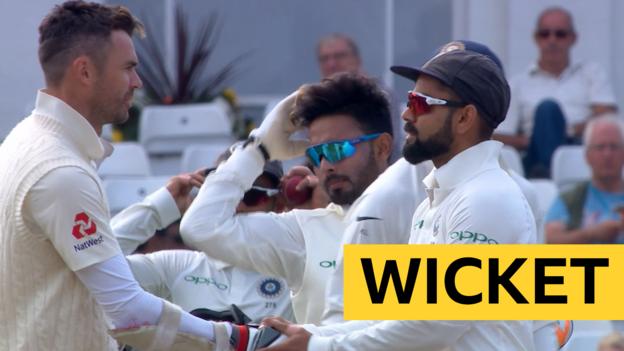
India need less than three overs of the fifth morning to take the wicket of James Anderson and wrap up a massive win over England in the third Test at Trent Bridge.
Police are charging a Mexican immigrant with first-degree murder in the death of 20-year-old Mollie Tibbetts. She went missing on July 18 while jogging in her hometown of Brooklyn, Iowa. USA TODAY
The arrest of an undocumented immigrant in the murder of a 20-year-old Iowa college student has reignited a debate over the dangers — real and perceived — posed by illegal immigration.
During a Wednesday morning discussion about the case on Fox & Friends, a favorite of President Donald Trump, commentator Tomi Lahren summed up what many conservatives have been arguing since it was revealed that the man charged with killing Mollie Tibbbets had entered the country illegally from his native Mexico.
“Illegal immigration kills Americans,” Lahren said. “It’s Mollie Tibbetts (today), and it could be your daughter, your sister, your friend tomorrow.”
Missing from that discussion was any proof that immigrants are more likely to commit crimes or acts of terrorism than native-born Americans. Immigration experts, including academic researchers, have said that’s because all available national crime statistics show immigrants commit fewer crimes, not more, than those born in the U.S. Even opponents of increased immigration lack evidence linking immigrants to higher crime rates.
“There’s 100 years of data from all different sources that all point in the same direction,” said Walter Ewing, senior researcher at the American Immigration Council, which advocates on behalf of immigrants. “If you don’t believe one study, there’s 10 more behind it that say the same thing.”
Ewing and others acknowledge that assessing the criminality of immigrants has always been difficult because statistics are hard to come by. Local police do not list the immigration status of those arrested, meaning it’s impossible to determine exactly how many crimes are committed by legal immigrants, undocumented immigrants and native-born citizens.
Immigration researchers have spent decades trying to work around the problem.
One method uses prison data to determine the immigration status of convicted criminals. Those who are foreign-born make up more than 13 percent of the U.S. population, but the Department of Justice released a report in January that found only 5.6 percent of inmates in federal, state and local prisons are foreign-born.
The libertarian Cato Institute used similar data when it concluded that the incarceration rate for native-born Americans is 1.53 percent compared to 0.85 percent for undocumented immigrants and 0.47% for legal immigrants. When Cato subtracted people in prison solely for immigration violations, the incarceration rate for undocumented immigrants fell to 0.5 percent.
Ewing used another approach to look at national immigration trends. From 1990 to 2013, both legal and undocumented immigrants came pouring into the U.S. The percentage of the U.S. population that is foreign-born increased from 7.1 percent to 13.1 percent. Yet over that time, violent crime rates plummeted 48 percent across the country.
In 2014, a team of university professors took a different approach. They examined crime habits of juveniles convicted of felonies in Arizona and Pennsylvania. Their study found that native-born juveniles were more likely to become repeat offenders than immigrant juveniles.
Department of Homeland Security statistics offer another way to look at the question. Nearly 800,000 undocumented immigrants brought to the country as children have received deportation protections under the Obama-era Deferred Action for Childhood Arrivals (DACA) program, which Trump is in the process of ending.
DACA enrollees are required to maintain a clean criminal record to remain in the program. In the six years since the program started, only 2,127 DACA enrollees (0.27 percent) have been removed from the program after committing crimes or being identified as gang members, according to data from Homeland Security.
Jessica Vaughan of the Center for Immigration Studies, a group that has advised the White House on ways to limit legal and illegal immigration, said each of those approaches contains significant flaws. For example, she said the number of immigrants in U.S. jails and prisons may be low because some criminal immigrants get deported and others are released into the community by sanctuary cities.
Vaughan’s team has researched the question of immigrant criminality for years and concluded it’s impossible to determine whether immigrants commit crimes at a higher rate than the native-born. Vaughan said the answer doesn’t even matter.
“Kate Steinle’s parents I’m sure don’t care one bit whether the crime rate in San Francisco is higher or lower than anywhere else,” she said, referring to the 32-year-old who was shot and killed by an undocumented immigrant in 2015. “The issue is not crime rates. The issue is what we do with that small fraction of immigrants that is committing crimes and causing problems.”
Trump repeatedly mentioned Steinle’s death on the campaign trail. And during his State of the Union Address in January, he introduced the parents of two teen girls killed by undocumented immigrants allegedly belonging to the MS-13 gang, an international gang formed in Los Angeles and mostly made up of Salvadoran immigrants.
Moira O’Neil, who studies the public perception of immigration for the FrameWorks Institute in Washington, D.C., noticed how Trump used the age-old tactic of repetition during that speech to drive home his point. He mentioned the MS-13 gang four times, and said the word gang five times.
“It’s very effective,” said O’Neil. “People are hearing that over and over and over again.”
O’Neil said immigration advocates have not been able to match the Trump administration’s rhetoric when framing the immigration debate. She said Trump has been hammering the notion that immigrants are criminals, while Democrats and other immigration supporters have been unable to keep up.
As a result, she said the public may associate immigrants with crime, leading to a stereotype that sticks.
“Think about it like exercising,” O’Neil said. “Every time he says MS-13, that association between immigrants and criminality is being activated in their minds. The way to counter that is to remind people of a very positive vision that lots of people have about immigrants. They are us. They are human beings.”
Xiaomi, the Chinese smartphone brand known for affordable smartphones (and loads of othergadgets) with formidable specs, has launched a new brand.
It’s called Pocophone, and by the looks of its first phone, the Pocophone F1, it appears it will launch similarly cheap phones with even better specs than Xiaomi.
On the surface, the Pocophone F1 is just another Android-based iPhone clone, with a notch on top, and pretty slim bezels on the sides. On the back, it resembles OnePlus, with a plastic (or aramid fiber, depending on the trim) cover and vertically positioned dual cameras and fingerprint sensor.
But the Pocophone surprises in terms of cost/benefit ratio. It launched in India on Wednesday starting at 20,999 rupees ($301), which is less than a third of the cost of an iPhone X or a Galaxy Note 9. And yet, it has specs that match or even eclipse those flagship phones.
For that price, you get a 6.18-inch, 2,246 x 1,080 pixel screen, a Snapdragon 845 processor (yes, the same one that the Note 9 has), 6GB of RAM, 64GB of storage, a 12/5-megapixel rear camera, a 20-megapixel selfie camera, a 4,000mAh battery, a fingerprint sensor, an IR-based face recognition technology (meaning that it works in the dark). It also has cool little tidbits that typically aren’t found on cheap phones, such as liquid cooling.
For 23,999 rupees ($344), you get the same phone but with 8GB of RAM and 128GB of storage. For 28,999 rupees ($415) you get 8GB of RAM and 256GB of storage, and for 29,999 ($429) you get the “Armoured Edition” of the phone, which also packs 8GB of RAM and 256GB of storage, and comes with an aramid fiber back case.
Here is the mega launch offer for #POCOF1 POCO F1 (6GB+64GB) – ₹20,999 POCO F1 (6GB+128GB) – ₹23,999 POCO F1 (8GB+256GB) – ₹28,999 POCO F1 Armoured Edition (8GB+256GB) – ₹29,999 This makes the #MasterOfSpeed the most affordable flagship with Snapdragon 845! How is that! pic.twitter.com/MKr4L2pQey
Pocophone’s approach appears to be very OnePlus-like: Launch an affordable phone that matches the top dogs in specs, and sprinkle a little something extra on top to make it feel like a real flagship. The difference, however, is in the price. When OnePlus 6 launched earlier this year, it started at $529 for the base model, and the top trip was $629. That’s pretty good compared with, say, an iPhone, but the Pocophone F1 is so much cheaper still.
Granted, the Pocophone F1 is a bit behind the OnePlus 6 when it comes to pure specs, as it has a nominally weaker camera and an LCD instead of AMOLED screen. And we haven’t tested the Pocophone F1 yet. From my experience with other Xiaomi phones, they do tend to be put together a bit more sloppily than phones from top brands; we’ll see if that’s true for Pocophone as well.
The Pocophone F1 doesn’t appear to be headed to the U.S., at least not at this point — in fact, Xiaomi in general hasn’t made any moves in that direction lately. But its first phone is impressive, and it’ll be very interesting to see what the Pocophone brand does next.
Northants have got the target down to double figures but it’s getting tense at Wantage Road, where Tim Murtagh dismissed first innings centurion Ricardo Vasconcelos and Northants captain Alex Wakely in quick succession after lunch. He has just added a third scalp, pinning a jittery Steven Crook leg before for 5.
Richard Levi has been loose outside the off stump in his brief innings to date but remains on 11. He’s in the middle with Rory Kleinveldt, who got off the mark first ball with a powerful drive for four off Murtagh and then edged over slip for a single.
Ben Duckett is expected to bat after suffering a hand injury earlier in the match but this is by no means certain.
It looked like a different game when Vasoncelos and Luke Procter were nudging the ball around in a second wicket stand of 75.
WASHINGTON – A day after being accused of illegal conduct, a defiant President Donald Trump denied wrongdoing and mocked his former personal attorney who implicated him in a hush money scheme designed to silence alleged ex-mistresses.
“If anyone is looking for a good lawyer, I would strongly suggest that you don’t retain the services of Michael Cohen!” Trump said during a tweet storm in which he accused Cohen of making up stories.
Meanwhile, the attorney for Cohen said the president’s former lawyer is ready to provide testimony linking Trump to another case: Russian efforts to influence the 2016 election via hacked Democratic emails.
Trump spoke out a day after taking a remarkable one-two legal punch, courtesy of Cohen and his former campaign chairman, Paul Manafort.
If anyone is looking for a good lawyer, I would strongly suggest that you don’t retain the services of Michael Cohen!
While he has not discussed the Cohen allegations in detail, Trump expressed sympathy for Manafort’s plight – and on Wednesday, he praised his former campaign aide for not talking to prosecutors, as Cohen has.
“I feel very badly for Paul Manafort and his wonderful family,” Trump tweeted about his ex-aide’s conviction on bank and tax fraud. “‘Justice’ took a 12 year old tax case, among other things, applied tremendous pressure on him and, unlike Michael Cohen, he refused to ‘break’ – make up stories in order to get a ‘deal.’ Such respect for a brave man!”
I feel very badly for Paul Manafort and his wonderful family. “Justice” took a 12 year old tax case, among other things, applied tremendous pressure on him and, unlike Michael Cohen, he refused to “break” – make up stories in order to get a “deal.” Such respect for a brave man!
In again decrying the alleged “witch hunt,” Trump also pointed out that the jury convicted Manafort on only eight of 18 counts.
As for Cohen, Trump claimed in another tweet that campaign finance violations “are not a crime.” Trump also said that predecessor Barack Obama’s team once settled a campaign finance case – but Obama was not accused of authorizing and seeking to hide a hush money scheme, as Trump now is.
In pleading guilty Tuesday to tax evasion and campaign finance charges, Cohen stated that he made hush payments in 2016 to women who claimed to have had affairs with the Republican presidential nominee, and did so at the “direction of the candidate,” plainly meaning Trump.
Prosecutors said the payments, designed to influence the election by keeping the women’s stories out of the public eye, amounted to an illegal and unreported campaign contribution.
At the same time Cohen was pleading guilty, a federal jury in Virginia convicted Manafort of bank and tax fraud charges, the first conviction for special counsel Robert Mueller. The jury’s decision increases the pressure on Manafort to cooperate as Mueller investigates Russian efforts to interfere in the 2016 presidential election to help Trump.
Trump likely faces more trouble in the coming months.
While placing the president in direct legal jeopardy over the hush money payments, Cohen also served notice he is willing to cooperate with Mueller on the Russia investigation.
Lanny Davis, Cohen’s attorney, told MSNBC that Cohen is “more than happy” to speak with the special counsel about “the obvious possibility of a conspiracy to collude and corrupt the American democracy system in the 2016 election,” as well as other Russia-related subjects.
They include “knowledge about the computer crime of hacking and whether or not Mr. Trump knew ahead of time about that crime and even cheered it on,” Davis told MSNBC’s Rachel Maddow. “And we know he publicly cheered it on, but did he have private information?”
Trump’s attorneys said Cohen is lying in order to get better treatment from prosecutors over his own illegal conduct.
“It is clear that, as the prosecutor noted, Mr. Cohen’s actions reflect a pattern of lies and dishonesty over a significant period of time,” Trump attorney Rudy Giuliani said.
Trump was more complimentary of Cohen before his long-time attorney began talking to prosecutors. He has called Cohen “a very talented lawyer” and, as recently as June, “a good person.”
Speaking Wednesday on NBC’s “Today” show, Davis sought to deny Trump a weapon he could use to prevent Cohen from talking to prosecutors: a pardon. Davis said Cohen would not accept a pardon from a president he regards as corrupt.
Congressional Democrats, meanwhile, warned Trump against any efforts to buy the silence of Cohen or Manafort.
“My message to the president: you better not talk about pardons for Michael Cohen or Paul Manafort tonight, or anytime in the future,” Senate Minority Leader Charles Schumer, D-N.Y., tweeted.
The president’s legal difficulties could also have political implications. Republicans already face tough battles as they seek to keep majorities in the House and Senate in the November elections.
Stumping for candidates in West Virginia on Tuesday night, Trump did not mention Cohen or Manafort, but did again attack Mueller’s investigation as “fake news” and a “witch hunt.”
“Where is the collusion?” Trump said at one point. “You know, they’re still looking for collusion. Where is the collusion? Find some collusion.”
Republicans have been near-silent on Trump’s legal travails, but many seemed worried about the impact on the elections.
“The looming threat is that the potential for more days like the one we just endured is high,” GOP strategist Kevin Madden said. “It will get more and more difficult to shift the midterm contests away from being a referendum on the president’s standing.”
Democrats are likely to make corruption a major issue, both before and after the elections, especially if they win control of the House and Senate.
“This is all about impeachment,” GOP strategist Scott Jennings said. “If Democrats take the House, they will impeach the president and this (Cohen allegation) will be article one.”
It all adds up to a “very big deal,” said Neal Katyal, a former U.S. solicitor general.
“The President of the United States has been directly implicated in federal crimes, and implicated not by some enemy, but by his own personal lawyer,” Katyal said. “This is the first time anything like this since Watergate, and it will begin the call for impeachment proceedings.”
Many legal analysts question whether the Constitution permits the indictment of a sitting president, but Katyal said prosecutors within the Department of Justice may be revisiting that question.
In the meantime, Mueller is believed to be preparing a report that Congress could use as the basis for impeachment hearings.
“I see both calls for impeachment proceedings beginning, and internal moves within DOJ to examine the indictment of a sitting President,” Katyal said.
Donald Trump has finally spoken out about his former lawyer Michael Cohen, and it appears he’s not very pleased with his services.
After Paul Manafort was found guilty on eight counts and Michael Cohen reached a plea deal and implicated Trump of campaign finance crimes, Trump decided Wednesday morning to offer a tongue-in-cheek review of Cohen’s legal services.
The president hopped on his own personal version of Yelp, Twitter, and gave his former lawyer the equivalent of a one-star review.
“If anyone is looking for a good lawyer, I would strongly suggest that you don’t retain the services of Michael Cohen!” Trump tweeted. Ouch. Burn.
If anyone is looking for a good lawyer, I would strongly suggest that you don’t retain the services of Michael Cohen!
Followers were quick to give props to Trump for managing to pull of sarcasm. Many noted the review might be better served on another online platform like Yelp, or Craigslist perhaps.
Next: Trump gives Cohen only one star in scathing Yelp review!
Times are a bit tough for Trump right now, but on the bright site, if the whole president thing doesn’t work out he could try his hand at writing professional Yelp reviews.
When Pope John Paul became the first pontiff to visit Ireland in 1979, almost half the island’s population turned out to see him as he toured the country.
His Sunday mass in Dublin’s Phoenix Park became the largest gathering Ireland had ever seen, with 1.2 million attendees.
It was an Ireland where condoms, abortion and homosexuality were banned by law, and whether unknown or not addressed, thousands of children were raped and abused by members of the Catholic clergy.
On Saturday, Pope Francis is expected to begin a 36-hour trip to Ireland, to attend the World Meeting of Families, a gathering of the Roman Catholic Church held every three years.
A crowd of half a million is expected in Dublin, but attention is expected to focus on claims of child sex abuse.
The Vatican said on Tuesday that Pope Francis will meet survivors, following demands from campaigners for action, accountability and justice for those who were affected.
“Ninety-four percent of accused walked free, and that’s of the abusers. This is the perpetrator population, we’re not even getting near the population of those … who concealed or colluded.
Mark Vincent Healy, survivor and campaigner
The visit comes little more than a week after a grand jury report released in Pennsylvania revealed the covering up of more than 1,000 cases of children abused by over 300 priests.
The report’s criticisms of Cardinal Donald Wuerl led to his withdrawal from a scheduled appearance at this weekend’s event in Dublin, where he was to deliver the keynote address, “The Welfare of the Family is Decisive for the Future of the World”.
The Pennsylvania news has brought further scrutiny upon Pope Francis, who is widely seen to be weak on an issue that has caused catastrophic damage to the Church’s reputation worldwide.
Listing the accused
On Monday, US-based group BishopAccountability.org launched the first open database of Irish clergy accused of child sexual abuse. The website already hosts similar information on those publicly accused of abuse in the US, Chile and Argentina.
The Irish database lists dozens of clergy members who have been convicted, or whose abuses have been alleged and documented in the media or by state-led inquiries.
It includes figures such as Brendan Smyth, a priest from Belfast who sexually abused or assaulted at least 143 children over a period of 40 years.
Smyth was shuffled between parishes in Ireland and the US, his order repeatedly failing to disclose his history to local bishops, before eventually being sentenced to prison in 1994, where he died three years later.
John Kelly, right, was abused while in Daingean Industrial School between 1965 and 1967 [File: Cathal McNaughton/Reuters]
The group said in a statement that it hopes “this Irish database will encourage an open debate about how societies balance an accused person’s privacy rights against a child’s right to be safe and the public’s right to know”.
Codirector of BishopAccountability.org Anne Barrett Doyle added: “It’s a very unsatisfactory list because we know from the Irish Church’s own safeguarding operation has counted more than 1,300 accused clergy since 1975.
“We have a paltry 70 or 80 on our list. This represents an accountability gap, not just a gap in unnamed perpetrators … I think it’s why the abuse crisis is very much an open wound in Ireland.”
Another name on the list is Henry Maloney, who was convicted in 2009. He abused boys at a Dublin secondary school between 1969 and 1973, after which he was transferred to another school in Bo, Sierra Leone where he continued to molest students.
Life after abuse
Mark Vincent Healy, who was among those abused by Maloney, now campaigns for justice.
Before the pope’s visit, he gathered research from more than 140 reports into religious orders and dioceses by the Irish Catholic Church’s National Board for Safeguarding Children (NBSCCCI).
According to Healy, of the 3,425 allegations raised in these reports against 1,348 people, only 82 were convicted.
“Ninety-four percent of accused walked free, and that’s of the abusers,” he told Al Jazeera. “This is the perpetrator population, we’re not even getting near the population of those … who concealed or colluded.”
A demonstrator holds a banner during a protest against the visit of Pope Benedict XVI in London on September 18, 2010 [Stefan Wermuth/Reuters]
But there are limits to what can be achieved through the courts, Healy says.
Research has shown that survivors of child sexual abuse in Ireland face lifelong consequences.
They are more likely to be unemployed, earn less and die by suicide than the general population. Male survivors are also more likely to spend time in prison.
“We do need justice, it’s absolutely fundamental, but I feel the discussion doesn’t permit talking about the dysfunctional life that is the consequence of this abuse, and how can we better serve that community,” says Healy.
“How do we reach out to them and offer them the sort of support for issues which they are wholly innocent of having happened to them?”
Pope Francis: We did not act in a timely manner
In a 2,000-word letter published this week and addressed to the world’s Catholics, Pope Francis acknowledged the Church’s history of abuse and cover-ups, including the cases in Pensylvania.
“We did not act in a timely manner, realising the magnitude and the gravity of the damage done to so many lives. We showed no care for the little ones; we abandoned them,” he wrote.
But critics hit back at the lack of concrete proposals.
Former head of the NBSCCCI Ian Elliot told the Irish Times that the pope’s record has been “a dismal failure” and that he should arrive in Ireland with “a mindset that it’s not good enough to simply apologise”.
Candles with a picture of Pope Francis on sale at a stall in Dublin [Clodagh Kilcoyne/Reuters]
Mary McAleese, the former Irish president, dismissed the World Meeting of Families as “essentially a right-wing rally”, while Taoiseach Leo Varadkar suggested the Church adopt a policy of mandatory reporting, which has been in place in Ireland since last year.
In his Sunday sermon, Archbishop of Dublin Diarmiud Martin said Pope Francis should “speak frankly about our past but also our future.” But he said the pontiff would not be able to provide all the answers that people ask.
For Barrett Doyle, the public database is a small step in confronting a history of neglect towards Ireland’s most vulnerable.
“We are being inundated with emails from Irish people who have seen the list and are asking us to add abusers names to it,” she says. “We obviously struck a nerve. There is a tremendous need for this.”
Former midfielder Len Johnrose opens up on BBC Radio Lancashire about being diagnosed with motor neurone disease.
There is no cure for motor neurone disease.
Half of those affected die within two years of being diagnosed with the rapidly progressing illness that can leave people locked in a deteriorating body, unable to move, talk and eventually breathe.
This week, Len Johnrose – a former midfielder who made more than 400 Football League appearances for Blackburn Rovers, Hartlepool, Bury, Burnley and Swansea City – went public for the first time about living with the illness.
Little over a decade since his playing career came to an end, the 48-year-old father-of-three, now a school teacher, admits he has already researched assisted dying as he fears the debilitating impact the illness will have.
Here, he tells BBC Radio Lancashire about the harsh reality of living with motor neurone disease.
‘I’m not angry – who would I be angry at?’
I’ve never thought ‘why me?’ I’ve never particularly even questioned why it’s happened. There are some days where I just think it’s an absolute bag of you know what, but I’m not angry about it. Who would I be angry at?
It is one of those things. I could get run over by a bus one day… life can be very, very cruel. That’s not just me, people’s lives are whisked away from them without warning. But I’m not angry.
The biggest thing is mentally it’s difficult. Some days are better than others, and I’ve had some really, really dark, down days. At the minute I’m just coming out of a really bad phase, post-holiday.
The last week has been absolutely horrendous, but I’m gradually getting out of it. You don’t want to speak to anybody, you don’t want to get out of bed, you have suicidal thoughts, it’s absolutely horrendous.
I was always one of those where if it’s light, I’m getting up. During the close season, if it was light I would go for a run, go to the gym. Now, I just don’t want to get out of bed. Once I’m out of bed and showered, then I’m generally feeling better as the day progresses. But at 8 or 9pm I’m tired.
‘Mentally I was OK, and then it hits you…’
I was diagnosed in March last year.
I initially went to the hospital about a fracture which hadn’t healed. I thought there was a nerve problem, so they did some electrical tests. Whilst there I just asked them to have a look at my other hand, because I had felt a little bit of weakness there months prior.
The consultant dashed out of the room and brought someone else in. That put me on the back foot a little bit, and I was told I had to come in for some more tests.
I had an uneasy feeling about it, but you look on Google and all the stuff you shouldn’t and after about a week I remember ringing up my wife and saying ‘I know what they’re looking for’.
I just laughed about it, I thought ‘it isn’t that. My legs are absolutely fine, it’s not that’. She’d been worried all week because that was the first thing she thought about.
When we went for the second investigation we just asked them outright and said ‘this is what we think it could be’.
It was probably August or September, another six months before I found out. During that six months things were progressing anyway, not at an alarming rate, and every minute of every day it was on my mind.
Motor neurone disease affects four parts: upper limbs, lower limbs, back and throat, which whenever you’ve got a sore throat you worry about, because it stops you swallowing.
When I was tested the first time they said there was an issue with my arms, then they did my legs and said there was something very slight in my legs. If you’ve got two areas affected they say you’ve possibly got it. If you’ve got three, you’ve definitely got it. When I went back, they said ‘you’re affected in three areas now’, and that was that.
When we found out we both broke down, but it wasn’t the world’s biggest surprise. For the next week or so I couldn’t have been more pragmatic. It was ‘right, this is what we’ve got to do…’ Mentally, I was OK, and then it hits you, really. And that’s when it started to be a struggle.
‘Not telling people felt like a guilty secret’
It was some months before we told the children. Things were becoming more obvious. The first thing it affected was my hands, upper limbs. So we’d be going out for family meals with people not knowing, and I’m struggling to cut things.
The children knew there was a problem. We got away with it, if you like, because I’d had issues with my back – unrelated, which I eventually had surgery on last November – so me not walking properly they put down to that.
But it was obvious with my hands. I remember my son saying to me ‘dad, you only broke one hand, why are both hands an issue?’ So they were aware something was wrong, and because of the time element, you don’t know what you’re going to be like from one day to the next, or one month to the next.
So, it was ‘do we protect them? And how long do we protect them for?’ We told them about Easter time I think, which was horrific, it really was. My son has really struggled with it since. My daughter seems to be keeping everything bottled in, seems to be coping really well, but I’m quite worried about her.
That was a bad week, because we ended up telling a lot of family then as well. It was quite a stressful week.
With the children it felt like a guilty secret. I’ve not done anything wrong, I didn’t ask for it.
I speak to the neurological psychologist on a regular basis, you just need an outlet sometimes.
That outlet might not necessarily be the ones closest to you, because they’re living it in their own world anyway and the last thing they want to do is hear it over and over again when they’re trying to keep themselves and the family together.
Johnrose was regarded as a tough-tackling midfielder throughout his 16-year professional career
‘50% die within two years’
Planning for the next step was difficult.
The condition doesn’t run linearly – I could be fine for a week, two weeks, whatever, and then suddenly you wake up one morning and can’t move your finger.
There are certain organisations out there, there’s an MND team in Preston who are really helpful, but it’s so difficult to plan.
What they try to do is get you to make the life you’ve got now easier, get you to cope and make adaptations and regards planning – it’s horrific to say, lifespan-wise, 50% die within two years. I think it’s 90 or 95% die within five years.
You’ve not got a long-term goal, but there are examples of people that live beyond that – Stephen Hawking is one.
It is difficult to plan and you’ve got to get things in place – wills, funeral packages and that sort of stuff. A lot of the time I am quite pragmatic about it, but there are a lot of down days.
‘I’m not drunk, I’ve got MND’
I’ve got three children, but two live at home. I spend a lot of time with them and they can see me struggling walking. People don’t know about the disease – I’ve spoken to people at school and they’ve said ‘oh, I don’t really know about it’, which is fine. That’s not a criticism, but people don’t know about it.
I’ve spoken to a friend about things that are starting to affect me and he said he didn’t know about it, and we speak every other day. So people don’t know about the harsh realities. This is not about getting sympathy or anything like that, it is something that needs more exposure for people to understand.
I walk around and I’m staggering. I thought to myself I’m going to get a t-shirt which says ‘I’m not drunk, I’ve got MND’.
I remember going into a supermarket with my daughter a few months ago. Packing’s hard and even lifting, you’ve just no strength in your muscles, so she was packing for me.
I got a bottle of wine and asked her to put it in, and there was a big kick-off about her putting it in the bag – I’m clearly not buying it for her, so there was a stand-off for about 20 minutes and they ended up apologising. It’s things like that.
I have these straps, which give me a little bit of support. Some days you don’t want to wear them, just to free your hands, but if you don’t wear them then there is nothing there to trigger to anyone that there is an issue.
Most days, if I’m busy or talking – which I do a lot – I’m OK. It’s mainly when there’s a lot of time on your hands. When I was off for three months after the back surgery, that was a difficult time.
Having said that, it is progressing and it’s starting to become a little bit difficult really.
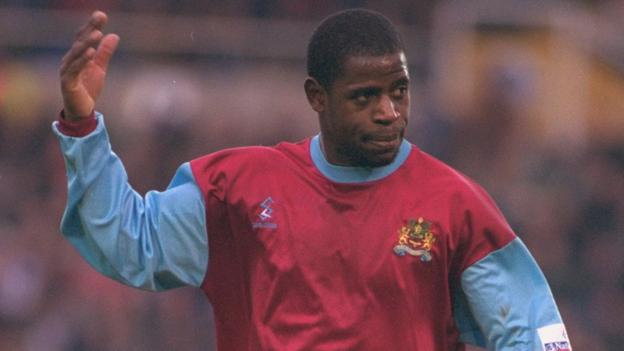
Johnrose, seen here playing for Burnley, scored in a win for Swansea on the final day of the 2002-03 season that kept the Welsh side in the Football League
The fear of deteriorating
I said from day one of my clinical psychology meeting ‘at X point, that’s when I want to go’.
Now the parameters change as you get to X point, but I said ‘when I’ve not been able to wipe my own backside, that’s when I want to go’.
I’m not afraid of dying. The thought of hanging around, for want of a better phrase, in a wheelchair, not being able to communicate properly or do anything – your eyesight is great, your mind is still fine, but you actually can’t do anything. No, put me down – and I couldn’t be more serious about that.
I’ve already looked at it, going abroad, and I genuinely wouldn’t want to hang around.
I’ve discussed it very briefly with my wife. It’s not something she wants to talk about. It’s not what you talk about at the table. I’ve certainly explored it. But that’s no fun for me at all, it’s not what I want to do.
Telling people about having motor neurone disease is not a case of trying to move on, it’s just another step forward.
I eventually want to put it out there for people to know how I’m coping or not coping, which might mean something to people as well as trying to make some good out of it.
Typically, people will be older. In that aspect I’m still relatively young and, fitness-wise, I was very fit, so it’s seeing if anyone else can relate to what I’m going through.
‘A very devastating condition’ – what is MND?
Chris James, from the Motor Neurone Disease Association, explains the illness: “Everybody’s journey is different with MND, but Len’s story is fairly typical. The common symptoms are people will lose the ability to walk, to perhaps talk, they lose the use of their arms and ultimately to breathe.
“It’s a very devastating condition. There is no cure for MND. There is a lot of research going into finding a cure and indeed into finding treatment, which we are still struggling to find.
“However, there have been great advances over the past few years in research and there is some hope now we might be moving towards some treatments for the disease.
“Stephen Hawking is very unusual in terms of MND, he lived for a very long time. Half of people die within two years of diagnosis, and a third within a year. It can be a an extremely rapidly progressing condition.”
If you are affected by the issues in this article, help and support is available via the BBC Action Line http://www.bbc.co.uk/actionline
The Iowa Division of Criminal Investigation announces charges related to the Mollie Tibbetts case during a news conference in Montezuma, Iowa. Rodney White, rodwhite@dmreg.com
Cristhian Rivera, the man accused in the death of Mollie Tibbetts, worked for a Brooklyn-area farm owned by the brother of a prominent Iowa Republican.
In a statement Tuesday night, Dane Lang, of Yarrabee Farms, said Rivera was an “employee in good standing” and was “shocked to hear” Rivera was implicated.
Dane Lang is related to Craig Lang, the former president of both the Iowa Farm Bureau Federation and the Iowa Board of Regents and a 2018 Republican candidate for state secretary of agriculture. Documents immediately reviewed by the Des Moines Register listed several owners of Yarrabee Farms, including Dane Lang and Eric Lang, Craig’s brother.
In the statement, Dane Lang said Rivera worked for Yarrabee Farms for four years and passed the government’s vetting process. Investigators visited the farm Monday to speak with employees.
The remains of a young woman believed to be Tibbetts were found Tuesday morning in rural Poweshiek County. The University of Iowa student went missing the night of July 18.
Read the full statement from Yarrabee Farms below:
“First and foremost, our thoughts and prayers are with the family and friends of Mollie Tibbetts. This is a profoundly sad day for our community. All of us at Yarrabee Farms are shocked to hear that one of our employees was involved and is charged in this case.
This individual has worked at our farms for four years, was vetted through the government’s E-Verify system, and was an employee in good standing. On Monday, the authorities visited our farm and talked to our employees. We have cooperated fully with their investigation.
Yarrabee Farms follows all laws related to verifying employees are legal to work in the United States, and we regularly seek outside counsel to ensure we stay up-to-date on employment law matters. We keep records on all employees and have shared that information with authorities.
We appreciate the hard work of law enforcement officials. We will continue to cooperate with authorities as the investigation moves forward.”






/https%3A%2F%2Fblueprint-api-production.s3.amazonaws.com%2Fuploads%2Fcard%2Fimage%2F832254%2F3a52d13c-39bb-43df-aafd-ce708300d613.jpg)




 trendynewsday