
Looks like a real catch!
Read More
from Trendy News Day https://ift.tt/2o0KiqK
via IFTTT
Looks like a real catch!
Read More
from Trendy News Day https://ift.tt/2o0KiqK
via IFTTT

Markazi Refugee Camp, Djibouti – Hafsa* says she feels trapped.
War forced her to flee her home in Yemen to Djibouti with her husband three years ago.
Little opportunities or hope of returning have left her restless in a remote refugee camp more than 200km from Djibouti’s capital and just 32km from Yemen‘s western coast.
The situation has created tension between 36-year-old Hafsa and her husband. But because she is a woman, she says she has no outlet for sharing her struggles.
“Because of the frustrating mood in the camp and bad circumstances and weather and my jobless husband and lack of income overall it is a dispute,” Hafsa tells Al Jazeera from outside the Markazi refugee camp near the fishing village of Obock.
The mother of three, including a daughter from her current marriage and two older children from her first who still live in Yemen, jabs her hand with frustration in the air as she describes her situation.
Her face, outlined by a pearly pink hijab (headscarf), is fair and unlined, making her look younger than her age, but her voice is strained.
“I cannot talk and express my feelings to others because the problems or the dispute between me and husband might become more complicated,” she says.
She adds other refugee women are abused by their husbands, but fear speaking out due to the stigma associated with domestic abuse.
“We are suffering from tradition,” Hafsa says. “Before the war, we were suffering many troubles, many problems from the society itself in Yemen, the people and the pressure from traditions. The war came just to push us out to come to Djibouti, but it is the wrong place,” she adds.
“We feel weak and vulnerable and attackable.”
Hafsa is one of the thousands of Yemenis who have fled to Djibouti during more than in three years of war between Yemen’s government, supported by a Saudi-led coalition, and the Iranian-backed Houthi rebels. To date, more than 40,000 Yemenis have made the treacherous journey across the Bab-El-Mandeb Strait, known as the Gate of Tears because it has claimed so many migrant and refugee lives. It connects the Red Sea and the Gulf of Aden along Djibouti’s eastern coast.
At the peak, there were more than 7,000 Yemenis living in Markazi. As of May 2018, the number had dwindled to just under 2,000, less than half of the total 4,300 Yemenis in Djibouti.
 |
| The Markazi refugee camp is located near the fishing village of Obock on Djibouti’s eastern coast [Mallory Moench/Al Jazeera] |
The small tent city stained by dust rises from a landscape scorched barren in summer, where temperatures regularly rise to 40 degrees Celcius in summer. UNHCR and Djibouti flags convulse in the hot wind above the gate. Electric spotlights are strung up by rusted wires, but according to those in the camp, the electricity often doesn’t work.
Refugees tell Al Jazeera the conditions are harsh – with limited money, food, employment or future hope – but for women, they can be even worse.
Aid groups and other NGOs in the camp say women can face economic, physical and even sexual domestic abuse.
There is almost no data on gender-based violence against refugees in Djibouti. UNHCR has no recorded incidents at the camp since it was started in April 2015. The head of the agency in Djibouti said that a recent report from a senior protection officer who interviewed a female resident found there was no sexual gender-based violence except for one instance of sodomy between children.
But professionals and refugees say women must first overcome cultural stigma and fear of repercussions to report violence and abuse.
“There are many cases of violence in the camp that happened, but the women don’t like to complain because they are afraid when they return back to Yemen that nobody would accept them and their children as a divorced woman,” Hafsa says.
A UNHCR report from October 2017 said that despite forming a refugee committee to address gender-based violence, the issue “remains a challenge among the Yemeni refugee community, mainly due to cultural predispositions and frequent appeal to the traditional legal codes instead of civil ones”.
According to Dina Cihimba Rehema, UNHCR’s protection officer in Markazi, the problem lies in the fact that women are often feel like they cannot talk about their situations.
“We have to reinforce sensitisation for women to feel free and make it easy for them to talk about what they’re facing,” she says. “We have to try to change the mentality.”
Every day, Muna Khalik, another refugee living in Markazi, opens a counselling centre housed in a metal trailer just inside the camp entrance. The centre is run by UNFD, the Djiboutian NGO in charge of women’s protection in the camp. The centre has one staff member and trains and employs refugees like Khalik as counsellors. They intake at least four domestic violence cases each month and report directly to UNFD’s head office.
The organisation said abuse is primarily economic – when the male breadwinner withholds money from his wife and creates tension in the family – but can also be physical or sexual. Their reports are confidential and details about cases could not be shared.
 |
| The UNFD-run counselling centre intakes at least four domestic violence cases each month and reports directly to UNFD’s head office [Mallory Moench/Al Jazeera] |
Asma Moustapha, Markazi’s director who works for the government refugee agency, said that when the counselling centre first opened three years ago, no women came because of the stigma.
“In their mentality, they think the office is only for divorce matters. They don’t think it can help them and their problems,” Moustapha told Al Jazeera. “Before the husband wouldn’t accept them to go to the office because he thought it will break his marriage and his family.”
Because women feel more comfortable sharing in their own community, UNFD trained refugee women as counsellors.
Khalik has lived in Markazi since she fled her home in the Yemeni city of Taiz, which was destroyed by bombing three years ago. Last year, she began working with UNFD counselling and conducting gender sensitisation activities for men and women.
She sits under a whirring fan inside the community centre where women sew purses to sell and children learn martial arts. Draped in a silken black veil with beaded gloves, Khalik’s sharp eyes emits empathy.
“When we started, especially men, they were not comfortable with those sensitisation activities,” Khalik tells Al Jazeera. “They were feeling that it’s something coming to separate them from their wives because they also think that once women know their rights, they will use it for everything. But with time, they come to understand that it’s something which is helpful for all the community.”
Community workers disseminate national and international text related to sexual violence and conduct outreach awareness sessions with men, women and youth on gender, human rights and sexual violence.
Counsellors at the centre give women options about what to do when facing domestic violence. If the situation is serious and the woman requests more intervention, the counsellor visits the family to talk to the woman’s husband. In the most extreme cases, a counsellor can help a woman go to the justice system – although the management said that no woman has ever requested to do so.
“It was really difficult for women to express and talk about such problems, but it was of culture. But there is a good impact and now they are feeling more free to talk about what is happening,” Khalik says.
She acknowledges, however, that sensitisation is slow and women may still not speak out.
“There are always things that we can’t know about in the families,” she says.
For Markazi’s women, domestic violence is one trouble among many that they say makes life nearly unbearable in the refugee camp.
Many want to resettle in Canada or Sweden or return home to Yemen – even though it’s still too dangerous now because of the conflict. As families enter their fourth year in the remote camp with no end in sight, many say they’ve lost hope.
“We have a vague future here,” Hafsa said. “We feel that we are dying in Djibouti.”
*Name has been changed to protect the individual’s identity.
from Trendy News Day https://ift.tt/2BAzQQr
via IFTTT

A Champions League final and a World Cup appearance at 19 years old – Trent Alexander-Arnold is doing big things at a young age.
So what is it about the Liverpool teenager that has got everyone excited?
The boy who grew up just minutes away from Liverpool’s training ground and has been at the club since the age of six has already made 47 first-team appearances, as well as representing England at every age group from under-16s upwards.
His promising talent was on display in Liverpool’s first two Premier League games against West Ham and Crystal Palace this season – but can he become one of the best players the club has produced?
A fear of failure, a growing maturity and a strong understanding of the game are among the qualities that have helped him become Jurgen Klopp’s right-back in the Liverpool manager’s first-choice team.
Here, BBC Sport takes a closer look at his attributes and mentality with insight from his former academy coach Neil Critchley.
It didn’t always go Alexander-Arnold’s way. He was prone to bursts of frustration as a young player and was “quite hard on himself”, such was his desire to win.
“He could be difficult at times,” Critchley told BBC Sport. “He would get frustrated and sulk, get his head down.
“He showed immaturity at times if he wasn’t performing the way he wanted or the team weren’t – if they were losing for example.”
These fits of frustration threatened to hold Alexander-Arnold back.
One of the most stark examples occurred in 2016 when, after playing “very well” against Nottingham Forest for Liverpool’s under-18s in 2016, he had a “disastrous game” against Manchester City just a few days later for the under-23s as he adapted to a new role as a right-back.
“It was probably the worst game he has ever had,” said Critchley. “I went to watch him and he kicked off. It was a car crash. That summed up where he was at in that moment. It was about him needing to become more consistent.”
Last season could have gone the same way. He struggled against Marcus Rashford away at Manchester United in March and was given a hard time by Crystal Palace just over a week later.
But two months after that he was starting in the Champions League final and kept Cristiano Ronaldo at bay, having dealt with Manchester City’s Leroy Sane in the quarter-finals. Was that a sign he had tempered the temper?
“By the end of last season he had matured and learned from his mistakes,” said Critchley. “But that was because he was allowed to develop and gain consistency.
“He had those games where he kept Sane relatively quiet over the 180 minutes and I thought he played exceptionally well. He then got his World Cup call on the back of that.
“He will want to play for Liverpool for the next 10-15 years and you have to strive to get better.”
Part of Alexander-Arnold’s mental strength comes from a “hungry” attitude and a fear of being replaced in the side.
There is now real competition for places at Liverpool – their summer spending of almost £170m is proof the club can attract some of the world’s best talent – and team-mates Joe Gomez and Nathaniel Clyne are other strong options at right-back.
“He had an inner drive that he kept well hidden,” said Critchley. “He had that ‘I’ll show you and I will prove you wrong’ attitude. He was a really focused and driven boy.
“Obviously he has the ability but he gets his head down and does his work. He will always have that fear that someone will come and take his place. That fear drives him to be better.”
Alexander-Arnold still lives with his parents so is constantly reminded of his upbringing as he followed in the footsteps of his idol Steven Gerrard as a born and bred Liverpudlian “living the dream”.
“His parents, his upbringing – it all goes into the pot. He has been developed in a really good environment. It is great for him to give younger players of the future some hope there is a pathway into Liverpool’s first team. He was a local boy, playing in the city and he had those dreams. They can come true.
“He should thank his parents daily. Being the person he is makes him the footballer he is,” added Critchley.
| Alexander-Arnold’s stats in all competitions in 2017/18 | |
|---|---|
| Appearances (starts) | 33 (30) |
| Minutes played | 2,652 |
| Goals | 3 |
| Assists | 2 |
| Chances created | 32 |
| Successful crosses from open play | 19 |
| Tackles won | 43/67 |
| Interceptions | 53 |
| Successful dribbles | 30/65 |
| Blocks | 7 |
Gerrard wrote in his autobiography that Alexander-Arnold had “all the attributes you need” after seeing him captain Liverpool’s under-18s.
He has since evolved into one of the Premier League’s most promising right-backs, with a passing range few 19-year-olds share thanks to his background as a midfielder.
Alexander-Arnold completed 17 successful crosses from open play in last season’s Premier League and created 25 goalscoring chances – more than Liverpool’s opposite full-back Andrew Robertson.
He also made 53 interceptions in the last campaign – displaying a strong understanding of the game – and is entrusted with many of Liverpool’s set-pieces after producing a number of dangerous deliveries.
The biggest stage appears to be no problem either – achieving an 89% pass accuracy on his World Cup debut against Belgium and being handed the same set-piece responsibility by England manager Gareth Southgate in only his second cap.
“Whatever position he plays, that is another string to his bow. He sees the game when he is on the pitch. He could end up playing in midfield but why not be the best right-back that Liverpool has ever produced?” said Critchley.
“Or go on to play for your country in so many games and be known as one of the best right-backs in the world. That is what he will be trying to do.”
from Trendy News Day https://ift.tt/2Ndds16
via IFTTT
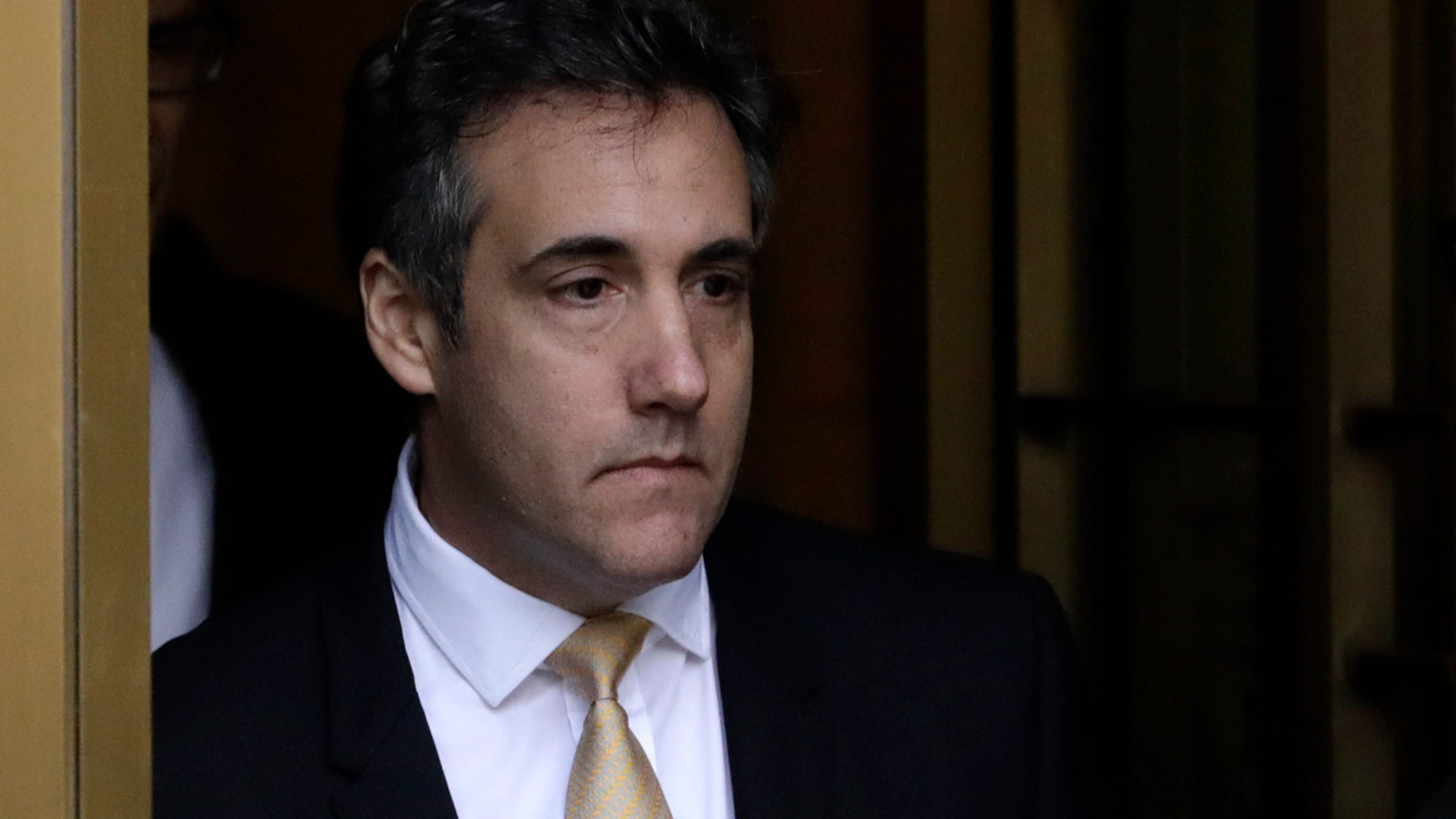

President Donald Trump’s former personal attorney Michael Cohen pleaded guilty to campaign finance and other charges. Deputy U.S. Attorney Robert Khuzami told reporters that Cohen thought “he was above the law.”
USA TODAY
WASHINGTON – Michael Cohen, the president’s former lawyer and fixer, doesn’t want a pardon from President Donald Trump and, rather, is hoping to open up about what he knows to investigators with the special counsel Robert Mueller, his lawyer said.
Speaking with NPR Wednesday morning, Lanny Davis, Cohen’s attorney, said his client wasn’t interested in being pardoned.
“Under no circumstances would he accept a pardon from Mr. Trump,” Davis said, adding that the president “not only directed a crime, he’s part of a cover up.”
Cohen pleaded guilty to eight counts Tuesday in a surprise hearing in New York that happened within an hour of a jury dropping a guilty verdict on eight counts in the trial against Trump’s former campaign chairman, Paul Manafort.
Cohen admitted to charges of lying about his income to evade income taxes, lying to banks to obtain loans, and making illegal contributions to benefit Trump’s campaign. The contributions to Trump’s campaign were violations of campaign finance laws and were made by arranging payoffs to silence two women who claimed to have had affairs with Trump.
More: Five things to know about Michael Cohen’s guilty plea
More: Michael Cohen said he paid hush money at ‘direction’ of Trump
More: Paul Manafort trial: Jury finds former Trump campaign manager guilty on 8 counts in tax fraud case
While admitting to the charges, Cohen stunned a federal courtroom in New York by declaring that he made those payments “at the direction of the candidate,” by whom he plainly meant Trump. He also said he did so specifically to influence the outcome of the election.
Davis appeared on MSNBC and CNN after the news dropped Tuesday, explaining Cohen was dedicated to telling the truth and interested in speaking with Mueller and his team of investigators.
“Mr. Cohen has knowledge on certain subjects that should be of interest and he’s more than happy to tell the special counsel all that he knows,” Davis said on MSNBC, adding he could tell investigators “not just about the obvious possibility of a conspiracy to collude and corrupt the American democratic system,” but also about his “knowledge about the computer crime of hacking and whether or not Mr. Trump knew ahead of time.”
Davis was referring to the emails hacked from the Democratic National Convention and of top Hillary Clinton aides during the 2016 election.
Davis noted that Trump publicly “cheered” on the hacks but alluded to private conversations that Cohen may have been privileged to.
Read or Share this story: https://usat.ly/2LiXmAW
from Trendy News Day https://ift.tt/2w3zj4v
via IFTTT

Even Instagram’s strongest security settings may not be enough to protect your account from determined hackers.
As the company scrambles to manage a wave of hacks that have hit hundreds of users since the beginning of August, many of these users have described a troubling pattern that raises serious questions about the app’s security settings.
Instagram lets users secure their accounts with two-factor authentication (PSA: here’s how to turn on 2FA if you haven’t already), but it currently relies on text messages, which aren’t as secure as app-based authentication methods.
The company said in a statement last week in response to Mashable’s reporting on the growing number of Instagram hacks that it’s working to improve its 2FA security, but it didn’t specify how. (Developer Jane Manchun Wong previously found evidence the company is testing a feature that would let people use a dedicated authenticator app, such as Google Authenticator.)
But until that update becomes available, the only option for users is the SMS-based method. And while SMS-based 2FA is better than none at all, it may not be enough to protect your Instagram account from determined cyber criminals.
Of the more than 275 people who have contacted Mashable about hacked Instagram accounts in the last week, most of the people we’ve heard from have said they were not using 2FA at the time.
But Mashable has confirmed that at least four people were hacked despite having 2FA enabled. At least six others who contacted Mashable have made similar claims, but were unable to provide evidence they had 2FA enabled on their accounts when they were hacked.
In some of these cases, there was no sign that someone was trying to hack their account — until the users were suddenly locked out with no warning. In other cases, they were aware hackers were targeting them, but Instagram’s tightest security settings weren’t able to protect their accounts.
“It’s not an exaggeration to say that Instagram is my number one security problem that I deal with as an IT professional”
One IT professional who spoke with Mashable on the condition of anonymity because he was not authorized to speak on behalf of his organization, said the Instagram account he manages for his company has been hacked three times in the span of a month, despite strict security settings. The account has two-factor authentication enabled, uses a 20-character password, and the email address linked to the account is a jumble of random characters, He has even given special instructions to his carrier to prevent unauthorized ports of his SIM.
Yet despite all this, the account, which has become a frequent hacking target, has been broken into three times in the last month. He often receives dozens of unauthorized 2FA prompts a day. (Mashable has seen screenshots confirming these attempts.) But oddly, he says that by the time he receives the prompt, the hackers have already managed to gain access to the account.
“Everything that Instagram has available is being done on our account and yet, every single time I get that SMS [the 2FA prompt], they have already changed the password,” he told Mashable. “I cannot as an IT professional tell you how they are doing this. They must have some sort of flaw in Instagram fundamentally that they are exploiting to do this.”
He has been able to regain access to the account each time because he has a contact at Instagram, but the constant hack attempts still take a toll. Fending them off has become a near-constant struggle — he says he’s typically able to reset his password and head them off if he catches them within the first few minutes — which takes time away from other duties.
“It’s not an exaggeration to say that Instagram is my number one security problem that I deal with as an IT professional,” he says.
It’s still unclear how these attacks are occurring. In the past, hackers have hijacked Instagram users’ SIMs in order to gain entry into 2FA-protected accounts. But that doesn’t appear to be what’s happening in these cases, in which users describe their 2FA settings being bypassed, changed, or disabled without their knowledge.
“Two-factor authentication obviously does help, but it’s not foolproof”
“Two-factor authentication obviously does help, but it’s not foolproof,” says Stuart Madnick, an information technology professor at MIT’s Sloan School of Management, who notes that clever hackers are often able to find loopholes that allow them to bypass 2FA.
One such loophole is particularly well known. A flaw in a routing protocol used by telecom companies, known as the Signaling System 7 (SS7) protocol, essentially allows hackers to redirect 2FA text messages from their intended recipients. This flaw has been exploited to great effect in the past. In January 2017, a group hackers exploited the SS7 flaw in order to empty their victims’ bank accounts, ArsTechnica reported. And researchers at Positive Technologies demonstrated just how easy it can be to exploit this particular flaw when they used it to hack into a Coinbase account last year. Two Democratic Congressmen publicly asked the FCC to work with carriers to address SS7 vulnerabilities last year, but they have not yet been patched.
Whether or not this is what’s happening to Instagram is impossible to say for sure without the company weighing in directly. Instagram has declined multiple requests to comment on the record. But the wave of recent hacks, which have caused hundreds to lose access to their accounts, highlight the fact that security is a growing concern for the service, which now has more than one billion users.
For small business owners who rely on Instagram for customers, these hacks can be especially devastating.
Robert Jordan who uses Instagram to communicate with clients for his soundtrack design company, reports a similar experience. On the night of Aug. 12, he was unable to log into his Instagram account, which had about 5,000 followers and was protected with 2FA. He soon realized the username had been changed, as well as the password and email for the account. His bio was deleted and his profile image changed to a partial image of a horse, which appeared to be a still from the DreamWorks film Spirit: Stallion of the Cimarron.
“For business profiles like mine that deal with multiple clients day to day through Instagram and other social media, it puts a huge dent in customer satisfaction”
He says he never received any indication from Instagram that something was wrong — no 2FA prompts and no emails alerting that his account info had been changed. Like dozens of others who have spoken with Mashable, he’s had no luck navigating Instagram’s support system.
“It’s extremely disappointing that, with such sensitive information like credit cards, addresses, phone numbers, and private messages linked to accounts, their support is less than subpar,” Jordan says. “Since a lot of people are ditching Facebook over the data privacy issues, and LinkedIn isn’t extremely popular, Instagram has been my biggest connection. For business profiles like mine that deal with multiple clients day to day through Instagram and other social media, it puts a huge dent in customer satisfaction.”
These types of small business accounts are significant not just to the people who run them. Small businesses are an increasingly important demographic for Facebook. There are 25 million business profiles on Instagram, according to the company’s own statistics. And while not all of these businesses pay for advertising, the company is increasingly trying to encourage them to do so — Instagram lets businesses target users with shoppable ads in its feed and recently began experimenting with in-app shopping in Stories, in addition to traditional ads.
But unlike Facebook, which has fairly robust security settings (like the ability to use physical security keys as well as secondary authenticator apps), Instagram’s security settings are fairly rudimentary. Businesses and other accounts with large followings have the same limited settings available to them as everyone else.
These settings don’t go far enough to protect accounts that have large followings or whose handles are short or unique enough to make them prime hacking targets, users say. For example, though 2FA is offered, users are only prompted for additional codes when logging in from an unrecognized device. Instagram also doesn’t require a password or other authentication method in order to change account information or to disable 2FA altogether.
Instagram, may also not being doing all it can to educate people about the risk of potential hacks, says Madnick, the MIT professor. “It’s not clear to Instagram’s best interest to tell people that they’re under threat. It’s a conflict of interest of sorts.” He notes that many people never enable 2FA because they don’t know it exists or assume they won’t be targeted.
Complicating the hacks is Instagram’s support system, which appears to be poorly equipped to handle the influx of requests to recover hacked accounts. Instagram said last week that users’ whose accounts are improperly accessed and have account information changed should follow emailed instructions to revert the changes on their accounts. But many report that these links are dead by the time they see them. Others say they never receive any email at all, or that their attempts to reset their passwords are in vain because all of the contact information associated with account has already been changed. Instagram says it has other ways of letting its users recover accounts, but declined to comment on specifics beyond pointing to its previous blog post.
For users who have been hacked, this process adds insult to injury. People who are already desperate to regain control of their accounts — whether it’s to support their business, recover photos of loved ones, or protect their privacy — end up feeling they’re moving in circles, receiving automated email after automated email, with no resolution.
So while the rest of Instagram’s 1 billion users wait for the security update the company promises is in the works, some of its most dedicated users are still waiting on a solution that may never come.

from Trendy News Day https://ift.tt/2w5SY3I
via IFTTT

US President Donald Trump’s national security adviser has said that Turkey could end its lira-battering crisis with Washington “instantly” by freeing a detained American pastor, adding that a Qatari cash infusion would not help Ankara’s economy.
The Turkish currency has been in freefall since Washington ordered tariffs in retaliation for the detention of Pastor Andrew Brunson on charges of complicity in a failed 2016 coup.
Brunson denies wrongdoing, and Ankara has in the past suggested his fate could be linked to that of a US-based Turkish religious leader whom Turkish President Recep Tayyip Erdogan accuses of orchestrating the attempted putsch.
Brunson, who has lived in Turkey for two decades, has been detained for 21 months, charged with terrorism by the Turkish government. He is now under house arrest.
“Look, the Turkish government made a big mistake in not releasing Pastor Brunson,” John Bolton told the Reuters news agency in an interview during a visit to Israel.
“Every day that goes by that mistake continues, this crisis could be over instantly if they did the right thing as a NATO ally, part of the West, and release pastor Brunson without condition.”
Qatar’s emir this month approved a package of economic projects, including a $15bn pledge of support for Turkey, giving a boost to the lira that lost some 37 percent of its value this year.
Bolton was sceptical about the intervention by the Gulf state, which has been feuding with US allies in the Middle East such as Saudi Arabia, United Arab Emirates and Egypt.
“Well, I think what they pledged is utterly insufficient to have an impact on Turkey’s economy. It’s certainly not helpful but we’ll actually see what develops from their pledge,” he said.
The Turkish lira lost value this year in a currency crisis triggered by concern over Erdogan’s influence over monetary policy and exacerbated by the dispute with Washington.
Last week a court in Turkey’s Izmir province rejected an appeal to release Brunson, saying evidence was still being collected and the pastor posed a flight risk, according to Turkish media.
from Trendy News Day https://ift.tt/2N8EuX4
via IFTTT
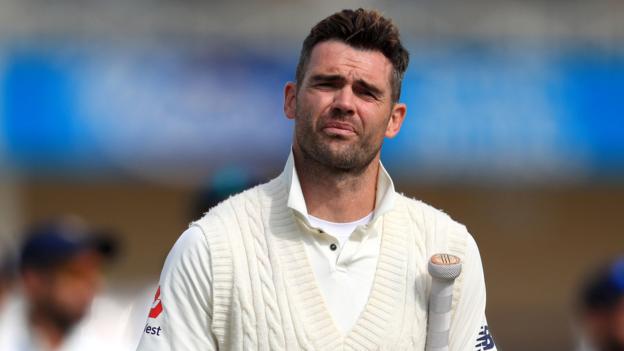
| Third Specsavers Test, Trent Bridge (day five of five) |
| India 329 & 352-7 dec: Kohli 103, Pujara 72, Rashid 3-101 |
| England 161 & 317: Buttler 106, Stokes 62, Bumrah 5-85 |
| India win by 203 runs |
| Scorecard |
India needed less than three overs of the fifth morning to wrap up a massive win over England in the third Test at Trent Bridge.
James Anderson looped Ravichandran Ashwin to slip in front of a handful of spectators after Nottinghamshire reversed their decision to charge a £10 entry fee and allowed free admission.
The home side were 317 all out, giving India victory by 203 runs – only their seventh success in a Test in England.
The visitors also drag their deficit in the series back to 2-1 with two matches remaining. The fourth Test in Southampton begins on 30 August.
It is a fine comeback from Virat Kohli’s side, who were steamrollered to lose the second Test by an innings.
But, after losing the toss at Trent Bridge, they batted, caught and used the new ball better than the hosts.
England may be without Jonny Bairstow for the fourth Test after he suffered a broken finger keeping wicket.
England deserve credit for the three consecutive Tests they won before this match but, for much of this contest, looked like they had learned little from a hammering by South Africa on the same ground in 2017, when they were bowled out for 205 and 133.
On this occasion, they surrendered all 10 wickets between lunch and tea on Sunday to be dismissed for 161 in their first innings.
They were in danger of another collapse on Tuesday until Jos Buttler and Ben Stokes shared a fifth-wicket partnership of 169 that exhibited all the virtues of patient, careful and responsible Test batting.
Now, the question for Joe Root’s side is can they follow the example of Buttler and Stokes to move on from the recklessness that has contributed to their recent Test results being so inconsistent?
Questions over who joins Alastair Cook at the top of the order have now spread to Cook himself, while current partner Keaton Jennings is in desperate need of runs in his second attempt at Test cricket.
Ollie Pope looked skittish at Trent Bridge, though allowances can be made for a 20-year-old in his second Test, and the Bairstow injury seems likely to leave a vacancy in the middle order.
On top of the batting, England continue to be hampered by dropped catches – 14 have gone down in three Tests so far this series.
India were awful in the second Test at Lord’s, bowled out for 107 and 130 and seemingly over-reliant on the runs of captain Kohli, who was struggling with a back problem.
Even though Kohli made scores of 97 and 103 here, the whole team has contributed.
All of the top order spent some time at the crease, debutant wicketkeeper Rishabh Pant provided dynamism, while Hardik Pandya had a fine all-round match and was part of an incisive four-man pace attack.
Perhaps their only concern from this win is an injury to off-spinner Ravichandran Ashwin that restricted his contribution throughout.
Prior to this match, India had won only one of their previous 11 Tests in England and passed 200 just once in their previous nine completed innings.
Now, the world number ones have their house in order and still have a chance of a first Test series victory here since 2007.
from Trendy News Day https://ift.tt/2N7rzVA
via IFTTT

Former Trump campaign chairman Paul Manafort stared intently at the jury as the clerk read off the counts finding him guilty of eight financial crime charges. (Aug. 21)
AP
ALEXANDRIA, Va. – Paul Manafort’s future doesn’t look so bright.
It was only years ago that he was at the top of his game, offering political consulting and lobbying for powerful figures, including President Donald Trump.
Now, the former Trump campaign chairman faces up to 80 years in federal prison after he was found guilty Tuesday on eight criminal counts, including bank fraud.
In reality, Tuesday’s guilty verdict was just the beginning for Manafort. He’s scheduled to face a second trial next month in Washington centered on allegations of lying to the FBI, money laundering and foreign lobbying.
This time prosecutors say they have even more evidence – more than double the amount they showed jurors in Virginia. In that trial, Manafort faces an additional 20 years in federal prison.
More: Paul Manafort trial: Jury finds former Trump campaign manager guilty on 8 counts in tax fraud case
More: President Donald Trump put on defense as Paul Manafort, Michael Cohen fall in court
The trial is set to begin in front of U.S. District Judge Amy Berman Jackson on Sept. 17.
Special Counsel Robert Mueller and his team have a knack for offering an open ear — and possible lower sentences — if suspects cooperate and offer information.
Unlike many of the others indicted in Mueller’s probe, which is investigating Russian interference in the 2016 election and possible obstruction charges by the president, Manafort elected to battle out the charges in court.
It’s not entirely clear if he has any chips left to bargain and prosecutors could still elect to retry the case on the 10 counts jurors couldn’t come to a conclusion on in Tuesday’s verdict.
Bruce Udolf, a criminal defense attorney in Florida who served as an associate independent counsel during the Whitewater investigation, said the eight guilty verdicts mean Manafort has little bargaining power with Mueller if he is interested in cutting a deal.
More: Paul Manafort trial by the numbers: 27 witnesses, 18 charges and a potential 305 years in prison
More: Judge in Paul Manafort trial says he has received threats, is under protection
More: Mueller investigation isn’t a ‘witch hunt’, and other reactions to Manafort verdict
“The Virginia case was Manafort’s best shot because the court wasn’t doing the government any favors,” Udolf said, referring to U.S. District Judge T.S. Ellis III who had been sharply critical of prosecutors during the trial. “Despite that, they got eight convictions. And in this business, you only need one.”
Usually, prosecutors are more open to bargaining with sentences at the start of an investigation, said Ron Hosko, a former assistant FBI director who worked for Mueller when Mueller was FBI director.
But, Hosko said, “I’m sure Mueller and his team will definitely be interested if Manafort has any information that could help them moving forward.”
“That’s if he [Manafort] has something to trade,” Hosko added.
He said even a much lower sentence could potentially be a life sentence for Manafort and cooperating might allow him some leeway.
“Even if it’s just a 10-year sentence. Those 10 years could be the last 10 years of your life,” Hosko said. “Do you really want to spend them in federal prison?”
A sentencing hearing has not been set for Manafort’s case and it’s unclear whether he will attempt to appeal Tuesday’s verdict.
His attorney, Kevin Downing, signaled an appeal could be a possibility.
“He is evaluating all his options at this point,” Downing said while leaving the courthouse.
Read or Share this story: https://usat.ly/2nYeUsX
from Trendy News Day https://ift.tt/2w1qJDa
via IFTTT

/https%3A%2F%2Fblueprint-api-production.s3.amazonaws.com%2Fuploads%2Fcard%2Fimage%2F832209%2F126e9fd5-b2c4-49a5-82a2-4047c5c95a34.jpg)
Image: Shutterstock / adistock

We were all young and impressionable once.
And we all remember the first classic book we read that really hit a chord with us, making us realise the power of great literature.
For some it’s The Great Gatsby, for others it’s George Orwell’s 1984.
And this Twitter thread is basically here to remind you that while it’s great that you read that book, it’s really basic of you to still be talking about it.
Twitter user @Julian_Epp posted this list of books that so many of us read as teenagers, and people had a lot to say about it.
Before you turn 18 you have to choose exactly one of these books to read and then never stop talking about for the rest of your life:
-Harry Potter
-The Great Gatsby
-Animal Farm
-The Communist Manifesto
-1984
-The Bible— Jules (@Julian_Epp) August 20, 2018
Some people took it personally.
we literally talk about all of these everyday lmao
— Mary J (@mhertzel) August 21, 2018
Others got busy adding their own teen faves to the list.
swap out animal form with on the road and this might be 100% gospel
— Gladstone (@WGladstone) August 21, 2018
Gotta include pretentious teens’ North Star of upper middle class angst, Catcher In the Rye
— Tanya clemons (@Cheerhop) August 21, 2018
Farenhiet 451 too
— Tina Keophannga Art (@TinaKeophannga) August 21, 2018
a middle-school librarian handed me that book when I was eleven and made me… me.
— the library haunter
(@SketchesbyBoze) August 21, 2018
Hitchhiker’s Guide to the Galaxy
— Matt Hanlon (@mhanlon) August 21, 2018
How could you forget Catcher in the Rye or Fear and Loathing in Las Vegas?
— Jas (@myspacep4p) August 22, 2018
Some, meanwhile, were just happy to keep talking about books.
1984 is mine, but in fairness the cameras on the street are not even the scariest concept about that book that has come utterly true. Witness Rumsfeld’s ‘unknown unknowns’, Trump’s ‘Fake News’ and Giuliani’s ‘truth isn’t truth’.
— Ross Tarbard (@rosstarbard) August 21, 2018
1984 I remember reading that book and saying to my best friend, as if that could ever happen .Cameras on every corner on every street not in a million years.
— ML72 (@goforitmike72) August 21, 2018
To be fair, we’ve never stopped talking about Harry Potter. And we never will.

from Trendy News Day https://ift.tt/2N7rql0
via IFTTT

It might have been another #MeToo moment: An Egyptian woman says a man stalked her at a bus stop, made inappropriate advances, and only backed off when she began filming him with her mobile phone.
But when she posted the video on Facebook, it ignited an online debate in which many Egyptians, including women, took the man’s side.
Some say he was politely flirting and the woman overreacted, while others have speculated about what she was wearing, suggesting she was the one at fault.
Sexual harassment, mostly ranging from catcalls to occasional pinching or grabbing, is rampant in Egypt.
Polls have found that a majority of both men and women in the country believe it is justified if women dress “provocatively” in public. That may explain the response to the brief video Menna Gubran posted on August 15.
In the video, a man, later identified as Mahmoud Soliman, can be seen approaching her on a suburban Cairo street and inviting her to coffee at On the Run, a nearby shop.
She politely declines and he apologises and walks away.
In a subsequent video and in TV interviews, Gubran said Soliman had circled in his car three times as she waited for a bus and made comments that made her feel uncomfortable.
At one point, she went into a nearby supermarket, hoping he would leave. When she returned, he came by again and got out of his car, at which point she says she began filming.
Soliman, who has also given TV interviews, denies doing anything wrong and disputed her account of circling in his car. “I just invited her to drink coffee, and I never bothered her. When she said I was bothering her, I apologised and left,” he said.
The video provoked a torrent of angry responses, but while many praised Gubran for outing an alleged harasser, just as many accused her of overreacting or questioned her motives.
“The man was speaking in a very polite and respectful way and she as any Egyptian woman called him a harasser,” a man who identified himself as Mustafa El-Sokarri wrote on Twitter.
Others asked what Gubran, who does not appear in the video, was wearing, with some fishing personal photos out of her social media accounts.
Many treated the incident as a joke. The Arabic phrase for “Let’s drink coffee” trended on social media, and “On the Run Guy” even enjoyed a moment of local fame.
The diverging responses reflect a long-running debate in Egypt over what constitutes sexual harassment and who is at fault.
“The incident was indeed harassment and a violation of the girl’s privacy,” said Maha Ahmed, a human rights lawyer at the Egyptian Commission for Rights and Freedoms.
“Unfortunately, there is misunderstanding of harassment in Egypt and this caused the controversy.”
The problem of sexual harassment in Egypt gained worldwide attention during and after the 2011 uprising that toppled President Hosni Mubarak, when women were harassed, groped – and in some cases, beaten and sexually assaulted – during mass protests.
In 2014, the government passed a law making sexual harassment punishable by up to five years in prison, but it is not widely enforced, particularly when it comes to milder forms of street harassment.
Mozn Hassan, a women’s rights activist, said that although the law was a positive step, it does not define different kinds of sexual harassment. “The state should lay down a clear definition,” she told the daily Al-Shorouk on Sunday.
A study released last year by the Thomson Reuters Foundation ranked Cairo as the most dangerous megacity in the world for women.
President Abdel Fattah El-Sisi questioned its findings, but acknowledged in TV comments last November that “there is sexual harassment in Egypt. There is a big percentage, but not to say it is the worst.”
Another poll carried out last year by UN Women and Promundo, a non-governmental organization, found that nearly 60 percent of Egyptian women say they have been sexually harassed, and nearly 65 percent of men acknowledge harassing women, though they mainly admitted to ogling.
The poll, which surveyed 1,380 men and 1,402 women in five governorates, found that 74 percent of men – and 84 percent of women – agreed that “women who dress provocatively deserve to be harassed.”
Forty-three percent of men said women “like the attention” when men harass them. Only 20 percent of women said they did.
from Trendy News Day https://ift.tt/2w1qat2
via IFTTT
 trendynewsday