‘Ralph Breaks the Internet’ gets the internet mostly right: Review

news image

“The internet is nothing to laugh at. It’s new and different and we should fear it.”

It’s an odd line to hear in 2018, when everyone from your 4-year-old nephew to your 95-year-old grandmother knows their way around a Facebook page. 

In Ralph Breaks the Internet, though, it’s being said to what might be the last demographic to never have heard of the internet: fictional characters whose video games have never been connected to wifi. And if the version of the internet they encounter doesn’t quite mesh with the reality the rest of us have been living in for 20+ years, Ralph gets enough of it right to be worth signing on for.

Ralph Breaks the Internet revisits Ralph (John C. Reilly) and Vanellope (Sarah Silverman) a few years after the events of Wreck-It Ralph, and their lives couldn’t look sweeter. The BFFs work hard at their respective games all day, and then hang out with each other all night. Come sunup, they separate to start the cycle again.

But this blissful routine is shattered when Vanellope’s game breaks down, leaving her not just without a home but without a sense of identity and purpose. Ralph, however, knows exactly who he is and what his job is: He’s Vanellope’s hero, which means he’s going to save her game. Even if they have to venture into the internet in order to do it. 

As envisioned by Disney Animation, the internet manifests as an infinite mega-city filled with enormous buildings (i.e., websites) and teeming with blocky visitors (i.e., user avatars). It looks sleek and colorful in the same way your home screen looks sleek and colorful, and it feels as full of infinite possibility as a blank browser window.

Through this vastness, Ralph and Vanellope set out on a convoluted voyage that takes them from the glittering towers of BuzzTube (a fictional YouTube-Buzzfeed hybrid, in case you couldn’t guess from the name) to the sketchy alleyways of the “dark web,” and everywhere in between. 

Ralph and Vanellope visit Slaughter Race in Ralph Breaks the Internet.

Ralph and Vanellope visit Slaughter Race in Ralph Breaks the Internet.

Ralph takes a while to get where it’s going, and not just because Ralph and Vanellope are exactly as bad at navigating the internet as you’d expect two total newbies to be. It’s not until halfway through the film that the real central conflict comes into focus, and once it does, it becomes apparent how hard the narrative was straining to get us there. 

Even then, the plot logistics require quite a bit of squinting and hand-waving to make work in any real-world sense. Like Ralph’s moneymaking scheme, which is definitely not how any of this works – take it from someone who works in an industry that’s famously struggled to monetize content. Or the mechanics of the third-act crisis, which I won’t spoil here.

But a bit of fuzziness is easy to forgive when Ralph is so sharp on so many other details. Everything about Slaughter Race – a game set in a dystopia so hilariously gritty, Mad Max would be at a loss – feels instantly recognizable, even though Slaughter Race doesn’t actually exist. And while that Oh My Disney setpiece feels almost creepily synergistic, it’s also hard to deny that C-3PO stage-managing Disney princesses is a childhood dream come true.

Wreck-It Ralph has a knack for distilling complicated grown-up concepts into kid-simple terms.

Ralph nails some bigger stuff, too. Like Zootopia (also co-directed by Rich Moore, who teamed with Phil Johnston for Ralph Breaks the Internet), Ralph has a knack for distilling complicated grown-up concepts into kid-simple terms. There’s shrewd messaging about toxic relationships, gender dynamics, and self-esteem, and a subversion of princess tropes that runs surprisingly deep. 

Also like Zootopia, it works because Ralph delivers all that without ever losing sight of the heart and humor driving the entire narrative forward. Ralph and Vanellope’s adventure is entertaining even when it’s not quite clear where it’s headed, thanks to its dynamic central duo, their willingness to embrace the absurd, and a heavy dose of spot-the-reference, and the emotions of the finale feel earned. 

Which, come to think of it, kind of sums up the online experience in a nutshell. Ralph Breaks the Internet is a two-hour journey down a series of rabbit holes filled with laughs, tears, a ton of self-referential meta gags, and a Tumblr-worthy reinvention of familiar characters that eventually delivers something you didn’t know you always needed. 

What could be more internet than that?

(PS: There are two post-credits scenes, so stick around to the bitter end.)

Https%3a%2f%2fblueprint api production.s3.amazonaws.com%2fuploads%2fvideo uploaders%2fdistribution thumb%2fimage%2f85735%2fff3f39a5 fe3c 4bec b1a3 41063e77f252

Read More

from Trendy News Day https://ift.tt/2z7lLpR
via IFTTT

May promises Brexit deal will deliver vote of British people

news image

British Prime Minister Theresa May has said the draft deal the United Kingdom has struck with the European Union with regards to Brexit will adhere to what people voted for during the 2016 Brexit referendum.

“What we have been negotiating is a deal that does deliver on the vote of the British people,” May told MPs on Wednesday after the UK and EU finalised the details of their plan on Tuesday.

May defended the agreement to a group of MPs from her own Conservative party ahead of a meeting with her cabinet, during which she is seeking her ministers’ backing for the deal.

Hardline Brexit supporters said the deal included unacceptable compromises.

May said the agreement would guarantee an end to unlimited immigration from the EU and would allow Britain to set its own trade policy, two of the main issues raised during the Brexit campaign.

She added the agreement included a backstop to avoid a hard border in Ireland but said this would be a temporary “insurance policy” if no future relationship is agreed.

“We want to bring the future relationship into place at the end of December 2020,” she said. 

The Irish border has been a key issue during negotiations between London and Brussels.

Both have vowed to prevent the re-emergence of a hard border between the Republic of Ireland and Northern Ireland, which will leave the EU with Britain, amid fears the issue could reignite decades-old tensions.

But the two sides disagreed for a long time on how to resolve the issue.

Jeremy Corbyn, leader of the main opposition Labour Party, said the agreement “breaches the prime minister’s own red lines”, adding that negotiations with Brussels had been “shambolic”.

“This government spent two years negotiating a bad deal that will leave the country in an indefinite half-way house,” Corbyn said.

Conservative Peter Bone, a leading pro-Brexit MP, also criticised May.

“You are not delivering the Brexit people voted for and today you will lose the support of many Conservative MPs and millions of voters,” Bone said.

Following the UK’s announcement an agreement was signed, Ireland’s Prime Minister Leo Varadkar said on Wednesday that an emergency EU summit could be held on November 25 to vote on the deal.

UK parliament would then vote on the Brexit accord.

If successful, the whole Brexit process should be concluded on March 29, 2019, almost three years after the referendum was held.

The agreement comes after months of intense negotiations between UK and EU leaders and mounting pressure on May. 

Last month, May said she was “ready to consider” extending a transition phase after the UK leaves, according to officials.

Such an extension, keeping Britain under EU governance with no say in it, would be highly unpopular with hardline supporters of Brexit.

The idea of a one-year extension to the transition period had been proposed by EU Brexit negotiator Michel Barnier.

This would buy more time to negotiate the future relationship between Britain and the EU, which could potentially help to make progress on the Irish border issue.

SOURCE:
Al Jazeera and news agencies

Read More

from Trendy News Day https://ift.tt/2OIQ5wg
via IFTTT

ATP Finals: Novak Djokovic beats Alexander Zverev in group match

news image

After a challenging first set, Novak Djokovic raced through the second set in 29 minutes
ATP Finals
Venue: O2 Arena, London Dates: 11-18 November
Coverage: Follow live coverage across BBC TV, radio, the BBC Sport website & mobile app. Live text commentary available on selected matches.

World number one Novak Djokovic took a big step towards the semi-finals at the ATP Finals with a clinical victory over Alexander Zverev.

After a very physical and close first set, the Serb ran away with the second to win 6-4 6-1.

Djokovic, chasing a first ATP Finals title since 2015, will reach the last four if John Isner beats Marin Cilic later on Wednesday.

“I don’t think it was breathtaking tennis but a win is a win,” he said.

“I played well mid-way through the second set and started to swing through the ball.

“I had not served that well but he made a lot of unforced errors which helped me to win.”

Indeed, it was a double-fault from Zverev that handed Djokovic the first set and a total of 33 unforced errors that contributed to the 21-year-old’s downfall.

Djokovic plays Cilic in his final round-robin match on Friday, while Zverev takes on Isner.

Are you Mr Bendy, Novak?

It took until the ninth game of the first set for either player to fashion a break point, Zverev missing two in that game.

Having survived that pressure, Djokovic left it until the perfect time to break in the following game – taking the set when the German double-faulted.

It was an unfortunate way for Zverev to fall behind, having been impressive with his serves until that point, delivering seven aces and in one game firing down three successive serves at more than 140mph.

Tipped by many as a future Grand Slam-winner, Zverev showed some of his talent with some beautiful passing shots but he was up against a player who can contort his body to reach almost anything.

Djokovic met one of Zverev’s body serves with an unconventional placement of his racquet that was more about shielding his face – but of course the return went in – and later Zverev needed two attempts at a smash to put the ball away, when against any other player the first one would have done.

“That’s a first – ‘Mr Bendy’,” the Serb laughed in his on-court interview. “I am relying on my flexibility a lot. I was fortunate to be surrounded with people who emphasised the importance of stretching and it has paid off.”

Analysis

Former British number one Tim Henman on BBC TV:

In the two sets, Djokovic only made 10 unforced errors. It’s not like he’s just rolling the ball into the court. He is playing at such a consistently high level. He dominated the last five games. I think he only lost two or three points.

It is a solid performance and puts a big marker down to the rest in the competition.

Former player and BBC commentator Andrew Castle:

This was from a guy [Djokovic] who was nowhere. He was a lost soul in the last two years after winning the French Open in 2016. He had won everything. But he is re-ignited now. I think it is fantastic to see him back at his best. It is brilliant for the game. Everyone will be watching this and thinking ‘that is a high standard’.

This tournament is finally starting to light up. We have had a lot of ordinary matches but that wasn’t one of them. Djokovic didn’t seem to think it was but if that’s the case then I’d like to see him playing ‘well’.

More to follow.

Read More

from Trendy News Day https://ift.tt/2z8R5EO
via IFTTT

How to find the best temperature for your high-tech weed vape

news image

This post is part of our High-tech High series, which explores weed innovations, and our cultural relationship with cannabis, as legalization in several U.S. states, Canada, and Uruguay moves the market further out of the shadows.


Cannabis users have always been fine-tuning their experience. Rolling a joint tighter or grinding bud finer will result in a different high, so it’s no surprise that users want that option when it comes to vaping. So what’s the best temperature to vape at? That depends on what you want out of your high.

Thanks to the rise of sate-level legalization in the U.S., vaping cannabis went from being a somewhat clunky and niche experience to a convenient and discreet norm. Whether you’re vaping oil or flower, the high tech gadgets being produced today allow users to curate their own experience, offering up a high they can learn to expect.

Vaping oil is the new standard

In recent years, vaping cannabis oil has exploded, and it’s helped introduce many to the world of legal pot. While smoking weed or downing an edible can offer an intense adventure, vaping oil can give users a more mellow and manageable experience. Additionally, it’s less smelly, there’s no smoke, and it’s an overall cleaner ordeal.

“You have all of this plant matter when you light it on fire you’re creating smoke. There’s a lot of that plant matter that doesn’t impact your high whatsoever — your experience whatsoever. So what vaping does, especially in the non-flower form, is it extracts all that plant matter and provides you just with the active compounds,” JJ O’Brien, VP of Strategy at Pax Labs said in an interview. 

When you purchase vape oil from a legal store, it usually comes with a standard fitting. Users can then purchase a battery relatively cheaply, which can be reused and recharged. 

Cannabis vape oils with the industry standard 510 fitting.

Cannabis vape oils with the industry standard 510 fitting.

Image: Shutterstock / King Dragon

While some batteries allow users to select between a few set temperature settings, companies like Pax allow people to set the temperature they’d like down to the degree.

At $29.99 the Pax Era is the company’s response to the industry’s oil boom. But there’s a catch — you can’t just go buy any type of oil you want because it does not use the industry standard 510 threaded batteries. Instead, the Era uses its own pods which are sourced from cannabis manufacturers they trust. Sure, while this may be a little inconvenient and limit the variety of oils you can buy, this model and others like it feel like a little bit more of a high-end experience. 

The Era is app-connected, which allows you to unlock a number of features, including temperature control from your smartphone. The vape can be set as low as 430 degrees Fahrenheit, and as high as 790. To set a temperature that’s right for you, it all depends on what you want out of the vape.

Image: lili sams, mashable

No temperature is the right temperature

“The unique part about temperature when it comes to cannabis consumption is that every single one of those active compounds — all your cannabinoids … all of your terpenes … add to your holistic high and they all have different boiling points,” O’Brien explained. “Temperature is incredibly important in any type of cannabis experience because you’re wanting to consume all of those compounds at the right heat, which vary on the map, and you can’t necessarily consume the full spectrum as easily as you want sometimes.

While some cannabinoids — compounds found in cannabis that can provide the consumer with different effects — can withstand a higher temperature, terpenes, the essential oils of the plant which give it its taste and smell, cannot. So, vaping at a lower temperature will give a more perfume-like flavor, while a higher temperature will produce more vapor and will be a more intense high. 

Activating these compounds is essentially what provides the user with an experience, one that is getting increasingly easier to manage thanks to technology. 

“The joint is actually the best vaporizer out there.”

“The joint is actually the best vaporizer out there,” O’Brien admitted. “You’re combusting on one end, you’re pulling hot air through a controlled environment because you’ve wrapped the paper, and you’re actually hitting that flower with different heats as the combustion cools coming into your mouth.”

How to find your best temperature? 

If you’re experimenting with different vape temperatures, the best thing to do is start low and try to be as mindful of your experience as possible. Take notes! Starting at a low temperature and waiting a decent amount of time between hits will allow you to take in how your body and mind are altered.

For the best results on the Era, select a dosage on the session control section of the app and slowly  increase the temperature each time you vape. Remember that the effects of cannabis are cumulative, so this may take a few different days or even weeks before you find the perfect temperature for each situation. 

 If you don’t have an Era and can’t control the dose of your session, try to be aware of how hard and how long your pulling. For the most accurate results, remember to charge your vape battery often.

The future of fine tuning 

While we can use things like vape temperature to help manage our highs, there are still so many factors involved in proving the same, repeatable experience which is essential to the mainstream acceptance of cannabis. How intense did you inhale and how long did you keep it in your lungs before exhaling? What was the THC percentage in the oil you purchased? CBD?

Temperature is only one factor in the very confusing and often overwhelming world of cannabis. A shot of whiskey is a shot of whiskey every single time. A hit of a joint or a puff off a vape can vary extensively.

Companies like Pax are allowing users to set their own preference through apps that fine tune temperatures and dosages. But without more research on how these compounds can effect us, many cannabis consumers are still playing guinea pigs with their highs. Widespread legalization at the federal level, like in Canada, may help us learn more about activating these compounds, and how we can better manage them.

Https%3a%2f%2fblueprint api production.s3.amazonaws.com%2fuploads%2fvideo uploaders%2fdistribution thumb%2fimage%2f85983%2f61e06d9c 1dff 46f1 825e f186d1e4b800

Read More

from Trendy News Day https://ift.tt/2OIJIJm
via IFTTT

Warrington v Frampton: PPV clash with Whyte v Chisora means fans lose out

news image

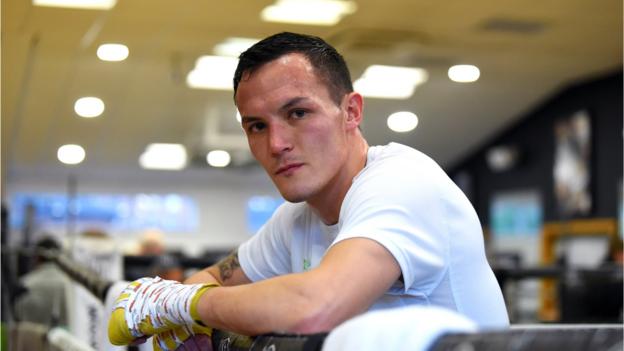
Frampton and Warrington meet on 22 December

IBF world featherweight champion Josh Warrington says “fans are the real loser” over a pay-per-view clash when he meets Carl Frampton on 22 December.

On the same night as Warrington, 28, defends his title at Manchester Arena, Dillian Whyte meets Dereck Chisora in a heavyweight bout at London’s O2 Arena.

Fans will need to pay for two pay-per-view events if they wish to see both.

“There will be fans who have to make a choice. It’s unfair really. No boxing fan is a winner,” said Warrington.

“I think boxing fans are the real loser in this one.”

Northern Ireland’s Frampton, 31, will bid to recapture a world title and told BBC Sport: “It’s not a good thing for boxing to have two pay-per-view fights on and fans will have to fork out for both, one or none.

“It’s close to Christmas too. It’s not good for boxing at all.”

‘Past their prime’

Fans will need to pay for two pay-per-view shows if they wish to see Chisora, Frampton, Warrington and Whyte on 22 December

Warrington-Frampton will be shown on BT Sport Box Office and promoted by Frank Warren. Whyte-Chisora – contesting a rematch from their thrilling 2016 bout – will be on Sky Box Office and promoted by Eddie Hearn’s Matchroom Sport.

Warren confirmed his world-title bout in September, while Hearn announced his main event on 1 November.

Hearn says the clash is “not ideal” but has stated a lack of suitable venues led to him opting for the date three days before Christmas. He feels each fight serves a different market, with Warrington-Frampton more appealing to hardcore boxing fans, while Whyte-Chisora will satisfy a broader market.

Warrington insists more should have been done to avoid a clash but believes his own contest will be a “fight of the year candidate” and sits on a “bigger bill”.

“We have seen those other two fight before,” he told BBC Sport. “We are fighting for a higher prize, a higher stake. This is two lads in their prime, whereas Whyte and Chisora have seen better days. They’ve both had losses.

“They have probably past their prime where as us two are both in our prime, dazzling. It’s a world title, let’s be right about it. And we both have passionate fans who follow us everywhere we go.”

Read More

from Trendy News Day https://ift.tt/2z8roEe
via IFTTT

‘Kidding’ is an extraordinary case study of consequence

news image

Everything matters. Even the giant foot.

Image: Erica Parise/SHOWTIME

Somewhere between the puppets, musical numbers, dazzling one-take transformations, and bizarre cold opens, Kidding on Showtime became one of this season’s best and most underrated comedies. Each episode took the audience further into the world and psyche of Jeff Pickles and the rest of the Pickles family, only to discover that the people responsible for creating Mr. Pickles’ Puppet Time — the happiest show on television — are all super, super fucked up. 

Plenty of TV families are OK on the outside and rotting on the inside, but what makes the Pickles clan unique, and what makes Kidding so good, is that the show makes sure to draw clean lines from the actions that they perform to the typically awful consequences they have on other people. 

Every time a character on Kidding messes up — whether it’s Phil misunderstanding his son’s needs or a random drunk girl trying to kill her childhood idol — it’s clear to see exactly why they did it and how it impacts the world around them. Watching Kidding feels like filling in an evidence board in real time, always connecting the red threads of cause and effect from character to character and action to later action. 

Watching Kidding feels like filling in an evidence board in real time, always connecting the red threads of cause and effect from character to character and action to later action. 

It’s a thrilling way to watch a TV show, even as the evidence points ever strongly towards catastrophe. 

In Kidding, what parents did to their children matters. Seb encouraged Jeff to be violent, and despite Jeff’s massive overcorrection towards kindness his repressed anger undid his life’s work. Jeff coped with his childhood by preaching to his sons, and his focus on talking led to children who think he’s incapable of listening. 

One of the most brilliant moments in the Season 1 finale of Kidding is also its cruelest. For the briefest of moments, Seb sits down and listens to his son Jeff, and Jeff gets an opportunity to listen to his son Phil. There are soft smiles and a feeling of acceptance in the air. Love triumphs over their previous mistakes! Hallelujah indeed. 

And then, tragedy. Again. On purpose. Considering how high the stakes were by the finale, it’s both sad and satisfying to see that the Kidding’s theme, that the other shoe will always drop, comes back in full force. Sad because many of these characters and lovable and it’s human nature to want better for them. Satisfying because the finale establishes what Kidding is really about. 

An apt tagline for Kidding Season 2, which is already ordered for next year on Showtime, would be “Look At What You’ve Done.” It’s a question every character could ask any other character, with a totally deserved tone of blame. Kidding is a comedy, but also a character study of what happens when everything matters and nothing is forgotten. And in that way, even with its heavy dose of unexplained magic, it’s the realest show of 2018. 

Https%3a%2f%2fblueprint api production.s3.amazonaws.com%2fuploads%2fvideo uploaders%2fdistribution thumb%2fimage%2f1637%2f116403be 2457 45a8 9f1f 5831a093bacd

Read More

from Trendy News Day https://ift.tt/2OJulQH
via IFTTT

Where does the future of the American left lie?

news image

Two weeks before the November 6 midterm elections, the White House released a special report by the Council of Economic Advisers (CEA) on the opportunity costs of socialism in response to what they call its “comeback” in American political discourse. 

The timing of the report was no coincidence. Left-wing ideas such as universal healthcare, fully funded public education and the abolishment of ICE were at the forefront of midterm debates. And indeed, on November 6, American voters elected two socialist women of colour, Rashida Tlaib and Alexandria Ocasio-Cortez, to Congress. Their historic wins are a true sign of shifting political terrains in the United States. Everyday people are now embracing real left-wing politics, and this has the capitalist class shaking in their boots.

The CEA report is one of the many examples of the far-right red-baiting aimed to scare people away from socialist politics. Resources are scant, they argue, so fascism, not equality, is the way out of poverty. Meanwhile, Wall Street Democrats are clinging to a moderate agenda rooted in corporate interests. Giving millions to big business owners, they say, is the best way to get everyday Americans back on their feet.

Still, in the face of these powerful forces of opposition, the American people elected some of the most progressive politicians we’ve seen in decades. With Tlaib and Ocasio-Cortez set to enter the House of Representatives, alongside Bernie Sanders in Senate, we now have three openly socialist politicians in Congress – the most in US history – and even more socialist politicians in local offices across the country.

But the ability of these elected officials to realise the progressive platforms on which they ran will ultimately come down to what we, ordinary citizens, do. It is on us to continue to organise – to march, knock on doors and fight for a political agenda that puts the needs of working-class people over big corporations.

It is very clear that Americans across the political spectrum are ready for something different. In fact, neoliberal policies are less popular than ever before. Seventy percent of Americans support a single-payer healthcare system. More Americans disapprove of the controversial GOP tax-reduction package than approve of it. Among young people, socialism is now more popular than capitalismThe right’s ideas are unpopular. So unpopular that, in many places this election cycle (and around the world), far right candidates didn’t even campaign on them. Fully aware that the support for their political demands is waning, they instead chose to lie, incite racism and rig the election to assume or maintain power.

Here in Florida, GOP gubernatorial candidate, Ron Desantis, followed this playbook to a T. Instead of presenting policy proposals to win over voters, he turned his campaign into a race war, using racist dog whistles against black people, Jews, Muslims and immigrants in order to lure white voters to his side, and away from the progressive agenda of Mayor Andrew Gillum. 

Desantis called Gillum “too radical” for associating with groups like ours, the Dream Defenders. Our political platform, the Freedom Papers, which outlines a plan for quality healthcare, shelter, food, education and safety for all, became the centre of his attacks. 

But Desantis didn’t debate the substance of the agenda itself – perhaps because he couldn’t find a way to argue against a proposal to meet people’s most basic needs, especially when so many are struggling to get by. So instead, he used lies and scare tactics, stirring up a racist frenzy promoting white nationalist violence, to steer people away from what’s best for everyone, in favour of a right-wing, pro-corporate and anti-people agenda.

In addition to using fear and racism, the political right also uses methods like gerrymandering, purging voter rolls, shutting down polling sites and confusing voters to suppress progressive votes and maintain their power globally as political minorities.

Following such right-wing attempts to suppress votes, Florida and Georgia experienced razor-thin margins between the GOP and progressive candidates for governor. As a result, both states are now in the middle of recounts. In Florida, incumbent Republican Governor Rick Scott has equated calls to count every vote with voter fraud and an attempt by Democrats to steal the elections.

While many progressive candidates scored landmark victories in the election, many others, mainly as a result of the aforementioned voter suppression methods, either narrowly lost to their right-wing opponents or are still facing a real possibility of a loss. However, rather than doubling down on a left-wing agenda that already proved its popularity among voters, and fighting against the GOP’s voter suppression methods, many within the Democratic establishment are already arguing that, perhaps, some candidates were just too progressive to win. The path to defeating Trumpism and the far right in 2020, they say, is to move further to the centre.

We are already seeing the Democratic establishment’s attempts to take down the left-wing flank that Tlaib and Ocasio-Cortez have the potential to build within the party. Right after Democrats took back the House of Representatives, Nancy Pelosi announced that she believes “Democrats have a responsibility to seek common ground” with Republicans in Congress, implying that she will focus on making compromises rather than impeaching Trump. This is unacceptable and irresponsible. Our lives are on the line. And clearly, Nancy Pelosi’s interests don’t align with ours. It is because of political stances like hers and the Democratic establishment’s overall neglect of the interests of working-class people that we’ve ended up with Trump in the first place.

We cannot defeat fascism by moving towards the centre. Unfortunately, all too often, politicians who run on left-wing platforms opportunistically move towards the centre for the sake of their “career” once they are elected. But ultimately, whether or not the progressives we fought to elect will be able to realise the platforms they ran on is not so much a matter of what they do once in office, but a matter of what we do. For progressive politics to succeed, we – as the people – need to change our attitude towards electoral politics. We need to understand that electing a candidate is not a matter of choosing a champion or a supreme leader. It’s a matter of choosing our best opponent. At times, we will organise with these elected officials to bring about real change, but at other times, we will organise against them to achieve the same. It is our responsibility to build the necessary power to hold them accountable to the needs of working people and not corporate interests.

Midterm voter turnout hit a 50-year high in 2018, with more than 47 percent of the voting-eligible population casting a ballot. However, more than half of Americans still did not go to the polls, likely because of how disillusioned they are by the entire political system. Grassroots movements should seize this opportunity and work tirelessly to convince these disillusioned Americans that they, and no one else, have the power to change our world.

We cannot fight fascism with neoliberalism or by entrusting our fate in the hands of a few politicians. Our only fighting chance is to build power. 

In the face of rising violence and efforts to make everyday people turn their back on one another, so we don’t rise up against the one percent, we must bring people together across race, religion and borders to struggle towards long-term political unity. In the spirit of Fred Hampton and the Black Panther Party, we must reignite the Rainbow Coalition, a 1960s Chicago-based alliance between young people in Black, poor white and Puerto Rican communities. The Rainbow Coalition was a real threat to the established powers in Chicago and across the country because it helped people find common fate and move a shared agenda across difference.

Solidarity among working people in the US and around the world is our only way out.

Together, we need to organise our neighbours, plan marches and use boycotts and direct actions to advance a shared, progressive agenda that would benefit us all. We must be clear and unapologetic in what it means to be leftist – universal healthcare, fully funded public education, an end to war and a redistribution of wealth. Ultimately, the most important takeaway from the midterm election is that we can’t wait for politicians to lead. Our power lies in realising that the progressive agenda is ours to set.

The views expressed in this article are the author’s own and do not necessarily reflect Al Jazeera’s editorial stance.

Read More

from Trendy News Day https://ift.tt/2z8xFA7
via IFTTT

Watch: ATP Finals – Djokovic v Zverev

news image

Watch Novak Djokovic v Alexander Zverev in ATP Finals round-robin action – BBC Sport


<!–


<!–

<!–
<!–

<!–

<!–

<!–


Summary

  1. 14:00 GMT: Novak Djokovic v Alexander Zverev in group match – watch BBC Two coverage and follow live text commentary
  2. 20:00 GMT: Marin Cilic v John Isner – listen to BBC Radio 5 live sports extra (online only)


Read More

from Trendy News Day https://ift.tt/2RUGGUh
via IFTTT

Google Home’s best feature just got way more useful

news image

Google Home now lets you respond to messages that are "broadcast" through your speaker.
Google Home now lets you respond to messages that are “broadcast” through your speaker.

Image: raymond wong / mashable

Google just made one of the best Google Home features a lot more powerful. 

I’m talking about the “broadcast” feature, which essentially turns your Google Home device into an in-home intercom system. 

First rolled out a year ago, the feature lets you send messages using the Google Assistant app or another Google Home speaker in a separate location. But up until now, those messages could only go one way.

So, for example, you could broadcast from your phone that you were on your way home, or send one from a kitchen speaker letting the rest of your family know that dinner is ready. But the person receiving the message had no way of responding, so you could never actually be sure your message was heard.

That’s now changing. Google is adding reply functionality so you can reply to broadcasts with your own voice messages — essentially turning your Google Home not just into an intercom, but a walkie-talkie. The feature will be rolling out “in the coming weeks,” according to Google, but you can see it in action in the video below. 

Https%3a%2f%2fvdist.aws.mashable.com%2fcms%2f2018%2f11%2f8e9349bb 37ca e864%2fthumb%2f00001

What’s more, the update also does a little to solve the problem of how you receive broadcasts if you have more than one Google Home. Though the initial incoming message will still play over all your devices, subsequent replies will only play over the speaker you reply from.

In addition to broadcast replies, Google is adding a few other new features to its Home speakers, including:

  • A new recipes feature that surfaces “suggested recipes” on Google Home products with a display. You can also save recipes you like in a dedicated “cookbook.”

  • A kid-oriented feature that lets you set alarms in the voice of cartoon characters, like the Ninja Turtles.

  • New playback controls for audiobooks and podcasts so you can change the playback speed to be faster or slower.

Looks like Home speaker users have more reason to utilize the tech more often now. 

Https%3a%2f%2fblueprint api production.s3.amazonaws.com%2fuploads%2fvideo uploaders%2fdistribution thumb%2fimage%2f86988%2ff0aed570 adeb 41cf 8b93 5772b03e0d86

Read More

from Trendy News Day https://ift.tt/2DD5pJx
via IFTTT

Design a site like this with WordPress.com
Get started