Ukraine condemns Russia plan to deploy S-400 missiles to Crimea

news image

Kiev, Ukraine – Ukraine’s foreign ministry has condemned Russia’s plan to deploy a fourth S-400 surface-to-air missile battalion to the annexed Crimean peninsula amid a deepening conflict with Kiev.

Earlier on Wednesday, Russia’s southern military district spokesman Vadim Astafiyev told Interfax news agency that S-400s would soon be deployed to Crimea. The system is expected to be operational by the end of the year, according to Russia’s RIA news agency.

Olexiy Makeyev, the Ukrainian foreign ministry’s political director, told Al Jazeera on Wednesday that the development was “dangerous not only for Ukraine” but the whole Black Sea region.

“The system’s operational range is up to 400km so it places all literal states in the Black Sea region, including NATO members under the threat of an attack. We know that those missiles can be used also for ground targets,” he said.

Makeyev said that Moscow has been militarising Crimea since 2014 bringing in “new weapon systems including nuclear capable aircraft and missiles as well as military personnel”. 

“The occupation and subsequent militarisation of Crimea led to the expansion of the area of use of Russian warships and military aircraft in the Black Sea and far beyond, even the Mediterranean basin,” he said.

“Such militarisation has far-reaching consequences for security not only in the Black Sea area but in the whole southern Europe, as well as North Africa and Middle East.” 

Tensions escalate

The tension between Ukraine and Russia reached a new low this week after the Russian border patrol blocked the route of three Ukrainian military vessels travelling from the Black Sea to the Sea of Azov through the Kerch Strait – the shared internal waters of both states according to their 2003 agreement. 

The seizure of the ships and the arrest of 24 crew members caused international outcry and condemnation of Moscow’s moves, including from US President Donald Trump who suggested that he might cancel his planned meeting with Russia’s President Vladimir Putin over the aggression.

Putin’s foreign policy adviser Yuri Ushakov responded saying the meeting was “equally needed by both sides and important for the development of the general situation in the world”.

Sergei Lavrov, Russia’s foreign minister, used stronger language, calling on Washington to stop encouraging “provocative” moves by Ukraine and instead mediate between Kiev and Moscow-backed rebels who claimed control of parts of Ukraine’s Donetsk and Luhansk regions in 2014.

Lavrov claimed Ukrainian warships had ignored maritime law on Sunday, aiming to create a scandal for domestic political purposes.

US encouragement for such acts “saddens me greatly”, he said.


Makayev responded to the allegations, advising “anybody who listens to the Russian statement [on Ukraine provoking Sunday’s clash] to read George Orwell beforehand, because you would not understand the Russian false logic”.

“Nobody [in Ukraine] is interested in warmongering. We are a peaceful nation. But we will defend our soil from the Russian aggression. We count on support of our American partners and we enjoy a full support also by the European Union,” he said.

On Wednesday, a 30-day period of martial law took effect in 10 of Ukraine’s 27 regions, with President Petro Poroshenko saying it aims to prevent an all-out Russian invasion. 

‘Kept like hostages’

Also on Wednesday, a Russian court in Crimea ordered the 60-day detention of the last group of 24 captured Ukrainian crew members. 

The nine sailors were taken to the same detention centre in the Russian-controlled Ukrainian city of Simferopol on the peninsula as their 12 colleagues who faced the court a day earlier on Tuesday, Aider Azamatov, lawyer of Yuri Budzila – one of the detainees, told Al Jazeera.

The same verdict was handed down to the remaining three crew members on Tuesday in Kerch city where they are hospitalised following their injuries in the Russian air force attack on his ship on Sunday.

They are accused of illegal crossing of Russia’s maritime border, said Azamatov.

“Of course, my defendant did not plead guilty. He understands that it is a political matter and the sailors are kept like hostages,” he said.

Azamatov also said that all of the detainees should be recognised as prisoners of war as they are all military personnel. 

“The Geneva convention has to be applied to them, which means that the captured servicemen should not be put in custody like this,” he said. “They should have been left on their vessels and armed patrol should have been assigned to them right in the sea.” 

Ukraine is seeking to secure their release through international mediators.

“We started negotiations with our partners and possible mediators. We engaged the International Committee of the Red Cross to be intermediator in our talks with Russians,” said Makeyev.

“We would appreciate every possible effort of all the countries, of all the free nations to be intermediator and urge Russian Federation to return our prisoners of war.”

Follow Tamila Varshalomidze on Twitter @tamila87v.

Read More

from Trendy News Day https://ift.tt/2FNDVmC
via IFTTT

The Trailer For Ariana Grande’s Revealing New Docu-Series Is Finally Here

news image

She already has a new music video and a whole album on the way, and now Ariana Grande is continuing to keep fans fed with the announcement of yet another exciting project.

On Wednesday (November 28), Ari debuted the first trailer for her long-awaited, oft-teased docu-series, Dangerous Woman Diaries. The four-part series, directed by Grande’s go-to videographer Alfredo Flores, will follow her during her 2017 Dangerous Woman Tour and through the creation of her third album, Sweetener. YouTube bills it as “a love letter to her fans,” and Grande sums it up in the trailer by saying, “We wanted to bring you as closely into our world as possible. … I wanna sing for you guys, and I wanna share these experiences.”

Elsewhere in the one-minute teaser, we see Grande shooting the video for “The Light Is Coming,” rehearsing for her heavenly VMA performance, and beautifully belting “Touch It” and “One Last Time” on stage. She also brilliantly mimics the question fans have been asking for months on end: “Where is the tour movie?” Finally, we have our answer!

Ariana Grande: Dangerous Woman Diaries is set to premiere on the singer’s YouTube channel on Thursday. Subsequent episodes will premiere on the following Thursdays (December 6, 13, and 20), although YouTube Premium subscribers will be able to binge all four parts right away. Now all we need is that epic-looking “Thank U, Next” video…

Read More

from Trendy News Day https://ift.tt/2FNtS0S
via IFTTT

Carlsen beats Caruana to retain World Chess crown

news image

Separating the two best chess players in the world was not easy. Two very different characters.

The 27-year-old Norwegian, who came to London as champion, Magnus Carlsen. Fidgety, bored, almost aloof, but fascinating.

Across the chess board: the challenger from Brooklyn, Fabiano Caruana. One year younger with dual Italian and American citizenship. He is more upright and studious looking. “Geek-cool”.

On first look, chalk and cheese, black and white.

But after three weeks locked in battle for the world chess championship, it’s clear they were binded together by the genius. The Special Ones.

Carlsen, the highest-rated player in chess history, yet just three measly points clear of Caruana, in a rankings system where both of them have over two thousand points.

Both acknowledged as having the brains of “super computers”.

And therefore, an unprecedented, world-record, twelve consecutive draws ensued.

I had been there at the start, billed as the greatest match-up in chess history.

“Are you two making chess cool?” I had asked, as their celebrity is reaching glossy magazines and mainstream media.

“Chess has always been cool to me, since I was eight years old.” replied Carlsen. Ice-cool and deadpan funny.

I returned for Game 12 and was allowed boardside for five incredible, electric minutes.

“What if I put them off?” was my fear.

But these are two men with superhuman powers of concentration. Planning many moves ahead. With millions of chess fans gripped and in awe, unable to pick a winner for sure.

Each game lasting hours with attack and defence, but no winner.

Something had to give. But how?

Wednesday November 28. “The College”, Holborn, central London. Game day 13. Unlucky for one.

Tie-breakers. Four ‘Rapid’ games, then ‘Blitz’ games and if there was still no winner, ‘Armageddon’!

(This is where white pieces have the advantage and if the player using them fails to win, they lose. The entire Championship!)

The players enter the soundproof box. They shake hands but that’s the last of their eye contact.

A couple of hundred spectators, the envy of chess fans, are outside the box in the small auditorium watching the tension unfold.

Carlsen, in grey suit, has the first move. He had lit up social media by surprisingly offering a draw from a “winnable position”, but remains the narrow favourite as the first rapid game begins.

Caruana, hoping to become the first American world champion since the famous Bobby Fischer over 40 years ago, is in sober blue – another unlikely fashion icon. But would Carlsen’s flair prevail?

For an hour, the tension of the rapid game holds. Then that rarest of moments over three memorable weeks in London. A blunder. From Caruana. And Carlson moves in for the kill. Checkmate? A crucial breakthrough, and an explosion of relief had the Norwegian out of his chair, pumping fist.

Once ahead, he was not going to let it slip. In rapid Game Two, Caruana was like a boxer dazed from the crucial punch. And by Game Three, it was over, brutally one-sided on the day after weeks of deadlock and tension.

This is why Magnus Carlsen is champion, this is why he offered the controversial draw on Monday, this is why he is regarded as the greatest ever on the chessboard.

Peter Doggers of Chess.com explains to me how this was the biggest ever match for social media, interactivity and eyes on the board. Over 100,000 people watced the streamed coverage on ‘Twitch’ alone.

Chess may not be of interest to all, and free-to-air everywhere, but smartphone games and interest in Asia, where their game originated, have mushroomed.

There have been longer, more controversial games, but nothing more intense, more significant, in the growth of a game.

Defeat will hurt Caruana, but he will rise to challenge again. And Carlsen isn’t the only winner.

This has been a hard-fought victory for the reputation of chess.

Read More

from Trendy News Day https://ift.tt/2rcgeKC
via IFTTT

What Happens When Swae Lee, Young Thug, And Mike Will Made-It Step In The Ring?

news image

Creed II is a boxing movie. The Creed II soundtrack is full of jams produced by Mike Will Made-It strategically designed to get you ready for the fight of your life. These two elements together make for a dynamic experience — but how would, say, Mike Will, Swae Lee, and Young Thug bring their atmospheric song “Fate” to life on TV, stripped of its intended context within the framing of a boxing movie?

They’d have to bring the ring with them. And that’s exactly what they did on The Tonight Show Tuesday night (November 27), commanding the space for a bout-ready rendition of the song. Swae and Thug made appearances in boxing trunks and robes while Mike Will manned a turntable at the back of the ring. They went all out, man. Turnbuckle covers, water bottles, stools, and everything.

My favorite detail is how Swae wears a pair of gloves strung together around his neck. Or maybe it’s how Thug’s bottom half is sports-appropriate while his top half remains committed to a turtleneck and chain. Or actually, maybe it was Mike Will grabbing the overhead mic to set a vibe before launching into anything. The only detail missing was Michael Buffer, but I guess he’s busy doing commercials, as always.

Creed II hit theaters last week, and while it failed to completely pummel its rival, Ralph Breaks the Internet, at the box office, it did earn a record-setting $55.8 million, the highest opening ever for a live-action film. That’s just what happens when Michael B. Jordan and Tessa Thompson get together.

Watch the performance above, then watch MTV News’s recent interview with Thompson — where she breaks down her contributions to the film — below.

Read More

from Trendy News Day https://ift.tt/2KHNfHl
via IFTTT

20+ gifts for men: Best gift ideas for the man in your life

news image

AMAZON

BEST FOR TECH SAVVY MEN

With the release of the Amazon Fire TV Cube, the retail giant is now looking to control your entire home entertainment system with just your voice. If the man in your life is looking for the latest and greatest in entertainment technology, then the Fire TV Cube should be one of the top gifts on your list. The device can stream Netflix, Hulu Plus, HBO Now, Showtime, YouTube, Facebook, and more.

Read More

from Trendy News Day https://ift.tt/2BCqf9Q
via IFTTT

Classic Anime Cowboy Bebop Is Officially Getting The Live-Action Treatment On Netflix

news image

After a full decade of rumors and false hope, Cowboy Bebop is officially getting the live-action treatment — for better or for worse.

On Tuesday (November 27), Netflix announced that snarky bounty hunter Spike Spiegel and his motley crew would ride again in a 10-episode live-action adaptation of the beloved 90s anime. The sci-fi noir tells the story of a rag-tag group of bounty hunters — Spike, Jet, Faye, and Ed — as they hunt down the galaxy’s most dangerous criminals while on the run from the demons of their pasts (both physical and metaphorical).

While Hollywood doesn’t have the best track record when it comes to adapting anime — and Netflix’s Death Note film was panned by fans and critics alike — original Cowboy Bebop creator Shinichiro Watanabe is on board with the project and will serve as consultant. Meanwhile, the Thor: Ragnarok‘s Chris Yost will pen the first script, which could bode well for the show’s humor. (Though, for what it’s worth, Yost also penned Thor: The Dark World.)

As long as the series gets Yoko Kanno back to score its jazzy soundtrack then there’s no real reason to be alarmed until there’s actual footage available to screen. As for its cast, well, maybe there’s still a role for actor and fan Keanu Reeves, who would have been the perfect Spike… 10 years ago.

Netflix’s Cowboy Bebop adaptation is the latest move in the studio’s massive anime push. The streaming giant also announced that Neon Genesis Evangelion and its two films would be coming to the platform, in addition to original anime productions 7Seeds, Ultraman, Seiya: Knights of the Zodiac, and an untitled Pacific Rim series.

Read More

from Trendy News Day https://ift.tt/2RiK5fB
via IFTTT

Explosion reported in Afghan capital Kabul, casualties feared

news image

A loud explosion was reported near the airport in the centre of the Afghan capital Kabul on Wednesday, security officials say. 

Casualties are feared, police told AFP news agency 

The cause of the blast was not immediately clear. The head of police in the area told Afghan news website Tolo that the explosion targeted security agencies’ installation. 

The news outlet also said that witnesses reported gunfire in the area. 

More soon…

Read More

from Trendy News Day https://ift.tt/2FYlQlZ
via IFTTT

Cars, guns and TV interviews: The militiaman on the UAE payroll

news image

He is designated a terrorist by the United States, shares the same ideology as al-Qaeda, yet for more than three years, Abu al-Abbas, a Yemeni commander who controls most of the flashpoint city of Taiz, has been receiving financial and military support from the United Arab Emirates, sources told Al Jazeera.

After purging the Houthis from Taiz’s eastern districts and killing dozens of Houthi fighters, al-Abbas’ forces now patrol the city’s streets with hi-tech US weaponry, arresting dissidents, reportedly carrying out extrajudicial killings, and instilling fear in the local population.

Sources in the southwestern city have told Al Jazeera that the Kataib Abu al-Abbas (Abu al-Abbas battalion), has crushed any group that opposes its strict interpretation of Islam – including al-Islah, the Yemeni branch of the Muslim Brotherhood, as well as secular and pro-democracy activists.

Abu al-Abbas has been designated an al-Qaeda and ISIL supporter by the US and Gulf states [Al Jazeera]

Al-Abbas, whose real name is Adil Abduh Fari Uthman al-Dhubhani, reportedly received more than 40 pick-up trucks from the UAE last year, worth an estimated $600,000, the sources said, despite him being sanctioned by the US for allegedly financing al-Qaeda in the Arabian Peninsula (AQAP) and the Yemeni branch of the Islamic State of Iraq and the Levant (ISIL, also known as ISIS). 

The sources added that based on communique issued by al-Abbas, he continued to receive political support from the UAE, including close military coordination with Emirati forces based in Aden.

The information appeared to corroborate previous investigations by Al Jazeera (Arabic link), and reports by local journalists that the UAE was continuing its support for al-Abbas and his cadre of followers in its fight against the Houthis.

Al-Abbas and his Salafists are pragmatic and the Emiratis know this. They have a zero understanding of politics and can be ordered around and will blindly follow

Maysa Shuja al-Deen, non-resident fellow at the Sanaa Center for Strategic Studies

‘The German tank’

Nicknamed “the German Tank” in his youth due to his competitive nature on the football field, al-Abbas was first introduced to Yemeni authorities in 2011 when he, and a group of Sunni Salafist students at the Dar al-Hadith seminary in Dammaj, began fighting against the Houthis.

Abu al-Abbas reportedly received more than 40 pick-up trucks from the UAE last year, despite being a designated ‘terrorist’ by the Gulf state [Al Jazeera]

The Houthis, who follow the Zaydi branch of Shia Islam, had accused the Salafists, who follow a strict interpretation of Sunni Islam, of smuggling weapons into the seminary and attempting to proselytise the local Zaydi community.

After three years of protracted fighting, the town and the seminary were overrun by the Houthis in 2014 when they launched their offensive across central and southern Yemen.

Concerned that the Houthis were Iranian proxies looking to turn Yemen into a Shia stronghold, a coalition of Arab states launched a military offensive in March 2015 that included a massive aerial campaign.

The Houthis denied wanting to turn Yemen into a religious theocracy, telling Al Jazeera that their decision to topple President Abd-Rabbu Mansour Hadi’s government stemmed from his decision to slash fuel subsidies in the summer of 2014, his failure to address Houthi demands during a failed National Dialogue, and his decision to push back long-awaited elections.

When al-Abbas fled from Dammaj to Taiz, sources said he immediately established the Sunni militia named Hummat al-Aqidah (Protectors of the Faith) in an attempt to rally support against the rebel takeover of the city.

Relying in sectarian rhetoric, his nascent group quickly began to grow. Within a few months, he would boast that thousands of fresh recruits had joined his group and that he managed to secure a significant number of victories over the Houthis in the eastern districts of Taiz city.

With his popularity on the rise, President Hadi appointed al-Abbas to the rank of colonel, despite the 47-year-old never attending a military institution or graduating from school.

According to multiple sources, it was shortly after this ascendency that al-Abbas began receiving financial and military support from the Saudi and UAE military.

The sources said that al-Abbas had formed a close relationship with Hani bin Braik, a former minister of state and current vice president of the Southern Transitional Council (STC) – a movement demanding secession for southern Yemen.

Al-Abbas’ forces were supplied with at least three trucks of weapons and ammunition, and his group was incorporated into the Security Belt – a UAE-funded force that has been accused by rights groups of arbitrary detentions and abductions.

His forces commandeered state institutions as well as the Mogamma Hael school for girls which, to this day, is still be used as a base for their operations.

‘Why are they helping terrorists?’

Mohammed*, a member of the National Union in Taiz, said the Security Belt had knowingly recruited fighters from al-Qaeda and other armed groups, ignoring pleas from local residents.

“We immediately rejected the Security Belt because it recruited men from al-Qaeda,” said Mohammed.

“Look at what they did in Aden, look at all the assassinations happening there, the violations and the complete failure of the Security Belt to bring security and stability.

“Yemen has a military police and a national army which needs to be supported to do their jobs. Why is the UAE giving a helping hand to terrorist organisations?”

The UAE has denied co-operating with al-Qaeda and designated al-Abbas a “terrorist” in conjunction with the US, Saudi Arabia and Qatar in October 2017.

Abu al-Abbas’ forces have commandeered several state institutions as well as the Mogamma Hael school for girls, the large building in the centre of the image [Al Jazeera]

But there have been several reports, some as early as February 2016, of UAE-backed forces coordinating with al-Qaeda affiliates in the battle for Taiz. 

An Al Jazeera report from earlier this year found that when al-Qaeda left Mukalla city in 2016, their “sudden, bloodless withdrawal,” came after an agreement was brokered with the Saudi-UAE alliance.

In July, Khaled Baterfi, a senior al-Qaeda leader, said his group had reduced attacks against Hadi’s and UAE-backed forces because assailing them would benefit the Houthis.

The US, which provides the Saudi-UAE alliance with billions of dollars worth of military equipment, has long admitted that al-Qaeda had infiltrated anti-Houthi ranks.

A senior US official told reporters in Cairo that the alliance had backed militias with “hardline Islamic commanders”, and it was “very, very easy for al-Qaeda to insinuate itself into the mix”. 

Nicholas Heras, a Middle East Security Fellow at the Center for a New American Security, said despite al-Abbas being a “militant Salafist”, he “fit perfectly into the UAE’s scheme in Yemen”.

“The UAE quietly continues to support Abu al-Abbas because he is a power-broker in one of Yemen’s most important and strategic cities and can mobilise a lot of local men to fight against the Houthis,” Heras said.

Al-Abbas wants to dominate Taiz and make it a model Islamic society according to his Salafist beliefs, and the Emiratis are willing to support him as long as he agrees to support them.

Nicholas Heras, Middle East Security Fellow at the Center for a New American Security

‘They will blindly follow’

Maysa Shuja al-Deen, a non-resident fellow at the Sanaa Center for Strategic Studies, said al-Abbas’ willingness to embrace al-Qaeda and other hardliners was due his simplistic understanding of the war-ravaging the country – a Sunni-Shia divide – one that fits the Salafist narrative and would be easily accepted by the Emiratis.

“Al-Abbas and his Salafists are pragmatic and the Emiratis know this,” she said. “They have a zero understanding of politics and can be ordered around and will blindly follow.”

In turn, this would allow the UAE to attain three of their objectives in the city, she said. 

Abu al-Abbas forces have at least three tanks in their arsenal which they routinely use to patrol areas under their control [Al Jazeera]

“First, the UAE is reluctant to support the liberation of Taiz because it might give rise to al-Islah, a group it has listed as a terrorist organisation.

“Second, fighting in Taiz allows the alliance to discredit the Houthis, by claiming that the Houthis are not fighting for patriotic or nationalist reasons, but are instead fighting for their own interests at the expense of other Yemenis.

“Third, Taiz is geopolitically problematic. It’s connected culturally, demographically and politically to both Sanaa and Aden. This would cause a headache for the alliance where it to be completely liberated from the Houthis.

“Therefore, the alliance are waiting for the war to end, then they will decide to partition Yemen into a federal state of three-four regions, not a north and south Yemen, otherwise Taiz would cause major issues for the Emiratis.”

Residents told Al Jazeera that after more than a year of being designated as a “terrorist”, al-Abbas continued to control key government buildings and issue declarations on behalf of the alliance.

According to one document given to Al Jazeera, when al-Abbas was asked to cede territory to the Yemeni government, he reportedly contacted Emirati officials in Aden who in-turn told the Yemeni government to back-off.

Platform on prime-time Emirati TV

While the UAE entered Yemen’s war to restore Hadi’s government, sources said it had become more entrenched in the conflict and had repeatedly undermined president Hadi’s rule.

When the Yemeni army asked Abu al-Abbas to relinquish control of territory he controls, the alliance sent the government a letter telling it not to make any changes in the field without the “official approval of the alliance in Aden.” [Al Jazeera]

According to several human rights groups, the UAE trained, financed and armed militias across the country’s south, set up secret prisons, and created a security establishment which answers to Aidarous al-Zubaidi, the leader of a secessionist movement backed by Abu Dhabi.

“Al-Abbas works just as well as a local partner for the Emiratis as South Yemen secessionist leaders do,” Heras said.

“Because al-Abbas, like the South Yemen secessionists, is playing his own game on a local level, they [the Emiratis] know he needs the support of an outside power to win that game.

“Al-Abbas wants to dominate Taiz and make it a model Islamic society according to his Salafi beliefs, and the Emiratis are willing to support him as long as he agrees to support them.”

Abdul Aziz Jabari, Yemen’s former deputy prime minister, said in an interview last year that he had once complained to President Hadi that armed groups in Taiz were “refusing to follow the government’s orders,” and were instead “receiving orders from Emirati officials”.

Jabari resigned from his post earlier this after accusing the UAE of preventing Hadi from returning to Aden where his temporary government is based.

Despite the UAE’s decision to classify al-Abbas as terrorist, sources said the Gulf nation was still treating him as a legitimate Yemeni leader.

In August, state broadcaster Abu Dhabi TV characterised him as a “victim of al-Islah” when he was invited to participate in a phone interview one of it’s prime-time shows.

Al-Abbas repeatedly lashed out at al-Islah in the interview, and in an earlier report accused the Muslim Brotherhood group of corruption and nepotism.

Since al-Abbas’ claims first emerged in 2016, al-Islah’s Aden branch said it had been repeatedly targeted by unidentified “militias”.

In a statement it said nine of its leaders had been assassinated, four arbitrarily arrested, and raids had been carried out on the party’s headquarters and on Islahi members’ homes.

One Yemeni official told Al Jazeera that one of al-Abbas’ closest aides, Adel al-Ezzi, was responsible for several assassination attempts on al-Islah members, and al-Abbas decision to banish him to Aden in September could have been an attempt to mediate a truce.

Al-Ezzi reportedly led the “single wolves” battalion, a unit which was responsible for a series of attacks blamed on ISIL’s branch in Yemen.

“We’ve noticed a trend where the UAE supports extremist militias instead of the national army,” said Burhan*, a government official based in Taiz.

“Instead of supporting the local authority represented by Taiz’s governor Ali Al-Mamari and Major General Khalid Fadhel, the Emiratis are turning to militias, something we simply don’t need,” he added.

The names of Mohammed* and Burhan* were changed due to security concerns 

Follow Al Jazeera’s Faisal Edroos on Twitter: @FaisalEdroos

Read More

from Trendy News Day https://ift.tt/2RlSQFG
via IFTTT

Pakistan and India break ground on visa-free Kartarpur corridor

news image

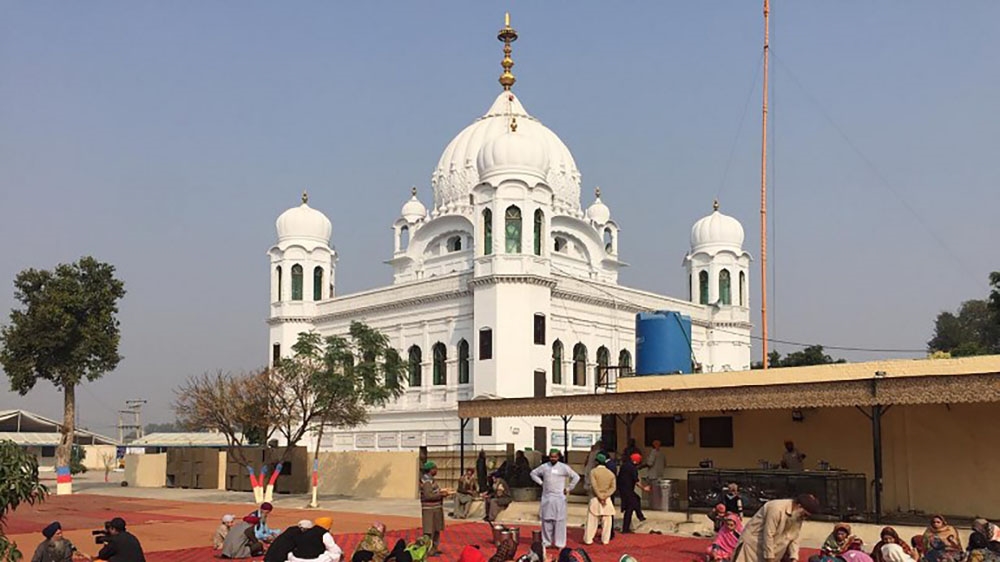
Islamabad/New Delhi – Nestled in the verdant green rice fields of Pakistan’s eastern Narowal district, the white domes of the Sri Kartarpur Sahib Gurdwara make a striking contrast.

Centuries ago, it is said, Guru Nanak, the founder of Sikhism, spent his final days in this small village, farming the fields and formalising many of the practices of what would become a religion followed by more than 25 million around the world.

When he died, in 1539, the legend goes that he was so revered by both Hindus and Muslims that there was a dispute over how his remains should be treated: should he be buried, in the Islamic tradition, or cremated, as Hindus wished.

Today, at the Sikh gurdwara, or place of worship, built over his final resting place, there is both a Muslim grave, and a Hindu samadh, marking his passing.

A few kilometres away, Sikhs gather at a podium to view one of the most sacred sites in their religion, lining up to pay tribute to Guru Nanak by viewing the gurdwara through a set of binoculars.

They are unable to access the site, just five kilometres away, because between the two gurdwaras lies an obstacle that has been almost insurmountable for most: the international border between India and Pakistan.

All that, however, is about to change.

Opening new era

On Wednesday, Pakistani Prime Minister Imran Khan inaugurated a new visa-free corridor between the gurdwara at Kartarpur and the Indian town of Dera Baba Nanak, about six kilometres away.

Sikh pilgrims will be able to travel freely between the two holy sites without visas for the first time since the border was established here in 1947, when India and Pakistan gained independence from Britain.

Khan, inaugurating the project, which will see the construction of a new road and bridge that would link the two sites, spoke of wanting to open a new era of relations between India and Pakistan.

“There have been mistakes on both sides [in the past], but we will not be able to move forward until we break the chains of the past,” said Khan. “The past is there only to teach us, not for us to live in.”

Also present on the occasion were Indian federal ministers Harsimrat Kaur Badal and Hardeep Singh Puri, and provincial Punjab minister Navjot Singh Sidhu.

The inauguration in Pakistan follows a similar event on the Indian side of the border earlier this week, attended by the chief minister of India’s Punjab province and the country’s vice-president. The corridor will formally open next year, in time for the 550th birth anniversary celebrations for Guru Nanak.

It marks a rare moment of positivity in relations between the two South Asian nations, who have fought three wars since gaining independence and between whom dialogue has been stalled for years.

Indian cricketer-turned-politician Sidhu was present at Wednesday’s inauguration [KM Chaudary/AP]

Earlier this year, India cancelled planned foreign minister level talks on the sidelines of the United Nations General Assembly, following the killing of Indian security forces personnel in the disputed region of Kashmir by armed separatists.

India accuses Pakistan of supporting the armed separatist movement in Kashmir, which both countries claim in full but administer separate portions of. Pakistan denies the charge, and alleges that India foments instability by supporting separatists in Balochistan province.

With the opening of the corridor – a long-standing demand of the Sikh community and one which Pakistan proposed be followed through earlier this year – the Pakistani government says it is showing that it is prepared to take concrete steps to ease tensions.

“The story of Kartarpur is as old as the history of Pakistan and India’s independence itself,” Fawad Chaudhry, Pakistan’s information minister, told Al Jazeera.

“We have groups on both sides of the border, some who are pro-peace, and many who do not want [talks] to occur. It is for the government to decide who to support. With this step, we have shown where we stand.”

For Sikhs in the area, the opening of the corridor is the culmination of a long-held dream.

“We have been asking for this for years,” said Ramesh Singh Arora, a Sikh community leader in Narowal who tends to the gurdwara. “It will make it a lot easier for people to come from India and then return to their country.”

With the inaugurations this week, work will now begin on a fenced off road between the gurdwara at Kartarpur and the gurdwaras on the Indian side of the border, which will allow Sikhs to access both sites without a visa.

Previously, Arora says, pilgrims were forced to cross the border at the Wagah/Attari crossing, a journey of more than 200km that involved dealing with a restrictive visa regime and travelling by road for hours.

“It’s a sense of homecoming. This is an emotional moment for the community,” says Bhabishan Singh Goraya, 67, a Sikh resident of nearby Amritsar, in India’s Punjab province. “We have been demanding this for so long.”

Political pressures

Analysts say the Indian government, led by right-wing Prime Minister Narendra Modi, was pressured into opening the corridor due to domestic political pressures.

“Politics did play a factor, with general elections in India less than six months away,” Krishan Pratap Singh, a New-Delhi based analyst, told Al Jazeera. “The Akali Dal, a coalition partner of the ruling Bharatiya Janata Party (BJP) government, is struggling in Punjab with internal strife and the Kartarpur corridor is being seen as an attempt to provide them a much needed fillip.”

It is a point that has been made in Pakistan, too.

“The reaction from Delhi [to the Kartarpur proposal] was always very negative,” said Pakistani Information Minister Chaudhry. “But now that they have elections in Punjab, so the Indian government has changed its position because of that. Internal public pressure has changed it.”

Indian artist Gurmeet Singh poses with a paper model of the Gurdwara Kartarpur Sahib in Pakistan [Narinder Nanu/AFP]

One of the sources of opposition to the corridor within India has been security concerns regarding the free movement of citizens between the two countries, even in the controlled environment of the corridor.

“There are apprehensions that some left-over elements of the [Sikh separatist] Khalistan movement still operate from Pakistani territory,” said Sreeram Chaulia, Dean of New Delhi’s Jindal School of International Affairs.

“They are still capable of appealing to vulnerable Sikh youth, recruiting and mobilising them. India has no way of monitoring once they are inside Pakistani soil.”

Sikh separatists in India began agitating for a separate homeland in the 1970s, but the movement petered out two decades later. India believes there has been an attempt to revive separatist groups in the recent past.

Pakistani analysts, too, warn that while the corridor may be a rare success story, the prospect of any resumption of dialogue between the countries remains dim.

“This is a good move in a situation where there is little hope of any improvement tin the relations between the two countries,” said Zahid Hussain, an Islamabad-based security analyst.

“But I don’t think it will change the overall atmosphere that prevails right now. It’s more for public consumption rather than a move that could change the politics of the region,” he added. 

Hussain points out that the opening of the corridor could not have occurred without backing from Pakistan’s powerful military, which has ruled the country for roughly half of its 71-year history.

This is a good move in a situation where there is little hope of any improvement tin the relations between the two countries

Zahid Hussain, an Islamabad-based security analyst

Army chief General Qamar Bajwa has publicly supported the project, and first discussed it with Indian legislator Sidhu at Prime Minister Khan’s inauguration in August. General Bajwa was also in attendance at the ground breaking on Wednesday.

Pakistan’s government is planning further confidence building measures, Information Minister Chaudhry said, including the easing of visa restrictions on Indian journalists.

“Pakistan has shown a bigger heart,” he said. “We had the attack on the Chinese consulate [last week] and we still didn’t stop this initiative [on Kartarpur] – the Indian support for the Baloch Liberation Army is not a secret.”

Chaudhry was referring to an attack on the Chinese diplomatic mission in the southern Pakistani city of Karachi by Baloch separatists on Friday, which killed two policemen.

Regardless of the tension in the relationship between the states, the Sikh community remains jubilant about the opening of the corridor.

“There are lots of relations on either side. When partition happened, most of our relatives went to India from Pakistan,” said Arora. “We decided to stay. We are Pakistani, but we are one people.”

Asad Hashim is Al Jazeera’s digital correspondent in Pakistan. He tweets @AsadHashim.

Zeenat Saberin is Al Jazeera’s digital correspondent in India. She tweets at @SaberinZe.

Read More

from Trendy News Day https://ift.tt/2AtX7zK
via IFTTT

Lebanon: British radio DJ Gavin Ford murdered in Beit Mery home

news image

Beirut, Lebanon – Gavin Ford, one of Lebanon’s most popular radio presenters, was found dead in his home in the hills of Beit Mery near the capital, Beirut.

Ford, a British citizen, was found reportedly covered in blood in his bedroom on Tuesday, with police confirming it was a murder without putting forward a motive.

Police said that Ford’s car appeared to have been stolen at the same time although they did not directly link the theft to the killing.

An-Nahar, a local newspaper, reported that Ford’s arms had been tied and that he had been strangled with a piece of cloth. The Associated Press news agency also quoted an unnamed official who confirmed Ford was strangled.

Ford’s voice enthralled the Lebanese for 20 years. He was the host of the breakfast show for Radio One, an English-language music channel in Lebanon. A household name, his killing has left his fans in shock.

Hiba Abboud listened to him as a teenager over a decade and a half ago. She remembered him with fondness and said: “Gavin made everyone’s morning. He was always upbeat and his was the cool show to listen to.” Abboud called his untimely demise a loss for Lebanon adding that “A piece of Lebanon is now missing. His voice is a part of growing up in Lebanon.”

Ford arrived in Lebanon from Cyprus in 1995 and joined Radio One. He quickly earned a reputation for his humour on the show ‘Gavin Ford in the morning’, which he hosted along with Olga Habre.

His colleagues at the radio station reached out to the police when Ford did not arrive for work and did not reply to calls. After hearing the news of his death, the station released a statement: “We are heartbroken to announce the passing of our dear Gavin Ford, a member of our team for many joyful years.”

Chris Rampling, the British ambassador to Lebanon, said: “I am shocked and deeply saddened by the death of Gavin Ford, one of Lebanon’s most popular morning breakfast hosts. The thoughts of all at the embassy are with his family, friends and colleagues at this terribly difficult time.”

‘Genuine and sincere man’

Derek Issacs, a British writer based in Beirut, knew Ford for years. He remembers how Ford did a series of stories on a 4-day-old kitten rescued by Issacs last year. Speaking to Al Jazeera, Isaacs remembered Ford as a “Gentle, genuine and a sincere man”.

“He had such an important job and yet he was so down to earth,” Issacs said, adding that the killing as “a complete mystery” to him.

Lebanon is largely seen as a safe shore on the Mediterranean for foreigners and locals alike. However, Ford’s murder, and before him the killing of British diplomat Rebecca Dykes in December last year, raises questions over the safety of expats in the country.

Lebanese police officials have begun questioning the neighbours of Ford in Beit Mery, east of Beirut, to identify recent visitors to his home.

For now, the Lebanese are puzzled. “Who could have killed a man who brought such happiness to our lives,” asked his long-time fan, Abboud.

Ford will be remembered, as one twitter follower put it, as the man who helped them bear Beirut’s chaotic traffic each morning.

Read More

from Trendy News Day https://ift.tt/2r81gFj
via IFTTT