Christopher Sherman, Associated Press
Published 6:37 p.m. ET Nov. 25, 2018 | Updated 8:08 p.m. ET Nov. 25, 2018
CLOSE
Several busloads of mostly Central American migrants traveling in a caravan arrived to Tijuana, Mexico. USA TODAY
TIJUANA, Mexico – Hundreds of migrants approaching the U.S. border from Mexico were enveloped with tear gas Sunday after several tried to make it past fencing and wire separating the two countries.
Earlier in the morning, a group of Central Americans staged a peaceful march to appeal for the U.S. to speed up the asylum claims process, but their demonstration devolved as they neared the crossing with the U.S. and some saw an opportunity to breach the border.
U.S. agents shot several rounds of gas, according to an Associated Press reporter on the scene, after migrants attempted to penetrate several points along the border. Migrants sought to squeeze through gaps in wire, climb over fences and peel back metal sheeting to enter.
Children screamed and coughed in the mayhem of the tear gas. Fumes were carried by the wind toward people who were hundreds of feet away, not attempting to enter the U.S.
Yards away on the U.S. side, shoppers streamed in and out of an outlet mall.
Honduran Ana Zuniga, 23, said she saw other migrants open a small hole in concertina wire at a gap on the Mexican side of a levee, at which point U.S. agents fired tear gas at them.
“We ran, but when you run the gas asphyxiates you more,” she told the AP while cradling her 3-year-old daughter Valery in her arms.
U.S. Customs and Border Protection helicopters flew overhead, while U.S. agents held vigil on foot beyond the wire fence in California. The pedestrian crossings at the San Ysidro port of entry, closed earlier in the day, were reopened about 3:45 p.m. PST, the Border Patrol office in San Diego said via Twitter.
Southbound vehicle lanes were reopened about 5 p.m., the CPB said via Twitter.
In a statement, Homeland Security Secretary Kirstjen Nielsen called the San Ysidro closure a matter of “public safety,” blaming migrants who “sought to harm CBP personnel by throwing projectiles at them.”
“As I have continually stated, DHS will not tolerate this type of lawlessness and will not hesitate to shut down ports of entry for security and public safety reasons. We will also seek to prosecute to the fullest extent of the law anyone who destroys federal property, endangers our frontline operators, or violates our nation’s sovereignty,” Nielsen said.
Earlier Sunday, the group of several hundred migrants pushed past a blockade of Mexican police who were standing guard near the international border crossing. They appeared to easily pass through without using violence, and some of the migrants called on each other to remain peaceful.
They carried hand-painted American and Honduran flags while chanting: “We are not criminals! We are international workers!”
Migrants were asked by police to turn back toward Mexico.
Around 5,000 migrants have been camped in and around a sports complex in Tijuana after making their way through Mexico in recent weeks via caravan. Many hope to apply for asylum in the U.S., but agents at the San Ysidro entry point are processing fewer than 100 asylum petitions a day.
Irineo Mujica, who has accompanied the migrants for weeks as part of the aid group Pueblo Sin Fronteras, said the aim of Sunday’s march toward the U.S. border was to make the migrants’ plight more visible to the governments of Mexico and the U.S.
“We can’t have all these people here,” Mujica told The Associated Press.
Tijuana Mayor Juan Manuel Gastelum on Friday declared a humanitarian crisis in his border city of 1.6 million, which he says is struggling to accommodate the crush of migrants.
U.S. President Donald Trump took to Twitter Sunday to express his displeasure with the caravans in Mexico.
“Would be very SMART if Mexico would stop the Caravans long before they get to our Southern Border, or if originating countries would not let them form (it is a way they get certain people out of their country and dump in U.S. No longer),” he wrote.
Mexico’s Interior Ministry said Sunday the country has sent 11,000 Central Americans back to their countries of origin since Oct. 19. It said that 1,906 of them were members of the recent caravans.
Mexico is on track to send a total of around 100,000 Central Americans back home by the end of this year.
After the game ended, the Cleveland Browns rookie quarterback encountered former coach Hue Jackson, who was hired by the Bengals shortly after being fired by the Browns during the season.
That apparently didn’t sit well with Mayfield and their awkward exchange as the teams were leaving the field was caught by TV cameras and photographers. The quarterback told the media afterward he wasn’t in any mood for pleasantries.
“He was here trying to tell us to play for him. Then he goes to a team we play twice a year,” Mayfield said. “Everybody can have their spin on it, that’s how I feel.”
Ohio Gov. John Kasich, a fierce critic of President Donald Trump who challenged him for the Republican nomination in 2016, is thinking “very seriously” about another run for president in 2020.
Kasich, a Republican who is finishing his final term as governor in January, said Sunday on ABC’s “This Week With George Stephanopoulos” that he is having “earnest conversations that go on virtually every day” with his friends and family about running in 2020.
“We need different leadership, there isn’t a question about it,” Kasich said. “I’m not only just worried about the tone and the name-calling and the division in our country and the partisanship, but I also worry about the policies.”
Among his policy concerns, Kasich cited the rising national debt, the inability to find a solution to the immigration problem, isolationism and the “rotten deal with the Saudis to look the other way” after the murder of Washington Post columnist Jamal Khashoggi.
Outgoing Ohio Gov. John Kasich on considering a 2020 run against President Trump: “I’m not only just worried about the tone and the name-calling and the division in our country and the partisanship, but I also worry about the policies” https://t.co/GlcWTIu29g#ThisWeekpic.twitter.com/emt3Qv0ITv
“I’m worried about our country in the longterm. So, the question for me is, ‘What do I do about this?’” he said. He added that he has to consider whether to run only if he thinks he can actually win, or if it would be worth it to run to “send a message that can disrupt the political system in this country.”
Kasich, 66, said he would consider a symbolic run when asked by host George Stephanopolous if he realistically thought he could wrest the nomination from Trump, who has solid support among Republican voters.
Ohio Sen. Sherrod Brown, a Democrat who just won re-election in the increasingly Republican state, also said on “This Week” that he is “seriously thinking about” a run for president in 2020.
“You know, I didn’t have this dream of being president of the United States all my life,” said Brown, 66. His lifelong dream, he said, had been to play centerfield for the Cleveland Indians, but admitted that “door obviously has closed.”
Brown said he hadn’t gone to Iowa or New Hampshire – the usual stops for presidential hopefuls – or “done any of those things to prepare, which is fine because the Iowa caucuses are 13 months away.”
He said other Democrats should take up his working-class focus because that is how he believes Trump can be defeated in the industrial Midwest.
“I hope that candidates running in the Democratic primary talk about the dignity of work, talk about respecting work, talk about when you work hard and play by the rules you ought to be able to get ahead,” he said.
Brown decried stagnant wages for workers amid record profits and sky-rocketing executive compensation.
“We’ve seen lots of heartache in my state and throughout the industrial Midwest,” while the White House “looks like a retreat for Wall Street executives,” Brown said.
Right to Life of Greater Cincinnati’s annual banquet last month wasn’t a tribute to John and Barbara Willke, but it could have been.
The band played a Johnny Cash song about the fate of mankind on Judgment Day. The emcee praised anti-abortion activists as patriots and derided secular journalists as dishonest. And as everyone headed to the buffet for chicken and roasted potatoes, a Catholic priest led a prayer thanking God for President Donald Trump and Supreme Court Justice Brett Kavanaugh.
Faith. Country. Media. Politics. All pillars of a movement the Willkes helped build more than 50 years ago at their kitchen table in Cincinnati, where they stuffed envelopes, wrote speeches and hashed out a strategy to abolish abortion in America.
The Willkes, who became a pro-life power couple after founding the nation’s first Right to Life chapter here, are gone now.
But their strategy for winning the abortion war is very much alive among those still in the fight.
At the annual banquet on Oct. 18, more than 600 turned out at the Sharonville Convention Center for the kind of revival-tent celebration the Willkes would have loved. They came to give money, praise God and cheer on a victory they believe is getting closer by the day.
“The idea that we can overturn Roe v. Wade is no longer years away,” said Meg Wittman, Right to Life’s director in Cincinnati.
“Just think about it,” she told the crowd, pausing to let the idea sink in. “It is within our grasp.”
Activists on both sides of America’s abortion barricades believe she could be right. Kavanaugh’s arrival at the Supreme Court puts Roe v. Wade, the 1973 decision legalizing abortion, in more peril than at any time in the past 45 years.
Whether that threat is met with joy or fear, the importance of the role John and Barbara Willke played in making it possible can’t be understated. They, quite literally, wrote the how-to manual for overturning Roe.
“What they started has grown into something really huge,” said Brad Mattes, a longtime friend and the president of the Life Issues Institute in Cincinnati.
That seemed unlikely in the beginning, almost five decades ago, when no one was certain the Willkes knew what they were doing.
Including the Willkes.
After Roe, the house ‘went crazy’
He was a doctor, she was a nurse. They were raising six kids on Cincinnati’s West Side while trying to run John’s family medical practice.
As devout Catholics, they’d spent what little spare time they had lecturing around the country on sex education from the church’s perspective, focusing on love, marriage and the immorality of contraception.
When a priest asked them in 1970 to expand their lectures to abortion, the Willkes said no.
“We’re not about to open that one,” John Willke recalled saying, years later. “If we start talking about abortion, it will swallow us up.”
Three years later, Roe v. Wade happened. The ruling stunned the Willkes. They saw it as a sign the culture was changing, tragically, in their view, and they had to act.
They turned their kitchen into a war room. In the morning, their children ate cereal at a table covered with photos of fetuses in various stages of development and with notes for their parents’ next lecture, which now focused entirely on abortion. At night, the Willkes huddled around the same table for hours, talking strategy, planning their next move.
Their oldest daughter, Marie Meyers, remembers the phone ringing constantly, visitors in and out of the house, strangers sleeping on the couch.
It had taken over their lives. It was swallowing them up.
“Our house went crazy,” Meyers said. “It was a seat-of-the-pants operation.”
For years, throughout the 1970s and most of the 1980s, the Willkes failed more than they succeeded.
Right to Life and other groups challenged Roe v. Wade in court and lost case after case. Judges generally considered the matter settled law: Abortion was legal, and states couldn’t restrict a woman’s right to have one.
Angry anti-abortion activists took to the streets. They blocked clinic entrances, chained themselves to doors and harassed patients. Some turned violent, shooting doctors and firebombing clinics, including Planned Parenthood’s clinic in Cincinnati.
“It was a really scary time,” said Toni Van Pelt, president of the National Organization for Women.
Al Gerhardstein, a Planned Parenthood lawyer, was running to court constantly in those days, seeking protective orders from judges to keep clinics open. “It was all about finding out how far they could go in interfering with a woman’s right to choose,” he said of the protests.
Like many of the protesters, the Willkes objected to abortion on religious grounds. They considered it an evil act, the ending of a life. But unlike many of them, the Willkes were pragmatists.
They opposed violence at clinics and said it was unrealistic to seek an outright ban on abortion so soon after Roe. It’s OK to be angry, they said, but be patient, too.
“We’re not going to win in giant steps,” Barbara Willke told The Enquirer in the 1990s, explaining the strategy following the Roe decision. “We’re going to win in small steps.”
The first step was changing the abortion debate itself. The Willkes realized the “right to choose” slogan had been effective for the abortion rights side, so they set out to find a forceful counter argument.
They launched an ad campaign, mostly from photos and drawings assembled at their kitchen table. It was low budget but high volume. Billboards and bumper stickers featuring smiling babies soon became ubiquitous on America’s highways.
Choose life. Abortion stops a beating heart. Real feminists are pro-life.
Then the Willkes did what they did best. They created a lecture series based in part on their Handbook on Abortion, a question-and-answer book filled with advice for those trying to win converts to the pro-life cause.
They’d written the book in 1971 when Meyers, their daughter, told them she needed more information to argue with pro-choice students she’d met in college. She bought her parents a Dictaphone and promised to type up whatever they had to say.
“There wasn’t anything like it,” Meyers said. “Dad was a master with words. He could cut right through in simple language, so everyone could understand.”
The first printing was 5,000 copies, but sales exploded after Roe v. Wade. It’s since sold more than 1 million copies.
The book and lectures made the Willkes the friendly faces and calm voices of a cause that had not always been viewed as friendly or calm. They appeared on so many TV and radio shows that friends started calling them the “mother and father of the pro-life movement.”
But they weren’t exactly Ward and June Cleaver. Their message may have been delivered coolly, but it was, in many ways, just as strident as those heard on the streets outside abortion clinics.
They used words such as “kill” and “murder” and “slaughter” when referring to abortion. They described clinics as “abortion mills” participating in a “holocaust.” They compared the work of clinic doctors to that of the Nazis.
Their lectures, delivered in the matter-of-fact tone of a college professor, included slideshows of aborted fetuses in buckets and garbage cans.
They also weren’t above the occasional publicity stunt. On The Phil Donahue Show, John Willke, known to his friends as Jack, shocked the host and the audience by taking a preserved human fetus out of a bottle and holding it up to the camera, wiggling its tiny arm with his index finger.
“There was pandemonium,” the Willkes recalled in their book, “Abortion and the Pro-Life Movement.” “Phil, for once in his career, was speechless.”
Politics, patriotism and abortion
Taking on talk show hosts was great theater, but the Willkes knew they’d have to broaden their campaign if they were serious about overturning Roe.
They and others at Right to Life set about making the group a political player.
The organization began publishing “pro-life ballots” to endorse candidates up and down the ballot, from President of the United States to county auditor. More important, it created a political action committee to raise money for them.
It didn’t matter whether the candidates would, if elected, have the power to do anything about abortion, only that they were willing to pick a side in the fight.
In the Willkes’ view, this was no small thing. It made abortion a campaign issue in every election, local or national. It forced people to think about abortion every time they cast a ballot.
“We’d identify and turn out pro-life voters,” Mattes said. “The movement’s strengths are in the grassroots.”
Winning elections mattered for two reasons: First, those elected to Congress or legislatures could make laws restricting abortion. Second, elected or appointed judges could uphold those new laws, pecking away at Roe v. Wade.
To win support from the courts and lawmakers, the Willkes moved beyond the argument closest to their hearts. Religion alone would not carry the day, they decided, so they started talking more about “human rights” and “civil rights.”
They modeled their approach on 19th Century abolitionists who had argued for years that slaves should be considered people, not property. In this view, the fetus was the person in need of constitutional protection.
Abortion wasn’t just anti-God, they said. It was anti-American.
Over time, the strategy paid off. Republican candidates embraced the cause and made pro-lifers a crucial part of their base. In turn, they appointed like-minded judges sympathetic to the anti-abortion side.
Court victories soon followed. Waiting periods, parental consent laws, mandatory ultrasounds, new licensing rules. Anything that made abortions harder to get.
If the Willkes found something worked in one state, they’d try it in another and another, sometimes helping to write the bills lawmakers would introduce.
Gerhardstein, the Planned Parenthood lawyer, watched the changing landscape the way a general might watch his troops being chased from the battlefield. He didn’t like what the Willkes were doing, but he had a grudging respect for the way they were doing it.
“The Willkes were never part of the strategy to get in your face and grab you and violently declare war,” Gerhardstein said. “They were in Columbus. They were lobbying the state legislature.”
The work was demanding, keeping the Willkes on the road for days or weeks at a time. Meyers said she often had to sign permission slips and check homework for her younger siblings because her parents were away so much.
“I did my best, but I’m sure they missed their parents,” Meyers said. “I don’t think anyone would begrudge it, but they were gone a lot. It was a sacrifice.”
Mattes said the Willkes felt they’d become so identified with the movement it was difficult to turn the job over to others. People expected things of them.
Those expectations included meeting with leaders they hoped to win over, such as Ronald Reagan and George H. W. Bush, who declared themselves “pro-life” while running for president.
Mattes said John Willke spent four hours with Bush at the then-candidate’s summer home in Kennebunkport, Maine, before the 1988 election, trying to lock in his support with the same lecture and slide show he and Barbara had done for years.
To opponents, the Willkes’ traveling lectures looked like propaganda. They accused them of lying, doctoring photos and using junk science to cover for the weaknesses in their case against legalized abortion.
The Willkes’ most notorious claim was that women were unlikely to get pregnant during what they called an “assault rape,” because the female body shuts down its reproductive system when under stress. “The tubes are spastic,” John Willke told The New York Times.
The theory, refuted by experts on reproduction, appealed to anti-abortion activists who didn’t want to include a rape exception in a future abortion ban.
Van Pelt said ideas like that send a clear message: “They don’t care about women.”
A Supreme Court battle looms
Meyers said no one who knew her parents would ever say such a thing.
Young pregnant women stayed in her house all the time while she was growing up, she said. Some had been put out by their parents, others by boyfriends. But always, she said, they found an open door at the Willke house.
“We had pregnant women in our house all the time,” Meyers said. “You can’t just say to a girl, you have to have this baby. You have to help them.”
Abortion rights advocates have said that’s all well and good, but not every woman seeking an abortion has a place to go, or even feels she needs to go anywhere. She just wants to make the most personal of decisions on her own. She wants to choose.
Van Pelt said she’s not sure how much longer that option will be available, given the current makeup of the Supreme Court. Already, she said, new laws championed by the Willkes have restricted access to abortion across the country.
Ohio now has 17 measures that limit abortion and nine remaining clinics, down from 14 in 2013. About 40 percent of women in the United States now live in a county without an abortion clinic.
“They’ve been setting this up for a long time,” Van Pelt said of the looming court battles. “I don’t know where we’re headed.”
Mattes said the Willkes knew. He said his friends saw how the battle would play out decades ago and they worked for more than half their lives to win it.
It didn’t matter that their work failed to significantly move public opinion: A Pew Research Center poll this year found 58 percent of Americans thought abortion should be legal in all or most cases, compared to 60 percent in 1995.
What mattered was they moved the opinion of the voters, politicians and judges who could change laws and, ultimately, challenge Roe v. Wade. They identified their target audience and created a political and cultural force.
As Mattes watched Kavanaugh’s confirmation hearings on TV last month, he thought of the early days of the movement and the anger and frustration so many abortion foes felt after the Roe decision.
He saw that same anger in the resistance to Kavanaugh’s Supreme Court nomination. He saw it in the accusations against Kavanaugh, the tough questions from Democratic senators, the protests in the street.
Mattes thought he knew why they were so upset. It wasn’t the allegations of sexual assault against him, Mattes said, it was the threat his nomination posed to abortion rights.
Soon, Roe v. Wade could be history.
“That time is coming,” Mattes said. “If it does, we’ll be standing on the shoulders of Jack and Barbara Willke.”
As the Thanksgiving holiday weekend draws to a close, President Donald Trump took a moment Sunday on his Twitter feed to humbly thank someone he believes is owed a debt of gratitude: himself.
Specifically, the president thanked himself for the current low oil prices, although it was unclear what presidential policy he believed responsible for the cheap fuel costs.
“So great that oil prices are falling (thank you President T),” he tweeted. “Add that, which is like a big Tax Cut, to our other good Economic news. Inflation down (are you listening Fed)!”
According to the International Energy Agency, oil supplies are already ample and production from Russia, Saudi Arabia and the U.S. is at record levels, which is driving prices down further.
So great that oil prices are falling (thank you President T). Add that, which is like a big Tax Cut, to our other good Economic news. Inflation down (are you listening Fed)!
On top of that, Iran has had higher-than-expected petroleum output because the Trump administration’ extended waivers to Iran on oil exports despite reimposing sanctions on the country as the U.S. backs out of an Obama-era deal on its nuclear program.
And experts say the U.S. is pressuring Saudi Arabia to keep up production. Last week, Trump announced that he did not intend to impose sanctions on Saudi Arabia for the murder of Washington Post columnist Jamal Khashoggi, despite U.S. intelligence reports linking his death to Crown Prince Mohammed bin Salman.
Trump’s decision not to take action against the Saudi monarchy could give him leverage in the effort to keep up the country’s oil production. On Wednesday, the president thanked Saudi Arabia for low oil prices in a tweet that came a day after the White House announced that it would not punish “the largest oil producing nation in the world” for a single journalist’s murder.
Later Wednesday, Trump said he “just can’t win with the Fake News Media” and lamented that the media was not focused on the gas prices he “pushed so hard” for.
Many Trump critics pounced on his “thank you President T” tweet Sunday, mocking the president for taking credit for lower gas prices and his choice of nicknames.
-Gas prices are 35 cents/gal higher than Nov. ‘16 -Dropping oil prices and down- for-the-year stock market have economists warning of recession -if you are going to call yourself President T, you have to wear chains and a mohawk https://t.co/PDhOA1JMXk
Trump giving himself the friendly nickname “President T” makes me deeply uncomfortable. Like he’s trying to cast himself in the role of the good dad all of the neighborhood kids love in a 1950’s TV show. https://t.co/ioprYxY2Wq
Camp Fire’s effect on respiratory health including coughing wheezing and tearing up could be seen for weeks and even longer. Veuer’s Angeli Kakade has the story. Buzz60
Fire-frazzled Northern California finally got some good news Sunday: An epic blaze that ravaged the countryside, killed dozens and wiped out thousands of homes was 100% contained.
The Camp Fire – the nation’s deadliest in a century – was contained within 153,336 acres, the California Department of Forestry and Fire Protection said.
The wildfire, which ignited in a rural area Nov. 8 before consuming the town of Paradise and roaring through nearby communities, has left a staggering toll. At least 85 people have been killed; 249 are listed as missing. Nearly 19,000 buildings, most of them homes, have been destroyed.
Thousands of people packing emergency shelters, hotels and campsites have lives in limbo, uncertain whether they will have communities to return to. The blaze has destroyed more structures than the state’s other seven worst wildfires combined.
Fire crews battling the blaze got a boost last week in the form of the first winter storm to hit the state this year. About 7 inches of rain fell over the burn area for three days without causing major mudslides, said Hannah Chandler-Cooley of the National Weather Service.
The wet weather helped extinguish hot spots and enabled responders to ramp up the search for additional victims, particularly in Paradise, a retirement community with a population of 27,000.
Sunday, crews continued sifting through muddy ash for human remains in and around the devastated town. Fire officials fear the death toll will climb as evacuees returning home find bodies in the singed-out shells of their homes.
Search crews pressed on despite the grim task. “The guys will never say it’s hard,” crew member David Kang said. “But it is.”
In Southern California, more residents returned to areas evacuated because of another wildfire as crews repaired power, telephone and gas utilities.
Los Angeles County sheriff’s officials were in the last phase of repopulating Malibu and unincorporated areas of the county. At the height of the fire, 250,000 fled their homes.
Three people died, and 1,643 buildings, most of them homes, were destroyed.
Contributing: Kirk Bado, USA TODAY; the Associated Press
Trump doesn’t understand most things, and that appears to include how giving thanks on Thanksgiving works.
While the rest of America spent the holiday expressing their gratitude for family, health, plentiful meals, loved ones, and a host of other blessings, the President seems to have confused the spirit of Thanksgiving with the opportunity for a #SelfLoveSunday post.
So great that oil prices are falling (thank you President T). Add that, which is like a big Tax Cut, to our other good Economic news. Inflation down (are you listening Fed)!
Like the world’s most petty ass dad, he thanked himself on behalf of all us ungrateful citizens — who, by the way, have ample reasons to express nothing but contempt for him taking credit for allegedly improved oil prices.
President T may not have the humility to express gratitude to anyone but himself, but he also knows he needs to keep his BFF, Saudi Arabia, happy. “Thank you to Saudi Arabia, but let’s go lower!” he tweeted regarding oil prices on Wednesday, Nov 21.
The Saudi Arabian government, you’ll remember, openly admitted to the horrifying murder of Washington Post journalist Jamal Khashoggi. That didn’t stop Trump from refusing to condemn the country and its officials for this abhorrent crime against human rights and decency.
Instead, he recently released a statement reiterating his appreciation for his Saudi Arabian allies in light of this appalling act.
Oil prices getting lower. Great! Like a big Tax Cut for America and the World. Enjoy! $54, was just $82. Thank you to Saudi Arabia, but let’s go lower!
Honestly, we’re just surprised President T didn’t refuse to pardon the turkey this year in order to save a pardon for himself. After all, there’s already talk of Congress looking into his suspicious ties to the Saudis — which is, of course, on top of the ongoing investigation into Russian collusion.
Several busloads of mostly Central American migrants traveling in a caravan arrived to Tijuana, Mexico. USA TODAY
The incoming Mexican administration of Andrés Manuel López Obrador now says that there is no deal with the United States that would allow asylum seekers to wait in Mexico while their cases are decided after reports Saturday indicated such an agreement had been reached.
On Saturday, The Washington Post reported that a deal between the Trump and Obrador administrations would begin a “Remain in Mexico” policy to replace the existing system – ofter derisively called “catch and release” – of permitting migrants to remain in the United States while their cases move through the courts, a process that can take years.
“For now, we have agreed to this policy of Remain in Mexico,” Mexico’s incoming interior minister, Olga Sánchez Cordero, told the Post. She described the policy as a short-term solution, while the “medium- and long-term solution is that people don’t migrate.”
But later , Sánchez said, “There is no agreement of any sort between the incoming Mexican government and the U.S. government.” Sánchez, who will serve as Obrador’s top domestic policy official when he takes office on Dec. 1, did not explain the reason for the conflicting statements.
President Donald Trump had appeared to tout the agreement in tweets, declaring, “Migrants at the Southern Border will not be allowed into the United States until their claims are individually approved in court.”
Migrants at the Southern Border will not be allowed into the United States until their claims are individually approved in court. We only will allow those who come into our Country legally. Other than that our very strong policy is Catch and Detain. No “Releasing” into the U.S…
“We only will allow those who come into our Country legally. Other than that our very strong policy is Catch and Detain. No ‘Releasing’ into the U.S,” the president tweeted Saturday. He repeated his threat to close the U.S.-Mexico border if “necessary.”
“There is no way that the United States will, after decades of abuse, put up with this costly and dangerous situation anymore!” he added.
Sánchez said the migrants also pose a major headache for Mexico.
“Mexico has open arms and everything, but imagine one caravan after another after another. That would also be a problem for us,” she told the Post.
Rep. Elijah Cummings, D-Md., said Sunday that he does not support a “Remain in Mexico” agreement “because that’s not the law.”
“They should be allowed to come in, seek asylum, that’s the law,” Cummings, who is expected to chair the Oversight Committee when his party takes control of the House of Representatives in January, told “Meet the Press” host Chuck Todd.
“I think we have a system that has worked for a long time. This president’s come in, wants to change it, that’s up to him. But now the Congress has got to stand up and hopefully they will,” Cummings said.
Stephanie Leutert, director of the Mexico Security Initiative at the University of Texas at Austin, said on Twitter that officials from the U.S. and Mexico hope that a “Remain in Mexico” policy could deter Central American migrants fleeing gang violence and poverty from seeking asylum in the U.S.
“This is the most recent move by the Trump admin to deter asylum seekers from coming to the border,” Leutert said. “The idea is to take away the ability to live & work in the US while cases are processed. The hope is that asylum seekers will not want to live in MX for months/years and won’t come.”
She said the policy, if enacted, would likely cut the number of asylum seekers, but cautioned that it could persuade others to try and illegally cross the border “undetected.”
If enacted, it would likely decrease number of asylum seekers. While some people will still find it preferable to wait in these cities – especially those with more money – others are more likely to look elsewhere. Others may even try to sneak in to the USA undetected.
About 5,000 Central American migrants have come to Tijuana, a city of 1.6 million people just across the border from California, as part of a caravan that traveled from Honduras then through Guatemala and Mexico. Many of the migrants fleeing poverty, corruption and violence in their home countries.
Tijuana Mayor Juan Manuel Gastelum on Friday declared a humanitarian crisis and many of his city’s residents have protested the migrants’ presence as Tijuana struggles to handle their arrival. Most of them are camped in a sports complex where local churches and charities have been helping them with assistance from Mexican government agencies.
Last update: 11:50 a.m. ET. Next update: By 4 p.m. ET.
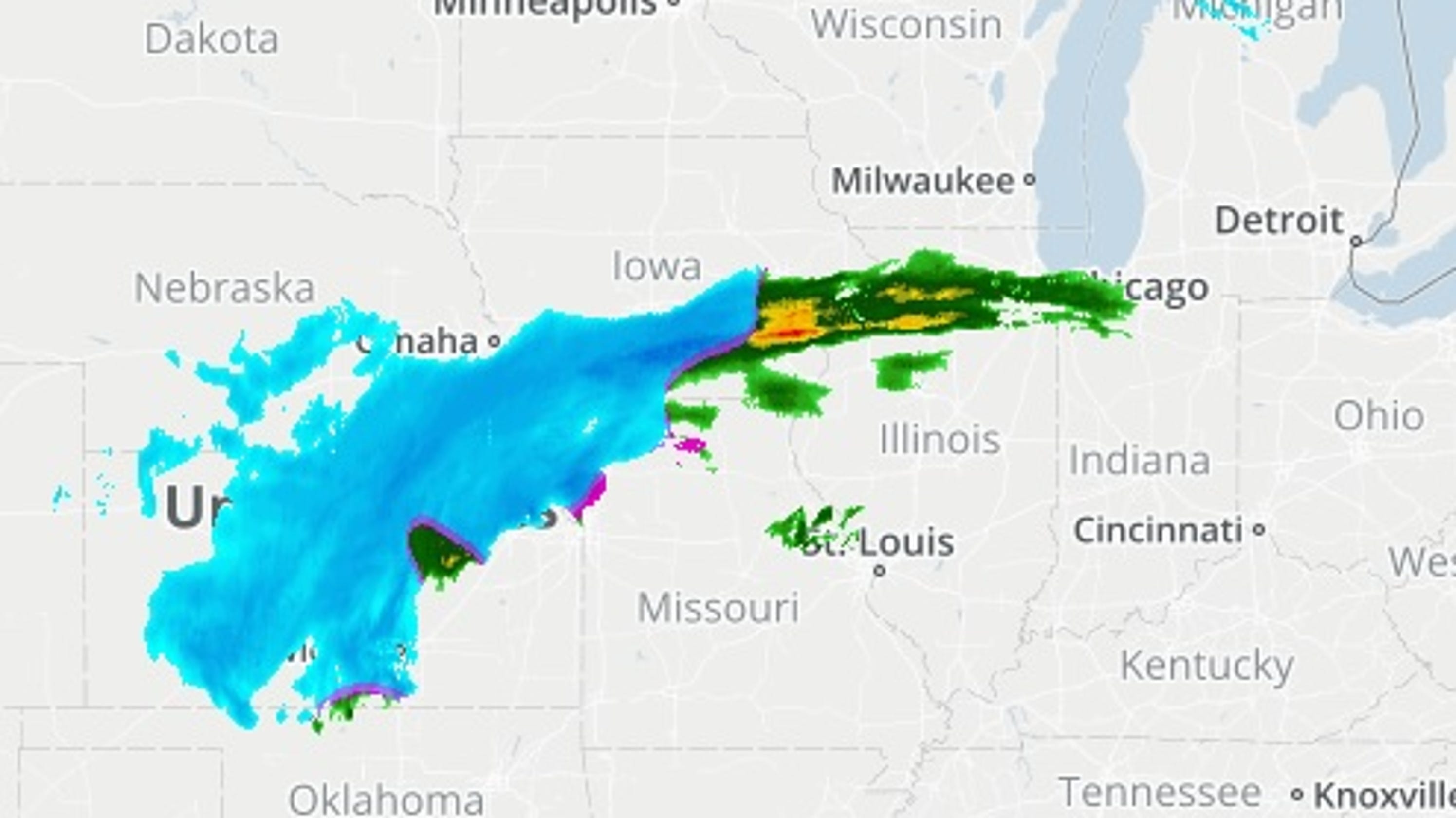
Airline passengers faced delays and cancellations across the Midwest on Sunday, one of the busiest travel days of the year as throngs of holiday travelers make their way home from Thanksgiving.
Most of those came in the Midwest, where a winter storm was bringing snow, ice and rain to a swath of the Great Plains and Midwest. Blizzard conditions were possible Sunday across parts of Iowa, Illinois, Missouri and Wisconsin.
The weather has led to flight cancellations at a number of airports in the region, including Kansas City, Missouri; Omaha, Nebraska; and Des Moines and Cedar Rapids, Iowa.
But the biggest impact to air travelers was in Chicago, where more than 200 combined arrivals and departures had been canceled as of 11:50 a.m. ET at the city’s busy O’Hare airport.
O’Hare is a major connecting hub for both United and American, and many of the cancellations there were on affiliate airlines that fly regional flights under the United and American brands. By FlightAware’s count. the cancellations accounted for more than 7 percent of Sunday’s entire schedule at O’Hare. Around 100 of O’Hare’s cancellations were made pre-emptively by Saturday night as storm forecasts solidified.
Cancellations also sprouted up Sunday morning across town at Chicago’s Midway Airport, a major base for Southwest Airlines. A combined 122 arrivals and departures — about 15 percent of the entire day’s schedule there — had been canceled there as of 11:50 a.m. ET.
Many major airlines were waiving change fees.
The details vary by carrier, but – generally – the waivers allow affected customers to make one change to their itineraries without paying change fees that can cost $200 or more.
About that donation, senator. Major League Baseball would like it back.
MLB has requested that a Mississippi Republican candidate for the U.S. Senate return the $5,000 donation it made to her campaign in the wake of controversial comments by the candidate.
“If he invited me to a public hanging,” Hyde-Smith said on Nov. 2 while in an embrace with a cattle rancher, “I’d be on the front row.”
MLB’s donation was made on Friday, three weeks after Hyde-Smith’s comment.
“The contribution was made in connection with an event that MLB lobbyists were asked to attend,” an MLB spokesperson said in a statement given to USA TODAY Sports. “MLB has requested that the contribution be returned.”
“If he invited me to a public hanging, I’d be on the front row”- Sen. Cindy Hyde-Smith says in Tupelo, MS after Colin Hutchinson, cattle rancher, praises her.
Several businesses, including Walmart, have asked for the return of donations over her comment.
San Francisco Giants owner Charles B. Johnson and his wife, Ann, also each donated $2,700 to the campaign, according to the San Francisco Chronicle.
After considerable backlash, Hyde-Smith apologized during a televised debate with Democrat Mike Espy, saying, “There was no ill will, no intent whatsoever in my statements.”
Espy is vying to become the Mississippi’s first African-American in the Senate since the Reconstruction.
Hyde-Smith also was captured on video making a joke about voter suppression, and photos posted to Facebook in 2014 show her with Confederate items and a caption reading, “Mississippi history at its best!”


/https%3A%2F%2Fblueprint-api-production.s3.amazonaws.com%2Fuploads%2Fcard%2Fimage%2F888089%2F10eaa080-a7ff-4f85-a4b0-6a64e12249ee.jpg)



 trendynewsday