Lebanon in stalemate over new cabinet: What’s the hold up?

news image

Beirut, Lebanon  After nearly a decade of turbulent politics and postponed elections, Lebanon held its first general election since 2009 this May.

Six months later, parties are still wrangling for ministerial slots to form a government.

A country defined by a rigid sectarian political balance where custom dictates how cabinet seats are allocated, Lebanon is no stranger to political stalemate.

Back in 2009, it took five months to form a government, and it took twice as long to appoint a new one in 2014.

But with concerns that an already-frail economy could go into a dangerous tailspin, a new government is urgently needed to launch the fiscal reforms required to unlock billions of dollars in conditional loans and grants Lebanon secured from lenders in April.

Along with the high stakes and dizzying political horse-trading, results from the new proportional electoral system, first used in May, have complicated the cabinet formation talks ongoing for months.

The complexity is compounded by regional and international dynamics: the Saudi Arabia-Iran regional rivalry, the future of the Syrian regime next door and the attention these issues attract from Washington.

Political representation

There are several factors behind the hold-up, but “at the core of it is the political equilibrium” at both the national and regional level, Johnny Mounayar, a political commentator, told Al Jazeera.

“Each side has its own calculations.”

At a recent press conference in Beirut, Prime Minister-designate Saad Hariri said he has a government line-up ready, but that Hezbollah, the Iranian-backed Shia paramilitary-cum-political movement, is obstructing the formation of a national unity government.

Constitutionally, it is the prime minister and president’s task to form a cabinet.

However, in a country that recognises 18 official religious sects, all with a stake in governance, cabinet selection is more about political representation than technocratic efficiency.

The country’s 15-year civil war was brought to an end in 1990 through a power-sharing system that divided the legislature equally among Muslims and Christians, reinforcing an older formula that dictated the president must be Maronite Christian, the prime minister a Sunni Muslim, and the speaker of parliament a Shia Muslim.

Hariri’s comments addressed Hezbollah’s demand that one of their Sunni allies be awarded a ministerial seat, which would come out of the premier’s share – a request Hariri rejects outright.

“The way Hariri sees it is that he has the exclusive power of the Sunnis,” said political analyst Kamal Wazne. But the election results “show[ed] there is a portion of the Sunnis that did not side with the mainstream”.

‘Sunni tangle’

Hariri’s Saudi-backed Future Movement (FM) party suffered losses in the May parliamentary election: out of 27 legislative seats allocated to Sunnis, Hariri’s bloc secured only 17 – a result Hariri blamed on the new electoral system.

Although FM still represents a majority of Sunni voters, for the first time, Hariri no longer monopolises representation of the Sunni community.

The PM-designate does not want to acknowledge an outcome in which 40 percent of Sunni MPs were “elected out of his political power,” said Wazne.

The whole issue is about “fair representation in government,” Wazne told Al Jazeera, explaining Hezbollah’s rationale for insisting its Sunni allies be granted a ministerial portfolio. “So, excluding them is actually not democratic.”

Lebanon’s cabinet mirrors the allotment of parliamentary seats.

Its 30-minister cabinet is split equally between Christians and Muslims, divided in turn among each confession’s sects. Sunnis receive six seats in the Muslim share, Shia get another six, and Druze get three.

The cabinet must also reflect electoral results. While there is no official ratio of parliamentary seats to cabinet roles, it is largely understood among political leaders that a bloc of five or more MPs qualifies for one ministry.

Enter the six MPs Hezbollah is lobbying for: they ran on separate parliamentary tickets.

In other words, they do not constitute a single bloc – an argument the Hariri camp has used to call Hezbollah’s motives into question.

The debate over the Sunni MPs, dubbed in Lebanon the “Sunni tangle”, is only the latest episode of political manoeuvering that has defined the formation talks.

For months, Christian leaders debated how many seats to allot to the Lebanese Forces, one of the country’s largest parties and a rival of the president’s Free Patriotic Movement. An agreement was only reached in October.

Foreign dynamics

The “Sunni tangle” is a microcosm of Lebanon’s inter- and intra-sectarian politics, as well as entrenched foreign interests.

Lebanon’s pluralism “leads to this competition between factions and leaders,” said Anthony Elghossain, a Lebanese writer focused on Washington-Beirut relations.

“That provides space for regional intervention, often because the leaders themselves recruit regional or international actors to participate in the politics of Lebanon.”

Hezbollah’s demand for a single ministerial seat “practically, doesn’t change anything, but it is symbolic,” said Mounayar.

First, it would weaken Hariri’s position as the “father of the Sunnis,” a term he often uses himself.

But it also serves as a marker of Saudi influence, somewhat derailed of late, in the face of Iranian sway over the country and neighbouring affairs, Mounayar said.

The killing of journalist Jamal Khashoggi has strained Saudi Arabia’s ties with the international community.

Iraq’s recent parliamentary election tilted the scales in Iran’s favour even more than before.

Meanwhile, in Yemen, the Saudis are being pressured into a ceasefire with the Houthis, backed by Iran.

All these events indicate a “game change,” which in turn, is a “relief” for Hezbollah, Mounayar explained.

The “regional climate is appropriate” for Hezbollah “to nurture” the insistence that the Sunni MPs outside Hariri’s camp be represented in the cabinet, he said.

Some of these MPs are believed to have ties to Syria’s regime, which Hezbollah has been fighting alongside during the country’s civil war.

With that conflict nearing an end, granting a cabinet seat to an affiliated MP could strengthen Damascus and Tehran’s influence over Lebanese politics.

The way Hariri sees it is that he has the exclusive power of the Sunnis, but the election results show[ed] there is a portion of the Sunnis that did not side with the mainstream

Kamal Wazne, political analyst

In recent weeks, the US expanded financial sanctions on Hezbollah, as well as individuals or entities who knowingly “assist, support, recruit, or fundraise” for the group.

Reports have surfaced of Washington delivering a message to Hariri, subtly warning against Hezbollah being awarded the Health Ministry, often categorized as a “service ministry,” in reference to the patronage system practised and endorsed by Lebanon’s sectarian leaders.

To some in Washington, the ministry appears to be an avenue for Hezbollah to bypass financial pressures.

To Hezbollah, it is the best way to provide services for its base through state resources.

The US has long been concerned that increased Hezbollah influence in government will negatively shape issues ranging from Hezbollah’s own arsenal to the future of Syrian refugees in Lebanon.

Yet the intended impact of US sanctions and the concern over Hezbollah potentially running the Health Ministry both appear detached from the on-the-ground reality of Lebanese politics, analysts told Al Jazeera.

“They don’t understand Hezbollah,” said Wazne, meaning the US and other anti-Hezbollah actors. “Once they understand Hezbollah, then they know how this organisation gets tougher under scrutiny.”

“What other option do the Americans have?” asked Mounayar, referring to the “Sunni tangle”.

“The alternative is chaos; that would be a great service to Hezbollah,” he said. “We learned this from experience: Hezbollah can control chaos and use it to its advantage,” Mounayar added, referring to an episode in 2008 when Hezbollah used the threat of violence as a negotiation tactic with the government.

“One ministerial seat is not that big a price,” he said, predicting that Washington and Paris, which also influences Lebanese politics, would ultimately prioritize political stability.

President Michel Aoun and his son-in-law, current Foreign Minister Bassil Gebran, offered a solution to the Hariri-Hezbollah stalemate: Aoun would give the Sunni MPs one cabinet seat from the Maronite Christian share. But the offer was rejected.

Another suggested solution was to award a cabinet position to a candidate of the Sunni MPs’ choosing, creating two layers of separation from Hezbollah. This was also reportedly rejected.

But Mounayar said the rejections were “tactical moves” taken by Hezbollah-backed MPs to up the ante before an eventual compromise.

‘Everything and nothing at stake’

“Everything and nothing is at stake,” Elghossain said about the government’s formation.

“Nothing is at stake because if, and when, a government is formed, it’s hard to imagine that it will somehow manage to tackle all of these challenges.”

At the same time, “everything is at stake because it’s almost impossible to think of how Lebanon still exists and survives in this sort of state of ‘controlled chaos’,” he added, referencing a term used by Lebanese to describe the country’s social and political equilibrium.

“Lebanon is a pyramid of problems sometimes,” Elghossain said.

Wazne was even more pessimistic. “We are a country on the verge of collapse,” he said. “Literally.”

Lebanon has over $85bn in public debt, ranked the world’s third-largest and constituting over 150 percent of the gross domestic product.

The country has chronic power cuts, a rubbish management crisis, water collection and distribution challenges, environmental degradations and rampant corruption, to name a few issues.

In addition, the country has had to deal with more than a million Syrian refugees.

In the midst of this crisis, Wazne said, “We’re acting like adolescents in Lebanon.” 

Read More

from Trendy News Day https://ift.tt/2OVWGDs
via IFTTT
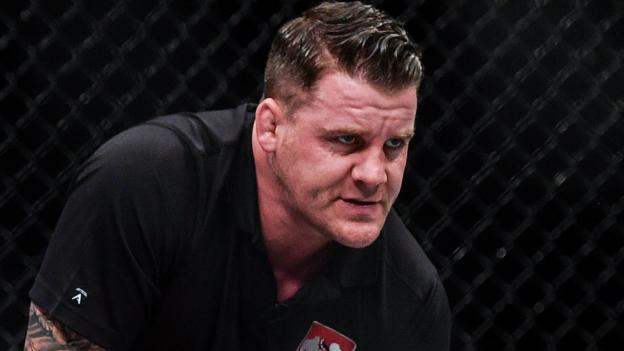
Marc Goddard: Life in the octagon with one of UFC’s most respected referees

news image

Marc Goddard has been refereeing MMA bouts for 14 years

A fighter to your right, their opponent on your left. Inside that cage they’ll do anything to win – render the other unconscious, force them to submit. Your job is to keep it within the rules, and save them from serious injury.

“This is fighting,” explains Marc Goddard, one of the most well-respected referees in the Ultimate Fighting Championship and across the mixed martial arts scene.

“You are turning up to have a pre-arranged legal fist-fight with someone. The ethos is ‘I have to stop my opponent by any means necessary’… within the confines of the rules.”

It is the “within the rules” part that sticks with Goddard, a former professional himself, who says his rise to the top of the officiating pool began “by complete accident”.

The Englishman has seen it all in a 14-year career in the middle – world title fights in front of 60,000 people, high-profile bouts across the world, a run-in with the most-recognisable name in the sport, Conor McGregor.

“I don’t care who you are, I don’t care where we are, I don’t care what’s at stake,” Goddard tells BBC Sport. “When I am doing my job, all I want the fighters to know is they’re going to get a fair crack at the whip.”

Here, he talks BBC Sport through life in MMA, the pressures of being a referee, that fallout with McGregor and what comes next for UFC.

How does refereeing compare with fighting?

Goddard’s involvement in MMA began before the turn of the millennium “in rings, on tatamis and open mats”, and he never predicted how popular the sport would become – let alone his own role in it.

An injury picked up at an event in 2004 paved the way for Goddard’s future in the middle, stepping in to help out a promoter who had been let down by a referee.

While admitting the buzz from officiating is “not even close” to the adrenaline rush lining up for a fight brings, Goddard says he was “always a referee trapped in a fighter’s body”.

“Fighting, unless you have done it, it is hard to explain the feeling you have and the stresses, strains and how long they live with you for,” he adds.

“You sign a contract to fight somebody three, four, five months in advance, you are going to bed with that person every night, you are waking up with that person every morning.

“As a referee, we don’t share the same type of feeling but, especially at the top, when you are stood in Las Vegas about to referee a world championship fight, yeah, you best believe you get a sense of occasion and you know where you are.”

Vetting people’s gods in Brazil

Goddard’s hectic schedule takes him all over the globe.

He has just returned from Brave17 in Lahore, the first big MMA event to be held in Pakistan, another unique atmosphere to add to the likes of Poland, Japan and Cambodia – though he says nothing compares to Brazil.

“British crowds are intense,” he says. “But Brazilians are fiercely intense, it’s almost like a football crowd in Brazil – passion, almost primal. If I am refereeing Jose Aldo or Anderson Silva, these people are gods.

“When you are stood there in Brazil, vetting the people’s gods, you don’t want to make an error or a mistake.”

Intimidating, surely?

“Intimidation leads to panicked, wrong choices,” adds Goddard, from Birmingham. “There are some intimidating characters out there, but as a referee you are paid to not be intimidated.

“You will get criticised, make no bones about that, regardless of the sport – the man in black is the one everyone wants to shout at. That doesn’t bother me, I am not a shrinking violet, it goes with the territory.

“My decisions are made on fairness and the appropriate action at the time. I thrive on procedures, that’s why the role of referee suits me – we have a rule book, we know what’s good and what’s bad and we stick to it.”

Clashing with McGregor

McGregor confronted Goddard in the ring at Bellator 187

A high-profile clash with McGregor came at Bellator 187 in Dublin last year when the Irishman jumped into the cage, after team-mate Charlie Ward defeated John Redmond, and confronted Goddard.

McGregor later apologised, saying he “overreacted” as he thought the referee was trying to pick an unconscious Redmond off the floor.

“I knew it was him,” says Goddard about McGregor’s sudden arrival in the cage. “I have known Conor since he was a young, fresh-faced boy making his debut in MMA. I have known his coach, John Kavanagh, for close on 10 years, he grew up in the same environment and competition, same events.

“I said my piece when it happened. I don’t care who you are, where it is – I have got a job to do and nothing or nobody on earth, from an integrity standpoint alone, is going to get in the way of that.”

It is not the first nor will it be the last time Goddard has encountered similar situations, recalling stories from Russia and Cambodia, but generally the referee finds fighters to be respectful.

“The thing with Conor, it first started when I told him to go and sit back down,” he added, referring to the Irishman’s outbursts outside the cage at UFC Gdansk a few weeks earlier.

“The idiots out there say I was only doing it because it’s Conor. But everyone that knows me and knows what I am about, knows it harps back to fairness. It doesn’t matter who you are, it’s about the two guys that are in the ring.”

So what makes a top MMA referee?

Goddard was in charge of the UFC Singapore bout between Holly Holm and Bethe Correia

“You have to know your sport inside and out,” says Goddard. “Not always from being a competitor, because that doesn’t translate – there are 1,001 fighters out there who I know would make horrendous referees.

“The qualities needed to be a ref are different. You need a finite attention to detail, integrity. For want of a better description, I don’t take any abuse.

“I am very pragmatic – it’s left or right, black or white, I don’t like grey areas. Being a referee, decisiveness is a definite quality you need.

“Once you decide on something, or make a call, you can’t waiver or falter, you have to command respect from people and you have to do that the right way, because respect and reputation take years to build and years to gain.”

Instinct also plays a huge part in Goddard’s role – think Holly Holm’s knockout of Bethe Correia in 2017, when the Englishman reacted quickly to block a follow-up punch from Holm with Correia already unconscious.

“I don’t watch fights as they unfold,” explains Goddard. “Referees who come unstuck get caught watching fights and can’t react quickly enough.

“I am always very conscious of the fact I am not there to watch the fight. I am reading the fight and have to read what’s happening in real time, what’s happened before that, is the fighter taking damage? Do I need to get close? Do I need to give space? Get ready to move?

“All of these things go round in your head and you’ve got to stay in the moment. A referee has to have that clarity of mind – one second too late and you’re the dog’s dinner, one second too early… you’re also the dog’s dinner.”

What next for UFC and MMA?

Goddard still trains regularly in mixed martial arts, despite his hectic refereeing schedule

Fights like McGregor and Khabib Nurmagomedov’s lightweight title bout in Las Vegas last month attract an audience beyond the MMA world, but with that comes scrutiny from outsiders – especially with UFC 229 ending in a mass brawl between the camps.

Goddard says the sport does not need to give its detractors any more ammunition and maintains MMA is a positive experience, traditionally built on “a core value of respect and etiquette”.

“Fighters, promoters, camps, referees, officials, everyone involved, we all have a collective responsibility to portray the sport in the correct way,” explains Goddard. “It’s the fight business, it’s the game. Certain things sell tickets and pay-per-views.

“They are all big boys and girls, and it’s down to them how they conduct themselves. We can’t tell them what to do. It’s a sport, but there is entertainment involved, too. Sometimes a little bit of needle and razzmatazz is going to generate what the promoters and what the business side of it is looking for.

“It’s not exclusive to MMA. Footballers, boxers, cricketers – you pick up the paper and there is a misdemeanour going on somewhere. But because it is a fighting art and we are battling a lot of misconceptions, something happens in our sport and it’s always amplified. That’s the way it’ll be for a considerable time.

“If the UFC ever going to be on prime time TV, BBC One or ITV on a Saturday night? No, so let’s not kid ourselves. By the same token, what is mainstream? Three, four, five years ago they wouldn’t touch MMA, now look what’s happened in the last few years.

“As a sport we have to take a good hard look at ourselves and make sure we move forward as one.”

As for Goddard’s involvement in the future of MMA, he’s a long way from finished yet.

“I am human, I am not perfect, nowhere near it, I don’t believe in perfection,” he adds.

“Something I try to impress on would-be officials and guys I train is by wanting to be perfect you are setting yourself up with a disadvantage – perfection is not a destination, it is a journey.

“Every time I ref I am trying to be perfect, because that’s what keeps me on my toes, but I never turn around and go ‘yeah, that’s perfect’, because it’s not.

“The day I get to perfection is hopefully the day I retire after a 25-year as an official – that’s the aim, anyway.”

Read More

from Trendy News Day https://ift.tt/2DxAhu9
via IFTTT

This shapeshifting clock turns time into moving art

news image

London-based design studio Animaro built a kinetic clock that changes its shape depending on the time of the day. Instead of displaying minutes and seconds with precision, Solstice takes a more meditative approach to time and moves in a relaxing, eye-soothing way. Its retail price will be around $770, but you could get it for less until the 13th of December if you back its Kickstarter campaign.

Read More

from Trendy News Day https://ift.tt/2QbIquU
via IFTTT

Hodeidah clashes flare around key port, despite calls for truce

news image

Fighting between the Saudi-UAE coalition and Shia rebels in Yemen has flared up again around the Red Sea port city of Hodeidah, despite UN calls for a ceasefire there, Yemeni officials and witnesses say.

Saudi-UAE coalition planes launched at least 10 air raids on positions held by the rebels, known as Houthis, late on Monday, witnesses told Al Jazeera. The rebels, who control the area, fired artillery in response.

Earlier on Monday, Yemen‘s internationally recognised government said it would attend UN-backed talks next month to put an end to the violence. The announcement came hours after the Houthis said they were ready for a broader ceasefire, but only if the coalition forces backing the Yemeni government want peace.

Al Jazeera’s Mohammed Adow, reporting from neighbouring Djibouti, said residents of Hodeidah spoke of the most intense fighting in days.

“Most of the fighting is happening around the 7th of July neighbourhood, about 4km from the port. The warring parties are using mortars and machine guns to attack each other since last night.

“The Houthis are adamant that they did not start the latest round of violence. One Houthi official we spoke to this morning said ‘you will see these kind of flare-ups as we grow closer to peace talks, because everyone wants to come to these talks in a position of strength,” Adow reported.

The official spoke on condition of anonymity, as he were not authorised to talk to reporters; the witnesses did so for fear for their safety.

The US-backed, Saudi-UAE coalition has been attempting to retake Hodeidah from the rebels since last summer with its forces now only several kilometres from the port, Yemen’s traditional lifeline.

The renewed Hodeidah fighting is blow to the UN efforts to end the three-year war.

Martin Griffiths, the UN envoy, announced on Friday that both sides had agreed to attend peace talks in Sweden “soon”. The internationally backed government said on Monday that it would attend, but also insisted the Houthis do so “unconditionally”.

The coalition has been battling the rebels on the side of Yemen’s internationally recognised government since March 2015 in a war that has killed tens of thousands of people and pushed much of the country to the brink of starvation.

Meanwhile, a new draft UN resolution, circulated by the United Kingdom in the UN Security Council, is calling for cessation of hostilities in Hodeidah and other place that are critical to the aid delivery to Yemen.

Kuwait, currently the only Arab member of the UN Security Council, has been under pressure from the Saudi-UAE coalition to reject to resolution. The Kuwaiti ambassador to the UN told journalist on Monday that he did “not think it would be helpful if they put this draft up for a vote this week”.

As international pressure on Saudi Arabia and the UAE increased, the Gulf nations pledged a new $500m food aid programme for Yemen on Tuesday.

The programme was announced by Abdullah bin Abdulaziz Al-Rabi’ah, general supervisor of Saudi Arabia’s King Salman Centre for Humanitarian Relief and Works, at a joint press conference in Riyadh with Reem al-Hashimy, UAE Minister of State for International Cooperation.

SOURCE:
Al Jazeera and news agencies

Read More

from Trendy News Day https://ift.tt/2DxA0aB
via IFTTT

Millie Bobby Brown paints Stephen Colbert’s nails, asks him which Spice Girl he is

news image

Sometimes, in an interview, it’s the tough questions you want. Sometimes it’s a bit of relaxed chit-chat. And other times you just want to paint the host’s nails and talk about the upcoming Spice Girls reunion.

In the nine-minute clip above, Stephen Colbert chats to Millie Bobby Brown about a whole range of topics — everything from Stranger Things Season 3 to her work with Unicef.

The interview finishes how very good interview should — a manicure accompanied by some important discussion of which Spice Girl Colbert thinks he’s most like (spoiler alert: it’s Ginger).

Read More

from Trendy News Day https://ift.tt/2BkW9aE
via IFTTT

European court orders release of Kurdish politician Demirtas

news image

The European Court of Human Rights (ECHR) has ruled that Turkey violated right to speedy trial of pro-Kurdish opposition politician Selahattin Demirtas, urging his release.

In Tuesday’s judgment, the top human rights court accepted that Demirtas, who has been in jail since November 2016, had been detained on “reasonable suspicion” of having committed a criminal offence.

But the court said judicial authorities had extended the politician’s detention on grounds that could not be regarded as “sufficient” to justify its duration.

The court said that his pre-trial detention interfered with his freedom of expression as he could not take part in parliament activities as an elected MP.

He is one of two former co-leaders of the pro-Kurdish Peoples’ Democratic Party (HDP).

The ECHR said the extensions of his detention were “beyond reasonable doubt,” especially during his campaigns for April 2017 constitutional referendum and June 2018 presidential election, in which the politician was a candidate.

“[The extensions of detention] had pursued the predominant ulterior purpose of stifling pluralism and limiting freedom of political debate, which was at the very core of the concept of a democratic society,” the court’s statement said.

“The Court therefore held, unanimously, that the respondent state was to take all necessary measures to put an end to the applicant’s pre-trial detention,” it added.

Read More

from Trendy News Day https://ift.tt/2KiTjpr
via IFTTT

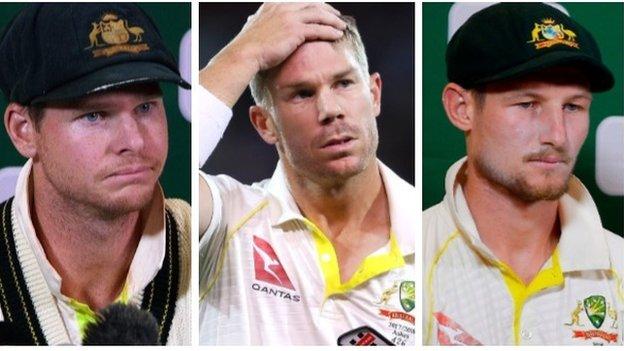
Steve Smith, David Warner & Cameron Bancroft bans not reduced

news image

Steve Smith, David Warner, Cameron Bancroft were banned after Bancroft used sandpaper on the ball during a Test against South Africa in March

The bans on Steve Smith, David Warner and Cameron Bancroft will not be reduced, says Cricket Australia (CA).

Smith and Warner were suspended for 12 months and Bancroft for nine for ball-tampering in South Africa in March.

The Australian Cricketers’ Association (ACA) wanted the punishment lifted after an independent review into CA found it to be partly to blame.

CA interim chair Earl Eddings said that “it is not appropriate to make any changes to the sanctions”.

Smith, captain at the time, and Warner, his vice-captain, are eight months into one-year bans, while Bancroft, who carried out the cheating in South Africa, will be eligible to return in December.

“These contrite men have suffered enough. Let them play,” said Greg Dyer, head of the players’ union, in October.

But Eddings added: “The original decision of the board to sanction the players was determined after rigorous discussion and consideration.

“CA maintains that both the length and nature of the sanctions remain an appropriate response in light of the considerable impact on the reputation of Australian cricket, here and abroad.

“Steve, David and Cameron are working hard to demonstrate their commitment to cricket and have our continued support to ensure their pathway to return is as smooth as possible.

“We believe the ongoing conversation about reducing the sanctions puts undue pressure on the three players – all of whom accepted the sanctions earlier this year – and the Australian men’s cricket team.

“As such, the Cricket Australia board doesn’t intend to consider further calls for amendments to the sanctions.”

Australia have struggled since the trio were banned. They lost a one-day series in England 5-0, a two-match Test series against Pakistan 1-0 and were beaten 3-0 by the same opponents in a T20 contest.

They have also lost a one-day series against South Africa 2-1 and host India across all formats of the game this winter on home soil, starting with a Twenty20 match in Brisbane on Wednesday.

Read More

from Trendy News Day https://ift.tt/2KjDH58
via IFTTT

Protest movement against abuse in Catholic church brews in India

news image

Kerala, India – The Catholic Church in India is facing a trying time, with a growing protest movement in response to allegations of sexual assault by clergymen.

In June, police in the southern Indian state of Kerala registered a case against the bishop of Roman Catholic Diocese of Jalandhar, in the northern state of Punjab. 

A nun had alleged that the bishop, Franko Mulakkal, had raped her repeatedly between 2014 and 2016 at a convent in Kerala. 

The nun is a member of the Missionaries of Jesus congregation based in Jalandhar.

The bishop was arrested but then released from prison on October 15 on bail on the condition that he presents himself in the police station once every fortnight.

Five nuns of the same congregation have come out in support of the complainant. Six of them live in a convent in Kerala, under police protection.

The events in India come as the Catholic church continues to face a crisis regarding sexual abuse allegations across the world [Raksha Kumar/Al Jazeera]

A few weeks before the case involving Mulakkal, in a separate incident, Kerala’s Malankara Orthodox Syrian Church set up a panel of lawyers and priests to investigate allegations of sexual abuse by a woman from Thiruvalla, a town in Kerala. 

She accused five priests of using her confession to blackmail and sexually abuse her for several years.

“We intend to clean up the system and also seek justice to the nuns who have been wronged,” said Father Augustine Vattoly of Eranakulam, Kerala. 

He now leads a newly formed umbrella organisation, Save Our Sisters (SOS), which was set up to fight for nuns who speak out, and is one of few church officials to back survivors.

I trust that God will grant me justice.

Survivor nun

On November 14, about 250 churchgoers, women’s rights activists and concerned citizens marched to the Kerala Government Secretariat in Thiruvananthapuram, the state capital.

In front of the North Gate of the building, they called for action to be taken against powerful clergymen. 

Fighting back tears, the nun in the case against Mulakkal said: “Perhaps God chose me as a tool in this fight against injustice.”

M.Sylvester, a Kochi resident, said: “All my life I have believed in the sanctity of the Church. I want that sanctity to be restored.”

Officially, all arms of the Church have come out in support of the accused priests.

The October issue of Christward, a monthly magazine published by the Diocese of Jalandhar, of which Franco Mullakal was the bishop until recently, blamed “pressure from the media and the scenario created by some sisters and their supporters” for Mulakkal’s arrest in Kerala. 

Father Kuriakose, a priest with same Jalandhar diocese, was a witness in the rape case against the bishop. He was found dead in his room in October; no investigation was ordered into his death and the priest’s family suspects foul play.

Nun viewed with suspicion

Initially, the complaint against the bishop was viewed with suspicion.

“Many within the Catholic Church saw the nun’s complaint as malicious,” said Anita Cheria, a journalist and activist based in Bangalore.

PC George, a member of the Kerala state legislative assembly who is also a Catholic, called the nun a prostitute. 

In a September press conference in Trivandrum, he said “the victim nun is not eligible to be a nun, she has ceased to be a virgin the day she was abused the first time”, but failed to question the celibacy of the accused bishop.

However, as public pressure increased, church officials have made fewer statements.

Protesters in Kerala have come out in support of those who claim to have been abused [Raksha Kumar/Al Jazeera]

The fallout has highlighted a lack of infrastructure to deal with allegations of sexual harassment within the church. 

While India has the Sexual Harassment of Women at Workplace (Prevention, Prohibition and Redressal) Act of 2013, churches and other religious institutions are not covered by it. 

“Even if we assume that there was an internal committee set up, the Church is so prudish about sex that I am not sure how such complaints would be addressed within the setup,” said Rima Thomas, a resident of Ernakulam.

In October, Cheria, the journalist, wrote: “Despite the passage of the ‘CBCI Guidelines to Deal with Sexual Harassment at Work Place’ by the Catholic Bishop’s Conference of India’s standing committee in September 2016, these guidelines provided no support to the survivor nun.” CBCI refers to the Conference of Catholic Bishops of India.

The Church has not formally acknowledged the nun’s complaint. 

She has said that she was she forced to approach police after attempting – and failing – to communicate with church officials.

Between September 8 and 21, five nuns staged a sit-in protest in Kochi in support of the alleged victim. 

“She has been a kind soul who has helped us for nearly a decade, how can we not support her now?” said Sister Anupama, a nun.

Anupama has written to the Vatican several times demanding attention but says she has not received any letters in response. 

Despite the lack of action, the survivor nun, however, has not lost hope. “I trust that God will grant me justice,” she said.

Read More

from Trendy News Day https://ift.tt/2Bls2zV
via IFTTT

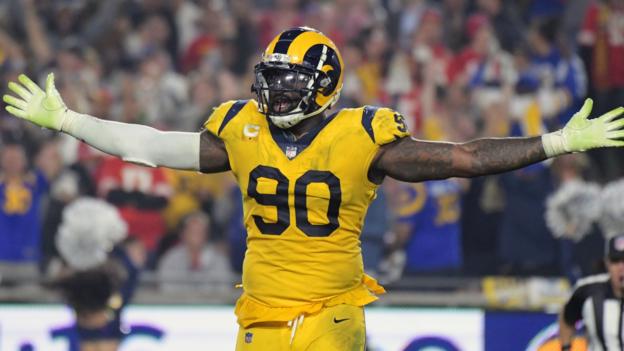
LA Rams 54-51 Kansas City Chiefs: Rams edge high-scoring classic

news image

Both teams headed into the match with 9-1 records this season

The Los Angeles Rams won a clash of two Super Bowl favourites as they beat the Kansas City Chiefs 54-51 in the third-highest scoring NFL game of all time.

Rams quarterback Jared Goff threw four touchdowns including the winning score with 1 minute 49 seconds left.

It is the first time two teams have scored more than 50 points in a match.

“It was a whirlwind,” said Rams head coach Sean McVay, whose side improved to 10-1. “Until the final few seconds you weren’t really able to breathe.”

The match between the league’s two highest-scoring offenses was moved to Los Angeles Memorial Coliseum after concerns over the pitch at Mexico City’s Azteca Stadium.

Chiefs quarterback Patrick Mahomes was on the losing side despite throwing 478 yards and six touchdowns, with the lead changing hands six times.

Mahomes had two chances to overhaul the Rams after Goff’s late score, but twice threw interceptions under pressure.

The 105 total points has been topped only twice in NFL history – 106 when the Cincinnati Bengals beat the Cleveland Browns 58-48 in 2004 and 113 as the Washington Redskins won 72-41 against the New York Giants in 1966.

“It was a crazy game,” said Goff, who threw for 413 yards. “It was a lot of fun.”

Read More

from Trendy News Day https://ift.tt/2FtWkoo
via IFTTT